Checking vs Savings Account: What Is the Difference?

Key takeaways
- Checking is built for spending with a debit card and unlimited transactions, and it usually pays little or no interest.
- Savings is built for holding money and pays interest, with high-yield accounts paying far more than the national average.
- Both checking and savings at a bank are FDIC insured, and both at a credit union are NCUA insured, up to at least $250,000 per depositor per institution.
- A common setup is a checking account for daily spending and a separate high-yield savings account for your emergency fund and goals.
- The old six-per-month savings withdrawal limit under Regulation D is now optional, so banks may or may not still enforce it.
- Keep about one month of spending in checking and move the rest to savings where it can earn real interest.
Almost everyone has a bank account. Far fewer people can explain, in plain words, why they have two of them. If you have ever stared at your online banking screen and wondered whether that pile of money should sit in checking or savings, you are asking exactly the right question. The answer shapes how much interest you earn, how easily you can spend, and how well you sleep when an unexpected bill lands.
Here is the short version. A checking account is a tool for moving money. A savings account is a tool for keeping money. They look similar on the screen, and both hold dollars that are federally insured, but they are built for opposite jobs. Once you see the difference clearly, setting up your accounts becomes one of the easiest wins in personal finance. Let us walk through it the way a knowledgeable friend would.
What a checking account actually is
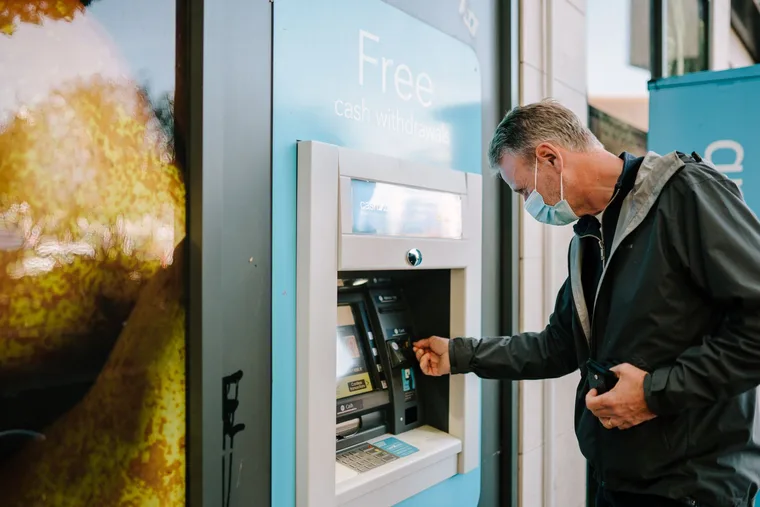
A checking account is the account your money lives in when it is in motion. Your paycheck lands here through direct deposit. Your rent leaves from here. Your debit card pulls from here, your bills autopay from here, and the cash you pull from an ATM comes from here. The whole point of a checking account is fast, frequent, unlimited access to your money.
Because a checking account is designed for constant activity, it comes with the tools that make spending easy. You get a debit card. You can write checks, though fewer people do that every year. You get access to bill pay, peer to peer transfers, mobile deposit, and ATMs. There is generally no limit on how many times you can spend or move money in a month.
The tradeoff is interest, or rather the lack of it. Most checking accounts pay little or nothing on your balance. Some pay a token rate, and a handful of rewards checking accounts pay more if you jump through hoops like a minimum number of debit swipes. But as a category, checking is not where your money grows. It is where your money flows. Expecting a checking account to build wealth is like expecting a hallway to be a bedroom. Wrong room for the job.
Checking accounts also come in a few flavors worth knowing. A basic checking account keeps things simple with no frills. A student or youth account waives fees for younger customers. An interest checking account pays a small yield but often asks for a higher minimum balance. A second-chance account helps people who have had trouble qualifying elsewhere. For most people, a plain no-fee checking account with a strong mobile app and a wide, free ATM network covers everything they actually need.
What a savings account actually is
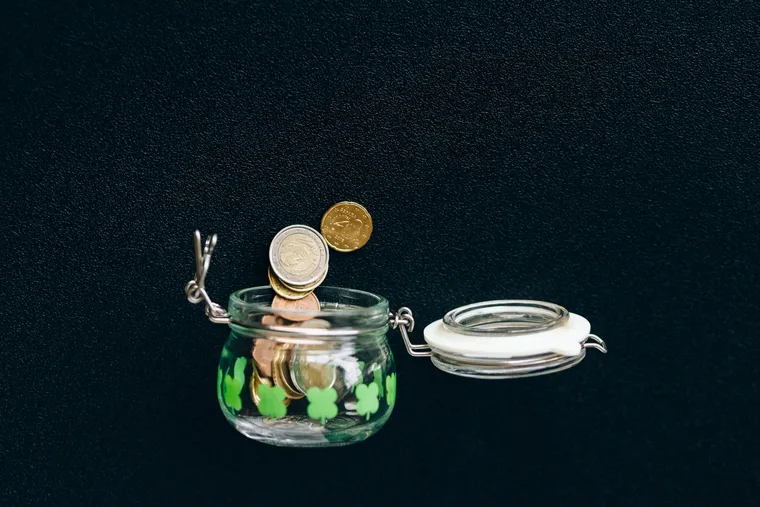
A savings account is the account your money lives in when it is resting. It is a holding pen. You are not spending from it every day. Instead, you are parking money you do not need this week so it stays safe and earns a little something while it waits.
The defining feature of a savings account is that it pays interest, expressed as an annual percentage yield, or APY. That number tells you how much your balance grows in a year once compounding is included. This is where the two account types split hard. A big national bank might pay a savings rate so low it rounds to nothing, while a high-yield savings account from an online bank might pay a rate that is many times higher. The dollars are insured the same way. The growth is not remotely the same.
It helps to know how savings compares to its close cousins. A money market account works much like savings but sometimes adds limited check-writing or a debit card, often with a higher minimum. A certificate of deposit, or CD, locks your money for a set term in exchange for a fixed rate, which suits money you truly will not touch. A plain high-yield savings account sits in the sweet spot for most goals, because it pays a solid rate while keeping your money available within a day or two. That balance of growth and access is why it is the workhorse of a good savings plan.
Savings accounts are deliberately a little less convenient than checking, and that friction is a feature, not a bug. There is usually no debit card attached to a plain savings account. You typically cannot pay a merchant directly from it. To spend that money, you first move it to checking. That small extra step is often exactly what keeps an emergency fund from quietly evaporating into takeout and impulse buys.
The old six-withdrawal rule, and what changed
For decades, federal rules capped certain savings withdrawals and transfers at six per month. This came from a Federal Reserve rule called Regulation D. If you moved money out of savings more than six times in a statement cycle, your bank might charge a fee, convert the account to checking, or eventually close it. A lot of people still believe this limit is the law.
In 2020 the Federal Reserve changed course. It removed the mandatory six-transfer cap, making the limit optional rather than required. That means banks are now allowed to let you withdraw from savings as often as you like. Some banks dropped the limit entirely. Others kept it in place out of habit or to nudge savings behavior. So the honest answer in 2026 is that it depends on your bank. Check your specific account agreement rather than assuming, and do not treat a savings account like a second checking account even if your bank technically allows it.
Interest is the whole reason to bother with savings
If checking and savings both hold insured dollars, why split them at all? Interest. Money sitting idle in a near-zero checking account is money doing nothing. The same money in a high-yield savings account is quietly earning while you go about your life. Over a single month the difference feels small. Over years, it becomes real.
Consider a simple example. Say you keep a 10,000 dollar emergency fund. In a checking account earning almost nothing, it might produce a few dollars a year, if that. In a high-yield savings account earning around 4 percent APY, that same 10,000 dollars would earn roughly 400 dollars in a year, and more in later years as the interest itself starts earning interest. You did not take on any risk. You did not lock the money away. You simply put it in the right room.
This is the quiet magic of compounding. Compounding means you earn interest on your interest, so a balance grows a little faster each year even if you never add another dollar. It is not a get-rich scheme, and savings rates rise and fall over time, so no single number is permanent. But given the choice between earning something and earning nothing on the exact same insured dollars, the decision makes itself. Play with the slider below to see how a savings balance grows when it earns interest instead of sitting still.
Both accounts are federally insured
People sometimes assume savings is safer than checking, or that one type is more protected than the other. It is not. Federal deposit insurance covers both account types the same way. What matters is the institution, not the label on the account.
If your money is at a bank, the Federal Deposit Insurance Corporation, or FDIC, insures your deposits up to at least 250,000 dollars per depositor, per insured bank, per ownership category. If your money is at a credit union, the National Credit Union Administration, or NCUA, provides equivalent coverage through its share insurance fund. Both are backed by the full faith and credit of the United States government. In the history of FDIC insurance, no depositor has lost a penny of insured funds.
The important nuance is that the 250,000 dollar limit applies to your combined balances at a single institution within an ownership category, not to each account. If you had 200,000 dollars in checking and 200,000 dollars in savings at the same bank under the same ownership, only 250,000 of that 400,000 would be insured. Most households never approach that ceiling, but if you do, spreading money across separate institutions or ownership categories restores full coverage. Before opening any account, confirm the institution is genuinely FDIC or NCUA insured. Legitimate ones say so plainly.
When to use each account
The cleanest way to think about it is by job. Ask what the money is for, and the right account usually becomes obvious.
Use checking for money that is going to move soon. That means the cash you use for rent or mortgage, utilities, groceries, gas, subscriptions, dining out, and everyday debit card spending. Direct deposit your paycheck here. Point your autopay bills here. This is your working account, and it should hold enough to cover your regular outflows without you sweating the balance.
Use savings for money that is waiting for a future job. That includes your emergency fund, which is the money you would reach for if your car died or you lost income. It also includes money you are setting aside for specific goals, like a vacation, a down payment, holiday gifts, or an annual insurance premium. Because this money is not for this week, it should be earning interest, which means a high-yield savings account rather than checking.
A helpful trick is to open more than one savings account, or use the sub-account or bucket feature many banks now offer, so each goal has its own labeled pot. Seeing a bucket named New Car at 3,200 dollars is far more motivating than watching one blurry balance and hoping you did not overspend it.
How much to keep in each
A frequent starting point is to keep about one month of expenses in checking, plus a small buffer so a surprise charge does not overdraw you. If your monthly spending is around 3,500 dollars, that might mean keeping roughly 4,000 dollars in checking. Enough to cover the bills with a cushion, but not so much that thousands of dollars sit there earning nothing.
Everything beyond that working balance generally belongs in savings. Your emergency fund is the anchor here. A widely cited target is three to six months of essential expenses, built up over time. That money should live in high-yield savings where it earns interest and is still available within a day or two if you truly need it. It should not sit in checking, where it earns nothing and is one impulse purchase away from disappearing.
These are guidelines, not commandments. Someone with irregular income might keep a larger checking buffer. Someone with a very stable salary and tight budgeting might keep less. The mechanism matters more than the exact number. Keep spending money accessible in checking, and keep everything else earning interest in savings.
Fees to watch on both accounts
The right account should not nickel and dime you. Plenty of banks and credit unions now offer accounts with no monthly maintenance fee and no minimum balance, so there is little reason to pay for the privilege of storing your own money. Still, fees hide in the fine print, and a few are worth knowing.
On checking, the fees to watch are monthly maintenance fees, overdraft and nonsufficient funds fees, and out of network ATM fees. Overdraft fees have historically been the most painful, sometimes 30 dollars or more per incident. Many banks have softened these rules in recent years, and the Consumer Financial Protection Bureau has pushed for clearer, lower overdraft practices. You can often avoid overdraft fees entirely by turning off overdraft coverage so a card purchase simply declines instead of triggering a fee.
On savings, watch for monthly fees tied to minimum balance requirements, and for any excess withdrawal fee if your bank still enforces a transfer limit. Also read the rate fine print. Some accounts advertise a high APY that only applies up to a certain balance, or that is a temporary promotional rate. A slightly lower rate with no strings often beats a flashy rate with conditions you will not meet.
Moving money between checking and savings
The bridge between your two accounts is the transfer, and modern banking makes this nearly instant when both accounts are at the same institution. You log in, move money from checking to savings or back, and it is done. Transfers between different banks, sometimes called external or ACH transfers, can take one to three business days, though many banks are getting faster.
The single most powerful habit here is automation. Set up a recurring automatic transfer from checking to savings, timed for right after payday. Even a modest amount moved automatically every pay period builds a savings balance without willpower, because the money leaves before you can spend it. This is often called paying yourself first, and it is one of the most reliable savings strategies precisely because it removes the human from the loop.
When you need to spend from savings, just reverse the flow. Move the money to checking, then spend from checking. That extra step is not a burden. It is a tiny speed bump that gives your brain a beat to ask whether this is really an emergency or just a want. Often that pause is all it takes to protect the fund you worked to build.
The ideal simple setup
Put it all together and a clean, low-effort structure looks like this. One checking account at a bank or credit union with no monthly fee, holding about a month of expenses, receiving your direct deposit and paying your bills. One high-yield savings account, ideally at an institution paying a competitive APY, holding your emergency fund and your goal money. One automatic transfer from checking to savings every payday so the balance grows on its own.
That is genuinely most of what a healthy banking foundation requires. No exotic products, no constant tinkering, no fees eating your balance. Checking does the spending. Savings does the growing. Federal insurance covers both. Automation does the discipline for you. Many savers find that once this structure is in place, they barely think about it again, which is exactly the point. Good money systems are quiet.
If you have been keeping everything in one account, or letting a big balance sit idle in checking, moving to this two-account setup is one of the highest-return, lowest-effort changes you can make. It costs nothing, it takes an afternoon, and it puts your money in the right room for the job it needs to do.
Common mistakes to sidestep
A few missteps trip up otherwise careful people, and all of them are easy to avoid once you know to look. The first is letting a large balance sleep in checking. If you routinely carry thousands of dollars more than a month of expenses in a near-zero checking account, you are handing the bank free use of your money and getting nothing back. Sweep the excess into high-yield savings and let it earn.
The second mistake is chasing a headline rate without reading the terms. A savings account waving a big APY may cap that rate at a low balance, require a large minimum, or drop the rate after an introductory window. Compare the rate you will actually earn on your real balance, not the number on the banner. The third is treating savings like a spending account. Even where your bank allows unlimited withdrawals, dipping into savings for everyday wants slowly erases the buffer you built. Keep the wall between spending money and saved money intact.
The last common slip is never confirming federal insurance. The vast majority of banks and credit unions are covered, but a small number of fintech apps and products are not banks themselves and route money in ways that can blur that protection. Before you trust a place with your cash, verify that deposits are held at an FDIC insured bank or an NCUA insured credit union. It takes one minute and it removes the only real worry.
Get those four things right and the rest takes care of itself. Right room for spending, right room for saving, a real rate, and confirmed insurance. That is a banking setup you can leave on autopilot for years.
Banks profit from what their customers do not know.
Every fee, teaser rate, and disclosure is a test you are taking whether you study or not. The Financial IQ Test scores your real money knowledge across 90 tests and shows you the gaps before a bank finds them first.
Test your Financial IQQuestions people ask
Can I just use one account for everything?
You can, but you give up two things. You lose the interest a savings account would pay on money you are not spending, and you lose the mental wall that keeps your emergency fund separate from your grocery money. Most people find that two accounts, one checking and one savings, cost nothing extra and make both spending and saving easier.
Is my money safe in both a checking and a savings account?
Yes, as long as the institution is federally insured. Bank deposits are backed by the FDIC and credit union deposits are backed by the NCUA, both up to at least $250,000 per depositor, per institution, per ownership category. That coverage applies the same way to checking and savings, so the account type does not change your protection.
How much money should I keep in checking versus savings?
A frequent rule of thumb is to keep about one month of expenses plus a small cushion in checking so your bills clear without stress. Everything beyond that, especially your emergency fund and money saved for goals, tends to belong in a high-yield savings account where it earns interest. The exact split depends on your income timing and comfort level.
What does APY mean on a savings account?
APY stands for annual percentage yield. It is the real rate you earn in a year once compounding is included, which makes it the honest number to compare across accounts. A savings account advertising a 4 percent APY would pay about 4 dollars per year on every 100 dollars if the rate stayed flat. Rates change over time, so treat any figure as a snapshot.
Are online savings accounts safe compared to big banks?
An online bank that carries FDIC insurance protects your deposits exactly the same way a large brick-and-mortar bank does. The insurance is tied to the institution being a member, not to whether it has branches. Online banks often pay higher rates because they spend less on physical locations. Always confirm FDIC or NCUA membership before you open an account.
Keep reading
Never Pay a Bank Fee Again: The Complete Playbook
CD Ladders Explained: Lock In Rates Without Locking Up Your Life
The Emergency Fund Guide: How Much, Where, and How Fast
The Flourish Letter
One smart money idea each week, charts included. Join free and get the printable 2026 Money Calendar in your welcome email.