How to Avoid ATM Fees: A Practical 2026 Guide
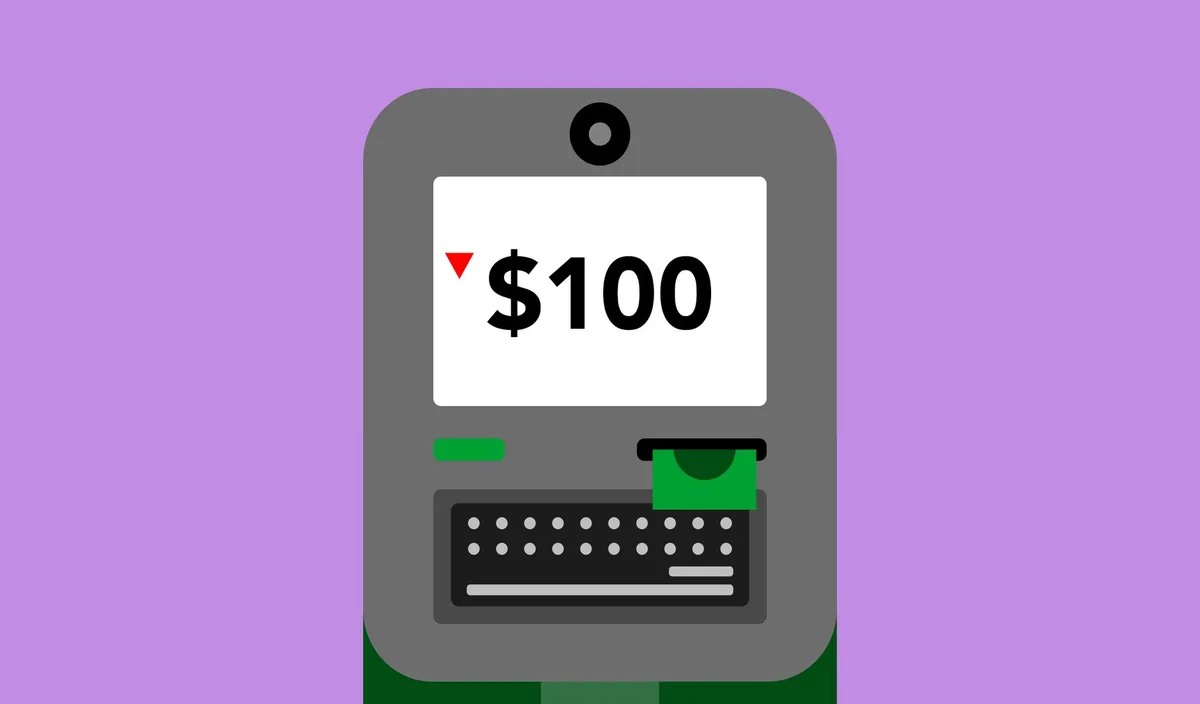
Key takeaways
- An out-of-network withdrawal usually costs two separate fees at once: your own bank's out-of-network fee plus the ATM owner's surcharge.
- In 2026 that combined bite commonly runs from about 4 dollars and 50 cents to more than 7 dollars for a single withdrawal.
- Using in-network machines and large surcharge-free networks like Allpoint, MoneyPass, and the credit union CO-OP network makes cash free.
- Some online banks and cash-management accounts refund ATM surcharges, which erases the whole two-fee problem.
- Checkout cash back at stores is a reliable zero-fee way to get cash when you are buying something anyway.
- Abroad, always decline dynamic currency conversion and choose the local currency so your card network sets the exchange rate.
The first time you notice an ATM fee, it is usually because you needed twenty dollars and the machine quietly took twenty three. You pulled cash from a corner-store machine at a bar or a gas station, tapped through a warning screen without really reading it, and later saw two separate charges hit your account. That is not one fee. It is two, stacked, and together they are why casual cash withdrawals are one of the most overpriced habits in American money. The good news is that ATM fees are almost entirely avoidable once you understand how the charges work. This guide walks through the two-fee problem in plain terms, the real dollar amounts in 2026, the free networks most people already have access to, the banks that refund fees, and a few simple habits that can push your yearly ATM cost all the way down to zero.
The two-fee problem nobody explains at the machine
When you use an ATM that does not belong to your bank, you can get hit from two directions at once, and this is the single most important thing to understand about ATM fees. The first charge comes from your own bank. It is called an out-of-network fee, and your bank charges it for the privilege of letting you use a machine it does not own. The second charge comes from the company that owns the ATM. It is called a surcharge, and it appears on a warning screen right before the cash comes out. Two different companies, two different fees, one withdrawal.
Here is the part that makes people angry when they realize it. The two fees have nothing to do with each other. Your bank does not see a penny of the owner's surcharge, and the ATM owner does not see a penny of your bank's out-of-network fee. You simply pay both. On a small withdrawal, the combined bite can be larger than what you would tip on a nice dinner, and you got nothing for it except your own money handed back to you.
There is a third fee that only shows up with foreign machines and travel, a foreign transaction fee, and we will cover that separately later. For everyday cash inside the United States, the two-fee stack is the thing to watch.
It also helps to know why this system exists at all. ATMs cost money to install, stock with cash, insure, and maintain. When a machine belongs to your own bank, the bank absorbs those costs as part of serving its customers, so you use it free. When you wander onto a machine owned by someone else, that owner wants to be paid for the service, and your bank wants to discourage you from creating work it has to settle with another institution. The surcharge and the out-of-network fee are simply those two incentives pointed at your wallet. Understanding that they are business decisions, not laws of nature, is the first step to sidestepping them.
What ATM fees actually cost in 2026
Let us put numbers on it, because the abstraction hides how much this adds up. Industry fee surveys have tracked ATM costs for years, and the trend has been steadily upward. In 2026 a typical out-of-network fee charged by your own bank runs somewhere around 1 dollar and 50 cents to 3 dollars and 50 cents. A typical owner surcharge runs somewhere around 3 to 4 dollars, and at high-traffic tourist spots, hotels, casinos, and nightlife venues it can climb well past that. Add the two together and a single out-of-network withdrawal commonly costs between 4 dollars and 50 cents and roughly 7 dollars and 50 cents.
The chart below shows how the two fees stack into a realistic total. These are representative 2026 figures, not a quote from any single bank, and your own costs depend on your bank and the machine you pick.
Now think about the frequency. If you pull out-of-network cash just once a week and pay 5 dollars each time, that is 260 dollars a year. Twice a week and you are past 500 dollars. And notice the cruelest detail: the fee is flat, so it is the same whether you withdraw 20 dollars or 200. On a 20 dollar withdrawal, a 5 dollar fee is a 25 percent charge. You would never accept a 25 percent surcharge on a sandwich, yet people pay it on their own cash without blinking.
Use in-network ATMs first, always
The simplest way to avoid both fees is to use an ATM that belongs to your own bank or credit union. When you use your own bank's machine, there is no out-of-network fee because you are in-network, and there is no owner surcharge because your bank owns the machine. The withdrawal is free. This sounds obvious, and it is, but the habit of just using whatever machine is closest is what quietly drains the money.
Most banks make it easy to find their machines. Open your bank's app and look for an ATM or branch locator, which uses your location to show the nearest in-network machines. If you bank with a large national institution, their machines are common enough that a little planning almost always puts one on your route. The trick is to check before you are standing in front of a random machine at 11 at night, not after.
If you find yourself constantly far from your bank's machines, that is a signal worth acting on. It may mean your bank is a poor fit for how you actually live, and switching to an institution with better ATM access, or one that belongs to a large surcharge-free network, can eliminate the problem permanently.
The big surcharge-free networks you may already belong to
Here is something many people never learn: your own bank's branded machines are not the only ATMs you can use for free. A lot of banks and credit unions belong to large shared networks, and every machine in the network counts as in-network for you. These networks are enormous, often larger than any single bank's own fleet of machines, and using them costs you nothing.
Three names are worth memorizing. Allpoint is a surcharge-free network with tens of thousands of machines, many of them inside retailers, pharmacies, and convenience stores you already visit. MoneyPass is another large surcharge-free network used by many banks and credit unions. And if you belong to a credit union, the CO-OP network, now often branded under the broader shared-branching and ATM cooperative for credit unions, gives you access to tens of thousands of machines and even in-person shared branches where you can do teller transactions at a credit union that is not your own.
The table below compares the main free-access networks and who tends to have them. Sort it by whatever matters to you, but the takeaway is simple: before you pay a surcharge, check whether the machine belongs to a network your account already includes.
How do you know which networks you belong to? Look on the back of your debit card for network logos, check your bank's website under ATM access or fees, or ask a representative directly. Many bank apps also let you filter their ATM locator to show only surcharge-free partner machines. Two minutes of setup here can save you hundreds of dollars a year.
Credit union shared branching deserves a special mention because so few people know it exists. Through the cooperative, a member of one small credit union can often walk into a completely different credit union hundreds of miles away, use the machine or even the teller window, and transact on their home account as if they were at their own branch. For anyone who travels or has moved away from their credit union's home city, this quietly solves the access problem.
Banks and accounts that refund ATM fees
Some banks take a different approach. Instead of building a huge machine network, they let you use any ATM anywhere and then refund the fees you get charged. This is common among online banks and some brokerage cash-management accounts, which do not run physical branches and use fee reimbursement as a selling point. The typical arrangement is that the bank charges you no out-of-network fee of its own, and then rebates the owner's surcharge, either without limit or up to a monthly cap.
If your account offers this, it is a genuinely powerful feature, because it means the entire two-fee problem disappears. You can use the most convenient machine on the block, pay the surcharge in the moment, and watch it come back as a credit within a statement cycle. Read the fine print for the details that matter: whether reimbursement is unlimited or capped at a dollar figure each month, whether it applies worldwide or only in the United States, and whether you need to meet any balance or direct-deposit requirement to qualify.
Even one refund-friendly account can serve as your dedicated cash account. Some people keep a checking account at a big bank for direct deposit and bill pay, and a second, fee-refunding account they use specifically for pulling cash on the road. Moving a little money between them is free and instant with modern transfers.
One caution worth noting. A refund is not the same as never being charged, and the timing can matter. If you are living close to the edge of your balance, a surcharge can hit your account immediately even though the rebate does not post until the end of the statement cycle. For most people this is a non-issue, but if a temporary five dollar dip could trigger an overdraft, keep a small buffer in the account so the refund has time to catch up.
Get cash back at the checkout counter
One of the most reliable ways to get cash with zero fees is not an ATM at all. It is the checkout register. When you pay with a debit card at most grocery stores, pharmacies, big-box retailers, and many gas stations, the terminal asks whether you want cash back. Say yes, enter an amount, and the cashier hands you cash along with your receipt. The store adds it to your purchase total and pulls it straight from your checking account.
The beauty of this method is that it is almost always completely free. Stores offer cash back because it saves them the cost and risk of holding large amounts of currency in the drawer, so they are happy to give it to you. There is usually a per-transaction limit, often somewhere in the range of a few tens of dollars up to a hundred or two, which is more than enough for everyday walking-around money. You do need to be making a purchase, but if you were buying groceries anyway, the cash is a free add-on.
A close cousin is debit cash-back at stores combined with the fee-free ATM networks that come with many neobank and app-based accounts. A lot of modern digital checking accounts advertise access to a large fee-free ATM network, often the same Allpoint or MoneyPass machines mentioned earlier, plus in-store cash back. If you open one of these accounts, take five minutes to learn exactly which machines and which stores are free for you, and then simply route your cash needs through those.
Foreign and international ATM fees, and the conversion trap
Traveling abroad adds a third layer of cost, and one sneaky trap that catches even careful travelers. Using an ATM in another country can trigger the same two domestic fees, your bank's out-of-network charge and the machine owner's surcharge, plus a foreign transaction fee that many banks tack on for any transaction in a foreign currency. That foreign transaction fee is commonly around 1 to 3 percent of the amount withdrawn.
To keep international cash cheap, a few moves help. Before you travel, check whether your bank has a partner bank abroad that waives out-of-network fees, or open an account known for no foreign transaction fees and worldwide ATM refunds. Withdraw larger amounts less often rather than small amounts frequently, so any flat fees are spread across more cash. And always use machines attached to real banks rather than the standalone machines in airports, train stations, and tourist strips, which tend to carry the highest surcharges and the worst exchange rates.
Now the trap. When you use a foreign ATM or pay with a card abroad, the machine will often ask whether you want to be charged in your home currency, US dollars, instead of the local currency. This is called dynamic currency conversion, and saying yes to it is almost always a mistake. It feels friendly and familiar to see the amount in dollars, but the machine sets its own exchange rate, and that rate is usually far worse than the rate your own card network would give you. The polite-sounding offer to convert for you is really an offer to overcharge you.
The rule is short and worth memorizing before any trip. When a foreign machine or terminal asks whether to convert to dollars, decline. Choose to be charged in the local currency every single time. Your card network, Visa, Mastercard, or your bank, will handle the conversion at a far better rate. Saying no to conversion can easily save you several percent on every withdrawal and purchase abroad.
Plan your withdrawals to cut the number of trips
Even when you cannot fully avoid a fee, you can shrink its impact by changing how often you pay it. Because ATM fees are flat, the fewer withdrawals you make, the less you pay in total. Someone who pulls 40 dollars four times a month pays four fees. Someone who pulls 160 dollars once a month pays one. Same cash in hand, one quarter of the fees.
This is not a suggestion to walk around with a dangerous wad of cash. It is a nudge to be intentional. If you know you tend to use roughly a certain amount of cash each week, plan a single fee-free withdrawal that covers the stretch, ideally from an in-network machine or via checkout cash back, rather than making repeated small trips to whatever machine is nearest when you run short. A little forecasting of your cash habits turns a recurring fee into an occasional one, or none at all.
The compounding cost of casual ATM use is easy to underestimate, so it helps to see it as an annual figure. The interactive below lets you set your own average fee and how often you pay it, then shows what those avoided fees could become if you saved and invested them instead. The point is not that a few dollars matters in isolation. The point is what a small, repeated, avoidable leak becomes over years.
Run the numbers with your own habits and the result is often startling. A fee you pay twice a week without thinking is not a rounding error. Over a decade, redirected into savings or investments, it can grow into a genuine chunk of money. That is the real cost of casual ATM use: not the 5 dollars in the moment, but the compounded pile of 5 dollar bills you handed away one at a time.
Your free-cash playbook, step by step
Pulling it all together, avoiding ATM fees comes down to a short, repeatable routine. None of it requires spreadsheets or discipline of steel. It is mostly about setting up the right accounts once and building one simple habit of checking before you withdraw. Follow the steps below and there is very little reason you should ever pay a two-fee stack again.
The first time you catch yourself about to use a random surcharge machine, pause and run through the playbook in your head. In-network machine nearby? Use it. Buying something anyway? Ask for cash back. Account that refunds fees? Use any machine and let the rebate handle it. Traveling? Decline the dollar conversion and use a bank machine. Once these become reflexes, ATM fees quietly disappear from your financial life, and the money that used to leak out three dollars and fifty cents at a time stays exactly where it belongs, which is with you.
Banks profit from what their customers do not know.
Every fee, teaser rate, and disclosure is a test you are taking whether you study or not. The Financial IQ Test scores your real money knowledge across 90 tests and shows you the gaps before a bank finds them first.
Test your Financial IQQuestions people ask
Why do I get charged two fees at one ATM?
Because two different companies are involved. Your own bank charges an out-of-network fee for letting you use a machine it does not own, and the company that owns the ATM charges its own surcharge. The two fees are unrelated, and you pay both on the same withdrawal. Neither company sees the other's fee.
How much do ATM fees cost in 2026?
A typical out-of-network fee from your own bank runs roughly 1 dollar and 50 cents to 3 dollars and 50 cents, and a typical owner surcharge runs about 3 to 4 dollars. Combined, a single out-of-network withdrawal often costs between 4 dollars and 50 cents and 7 dollars and 50 cents. Tourist spots, hotels, and nightlife venues can charge much more.
What is the easiest way to avoid ATM fees entirely?
Use an ATM that belongs to your own bank or to a surcharge-free network your account includes, such as Allpoint or MoneyPass. When you are already shopping, ask for cash back at the checkout register, which is almost always free. Between in-network machines and checkout cash back, most people can avoid fees completely.
Do any banks refund ATM fees?
Yes. Many online banks and some brokerage cash-management accounts charge no out-of-network fee of their own and reimburse the ATM owner's surcharge, either without limit or up to a monthly cap. Read the terms to see whether the refund is capped, whether it works abroad, and whether you need direct deposit or a minimum balance to qualify.
Should I let a foreign ATM charge me in US dollars?
No. That option is called dynamic currency conversion, and the machine uses its own poor exchange rate. Always choose to be charged in the local currency so your card network, such as Visa or Mastercard, handles the conversion at a much better rate. Declining conversion can save you several percent on every withdrawal abroad.
Is getting cash back at a store really free?
In most cases yes. Grocery stores, pharmacies, and big-box retailers commonly offer debit cash back at no charge because it reduces the currency they have to keep on hand. There is usually a per-transaction limit, but for everyday cash needs it is one of the cheapest and most convenient options available.
Keep reading
Never Pay a Bank Fee Again: The Complete Playbook
CD Ladders Explained: Lock In Rates Without Locking Up Your Life
The Emergency Fund Guide: How Much, Where, and How Fast
The Flourish Letter
One smart money idea each week, charts included. Join free and get the printable 2026 Money Calendar in your welcome email.