What Is a Substitute Check? Check 21 and Your Rights When You Receive One
Key takeaways
- A substitute check is a paper reproduction of your original check that the law treats as the legal equivalent of the real thing, as long as it carries the required legend and accurately shows both sides. A bank may hand you one, but Check 21 does not require it to do so on request.
- Check 21 took effect on October 28, 2004, and let banks exchange electronic images instead of shipping paper checks across the country.
- If a substitute check is charged to your consumer account incorrectly, you may have an expedited recredit right, with a window that is generally 40 calendar days from the statement or delivery date, and the bank must extend that window for extenuating circumstances such as extended travel or illness.
- When a valid claim is not resolved in 10 business days, the bank must provisionally recredit your loss up to the lesser of $2,500 or the check amount by that tenth business day, with any remaining loss up to the check amount by the 45th calendar day, unless it has already properly decided the claim is invalid.
- A substitute check can document an unauthorized or fraudulent payment and support a claim. The Federal Reserve notes you may have additional rights under Check 21 if you receive a substitute check of a fraudulent original, and ordinary check law protects you against fraudulent checks when you notify your bank promptly.
- A defective reproduction does not cost you your protection; a bank's failure to meet its legal equivalence warranty can itself be the basis of a claim, and a substitute check is often the only physical proof of a payment you can obtain later.
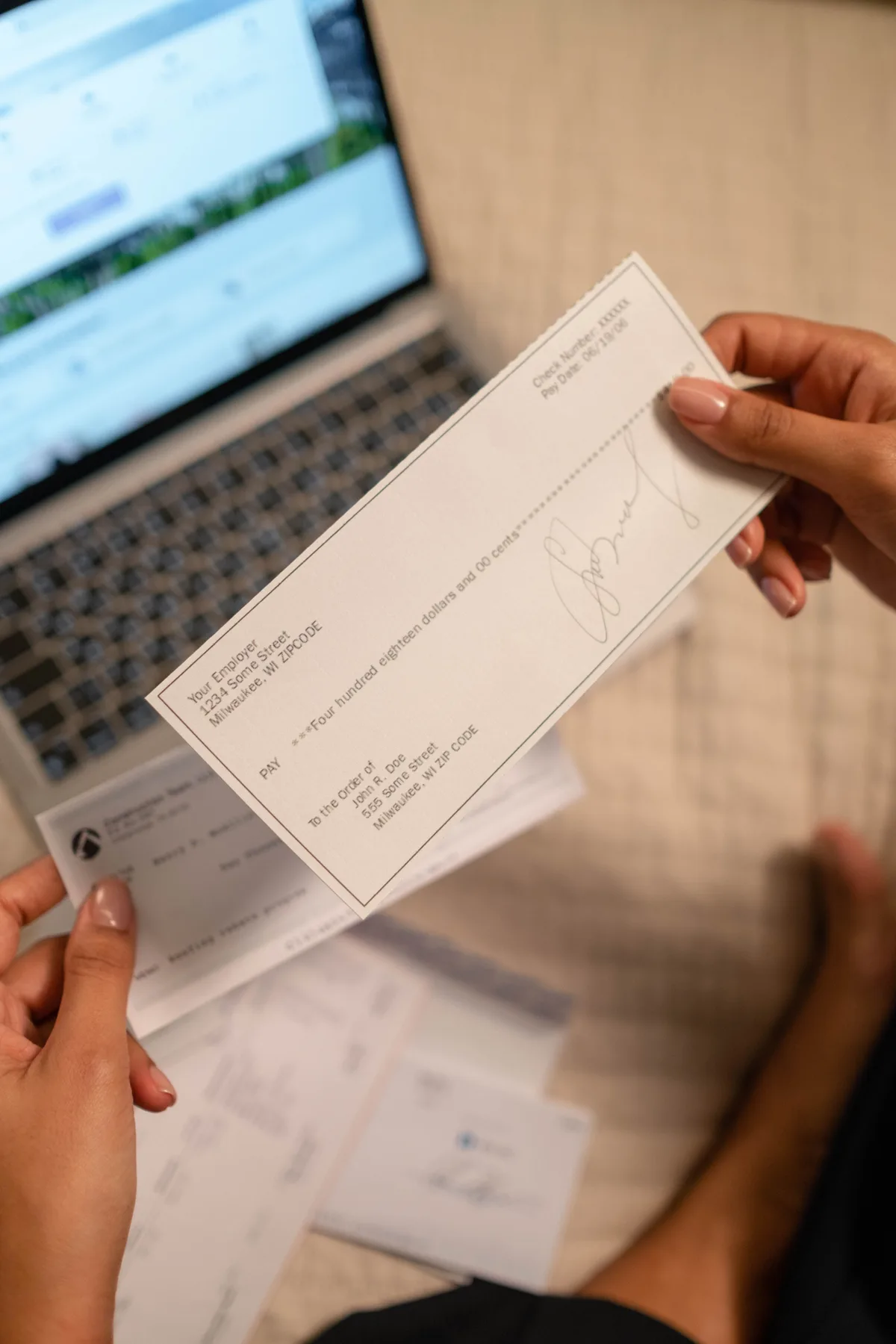
Picture this. You write a check to your landlord, she deposits it, and a couple of weeks later you ask your bank for a copy to settle a disagreement about the month it covered. What lands in your hands is not the paper you signed. It is a clean printout with an image of the front and back of your check, a slightly odd layout, and a line of small print near the top that says it is a legal copy. That printout has a name. It is a substitute check, and under federal law it is allowed to stand in for the real thing.
Most people never think about how a check actually travels from the person who wrote it to the bank that pays it. For a long time that journey involved literal paper riding in trucks and on planes across the country. A law passed more than twenty years ago changed that, and the substitute check is the piece of that change you are most likely to hold in your hand. This guide walks through what a substitute check is, where you run into one, and a consumer protection that comes bundled with it that almost nobody knows they have.
The short version
A substitute check is a paper reproduction of an original check. It shows a picture of both sides of the original and carries a specific legal statement. When it is prepared correctly, the law calls it the "legal equivalent of the original check for all purposes," according to the Federal Reserve's explanation of the Check 21 Act. In plain terms, a business, a court, or the IRS has to accept a proper substitute check the same way it would accept the check you actually signed.
The reason this exists is speed and cost. The Check Clearing for the 21st Century Act, almost always shortened to Check 21, was enacted in October 2003 and took effect on October 28, 2004, as the National Credit Union Administration summarizes. The rules that put it into practice live in Regulation CC, specifically a section called Subpart D. Before Check 21, a bank that wanted to collect on a check often had to send the paper itself to the paying bank. After Check 21, banks could send an electronic image instead and, when paper was still needed somewhere down the line, print a substitute check from that image.
How checks stopped flying around the country
To understand the substitute check, it helps to understand the thing it replaced. A check is a set of instructions. It tells your bank to move a specific amount of money to whoever deposits it. For those instructions to be carried out, information from your check has to reach your bank so your account can be charged.
For decades that meant the physical check moved through the system. The bank where it was deposited would gather up stacks of paper and ship them toward the banks that had to pay. Weather delays, like grounded flights, could literally slow down the nation's money. Check 21 was designed to break that dependence on paper by encouraging what the industry calls truncation. Truncation simply means stopping the original paper check at some point in the process and converting its information into an electronic image that travels the rest of the way.
Here is the part that trips people up. Check 21 did not force any bank to accept electronic images from other banks. Banks still have to agree to exchange images with one another. What the law did do was guarantee that if a bank needed paper at any step, it could create a substitute check from the image, and every other bank and business would be required to honor that substitute check as if it were the original. That guarantee is what made large scale image exchange practical. A bank no longer had to worry that some party downstream would refuse anything but the original signed paper.
What makes a piece of paper a substitute check
Not every photocopy of a check qualifies. A substitute check has to meet specific requirements to earn its legal standing. According to the Federal Reserve, it must accurately represent all of the information on the front and back of the original check, and it must bear the legend "This is a legal copy of your check. You can use it the same way you would use the original check."
A proper substitute check also reproduces the MICR line, which is that row of stylized numbers along the bottom of a check that encodes the routing number, account number, and check number. Reproducing that line lets automated equipment read the substitute check the same way it would read the original. When a bank creates, transfers, or presents a document as a substitute check, it makes a warranty that the document meets these legal equivalence requirements. That is where a common misunderstanding creeps in, so it is worth being careful. If a reproduced check turns out to be defective, say the image is illegible or the MICR line is wrong, that does not quietly strip you of protection. A bank's failure to satisfy its legal equivalence warranty can itself be the basis of a claim. In other words, a defect in the reproduction is often a reason you can raise a problem, not a reason you cannot. If you want a refresher on what each number on a check actually means, our guide to routing versus account numbers breaks it down.
One more distinction matters, and it is subtle. The law draws a line between a true substitute check and a mere paper or electronic picture of one. The Federal Reserve notes that someone who receives an actual substitute check gets a fuller set of protections, while someone who receives only a paper or electronic representation of a substitute check gets a narrower set. We will come back to why that line matters when we get to your rights.
Where you actually run into one
Day to day, most of your check activity is now electronic and invisible. You snap a photo with your phone, or a merchant scans a check at the register, and the image does all the traveling. So when does a physical substitute check show up in your life? A few common moments.
- - You ask your bank for a copy of a check you wrote, perhaps to prove a payment, and the bank hands you a substitute check instead of the original.
- - A check you deposited bounces, and the bank returns a substitute check to you rather than the original paper.
- - You keep paper records and your bank, which no longer stores originals, sends substitute checks with or in place of a traditional statement.
- - You need documentation for taxes, a court matter, or a dispute with a company, and the only "paper check" available is the reproduced version.
One thing to be clear about here is what Check 21 does not promise. The law does not give you a right to demand a substitute check. As the Federal Reserve puts it, your bank may provide you with a substitute check, but it is not required by law to do so. Many banks will instead hand you a plain image or an ordinary copy, which is usually perfectly fine as proof of payment. So receiving a substitute check is something that happens to come your way, not a document you can insist on. The special protections described below attach when you actually receive one, not to a request you make for one.
In each of these cases the substitute check is doing the job the original used to do. Because the original paper was very likely destroyed after its image was captured, the substitute check is often the best paper evidence that exists. That is exactly why the legal equivalence rule is so useful. You are not stuck arguing that a copy should count. The law already says it does.
The quiet consumer right nobody mentions
Here is the piece worth remembering. Because a substitute check is a reproduction rather than the original, there is a small chance something goes wrong in the process. An image could be captured poorly, a check could be processed twice, or the wrong amount could be read. Congress anticipated this and built a special protection into Check 21 called expedited recredit. It is spelled out in the law at 12 U.S.C. 5006 and in Regulation CC.
Expedited recredit is a fast track refund right that applies specifically to consumers who received a substitute check and believe it was charged to their account incorrectly, and who need the original or a better copy to show the claim is valid. This is separate from, and in some ways faster than, an ordinary bank error dispute. The catch is that it only attaches to actual substitute checks received by consumers. If all you ever got was an electronic image or a plain photocopy, you may still have other claims, but you do not get this particular fast track, which is why the earlier distinction matters.
A few conditions have to line up. You must assert in good faith that the substitute check was not properly charged, or that you have a warranty claim about it. You must have suffered a loss. And you must explain why you need the original check or a better copy to figure out whether your position is correct. The text of Regulation CC lays out these elements in Section 229.54. Interestingly, you do not have to still be holding the substitute check when you file. You only need to have received one at some point.
The clock, in days
Expedited recredit runs on a tight schedule, and the deadlines cut both ways. You have a limited window to raise the claim, and once the bank has your complete claim, it has limited time to act.
You generally must contact your bank within 40 calendar days of the later of two dates: the day the bank mailed or delivered the statement showing the charge, or the day it delivered the substitute check itself, according to Regulation CC. For a mailed statement, that window is measured from the postmark. This is where a lot of coverage gets it wrong by treating an extension as a favor. It is not discretionary. If extenuating circumstances delay you, which the law describes as including extended travel or the illness of the consumer, the bank must extend the 40 day period by a reasonable additional amount of time. The statute and Regulation CC both use mandatory language here, so a qualifying circumstance obligates the bank to give you more time rather than leaving it to the bank's goodwill.
Once the bank has your complete claim, it must investigate. If it cannot resolve the matter within 10 business days, it has to provisionally put money back while it keeps looking. That provisional recredit is tied to your actual loss, and it is capped. By the end of the tenth business day, the bank must recredit the amount of your loss up to the lesser of $2,500 or the amount of the substitute check, plus interest if your account earns interest. If your loss runs higher than that ceiling, the bank must recredit the remaining amount of the loss, up to the amount of the check, no later than the 45th calendar day after the banking day it received your claim. These figures come straight from the FDIC's examination materials and the statute.
There is an important wrinkle on that remainder, and it is often overstated. The bank does not have to wait until day 45, and it does not always owe the remainder at all. If it finishes investigating sooner and decides your claim is valid, it must recredit the full amount quickly rather than drag it out. And if it properly determines before that time that your claim is not valid, it is not required to provide the remaining provisional credit, because there is no established loss left to cover. Provisional recredit is there to carry you through the investigation, not to guarantee a payout regardless of what the investigation finds.
Two practical notes about those numbers. First, business days are not calendar days. A business day under Regulation CC excludes weekends and federal holidays, so a 10 business day clock can stretch across two weekends on the calendar. If you want the mechanics of how banks count days for check timing in general, our explainer on how long until a check clears covers the same counting rules. Second, if the bank decides sooner that your claim is valid, it does not get to sit on the money. It must recredit your account no later than the end of the business day after it reaches that decision.
Why a cash cushion helps while a claim is pending
Here is a practical wrinkle in that timeline. The fast part of expedited recredit only covers your loss up to the lesser of $2,500 or the check amount by the tenth business day. If a substitute check was charged for more than that, the rest may not land back in your account until as late as the 45th calendar day, and only if the bank has not already resolved the claim. So for a few weeks you could be out real money through no fault of your own while the bank investigates. A modest emergency buffer is what keeps that gap from turning into a bounced payment or a late fee somewhere else. Use the calculator below to sketch how long it might take to build a cushion that could carry you through a wait like that. The math is a simple illustration, not a prediction of your own situation.
How to actually file a claim
The process is less intimidating than the legal language makes it sound. You are essentially telling your bank, in good faith, that a substitute check was charged to you incorrectly and that you need better documentation to sort it out.
When you reach out, be ready to give your name and account number, why you believe the amount was improperly charged and the dollar figure involved, why you need the original check or a better copy to evaluate the claim, and enough information for the bank to find the substitute check in question. Those pieces are what turn an initial phone inquiry into a complete claim. A quick question about a charge you do not recognize is not the same thing as filing. The protections and the bank's deadlines run on a complete claim that includes all of the required elements, not on a first casual contact.
A bank can require you to submit the claim in writing, and may ask you to do so within 10 business days of an oral claim. This is where the timeline is easy to misread. When the bank requires a written claim, its deadlines for acting, meaning the 10 business day and 45 calendar day clocks, run from the day it receives your written claim, not from your first phone call. So if you call on a Monday and mail a letter the following week, the bank's response clock starts when your written claim arrives, not when you first dialed. Keep a dated copy of whatever you send and note when you sent it, so you can track the window accurately from the right starting point.
After the recredit lands, the money must be made available to you quickly. The law requires the bank to make a recredit available for withdrawal by the start of the next business day after it credits your account, with narrow exceptions we will cover next. And if the bank later determines the check was charged correctly after all, it can reverse the provisional recredit, but it has to notify you no later than the next business day with the amount reversed and an explanation of its reasoning. That reversal mechanic is similar to how ordinary provisional credit works on other kinds of disputes.
When the bank is allowed to push back
Expedited recredit is a right, but it is not unconditional. Regulation CC lets a bank delay making a recredit available in certain safeguard situations. These include accounts that were opened within the past 30 days, accounts that have been repeatedly overdrawn in the recent past, and situations where the bank has reason to believe the claim is fraudulent. In those cases the bank can hold availability until the earlier of the day after it decides the claim is valid or the 45th calendar day after you submitted it.
The bank can also simply investigate and conclude you were charged correctly. If the substitute check really did match a payment you authorized, there is nothing to refund, and the bank is not obligated to provide or keep provisional credit it would otherwise owe. The protection is designed to cover genuine processing problems and errors, not to turn every check into a reversible transaction. Approaching the process honestly and with your records in order is the best way to keep it moving.
One important limit: this is a consumer right
Expedited recredit applies to consumer accounts, meaning accounts used mainly for personal, family, or household purposes. If you run a business and hold a business checking account, you do not get the 10 business day provisional recredit or the 40 day claim window under this part of the law. That does not leave businesses without any recourse. Businesses can still rely on the substitute check warranties and on ordinary check law, and banks themselves have an indemnity system for sorting out losses among one another. But the fast consumer track is reserved for consumers.
This is one of several places in banking where the rules treat a personal account very differently from a business one. If keeping clean records across both personal and business accounts is a challenge, a personal finance and credit monitoring tool such as WalletHub Premium can help you keep an eye on your accounts and flag charges you do not recognize before a deadline like the 40 day window sneaks up on you.
Why this still matters in a world of phone deposits
It is fair to ask whether substitute checks are a relic now that so many checks never touch paper at all. The honest answer is that check volume has fallen for years as people switch to cards, ACH, and instant payment apps. But checks have not disappeared, especially for rent, closing costs, government payments, and business to business invoices. And as long as any part of the system can demand paper, the substitute check remains the bridge that keeps an all image process workable.
There is also a records angle that is easy to overlook. Because banks largely stopped storing original paper checks after Check 21, the substitute check is frequently the only physical proof of a transaction you can obtain later. If you ever need to document a payment for a landlord, a contractor, the tax authorities, or a court, knowing that a substitute check carries the same legal weight as the original can save you a real headache. It is worth getting comfortable reading one, the same way it pays to know how to read a bank statement without missing a fee.
How a substitute check connects to fraud defense
Image based processing moves money faster, and speed can cut against you when a check is fake or altered. The substitute check rules do not change the basic reality that a forged or counterfeit check can still cause losses, and they do not replace your duty to look closely at any check you are handed before relying on it. If you accept checks, our walkthrough on how to spot a fake check pairs naturally with this topic.
A substitute check actually works in your favor when a check turns out to be bad, rather than against you. It documents the payment that went through, even an unauthorized or fraudulent one, which is exactly the kind of record you need to back up a claim. The Federal Reserve notes that if you receive a substitute check of a fraudulent original check, you may have additional rights under Check 21. More broadly, ordinary check law already protects you against fraudulent checks so long as you notify your bank in a timely fashion, and that holds whether you received an original check, a substitute check, an image statement, or just a line item on your account statement.
So when something does go wrong with a reproduced check, you are not left to argue about whether a copy counts. The law gives the substitute check standing, gives you a defined window to raise a problem, and puts the bank on a clock to respond. Those are real, enforceable protections, even if they rarely make the news.
Putting it all together
A substitute check is one of those quiet pieces of financial plumbing that works so smoothly most people never learn its name. It is a paper reproduction of your check that the law treats as the genuine article, created so that banks could stop shipping paper across the country and start exchanging images instead. You are most likely to meet one when a bank hands you a copy of a check, when a deposited check is returned, or when you need paper proof of a payment. Just remember you cannot demand one as a matter of right; whether you get a substitute check or a plain copy is up to your bank.
The detail worth filing away is the expedited recredit right. If a substitute check is ever charged to your consumer account incorrectly and you suffer a loss, you can ask your bank for a fast track refund. You generally have 40 calendar days to raise it, and that window must be extended if extenuating circumstances like extended travel or illness kept you from filing on time. Once the bank has your complete claim, it has to provisionally restore your loss up to the lesser of $2,500 or the check amount within 10 business days if it cannot resolve the claim faster, with any remaining loss up to the check amount by day 45, unless it has already properly decided the claim is invalid. Knowing that right exists, and knowing the deadlines, turns a confusing printout into something you can actually use. For anything beyond the basics, the operative rules live in Regulation CC and the Check 21 Act, and the plain language summaries from the Federal Reserve, the FDIC, and the NCUA are the primary sources to lean on.
Banks profit from what their customers do not know.
Every fee, teaser rate, and disclosure is a test you are taking whether you study or not. The Financial IQ Test scores your real money knowledge across 90 tests and shows you the gaps before a bank finds them first.
Test your Financial IQQuestions people ask
Is a substitute check as good as the original check?
Yes, when it is prepared correctly. Under the Check 21 Act, a proper substitute check is the legal equivalent of the original for all purposes, so a business, court, or agency must accept it the same way it would accept the check you signed. It has to accurately show the front and back and carry the legend stating it is a legal copy. One thing to keep in mind is that your bank is not required by law to give you a substitute check if you ask for one; it may hand you a plain copy or image instead, which usually works fine as proof of payment.
How long do I have to report a problem with a substitute check?
For a consumer account, you generally have 40 calendar days from the later of the day the bank mailed or delivered the statement showing the charge or the day it delivered the substitute check. For a mailed statement, that is measured from the postmark. If extenuating circumstances such as extended travel or illness prevented you from filing on time, the bank must extend the window by a reasonable additional amount of time. This is required by law, not left to the bank's discretion.
How fast does the bank have to refund me?
If your claim is valid and the bank cannot resolve it within 10 business days, it must provisionally recredit your loss up to the lesser of $2,500 or the amount of the check by the end of that tenth business day, and any remaining loss up to the amount of the check by the 45th calendar day. It does not owe the remainder if it has already properly decided the claim is not valid. Business days exclude weekends and federal holidays, so the calendar time can be longer than it sounds. When the bank requires a written claim, these deadlines run from the day it receives your written claim.
Does a substitute check help or hurt me if the original was fraudulent?
It can help. A substitute check documents the payment that went through, even an unauthorized or fraudulent one, which is the kind of record that supports a claim. The Federal Reserve notes that if you receive a substitute check of a fraudulent original check, you may have additional rights under Check 21. More broadly, ordinary check law protects you against fraudulent checks as long as you notify your bank promptly, whether you received an original check, a substitute check, an image statement, or a line item on your statement.
Do businesses get the same expedited recredit right?
No. Expedited recredit under Check 21 is a consumer protection for accounts used mainly for personal, family, or household purposes. Businesses can still rely on substitute check warranties and ordinary check law, but they do not get the 10 business day provisional recredit or the 40 day claim window.
What if I only received an electronic image, not a paper substitute check?
The expedited recredit fast track specifically attaches to actual substitute checks received by consumers. If you only received a plain electronic image or an ordinary photocopy, you may still have warranty claims or rights under other check law, but you may not qualify for this particular expedited recredit process.
Keep reading

Never Pay a Bank Fee Again: The Complete Playbook

CD Ladders Explained: Lock In Rates Without Locking Up Your Life

The Emergency Fund Guide: How Much, Where, and How Fast
The Flourish Letter
One smart money idea each week, charts included. Join free and get the printable 2026 Money Calendar in your welcome email.