Key takeaways
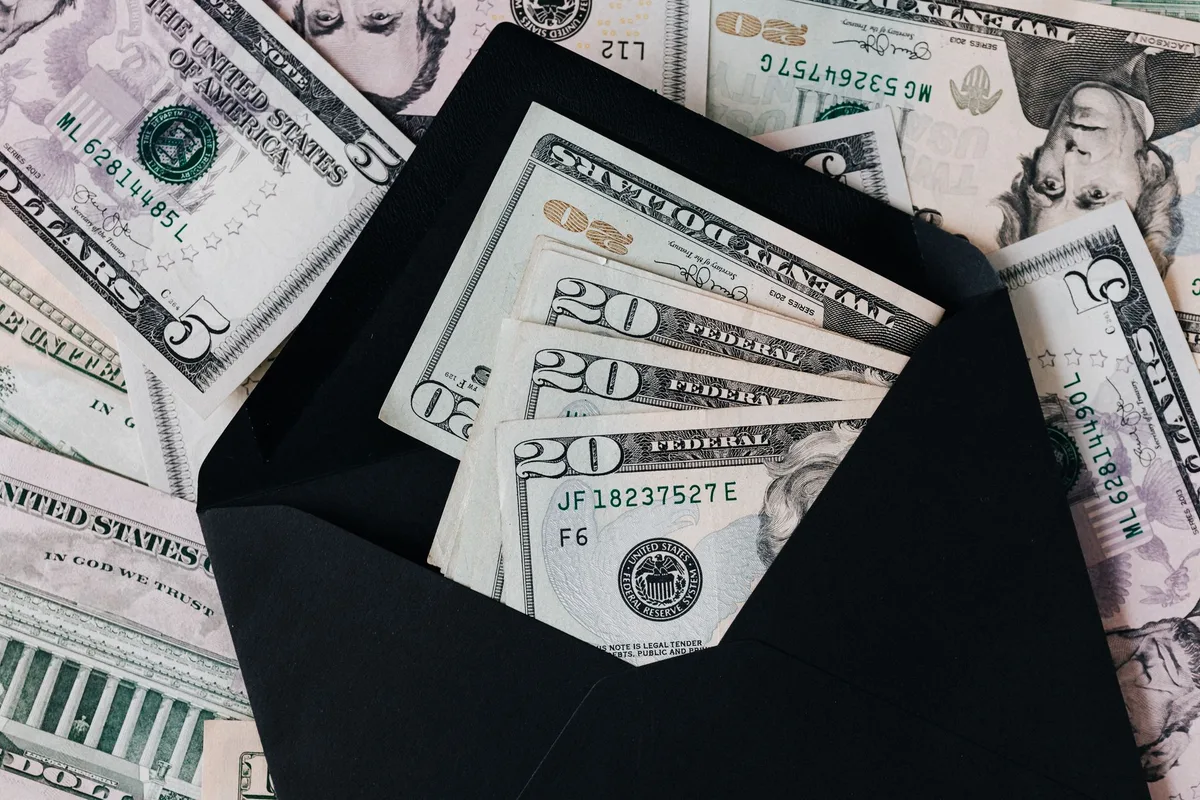
- Cash stuffing means withdrawing physical cash on payday and dividing it into labeled envelopes or a binder, then spending only what is in each category.
- It works because paying with cash triggers a real pain of paying that frictionless card taps do not, and an empty envelope is a hard wall that app alerts never provide.
- Set it up from your own bank statements, budget realistic amounts for variable categories, and align your cash-out day with payday.
- Keep fixed bills like rent, utilities, and insurance on autopay; use cash only for discretionary in-person spending like groceries, dining, and gas.
- The real downsides are theft or loss risk, no FDIC insurance, lost interest, no fraud protection, and difficulty with online bills and building credit.
- A hybrid approach that stuffs only your two or three problem categories captures most of the benefit while avoiding most of the drawbacks.
If you have ever swiped a card, felt nothing, and later stared at a statement wondering where the money went, cash stuffing is worth a serious look. The method is simple on its face. You pull physical cash out of your bank on payday, split it into labeled envelopes or a zippered binder, and then you spend only what sits inside each pocket. When the grocery envelope is empty, groceries are done for the cycle. No overdraft, no "I will just put it on the card this once," no fuzzy math at the end of the month.
Cash stuffing exploded on social media over the past few years, and the aesthetic of pretty binders and fanned-out bills can make it look like a trend. Underneath the videos, though, is an old and stubbornly effective idea. Your grandmother may have called it the envelope system. What is new is the packaging, the online community, and a fresh wave of research explaining exactly why handing over paper money hurts more than tapping a phone. This guide walks through what cash stuffing really is, the psychology that makes it work, how to set it up step by step, which bills belong in envelopes and which should stay on autopay, the honest downsides, and who benefits most.
What cash stuffing actually is
Cash stuffing is a zero-tolerance version of category budgeting. Instead of tracking spending after the fact in an app, you decide the limits in advance and then physically ration the money. Each spending category gets its own envelope or binder slot: groceries, gas, dining out, personal care, pet supplies, whatever you tend to overspend on. On your cash-out day you withdraw the total, break it into the right bills, and load each pocket with its assigned amount.
From there the rule is almost aggressively simple. You pay for that category only from its envelope. Nothing borrows from anything else without a deliberate decision. If dinner out would empty the dining envelope and it is only the fifteenth, you either eat at home or you consciously move cash from another envelope and accept that the other category now has less. The friction is the feature. You are forced to confront the tradeoff in the moment, not three weeks later.
This is where cash stuffing differs from a plain digital envelope app. Apps mimic the categories but keep your money in one account, and a tap still moves it invisibly. Cash stuffing keeps the money literally separate and literally physical. The binder becomes a small, honest mirror of your priorities. You can see the grocery envelope thinning as the month goes on, and that visibility does something a push notification rarely manages.
Why physical cash reduces overspending
The reason cash stuffing works is not willpower. It is a well-documented quirk of how our brains process payment. Researchers call it the pain of paying. Spending money activates regions of the brain associated with genuine discomfort, and the more tangible and immediate the payment feels, the more that discomfort registers. Handing over a twenty-dollar bill and watching your envelope get thinner is a vivid, slightly painful event. Tapping a card is nearly frictionless, and frictionless payment quietly encourages you to spend more.
Classic behavioral work found that people are often willing to pay substantially more for the same item when using a card instead of cash. Card spending decouples the pleasure of buying from the pain of paying. The purchase happens now, the bill arrives later, and the two never quite meet in your mind. Cash collapses that gap. The pleasure and the pain arrive together, in the same moment, at the register. That is uncomfortable in exactly the way that protects your budget.
There is a second effect worth naming. Cash is finite in a way that a card balance is not. A credit line feels elastic. You can always find a little more room, and the limit is abstract until you hit it. A grocery envelope holding sixty dollars is not abstract at all. When it is empty, it is empty, and your body understands that before your rationalizing brain gets a vote. This hard stop is the single biggest reason chronic overspenders find cash stuffing works when app alerts never did. An alert is a suggestion. An empty envelope is a wall.
A third effect is that counting cash makes the size of a purchase concrete. When you have to physically peel off four twenties for a dinner, the eighty dollars feels like eighty dollars. On a card the same charge is just a number that blends into a running total you will glance at later. Recent payment research from the Federal Reserve continues to find that people reach for cash more often for smaller everyday purchases, which are exactly the frequent, low-stakes buys where mindless spending adds up fastest over a month. Slowing those down is where the method quietly earns its keep.
The point of cash stuffing is not to punish yourself. It is to make the cost of a decision visible at the exact moment you are deciding, so your future self stops getting ambushed by your present self.
How to set up cash stuffing step by step
Setting up your first cash stuffing cycle takes about an hour of honest work up front. The temptation is to grab a cute binder and start stuffing random amounts. Resist that. The method only works if the numbers are grounded in what you actually spend, so start with your own bank statements rather than a template you found online.
Begin by pulling two or three months of transactions and sorting them into categories. You are hunting for your variable spending, the stuff that moves month to month based on choices you make. Groceries, dining out, gas, entertainment, clothing, personal care, hobbies, small household items. Ignore your fixed bills for now. Those are a separate problem we will handle in the next section.
Next, decide a realistic amount for each cash category. Realistic is the operative word. If you have been spending six hundred dollars a month on groceries, budgeting three hundred because a video told you to will fail by the second week, and a failed system gets abandoned. Set the envelope slightly below your recent average so there is gentle pressure, not an impossible target. You can tighten later once the habit sticks.
Then align your cash-out day with payday. If you are paid every two weeks, run two-week cycles and withdraw two weeks of category cash each payday. If you are paid monthly, do it monthly. Matching the rhythm of your income to the rhythm of your envelopes keeps the whole system from drifting. On cash-out day, withdraw the total, ask the teller or ATM for a mix of bills that lets you load each envelope exactly, and stuff. That is it. Now you spend from the envelopes and nowhere else until the next cash-out day.
Which expenses suit cash and which stay on autopay
Here is the mistake that sinks a lot of beginners. They try to put everything into cash, including rent and the electric bill, and within a week they are driving checks around town and missing due dates. Cash stuffing is a tool for variable, discretionary, in-person spending. It is a terrible tool for fixed bills that reward automation. The skill is knowing which is which.
Fixed bills should almost always stay on autopay from your checking account. Rent or mortgage, utilities, insurance premiums, phone, internet, subscriptions, loan payments, and anything with a fixed due date and a late fee belong on automatic payment. These are not decisions you make at a register. They are the same every month, and the risk of a missed payment hurting your credit far outweighs any behavioral benefit of paying them by hand. Automate them and forget them.
Cash shines for the categories where you make dozens of small in-person choices, and where a little friction changes behavior. Groceries and household runs, dining out and coffee, gas, entertainment and impulse buys, clothing, personal care, pet supplies, kids' incidentals, and hobby spending are ideal envelope categories. These are exactly the buckets where a tap-happy card leaks money, and exactly where watching physical cash disappear pulls you back into reality.
Handling leftover cash and sinking funds
One of the quiet joys of cash stuffing is finding money left in an envelope at the end of the cycle. What you do with it matters, because sweeping it back into general checking often means it evaporates. A cleaner habit is to give leftover cash a job. Many people roll it into a sinking fund, which is simply an envelope for a future planned expense you are saving toward in small pieces.
Sinking funds are where cash stuffing stops being purely defensive and starts building toward things. Instead of getting blindsided by a large predictable cost, you set aside a little each cycle. Common sinking funds include holidays and gifts, car maintenance and registration, annual insurance premiums, back-to-school, travel, and a general "stuff breaks" fund. A car repair that would have been a crisis becomes a withdrawal from the envelope you have been feeding all year.
There is one important caveat about storing meaningful cash at home, and it deserves its own section because the risk is real.
The real downsides of cash stuffing
Cash stuffing has genuine drawbacks, and a writer who pretends otherwise is selling you something. The most obvious risk is loss. Cash that is stolen, burned in a fire, or simply misplaced is usually gone for good. Unlike money in a bank, physical cash at home is not insured. The Federal Deposit Insurance Corporation protects deposits at insured banks up to at least two hundred fifty thousand dollars per depositor, per bank, per ownership category. Your kitchen binder has no such backstop.
The second real cost is lost interest. In 2026, a solid high-yield savings account can pay meaningfully more than the near-zero rate on paper cash sitting in an envelope. Money you stuff is money that is not earning anything. For your everyday spending envelopes this barely matters, because that cash is meant to be spent within weeks. For larger sinking funds that sit for months, though, keeping hundreds or thousands in physical cash quietly costs you real interest. Many people solve this by keeping long-horizon savings in a high-yield savings account and using physical cash only for near-term spending categories.
There are more downsides worth weighing. Cash carries no fraud protection. If a card is stolen, federal rules cap your liability and the issuer usually reverses fraudulent charges. If cash walks out of your bag, there is no dispute department. Cash is also useless for the growing share of spending that happens online, so a pure cash system forces awkward workarounds for anything you buy over the internet. And leaning entirely on cash means you are not using a credit card responsibly, which is one of the main ways people build the credit history that lowers the cost of future mortgages and loans. None of these kill the method. They just mean cash stuffing should be one tool in your kit, not a religion.
Safety tips for keeping cash at home
If you are going to keep cash on hand, treat it with the seriousness it deserves. Do not keep large sums in a decorative binder on an open shelf. A small fireproof and waterproof lockbox, ideally one that is anchored or heavy enough to be hard to grab, protects against the two most common household disasters at once. Keep only what you need for the current cycle plus your active sinking funds, and move anything larger into an insured bank account.
Be quiet about it. The videos that made cash stuffing popular also broadcast to the world that a lot of people now keep piles of cash at home. You do not need to advertise your setup. It is also wise to keep a simple written log of what each envelope holds, so that if cash does go missing you at least know how much and can adjust. Finally, revisit your homeowner or renter insurance policy. Many policies cap coverage for cash losses at a low amount, often a few hundred dollars, regardless of how much was actually taken. Knowing that cap is another argument for keeping only modest sums in physical form.
Hybrid approaches that keep the benefits
You do not have to choose between full cash stuffing and no cash at all. In practice, the most sustainable version for many households is a hybrid. You automate every fixed bill, keep a card for online purchases and for the emergencies where fraud protection matters, and use physical cash only for the two or three categories where you personally leak money. For most overspenders that means groceries, dining out, and impulse shopping, and nothing else.
This targeted approach captures the behavioral punch of cash exactly where it helps while sidestepping most of the downsides. Your rent still pays itself on time. Your credit card still builds credit and earns any rewards, as long as you pay it in full. Your online shopping still works. But the three envelopes standing between you and mindless spending do the heavy lifting. A hybrid also scales down gracefully. Once a problem category is under control, you can retire its envelope and keep only the ones you still need.
Another common hybrid is seasonal or situational. Some people run full cash stuffing for a few months to reset their habits and recalibrate what things actually cost, then relax into a lighter version once the lessons stick. There is nothing wrong with using cash as training wheels. The goal is a healthier relationship with spending, not a lifetime of counting bills at the kitchen table.
You can also blend cash stuffing with a broader budgeting framework rather than treating it as a rival. A simple percentage plan that splits your take-home pay across needs, wants, and savings pairs naturally with envelopes. The plan sets the big buckets, and cash stuffing enforces the wants bucket where discipline is hardest. Some households keep a budgeting app for the big picture and reporting, then physically stuff only the two or three categories the app has flagged as chronic overspenders. The app tells you the truth, and the envelopes make you act on it.
Who cash stuffing helps most
Cash stuffing is not for everyone, and that is fine. It shines for a specific set of people. If you are a chronic overspender who blows past every app alert without slowing down, the empty-envelope wall may finally be the stop sign that works. If you live paycheck to paycheck and a single overdraft can cascade into fees and stress, the guarantee that you cannot spend money you have not stuffed brings real peace of mind. And if you are a visual, tactile person who has always found budgeting spreadsheets abstract and easy to ignore, physically handling your money can make the whole thing click.
It tends to help less if you already spend deliberately, if most of your spending is online or automated, or if the logistics of frequent bank trips would frustrate you into quitting. For those savers, a good budgeting app paired with a couple of automated transfers usually does the job with less hassle. The honest test is simple. Try it for two full cycles. If your variable spending drops and you feel calmer about money, the method is earning its keep. If it feels like busywork and nothing changes, a digital approach probably fits you better, and that is a perfectly good answer.
Cash stuffing endures because it solves a real problem with a real mechanism, not because it looks good on a screen. Modern payments are designed to be frictionless, and frictionless is precisely the wrong setting for a brain that spends more when spending feels like nothing. Reintroducing a little healthy friction, in the categories that need it, is a small act of self-respect. Whether you go all in with a full binder or just stuff three stubborn envelopes, the win is the same. You decide where your money goes before it goes, and then you get to watch yourself keep that promise.
Every budget has two sides. Income is the one with no ceiling.
You can only cut expenses so far. The income line is the one that can grow without limit, and it grows fastest when your career fits your cognitive strengths. RealWorldCareers shows you where that fit is.
Find the career your brain was built forQuestions people ask
Is cash stuffing just the old envelope budgeting system?
Yes, at its core it is the same envelope method your grandparents may have used. What changed is the packaging, with binders and an online community, plus a fresh wave of behavioral research explaining why physical cash curbs spending. The mechanics of dividing cash by category and spending only what is inside are unchanged.
Is it safe to keep cash at home for this?
It carries real risk, since cash at home is not FDIC insured and can be stolen, lost, or destroyed. Keep only what you need for the current cycle plus active sinking funds in a fireproof, waterproof lockbox, and move larger savings into an insured bank account. Check your renter or homeowner policy, because coverage for cash losses is often capped at a few hundred dollars.
Should I put my rent and utility bills in envelopes too?
No. Fixed bills with due dates and late fees belong on autopay from your checking account. Cash stuffing is designed for variable, discretionary, in-person spending where a little friction changes your behavior. Automating fixed bills protects your credit and frees the method to do what it does best.
Will using only cash hurt my credit score?
It can, because credit history is built partly through the responsible use of credit accounts. If you never use a credit card, you miss one common way to build that history. A hybrid approach solves this: keep a card for online purchases and paid-in-full monthly spending while using cash only for problem categories.
What do I do with cash left over in an envelope?
Give it a job rather than sweeping it back into general checking where it tends to disappear. Many people roll leftovers into a sinking fund, which is an envelope for a planned future expense like car maintenance, holidays, or travel. That turns predictable costs into small, painless withdrawals instead of crises.
How do I know if cash stuffing is right for me?
Try it for two full pay cycles and watch your variable spending. It helps most for chronic overspenders, people living paycheck to paycheck, and tactile budgeters who ignore app alerts. If your spending drops and you feel calmer, it is working; if it feels like busywork with no change, a budgeting app may fit you better.
Keep reading
The 50/30/20 Budget With Real 2026 Numbers and Examples

How to Budget as a Couple Without Fighting About Money

How to Build a Budget That Actually Sticks This Time
The Flourish Letter
One smart money idea each week, charts included. Join free and get the printable 2026 Money Calendar in your welcome email.