Key takeaways
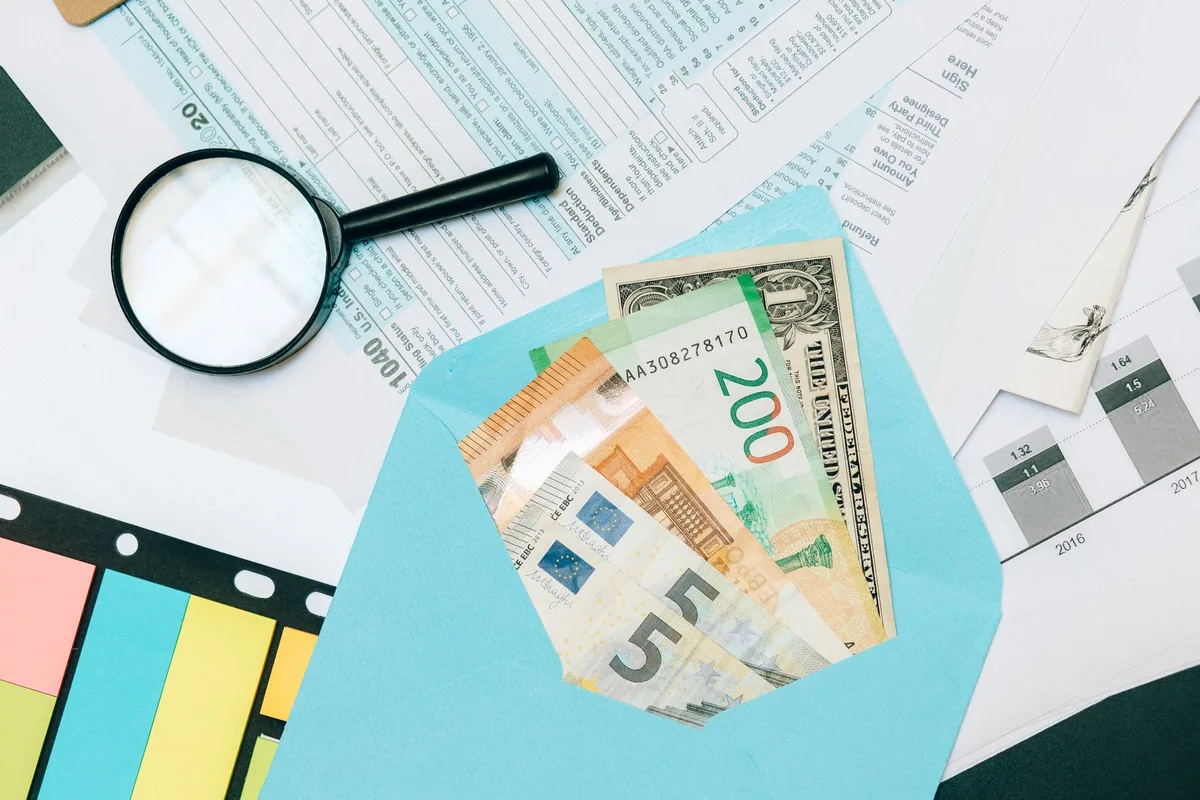
- Envelope budgeting assigns each variable spending category a fixed pile of money and treats empty as a hard stop until the next refill.
- Use envelopes for groceries, dining, gas, and fun. Keep rent, utilities, insurance, and debt payments on autopay outside the system.
- Fund envelopes on payday after fixed bills and savings transfers clear so essentials are protected before flexible spending begins.
- When an envelope is empty, wait, transfer deliberately, or use a small buffer. Quiet credit card swipes break the method.
- Sweep leftovers to savings or sinking funds so restraint becomes visible progress instead of money that disappears.
- Most people succeed with a hybrid: cash for trigger categories and digital buckets for everything else, especially couples.
You open your banking app on a Tuesday night and the number is lower than it should be. Not dramatically lower. Just quietly wrong. Groceries, takeout, gas, a few "just this once" purchases, and suddenly the last week of the month is a math problem you did not sign up for. That slow leak is why envelope budgeting keeps coming back. It is not a new idea. It is an old idea that still solves a modern problem: money that feels infinite until it is gone.
Envelope budgeting, sometimes called the envelope system, assigns every dollar of your variable spending to a named pile before the month begins. Classically those piles were paper envelopes stuffed with cash. In 2026 the same system runs on paper, on bank buckets, on budgeting apps, or on a hybrid of all three. The container changes. The rule does not: when a category is empty, spending in that category stops until the next refill.
This guide explains how the system works end to end. You will see how classic cash envelopes compare with digital apps, which categories belong inside envelopes and which stay outside, how to fund envelopes on payday, what to do when an envelope runs dry, surplus rules, couples logistics, hybrid setups, and the pitfalls that quietly break the method. You will also see how envelopes help households move off paycheck-to-paycheck living without needing a perfect personality upgrade first.
What envelope budgeting really is
At its core, envelope budgeting is pre-commitment. You decide, while you are calm and caffeinated, how much each spending area gets. Then you put that money into a container that only that category can use. The CFPB and other consumer educators have long treated simple budgeting tools as a practical way to line up income with goals; envelopes take that idea one step further by making the limit physical or visual rather than purely mental.
Three design choices separate envelope budgeting from a spreadsheet you glance at twice a month.
- Money is partitioned. Groceries do not share a pile with concert tickets. Each category has its own balance.
- Spending is limited up front. You set the cap before the store, not after the statement.
- Empty means empty. The system only works if an empty envelope closes the category until the next payday refill.
That last rule is the whole game. Without it, envelopes become pretty labels on one big wallet, and you are back to the same leak you started with.
Why the system stops overspending
Modern payments are engineered for speed. Tap, approve, done. The friction that used to slow a purchase has mostly been designed away. Envelope budgeting reintroduces two kinds of friction that matter.
First is the pain of paying. Handing over cash, or watching a category balance drop before you buy, makes the cost feel real in the moment. Card taps and one-click checkout delay that feeling until the statement arrives, which is usually too late to change the choice you already made.
Second is a hard stop. An app alert is a suggestion. An empty grocery envelope is a wall. When the wall is visible, you either wait, cook what is already in the fridge, or make a conscious trade from another envelope. You do not "sort of" overspend without noticing. That conscious trade is the skill envelopes teach, and it is the skill paycheck-to-paycheck households need most: choosing on purpose instead of discovering the damage later.
Food prices still move. Bureau of Labor Statistics CPI data has continued to show meaningful year-over-year changes in food at home and food away from home, which is exactly why grocery and dining envelopes need realistic numbers rather than wishful ones. The system does not fight inflation with magic. It forces you to see the pressure and respond category by category.
Classic cash envelopes vs digital apps
You do not have to pick a religion. Cash and digital are two delivery systems for the same rule set. Matching the delivery to your life matters more than looking old-school or high-tech.
Classic cash envelopes
On payday you withdraw your variable spending money as cash. At home you divide the bills into labeled envelopes: groceries, gas, dining, fun, personal care, and so on. You shop with the relevant envelope. Change and receipts go back in. When the envelope is empty, that category is closed for the rest of the cycle.
Strengths: highest friction, strongest "pain of paying," hard to ignore, great for in-person overspending. Weaknesses: cash can be lost or stolen, cash at home is not deposit-insured the way bank balances are, online shopping is awkward, and you earn no interest while the bills sit in a drawer.
Digital envelope systems
Digital versions keep the same categories but hold the money in bank sub-accounts, virtual envelopes inside a budgeting app, separate debit cards, or limited virtual cards. You fund each category on payday, check the remaining balance before you buy, and refuse to spend past zero without a deliberate transfer from another envelope.
Strengths: works for online shopping, easy for couples to share, low theft risk relative to a binder of cash, and integrates with direct deposit. Weaknesses: less natural friction, easier to ignore if you never open the app, and a soft stop unless you use a true declining-balance card or hard bucket that cannot overspend.
Hybrid systems
Most people who stick with envelopes for more than a season end up hybrid. Physical cash covers the two or three categories where they overspend in person. Digital envelopes cover the rest. You get the sting where it earns its keep and the convenience everywhere else. A common pattern is cash for groceries and dining, digital buckets for gas, gifts, kids, and clothing.
Categories that work well in envelopes
Envelopes earn their keep on variable spending you control at the point of purchase. The usual winners:
- Groceries. Frequent trips, easy to overbuy, highly sensitive to "just one more thing."
- Dining out and coffee. High emotion, low memory. Small charges stack into a large monthly total.
- Gas. Predictable enough to plan, variable enough that a hard cap prevents silent creep.
- Fun and entertainment. Movies, hobbies, streaming impulse upgrades, weekend plans.
- Personal care and clothing. Easy to justify mid-month, easy to forget you already spent.
- Kids or pets miscellaneous. Dozens of small "we need this" buys that never look large alone.
If a category is variable, frequent, and historically overshoots your intention, it belongs in an envelope. If a category is fixed, due-date driven, and late-fee sensitive, it does not.
Fixed bills stay outside the envelopes
This is the rule beginners break first. They stuff rent, the electric bill, insurance, and the car payment into envelopes because the method feels complete only when everything is stuffed. Then a due date arrives, the cash is short or the landlord does not take cash, and the whole system looks broken.
Fixed bills belong on autopay from checking. Rent or mortgage, utilities, insurance premiums, phone, internet, minimum debt payments, and planned savings transfers should leave your account automatically on schedule. Envelope budgeting is a behavior tool for flexible spending. Reliability tools belong on automation. Budget the fixed bills first, then envelope only what remains.
A clean monthly flow looks like this: paycheck lands, fixed bills and savings transfers clear, leftover variable money is divided into envelopes. That order protects housing and credit while still giving you a hard wall around the spending that used to leak.
How to fund envelopes on payday
Funding is the ritual that keeps the system alive. Without a fixed refill day, envelopes become a project you mean to restart every Sunday night and never quite do.
- Know your take-home pay per cycle. Use the amount that actually hits the bank after taxes and deductions, not your gross salary.
- Pay yourself and your bills first in the account. Fixed obligations and planned savings move out of checking before any cash-out or category transfer.
- Total the envelope categories for this cycle. If you are paid biweekly, fund two weeks of each envelope rather than a full month in one shot.
- Move the money in one sitting. Withdraw cash for paper envelopes, or transfer into bank buckets and app categories in one ten-minute session.
- Log starting balances. Write the amount on the envelope, in a notes app, or let the budgeting app show it. You need a clear starting line so "empty" is obvious later.
Biweekly paychecks pair cleanly with half-month envelope fills. Monthly paychecks pair with a full-month fill plus a small buffer envelope for the awkward last few days. Weekly pay can use smaller weekly fills for food and gas, with longer envelopes for fun and clothing. Match the refill to the paycheck so the system never asks you to fund money you do not have yet.
If you want a first-pass split for how much of take-home should even be available for needs, wants, and savings before you carve envelopes, the familiar 50/30/20 framework is a reasonable scaffold. Your envelopes mostly live inside the wants bucket and the variable slice of needs.
What to do when an envelope is empty
An empty envelope is not a failure. It is the system doing its job. You have three honest options and one dishonest one.
- Wait until the next refill. Cook from the pantry, skip the night out, carpool, or use what you already own. This is the default answer.
- Transfer deliberately from another envelope. Move twenty dollars from fun to groceries if that trade reflects your real priority this week. Say it out loud or log it in the app. The point is consciousness, not perfection.
- Use a small buffer envelope if you built one. A fifty to one hundred dollar overflow category absorbs genuine surprises without raiding rent or savings.
- Do not quietly swipe a credit card and promise to fix it later. That single move unravels the wall. Once the wall is optional, overspending returns with interest charges attached.
If the same envelope empties early every single cycle, the number is wrong, not your character. Raise it using real spending data, then tighten later. A system that is constantly empty by day twelve is a system set with fantasy math.
Surplus rules: what leftovers should do
Leftover money at the end of a cycle is the quiet prize of envelope budgeting. Handle it on purpose or it disappears back into the general pool.
Common surplus rules that work:
- Sweep to savings. Move unspent cash or digital leftovers into a high-yield savings account on refill day. Watching a savings balance grow from restraint is what keeps people going past month three.
- Feed a sinking fund. Roll leftovers into car repairs, holiday gifts, annual insurance, or vacation so big predictable costs stop landing on plastic.
- Roll forward sparingly. A little roll-forward in groceries can smooth a heavy week. Rolling every surplus forever removes the urgency that makes envelopes work.
- Debt snowball boost. If high-interest debt is the emergency, send consistent surpluses there until the balance is gone, then redirect to savings.
Pick one primary surplus rule and write it down. "Leftovers go to the emergency fund until three months of expenses are covered, then to vacation." Ambiguous leftovers become accidental spending by Saturday.
Sample envelope plan with real numbers
Here is a worked example for a household with about $5,400 monthly take-home. Fixed bills and automated savings claim $3,900. That leaves $1,500 for variable envelopes. The split below is an illustration, not a prescription. Your numbers should come from your last 90 days of statements, trimmed by about 10 percent where you want gentle pressure.
Math check on that sample: groceries $500 + dining $200 + gas $180 + fun $150 + personal care $80 + clothing $100 + kids or pets $120 + gifts $70 + buffer $100 equals $1,500. If dining was historically $320, the $200 envelope is a real behavior change, not a polite suggestion. Pair that with a weekly meal plan and the empty-envelope wall becomes manageable instead of miserable.
Couples logistics without turning money into a fight
Envelope budgeting can either calm a two-person household or turn every grocery run into a referendum. The difference is design.
A pattern that works for many couples:
- Shared envelopes for shared life. Groceries, household supplies, family fun, and kids categories live in one place both partners can see and spend from. Bank buckets and shared app envelopes excel here.
- Equal personal envelopes with a no-questions rule. Each partner gets the same personal fun amount. Nobody audits the other person's personal envelope. That rule defuses the surveillance resentment that kills couple budgets.
- One joint refill ritual. Ten minutes on payday, together. Fund, glance at last cycle's empties, adjust one number if needed, sweep surplus. A system one partner runs alone becomes a system one partner resents alone.
- Agree on the empty rule in advance. Decide now what happens when dining is empty on a Friday. Waiting, transferring, or using buffer should be a household policy, not a 9 p.m. argument in a parking lot.
If incomes are uneven, fund shared envelopes proportionally to take-home pay and keep personal envelopes equal if fairness of lifestyle is the goal. The key is that both people can explain the rules without a spreadsheet open. Simple rules survive. Complicated scorekeeping does not.
Pitfalls that break the system
Envelope budgeting fails in predictable ways. Name them early and you will not think the method is broken when the real problem is a broken rule.
Stealing from the rent envelope
If you put housing money in an envelope and then raid it for dinner, you have built a delayed crisis machine. Housing, utilities, and minimum debt payments should never be optional piles you can "borrow" from. Keep them on autopay, fully funded, outside the envelope game. The whole point of envelopes is to protect the essentials by rationing only the flexible money.
Fantasy amounts
Cutting groceries from $900 to $400 because a video made it look easy will empty the envelope mid-month and train you to quit. Start near your real average, then trim 10 to 15 percent. Sustainable beats heroic.
Too many categories
Eighteen micro-envelopes create admin work that feels like a second job. Start with five to eight categories. Merge small ones. You can always split later if a category keeps lying to you.
Ignoring online spending
If half your overspending is on a phone screen, paper grocery envelopes alone will not fix it. Give online shopping its own digital envelope or limited virtual card, and check that balance before checkout.
Skipping the surplus sweep
Without a leftover ritual, success feels invisible. Sweeping even $60 a month is more than $700 a year before interest. Visibility is motivation.
Quiet credit card backups
A "just this once" card swipe when an envelope is empty teaches your brain that the wall is decorative. If you truly need a safety valve, fund a small buffer envelope on purpose. Do not improvise with revolving credit.
Using envelopes to leave paycheck-to-paycheck living
Paycheck-to-paycheck life is often less about income than about timing and leakage. Money arrives, flexible spending has no hard edges, and the account is low again before the next deposit. Envelope budgeting attacks both problems.
On timing: funding envelopes only after fixed bills and a small savings transfer means the essentials are already claimed. You are no longer hoping there will be money left for rent after a week of normal life. The order of operations does the protection.
On leakage: empty-envelope walls stop the slow drain of unplanned purchases that used to erase the gap between paychecks. Households often find that the first thing envelopes free up is not a vacation fund. It is calm. The second thing is a growing emergency cushion, even if it starts at $25 per paycheck.
A practical bridge out of paycheck-to-paycheck looks like this over 90 days. Month one: automate fixed bills, open a tiny emergency transfer, envelope only groceries and dining. Month two: add gas and fun, start sweeping leftovers. Month three: add a sinking fund for one predictable annual cost and raise the emergency transfer. You do not need a perfect full system on day one. You need one or two walls that stop the worst leaks, then you widen the system as the habit sticks.
While you tighten cash flow, it also helps to know your credit picture is not quietly working against you with high utilization or forgotten accounts. Many people glance at scores and alerts through tools such as WalletHub Premium so budget changes and credit health move together rather than as separate projects.
A 30-day setup plan
Week one is diagnosis. Pull 90 days of bank and card activity. List variable categories. Circle the two with the biggest gap between what you meant to spend and what you actually spent. Note fixed bills and due dates so you can confirm they are on autopay.
Week two is design. Choose paper, digital, or hybrid. Set amounts from real averages minus about 10 percent. Create the containers: envelopes, bank buckets, app categories, or a mix. Write the empty rule and the surplus rule where you will see them on refill day.
Weeks three and four are the live test. Spend only from envelopes. Check balances before purchases. When something is empty, use an honest option. At day 30, hold a fifteen-minute review. Keep what worked, fix what chafed, sweep leftovers, and adjust one or two numbers. Most people are surprised by how much calmer the last week of the month feels when the first three weeks were constrained on purpose.
Who this method fits, and who it frustrates
Envelope budgeting helps most when overspending is frequent, in-person or online impulse-driven, and emotionally disconnected from the bill. It also helps when two people share money and need visible agreements rather than after-the-fact arguments. It frustrates people who already spend deliberately, who hate handling cash or checking apps, or who try to force every last dollar into twelve rigid piles on day one.
If you try envelopes for two full pay cycles and variable spending does not change, the method may not be your friction type. Try a different container, fewer categories, or a hybrid focused only on your worst leak. The goal is not to win at stationery. The goal is to make overspending harder than staying on plan, and to turn leftover dollars into a future you can see.
Envelope budgeting endures because it answers a simple question at the only moment that matters: "Can I afford this category right now?" When the answer lives in a labeled pile with a real balance, you stop negotiating with yourself in the checkout line. You already negotiated on payday. That is the system. Everything else is just choosing the container that helps you keep the promise.
Every budget has two sides. Income is the one with no ceiling.
You can only cut expenses so far. The income line is the one that can grow without limit, and it grows fastest when your career fits your cognitive strengths. RealWorldCareers shows you where that fit is.
Find the career your brain was built forQuestions people ask
Is envelope budgeting the same as cash stuffing?
Cash stuffing is the physical cash version of envelope budgeting. Envelope budgeting is the broader system and can run on cash, bank buckets, apps, virtual cards, or a hybrid. The rule set is the same either way: each category has a limited pile, and empty means stop until the next refill.
Should rent and utilities go in envelopes?
Usually no. Fixed bills with due dates and late fees belong on autopay from checking. Envelopes work best on variable spending where your choices at the store or screen change the total. Automate housing and utilities first, then envelope only what remains so you never raid rent money for dinner.
What if my grocery envelope runs out mid-month?
That is the system working if the amount was realistic. Wait until the next refill, cook from what you have, transfer deliberately from another envelope, or use a small buffer envelope if you funded one. If the envelope empties early every cycle, raise the number using real spending data rather than abandoning the method.
Can couples use one shared envelope system?
Yes. Shared categories like groceries and family fun work well in joint envelopes both partners can see. Give each partner equal personal money with a no-questions rule, and refill together on payday. Agree in advance what happens when a shared envelope is empty so Friday night is not a surprise fight.
Do I need a special budgeting app?
No. Paper envelopes, free bank sub-accounts, multiple debit cards, or a simple spreadsheet can all enforce the same rules. Apps help when you want real-time balances and couple sharing. Choose the container you will actually check before you spend, not the one with the most features.
How does envelope budgeting help with paycheck-to-paycheck stress?
It changes the order of operations. Fixed bills and a small savings transfer leave first, then envelopes ration only the flexible money. That reduces mid-cycle leaks and makes the last week of the month calmer. Start with one or two problem categories if a full system feels like too much on day one.
Keep reading
The 50/30/20 Budget With Real 2026 Numbers and Examples
How to Budget as a Couple Without Fighting About Money

How to Build a Budget That Actually Sticks This Time
The Flourish Letter
One smart money idea each week, charts included. Join free and get the printable 2026 Money Calendar in your welcome email.