Credit Card Cash Advances: Why They Cost So Much
Key takeaways
- A cash advance is borrowing cash against your credit line, and it runs on its own higher APR that is usually several points above your purchase rate.
- There is no grace period on a cash advance, so interest starts accruing the moment the cash leaves the ATM, even if you pay your statement in full.
- An upfront cash advance fee of about 3% to 5% of the amount is charged the instant you take the money, on top of the interest.
- Your cash advance limit is usually a small slice of your total credit limit, often just a few hundred dollars or a fraction of your line.
- More counts as a cash advance than people expect: ATM withdrawals, convenience checks, casino chips, some money orders, and on many cards buying crypto or gift cards.
- Cheaper alternatives almost always exist, from an emergency fund to a personal loan to simply asking family, and knowing them ahead of time is the real protection.
Imagine standing at an ATM at midnight, short on cash, staring at your credit card and wondering if you can just pull a couple hundred dollars out of it. You can. The machine will happily dispense the bills. But the moment those twenties slide out of the slot, you have quietly agreed to one of the worst borrowing deals your wallet offers. A cash advance looks like a simple convenience, and issuers are content to let it look that way. Underneath, it runs on a different and more punishing set of rules than the everyday purchases you make with the same piece of plastic. This guide walks through exactly how a cash advance works, why it costs so much more than it seems, what surprising things count as one, and what to reach for instead when you genuinely need cash.
What a Cash Advance Actually Is
A cash advance is borrowing physical cash, or something close to cash, directly against your credit line. When you buy groceries with your card, you are charging a purchase. When you walk up to an ATM, insert your credit card, enter a PIN, and take out bills, you are taking a cash advance. The difference is not cosmetic. Your issuer treats these as two separate categories of transaction, with separate rules, separate rates, and separate limits.
The reason issuers draw this line is risk. A purchase leaves a paper trail at a merchant, and if something goes wrong you have dispute rights and the bank can often recover money. Cash is different. Once you have the bills in hand, there is nothing to claw back. Lenders view cash advances as riskier and more likely to signal financial stress, so they price them accordingly. That pricing is the whole story of why a cash advance hurts, and it shows up in three distinct ways that we will take one at a time.
It helps to see the whole cost structure side by side before we dig in. A regular purchase, paid in full, can genuinely cost you nothing. A cash advance is built so that it almost never costs nothing. Here is how the two compare on the features that matter.
The First Cost: A Separate, Higher Cash Advance APR
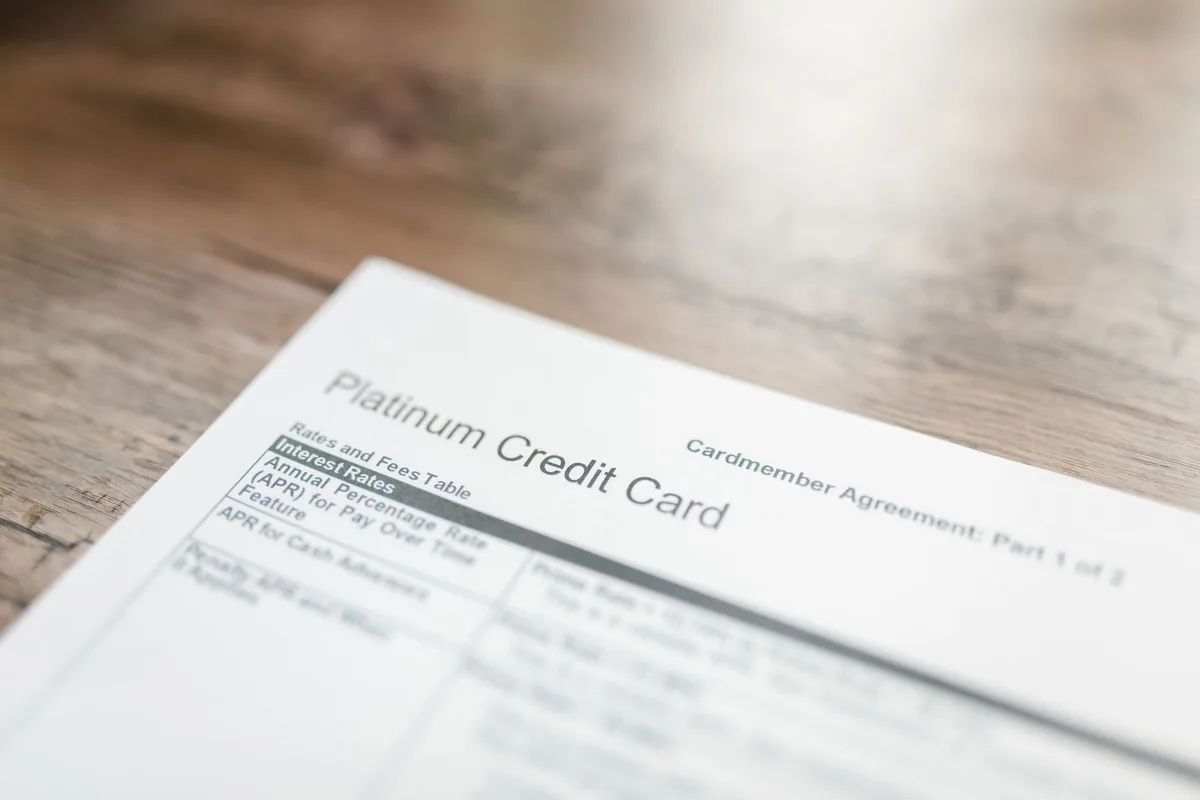
Every credit card carries more than one APR, and the cash advance APR is usually the meanest of the bunch. Where your purchase APR might sit somewhere north of 20% in 2026, the cash advance APR is commonly several points higher, often landing well into the high 20s and sometimes brushing 30%. It is printed right on your card agreement, in the same disclosure box that lists your purchase rate, though most people never look at it until they are already paying it.
That gap between the two rates matters more than a few percentage points might suggest, because of how card interest is calculated. Your issuer takes the APR and divides it by 365 to get a daily periodic rate, then charges that tiny slice against your balance every single day. A cash advance APR of 29.99% works out to a daily rate of about 0.08216%. On a $1,000 advance, that is roughly 82 cents of interest on the very first day, and it keeps compounding from there. The higher rate is not the biggest problem with a cash advance, but it is the foundation that the other two costs build on top of.
One more wrinkle makes the higher APR sting. Federal rules generally require issuers to apply anything you pay above the minimum to your highest-rate balance first. That sounds helpful, and it is, but it means that while you are carrying both a purchase balance and a cash advance balance, your extra payments go to knocking down the cash advance before they touch your cheaper purchase debt. The minimum payment, meanwhile, can be applied however the issuer likes, which often means the expensive cash advance lingers.
The Second Cost: No Grace Period, So Interest Starts Immediately
This is the single most important thing to understand about a cash advance, and it is the feature that separates it most sharply from a normal purchase. There is no grace period.
On regular purchases, credit cards give you a grace period, the window between your statement closing date and your payment due date. Federal rules require that if a card offers this window it must be at least 21 days. Pay your full statement balance by the due date, and the issuer charges zero interest on those purchases. It is the most valuable feature a credit card has, and it is the reason a high purchase APR can be completely harmless to someone who pays in full every month.
Cash advances get none of that mercy. Interest begins accruing the instant the cash leaves the machine. There is no waiting period, no due date to beat, no way to pay it off before the clock starts. Even if you rush home and pay the advance back the next morning, you still owe interest for the day or two it was outstanding. And if you carry any part of it, that daily interest compounds relentlessly until the advance is gone. The grace period is the escape hatch that makes credit cards nearly free for disciplined users. The cash advance is the one door that hatch does not open.
There is a subtler trap hidden here too. Taking a cash advance can knock out the grace period on your purchases for that cycle. Because you are now carrying a balance that accrues interest daily, some issuers will start charging interest on new purchases as well, rather than giving them the usual grace period. So a single cash advance can quietly turn your ordinary spending into interest-bearing debt for the rest of the month. What looked like a small $200 withdrawal can end up costing far more than $200 worth of pain.
The Third Cost: The Upfront Cash Advance Fee
Before a single day of interest is even counted, the cash advance charges you a fee just for the privilege of taking the cash. This fee is typically 3% to 5% of the amount advanced, and many cards set a minimum dollar amount, often around $10, so small advances get hit proportionally even harder.
Run the numbers on a modest example. Take a $300 cash advance on a card with a 5% fee. That is a $15 charge that lands on your balance the moment you take the money, before interest even enters the picture. If the fee has a $10 minimum and you only took $100, the 5% would be $5, so the $10 minimum kicks in instead, meaning you paid 10% just in fees on that small advance. The fee structure quietly punishes small withdrawals the most.
Now stack all three costs together, because that is how they actually arrive. On a $500 cash advance with a 5% fee and a 29.99% APR, you start with a $25 fee on day one. Then interest accrues immediately at about 41 cents a day on the $525 you now owe. If it takes you three months to clear it while making modest payments, the fee plus interest can easily push the true cost past $50 on a $500 loan you had for a quarter of a year. That works out to an effective cost far above the sticker APR, because the upfront fee acts like interest you paid instantly. This is why consumer advocates put cash advances just a rung above payday loans on the ladder of expensive borrowing.
The Hidden Limit: Your Cash Advance Line Is Smaller
Here is a detail that catches people off guard at the worst possible moment. Your cash advance limit is almost always much lower than your overall credit limit. You might have a $10,000 credit line and a cash advance limit of only $2,000, or in some cases just a few hundred dollars.
Issuers cap the cash advance limit precisely because they see cash as higher risk. The result is that someone reaching for a cash advance in an emergency may find they cannot get nearly as much as they assumed. Trying to withdraw more than the cash advance limit simply results in a declined transaction at the ATM, which is a frustrating surprise when you are already stressed. You can find your specific cash advance limit on your monthly statement or by logging into your online account, and it is worth knowing that number before you ever need it, not after.
There is a silver lining buried in that low limit. Because you cannot take out that much, the damage a cash advance can do is somewhat contained. But it also means a cash advance is a poor plan for any large or sustained cash need. If you are counting on your card to bail you out of something bigger than a few hundred dollars, the cash advance limit alone may make that impossible.
What Counts as a Cash Advance (Sometimes Without You Knowing)
The obvious cash advance is an ATM withdrawal. But issuers define the category broadly, and several transactions trigger cash advance treatment, complete with the fee and immediate interest, even when no cash physically changes hands. Getting surprised by one of these is a common and expensive mistake.
The convenience checks your issuer mails you, the ones that look like a nice free gift, are usually cash advances in disguise. Writing one triggers the cash advance fee and rate just as if you had visited an ATM. Casino chips and gambling transactions are almost always coded as cash advances, as are lottery tickets in many cases. Wire transfers and some money orders count too. Certain peer to peer app transfers, particularly when you fund them with a credit card rather than a bank account or debit card, can be treated as cash advances by your issuer.
Two modern ones surprise people the most. On many cards, buying cryptocurrency with a credit card is coded as a cash advance, which stacks the fee and immediate interest on top of an already volatile asset. Similarly, some issuers flag the purchase of certain gift cards or reloadable prepaid cards as cash-like transactions. The safest habit is simple. Before you use a card for anything that resembles getting cash, moving money, or buying a cash equivalent, check your card agreement or call the number on the back and ask directly whether it will be treated as a cash advance. Two minutes on the phone can save you a fee and a month of interest.
A Worked Example: What a Cash Advance Really Costs
Percentages are abstract, so let us make one concrete and honest. Say you take a $1,000 cash advance on a card with a 5% cash advance fee and a 29.99% cash advance APR, and it takes you six months to pay it off in equal chunks.
The fee lands first: 5% of $1,000 is $50, added to your balance on day one. So you actually owe $1,050 before any interest. That $1,050 immediately starts accruing interest at a daily periodic rate of 29.99% divided by 365, which is about 0.08216% a day, or roughly 86 cents on the first day. As you pay the balance down over six months, the interest each month shrinks along with the balance. Paying it off in six roughly equal payments, the total interest comes to somewhere around $92. Add the $50 fee, and your $1,000 of cash cost you about $142 over six months.
Compare that to a personal loan for the same $1,000 at a much lower rate over the same period, where the total interest might be a small fraction of that with no upfront fee at all. The cash advance cost you more in fees and interest than many borrowers would pay for the entire loan elsewhere. And this example assumes you pay it off diligently in six months. Let it linger, keep taking new advances, or make only minimums, and the cost climbs fast because the interest never stops and never gets a grace period. Use the slider below to see how the cost changes with the amount, the rate, and how much you pay each month.
Notice what the slider reveals if you push the monthly payment down toward the minimum. The balance barely moves, the daily interest keeps compounding, and a small advance can stretch into a surprisingly long and costly debt. Push the payment up and the whole thing collapses quickly, because once the fee and early interest are behind you, every extra dollar attacks the principal. With a cash advance, speed is everything. The faster you kill it, the less the immediate-interest design can hurt you.
Cheaper Alternatives to a Cash Advance
The good news is that a cash advance is almost never your only option, even in a pinch. Knowing the alternatives before an emergency hits is what keeps you from reaching for the most expensive tool by default. Here are the ones worth considering first.
The cheapest source of emergency cash is money you already have. A funded emergency savings account, even a modest one, costs you nothing to tap and carries no fee and no interest. This is exactly the situation an emergency fund exists for, and if you do not have one yet, building even a small buffer in a {{AFF_LINK_HYSA}} is the single best protection against ever needing a cash advance. Many savers aim for a starter cushion of about $1,000 and build from there.
If you do not have savings to draw on, a personal loan is usually far cheaper than a cash advance. It typically carries a lower rate, no upfront cash advance fee, a fixed monthly payment, and a clear payoff date. The tradeoff is that it takes time to apply and fund, so it works better for a planned need than a midnight emergency. Some employers and payroll apps also offer paycheck advances, letting you access wages you have already earned at little or no cost, which can bridge a short gap without any borrowing at all.
For a specific expense rather than raw cash, using the credit card itself as a purchase almost always beats a cash advance. If the emergency is a car repair or a medical bill, charging it as a normal purchase keeps your grace period intact and lets you pay zero interest if you clear it by the due date. A 0% introductory purchase card can extend that interest-free window even further. And do not overlook the oldest option of all: a frank, specific request to family or a close friend, ideally with a written plan to pay them back. It can be awkward, but it is often the cheapest money you will ever borrow.
The Bottom Line on Cash Advances
A cash advance is your credit card wearing an ATM costume, and the costume hides three separate costs that arrive together. You pay a higher cash advance APR, you get no grace period so interest starts the instant you take the cash, and you pay an upfront fee of about 3% to 5% before interest even begins. On top of that, your cash advance limit is smaller than you expect, and more transactions count as cash advances than most people realize, from convenience checks to casino chips to buying crypto on some cards. Add it all up and a cash advance sits near the top of the list of expensive ways to borrow. The practical defense is twofold. Build even a small emergency fund so you rarely need one, and learn the cheaper alternatives, from personal loans to paycheck advances to a plain purchase on the same card, so that if the machine ever tempts you at midnight, you already know a better door to walk through.
The fastest debt payoff plan is usually a bigger shovel.
Every payoff method works better with more income behind it. If your career has plateaued, finding work that matches your cognitive strengths can raise the number that matters most: what you can put toward the balance each month.
Find the career your brain was built forQuestions people ask
What exactly is a credit card cash advance?
A cash advance is when you use your credit card to get physical cash or a cash equivalent rather than to buy something. The classic example is withdrawing bills from an ATM using your card and a PIN. You are not spending a balance you already have. You are borrowing new money against your credit line, which is why it is treated as a separate and more expensive kind of transaction than a normal purchase.
Why does a cash advance cost more than a regular purchase?
Three costs stack up at once. First, the cash advance APR is usually several points higher than your purchase APR. Second, there is no grace period, so interest starts the day you take the cash instead of waiting until a due date. Third, there is an upfront fee of roughly 3% to 5% of the amount. A normal purchase can cost you nothing if you pay in full. A cash advance almost always costs something.
Does a cash advance have a grace period like purchases do?
No, and this is the part that surprises people most. With regular purchases, paying your statement balance in full by the due date means you owe zero interest. Cash advances get no such window. Interest begins accruing the moment you take the cash and keeps running every day until the advance is paid off. Even paying your full statement the next day does not undo the interest that already accrued.
What transactions count as a cash advance without me realizing it?
More than you might think. ATM withdrawals and the convenience checks issuers mail you are obvious ones. Less obvious are casino chips and gambling, wire transfers and some money orders, certain peer to peer app transfers funded by a card, and on many issuers buying cryptocurrency or gift cards. When in doubt, check your card agreement, because the fee and interest apply whether or not you meant to trigger them.
How much can I actually take as a cash advance?
Usually far less than your full credit limit. Issuers set a separate, lower cash advance limit, which might be a few hundred dollars or something like 20% to 30% of your total line. You can find your exact cash advance limit on your monthly statement or in your online account. If you try to take more than that limit allows, the transaction is simply declined.
What are cheaper ways to get cash in an emergency?
Several options usually beat a cash advance. A funded emergency savings account is the cheapest, since it costs nothing. A personal loan often carries a much lower rate and a fixed payoff plan. Some employers offer paycheck advances at little or no cost. Even a 0% purchase card used for the actual expense, or a frank conversation with family, tends to cost less than the fee plus immediate interest of a cash advance.
Keep reading

How to Win at Credit Card Rewards Without the Debt Trap
The 800 Credit Score Playbook: What Actually Moves the Needle

Debt Snowball vs Avalanche: The Interactive Showdown
The Flourish Letter
One smart money idea each week, charts included. Join free and get the printable 2026 Money Calendar in your welcome email.