How Credit Card Interest Is Actually Calculated
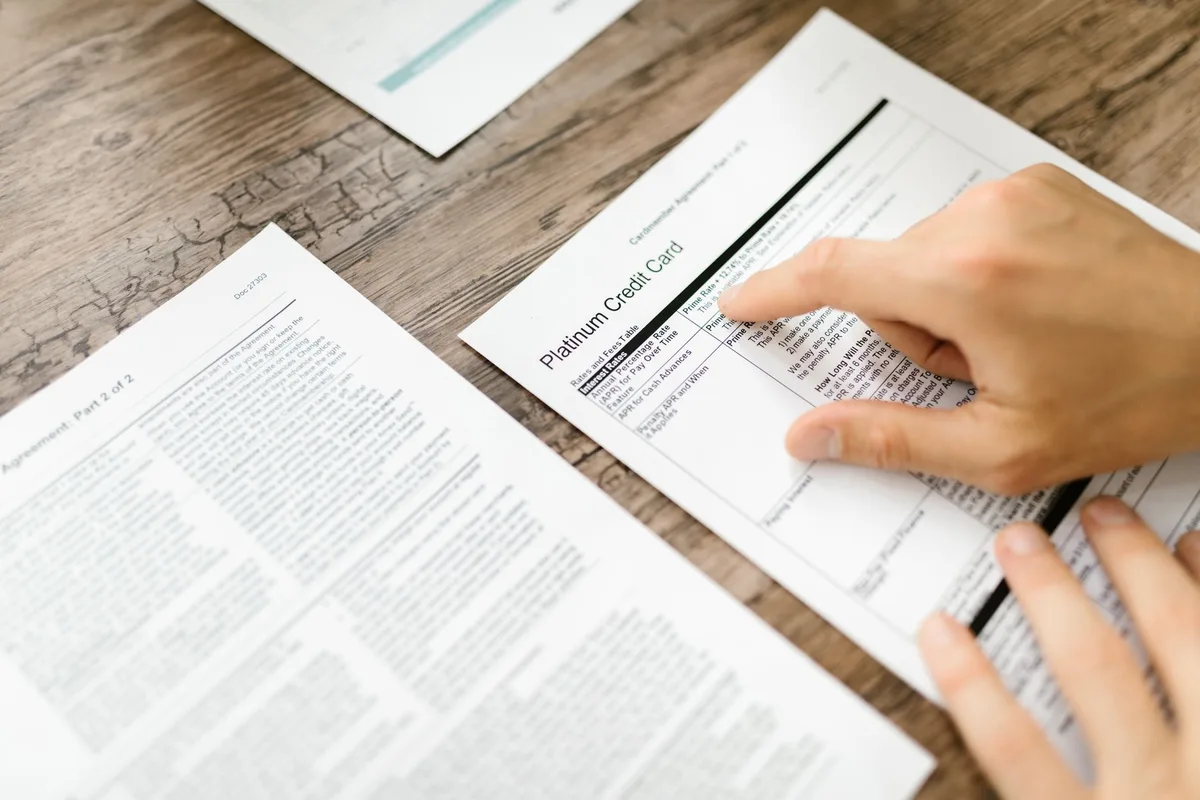
Key takeaways
- Most cards do not charge interest on your APR directly; they convert the APR into a tiny daily periodic rate and apply it to your balance every single day of the billing cycle.
- The daily periodic rate is your APR divided by 365, so a 24 percent APR works out to about 0.0658 percent charged per day.
- Most issuers use the average daily balance method, which adds up your balance for every day of the cycle and divides by the number of days, so new purchases start costing you fast.
- Because yesterday's interest gets added to today's balance, credit card interest compounds daily, which is why a balance grows faster than a flat APR would suggest.
- If you pay your statement balance in full by the due date every month, the grace period wipes out interest on purchases entirely, so you can use the card and pay zero interest.
- Carrying a balance even once usually suspends the grace period, so new purchases start accruing interest from the day you make them until you are fully paid off again.
Here is a strange thing about the most common debt in America. Almost everyone who carries a credit card balance knows their APR, and almost no one can tell you how that APR turns into the actual dollars on their statement. The gap matters, because the way the number is built quietly decides how fast your balance grows, why paying a few days early helps, and why one full payment a month can drop your interest to exactly zero. This is the guide that shows you the real machinery, step by step, with the math checked.
None of it is complicated once you see it laid out. Your card does not charge you your APR in one lump at the end of the month. It shaves off a tiny piece of that APR every single day and applies it to whatever you owe that day. Understanding those daily mechanics is the difference between feeling helpless in front of a statement and knowing exactly which lever to pull. Let us take the whole thing apart.
Start By Feeling the Cost
Before any formulas, get a gut sense of what interest actually costs on a real balance. Slide a balance, an APR, and a monthly payment below and watch how long the debt takes to clear and how much interest you hand over along the way. Try a high APR like 24 percent and a low payment, then bump the payment up and watch the interest collapse.
Keep whatever numbers surprised you in mind. Everything below explains exactly where that interest figure comes from and how each input moves it.
Step One: Your APR Becomes a Daily Rate
APR stands for annual percentage rate, and the word annual is the trap. Your issuer does not wait a year to charge you. It converts that yearly rate into a daily one by dividing your APR by 365. That result is called the daily periodic rate, and it is the number that actually does the billing.
The math is simple. Take an APR of 24 percent. Divide 0.24 by 365 and you get about 0.0006575, or roughly 0.0658 percent per day. That looks almost too small to matter, and on any single day it barely does. The power is in repetition. That tiny rate gets charged 30 or 31 times a cycle, and each charge lands on a balance that already includes yesterday's interest. Your statement usually prints this daily periodic rate, often carried out to six or seven decimal places, right alongside your APR.
A quick note for the curious. A few issuers divide by 360 instead of 365, and cards with more than one APR, such as a separate rate for purchases and for cash advances, run this calculation once for each rate. The idea is identical either way. The annual rate gets sliced into a daily one before anything else happens.
It is worth pausing on why issuers bill this way at all. Charging a daily rate lets the card track your balance in real time, so a purchase you make on the fifteenth and a payment you make on the twentieth both get counted the moment they happen. That precision cuts both ways. It means the card can charge you for every day you borrow, but it also means every day you pay down early stops costing you interest immediately. Most people only notice the first half of that bargain. The second half is where the savings hide, and it is the reason the rest of this guide keeps circling back to timing.
Step Two: The Average Daily Balance
Here is the part most people never learn, and it is the most useful. Your interest is almost never calculated on your ending balance alone. Most issuers use the average daily balance method. They record what you owe at the end of every single day in the billing cycle, add all those daily balances together, and divide by the number of days in the cycle. That average is the balance your interest actually gets charged on.
Why does this matter so much? Because it means timing is everything. A purchase you make on day two of the cycle sits in your balance for almost the entire month and pushes the average way up. A payment you make on day two pulls the average down for the rest of the cycle. The average daily balance method is the reason paying early, or paying more than once a month, genuinely lowers your interest. You are not paying the balance you happen to end on. You are paying the balance you carried on average.
Let us make it concrete. Say you start a 30 day cycle owing $1,000. On day 11 you charge $500, taking you to $1,500. On day 21 you pay $600, dropping you to $900. Your balance was $1,000 for the first 10 days, $1,500 for the next 10 days, and $900 for the final 10 days. The table below walks through the arithmetic so you can see the average appear.
Add those daily balances up: ten days at $1,000 is $10,000, ten days at $1,500 is $15,000, and ten days at $900 is $9,000. The total is $34,000. Divide by 30 days and your average daily balance is about $1,133.33. Notice that this is not your starting balance, not your ending balance, and not the average of the two. It is the true day-weighted average, and it is the honest number your interest is built on.
Step Three: Put the Two Together
Now the payoff. To get your interest charge for the cycle, you multiply three things: your average daily balance, your daily periodic rate, and the number of days in the cycle. That is the entire formula.
Using our example, the average daily balance is $1,133.33, the daily periodic rate on a 24 percent APR is 0.0006575, and the cycle is 30 days. Multiply them together: $1,133.33 times 0.0006575 times 30 comes to about $22.36 in interest for that one cycle. On a balance hovering around $1,100, more than twenty dollars evaporated in a single month, and that is before it compounds into next month. The flow below shows the three moves in order, from APR all the way to dollars owed.
That is genuinely all there is to the core calculation. APR divided by 365 gives the daily rate. Balances averaged across the cycle give the average daily balance. Multiply those together and by the days in the cycle, and you have your interest. Every other wrinkle, and there are a few worth knowing, sits on top of this foundation.
Why It Compounds: Interest On Your Interest
There is a reason your balance seems to grow faster than a plain APR would suggest, and the reason is daily compounding. When the issuer charges that daily periodic rate, the interest for the day is added to your balance. The next day, the rate is applied to the new, slightly larger total. You are paying interest on your interest, every day, all cycle long.
This is why the effective annual cost of a card runs higher than its stated APR. A card advertising a 24 percent APR, once you account for interest compounding daily across the year, carries an effective annual rate of roughly 27 percent. That extra three points is not a hidden fee or a trick in the fine print. It is simply what daily compounding does to a rate over a full year. The stated APR is the simple annual rate; the effective rate is what you truly pay if you carry the balance the whole time.
The lesson is not to panic about the difference. The lesson is direction. Compounding works relentlessly against you when you carry a balance, at a pace slightly worse than the sticker rate implies. The same force works powerfully for you inside a savings account or an investment. On a credit card it is a headwind, and the only way to shut it off entirely is to stop carrying the balance at all. Which brings us to the single most important feature on your card.
The Grace Period: How to Pay Zero Interest
Everything above assumes you are carrying a balance. If you are not, most of it never happens, and that is thanks to a feature called the grace period. The grace period is the stretch of time between the end of your billing cycle and your payment due date, usually at least 21 days. If you pay your full statement balance by the due date, the issuer charges no interest on your purchases. None. You borrowed the money for weeks for free.
This is the quiet superpower of a credit card used well. Pay in full, every cycle, and you get all the convenience, fraud protection, and rewards while paying exactly zero in interest. The daily periodic rate still exists, the average daily balance still gets calculated, but the result is multiplied against a balance you cleared, so the interest lands at zero. Millions of people use cards for years and never pay a cent of interest for precisely this reason.
Now the catch, because it is a real one. The grace period only protects you if you pay in full. The moment you carry a balance from one month into the next, most issuers suspend the grace period. New purchases then start accruing interest from the day you make them, with no free window at all, until you pay the entire balance off and stay paid off for a full cycle to reset the grace period. This is why a single month of carrying a balance can cost more than you expect. It does not just add interest on the old balance; it strips the free ride from everything new you buy.
One more exception worth stating plainly. Cash advances almost never get a grace period. Take cash off a credit card and interest usually starts the day of the transaction, often at a higher APR than purchases, and frequently with a separate fee on top. If you remember one thing about cash advances, let it be that they begin costing you immediately.
Watch the Daily Rate Turn an APR Into Dollars
It helps to see how a fixed balance quietly bleeds interest across a billing cycle when you carry it. Below is a $2,000 balance held steady through a 30 day cycle at three common APR levels, showing roughly how many dollars of interest pile up as the days tick by. The steeper the line, the higher the APR working against you.
The takeaway is not any single number. It is the shape. Interest does not arrive as one charge at the end of the month. It accumulates a little every day, which is exactly why the day you pay matters and why a higher APR bends the whole line upward. A balance you would clear in a week costs far less than the same balance carried for a full cycle.
The Minimum Payment Trap
Once you understand daily interest, the danger of paying only the minimum becomes obvious. A minimum payment is usually set at something like 1 to 3 percent of your balance, or a small floor amount plus that month's interest, whichever is larger. It is designed to keep your account current. It is not designed to get you out of debt, and on a high APR it barely dents the principal.
Consider a $5,000 balance at a 24 percent APR. Paying only a minimum of around 2 percent of the balance each month, which shrinks as the balance shrinks, can stretch the payoff across well over a decade and pile up thousands of dollars in interest, often more than the original balance itself. Now compare that to paying a fixed $250 every month. The debt clears in roughly two years, and the interest paid drops by thousands. Same balance, same APR, wildly different outcome, and the only thing that changed was refusing to let the payment shrink with the balance. The comparison below lays it side by side.
The reason a fixed payment wins so decisively goes right back to the average daily balance. A fixed payment knocks the balance down faster, which lowers the average daily balance every cycle, which shrinks the interest, which sends more of your next payment against principal. It is a virtuous cycle running in the exact opposite direction of the minimum-payment trap. The single most powerful move most borrowers can make is to pick a fixed monthly payment and hold it steady no matter how far the balance falls.
Putting It All Into Practice
You now know more about credit card interest than most people who carry it every month. Here is how to turn that knowledge into fewer dollars leaving your account.
Pay in full whenever you possibly can. This is the whole game. A statement paid in full by the due date means the grace period wipes out purchase interest entirely. If you can only do one thing, do this, and let the grace period do the heavy lifting.
If you must carry a balance, pay early and pay often. Because interest is built on your average daily balance, every day you carry less, you owe less interest. A payment on day five of the cycle helps far more than the same payment on day twenty-five. Splitting your payment in two across the month can shave the average down further.
Never let a fixed payment shrink. If you send $250 this month, send $250 next month even after the minimum drops. Locking the payment is what turns a decade of debt into a couple of years.
Treat cash advances as a last resort. No grace period, interest from day one, usually a higher rate, and a fee. If you find yourself reaching for one regularly, that is a signal to look at the underlying budget rather than the card.
Read your statement once, on purpose. Find your APR, your daily periodic rate, and your average daily balance. Seeing the actual numbers your issuer uses turns the abstract into the concrete, and concrete is where good decisions get made.
One more habit is worth building if you carry balances across more than one card. Line up the APRs and attack the highest rate first while paying at least the minimum on the rest. This is often called the avalanche approach, and the daily math is exactly why it works. Since each card charges its own daily periodic rate against its own average daily balance, a dollar aimed at your 29 percent card kills far more future interest than the same dollar aimed at a 19 percent card. Some people prefer to clear the smallest balance first for the motivation of a quick win, and that is a fair choice too. Just know that, in pure dollars, the highest rate is where the daily meter runs fastest, so that is where an extra payment does the most damage to the interest you would otherwise owe.
The One Sentence Worth Remembering
Strip away the vocabulary and credit card interest comes down to this. Your APR gets sliced into a daily rate, that rate is charged every day against the average balance you carried, and it compounds as it goes, unless you pay in full and let the grace period cancel it entirely. The daily periodic rate, the average daily balance, the compounding, and the grace period are the whole story. Everything else is a variation on those four ideas.
The practical upshot is oddly hopeful. Because interest is built one day at a time on the balance you carry, you have far more control than a static APR makes it feel like you do. Pay early, pay fixed, and pay in full when you can, and you turn the daily machinery from a slow leak into a non-issue. Run your own balance through the calculator at the top one more time, this time raising the payment, and watch how much of that interest simply disappears. That disappearing number is the reward for understanding the math.
The fastest debt payoff plan is usually a bigger shovel.
Every payoff method works better with more income behind it. If your career has plateaued, finding work that matches your cognitive strengths can raise the number that matters most: what you can put toward the balance each month.
Find the career your brain was built forQuestions people ask
How is credit card interest actually calculated?
Your issuer takes your APR and divides it by 365 to get a daily periodic rate. It then figures your average daily balance for the billing cycle by adding your balance at the end of each day and dividing by the number of days in the cycle. Finally it multiplies the average daily balance by the daily rate and by the number of days in the cycle. Because each day's interest is added to the balance, the charge compounds daily rather than once a month.
What is the daily periodic rate?
The daily periodic rate is the slice of your APR that gets charged each day. You find it by dividing your APR by 365. For example, a 24 percent APR becomes a daily rate of about 0.0658 percent. Your card statement usually lists this number, sometimes carried out to six or seven decimal places, and it is the figure the issuer actually uses to bill you.
How do I avoid paying credit card interest completely?
Pay your full statement balance by the due date every single month. When you do that, the grace period keeps interest from ever being charged on your purchases. The trap is that carrying a balance even once usually cancels the grace period, so new purchases start racking up interest immediately until you pay everything off again and stay paid off for a full cycle. Cash advances are the exception; they almost never get a grace period and start charging interest the day you take them.
Why does my balance grow faster than my APR suggests?
Because credit card interest compounds daily. Each day the issuer adds that day's interest to your balance, and the next day's interest is calculated on the slightly larger total. Over a year this daily compounding pushes your effective cost above the stated APR. A card advertising 24 percent APR can carry an effective annual rate closer to 27 percent once daily compounding is counted in.
Does making a payment mid-cycle lower my interest?
Yes, and this is one of the most useful and least understood facts about cards. Because most issuers use the average daily balance method, every day you carry a lower balance pulls that average down. Paying early in the cycle, or paying more than once a month, reduces the average daily balance the interest is calculated on. You do not have to wait for the due date to start saving money.
Is the minimum payment enough to make real progress?
Usually not. A minimum payment is often set around 1 to 3 percent of the balance plus interest, which is designed to keep the account current, not to clear the debt. On a card charging a high APR, paying only the minimum can stretch a modest balance into years of payments and can more than double what you ultimately pay. Sending a fixed higher amount every month, even a small one, shortens the timeline dramatically.
Keep reading

How to Win at Credit Card Rewards Without the Debt Trap
The 800 Credit Score Playbook: What Actually Moves the Needle

Debt Snowball vs Avalanche: The Interactive Showdown
The Flourish Letter
One smart money idea each week, charts included. Join free and get the printable 2026 Money Calendar in your welcome email.