Key takeaways
- An economic moat is a lasting advantage that keeps competitors from stealing a company's high profits, a term popularized by Warren Buffett.
- Moats usually take one of five shapes: intangible assets, switching costs, network effects, cost advantages, or efficient scale.
- A moat shows up as after-tax returns on invested capital that stay above the company's cost of capital for years; Morningstar measures the return as net operating profit after tax divided by average invested capital, so it compares fairly with an after-tax cost of capital.
- A wide moat means an edge expected to last more than twenty years, but it is rare and only describes durability, not how good the stock is; in its recent review Morningstar found close to 20% of covered stocks earn it.
- The rating weighs how long excess returns can last, not how many sources feed the edge, so even one durable source can support a wide moat; heavy dependence on a single product or rule just calls for a closer look at durability.
- A great business bought at a rich price can still be a poor investment, and even strong moats can erode as technology, tastes, and rules change.
Picture two coffee shops that open on the same street in the same month. Same rent, same prices, same beans. A year later one has a line out the door and the other is quietly empty. That gap is rarely luck. Usually one of them has something the other cannot easily copy, whether it is a spot everybody walks past, a loyalty app people already have on their phones, or a supplier deal nobody else can match.
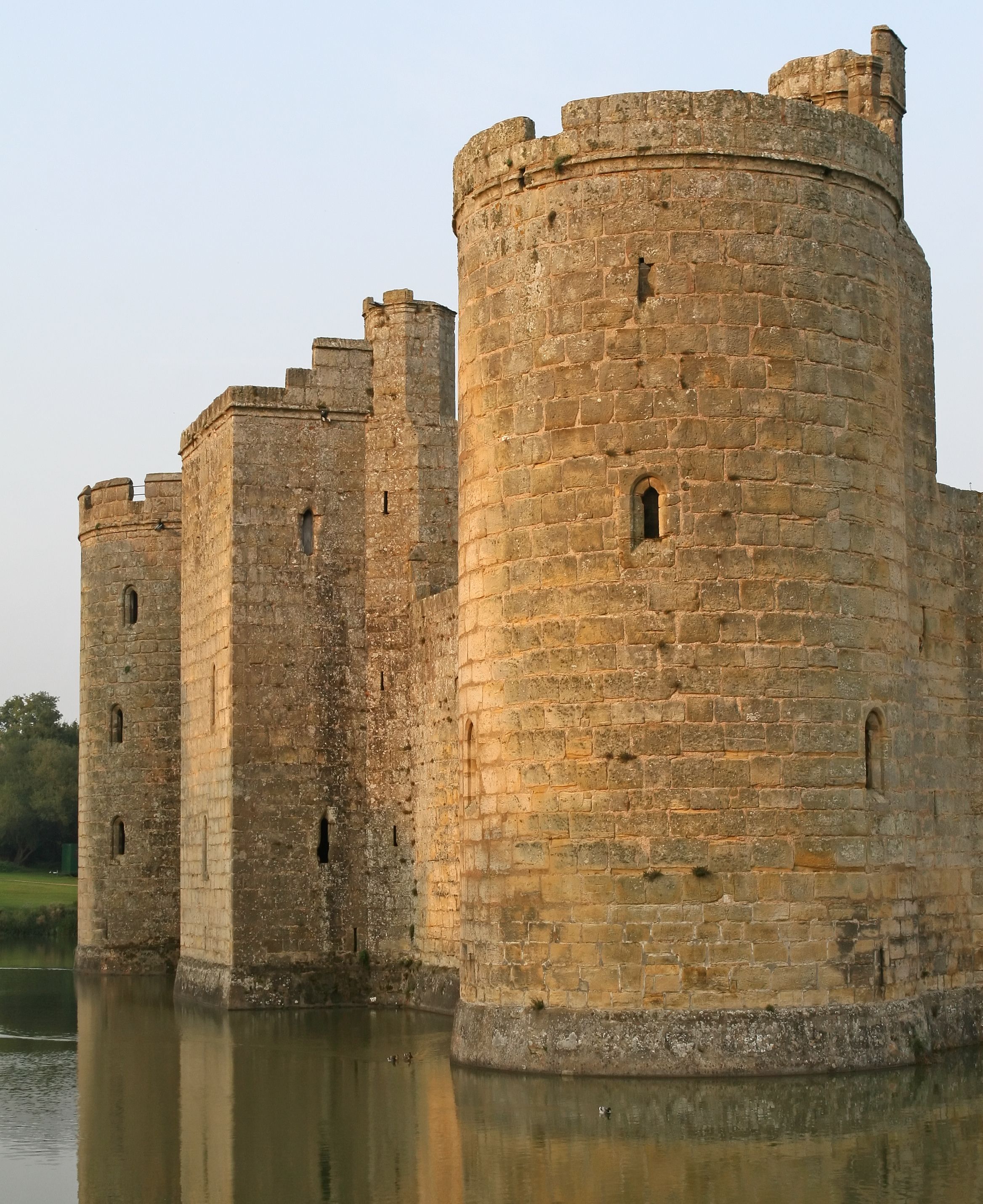
In investing, that something has a name. It is called an economic moat, and it may be the single most useful idea for telling apart a company that will still be making good money in twenty years from one that is about to get run over by its own competition. The word sounds fancy, but the picture is plain. Think of a castle with a wide ring of water around it. The water does not make the castle richer. It makes the castle harder to attack. A business with a moat earns healthy profits and has some durable feature that keeps rivals from marching in and taking those profits away.
This guide walks through where the idea came from, the five shapes a moat usually takes, how to spot one yourself, and the honest limits of the whole concept. None of this is a recommendation to buy or sell anything. It is a way of thinking that helps the news make more sense and helps you ask better questions before you ever put a dollar to work.
Where the idea came from
The phrase belongs to Warren Buffett. In his 1995 Berkshire Hathaway letter and at that year's shareholder meeting, he described looking for "economic castles protected by unbreachable 'moats'," and he talked about wanting a business with a wide and long-lasting moat around it, protecting a terrific economic castle with an honest person in charge. He came back to the idea again and again over the years because it captured something he cared about more than a single good quarter. He wanted businesses whose advantages would still be standing long after he stopped paying attention.
In his 2007 letter Buffett spelled out why the moat matters so much. The basic logic of capitalism, he wrote, is that any business earning high returns will be attacked over and over by competitors who want a piece of that money. So the question is not whether a company is profitable today. The question is whether it has something that keeps those attackers from succeeding. He pointed to two classic examples: being the lowest-cost producer, the way a no-frills insurer or a warehouse retailer can be, and owning a powerful worldwide brand, the kind people reach for without thinking. Both make it hard for a rival to simply show up and win.
Years later the research firm Morningstar turned Buffett's metaphor into a formal framework, complete with ratings and a book called Why Moats Matter. That is where a lot of the structure in this guide comes from, including the idea that moats tend to come in five recognizable shapes.
Why a moat shows up in the numbers
Before the five shapes, it helps to understand what a moat actually protects. The technical phrase is "return on invested capital," which sounds intimidating but means something you already grasp intuitively. Invested capital is all the money a company has put to work in the business, both the money its owners contributed and the money it borrowed. The return is the after-tax operating profit the business squeezes out of that pile each year, meaning the operating profit that is left once the tax bill is paid. Morningstar measures it as net operating profit after tax divided by average invested capital. The after-tax part matters, and here is why. If a company earns fifteen cents of after-tax operating profit on every dollar invested, that is a strong return. If it earns three cents, that is weak.
But the number alone does not tell you much until you measure it against one benchmark: the cost of capital. That is roughly what the company has to pay to use that money, blending the interest owed on its debt and the return shareholders expect for taking the risk. Because that cost is itself usually figured on an after-tax basis, you want an after-tax return on the other side of the scale so you are comparing like with like. Compare a pretax operating return against an after-tax cost and you can fool yourself into seeing value creation that is not really there. A business only creates real value when its after-tax return on invested capital sits comfortably above its cost of capital, year after year. Earning fifteen cents is not impressive if the money itself costs the company sixteen. Clearing that bar with room to spare is the flashing light that draws every competitor in the industry, because returns above the cost of capital are exactly the easy money a crowd rushes toward, and a crowd tends to drive those returns back down toward the break-even line for everyone.
A moat is whatever lets a company keep earning after-tax returns well above its cost of capital even after the crowd shows up. Without a moat, fat profits are usually temporary. A company invents a better mousetrap, earns great margins for a few years, and then a dozen copycats flood in and the margins melt back to ordinary. With a moat, the excess returns stick around, because the copycats run into a wall. That is the whole game. If you want to go deeper on where these numbers live in a company's filings, our guide on how to read company financial statements shows you where to find profit, cash, and debt.
The five shapes a moat usually takes
Morningstar groups durable advantages into five sources. Most strong businesses lean on one or two of them, and a rare few have several working together. Here is each one in plain terms, with a made-up example so you can see the shape clearly.
1. Intangible assets
These are advantages you cannot touch: brands, patents, and government licenses. A brand becomes a moat when people will pay more for the same basic product simply because of the name and the trust behind it. A patent is a moat because the law literally forbids rivals from copying the invention for a set number of years. A license is a moat when the government only hands out a few of them, so new competitors cannot legally enter. Buffett's favorite example in this category was a soft drink people ask for by name all over the world. The drink is not chemically magic. The name is the asset.
2. Switching costs
Sometimes a product is not obviously better, but leaving it is a pain. Think about the software a company runs its payroll and accounting on. Even if a rival is a little cheaper, switching means retraining the whole staff, moving years of records, and risking mistakes that could take weeks to fix. The hassle itself is the moat. Customers stay put not because they love the company but because the cost in time, money, and stress of leaving is too high to bother. That stickiness gives the company room to raise prices a little each year without losing many customers.
3. Network effect
This one gets stronger the more people use it. A marketplace with the most buyers attracts the most sellers, which attracts even more buyers. A payment system that nearly every store accepts is valuable to you precisely because nearly every store accepts it, and stores accept it because nearly everyone carries it. Each new user makes the service more useful to everyone already there, which makes it nearly impossible for a newcomer to break in. A rival starting from zero has nothing to offer because it has no one on it yet.
4. Cost advantage
Some companies can simply make or deliver something cheaper than anyone else, and keep doing it. Maybe they sit on a resource that is cheaper to dig up, maybe their scale lets them squeeze suppliers, maybe their delivery routes are so dense that each extra stop barely adds cost. Whatever the reason, they can charge the same price as rivals and pocket the difference, or undercut everyone and still make money. Buffett pointed to a warehouse retailer that thrives on being the low-cost option as a textbook case. Notice that this kind of company does not need to keep raising prices at all; its edge comes from the cost side.
5. Efficient scale
This is the quietest moat and the least common. It shows up in markets that are only big enough to support one or a few players profitably. Think of a pipeline serving a single region, or an airport in a mid-sized city. A new competitor could build a rival, but doing so would split a small market two ways and leave both players losing money. So no sane rival bothers. The limited size of the market itself keeps attackers away.
How common is each source?
Not all five show up equally often. In a 2017 study, Morningstar looked at the roughly 200 companies it then rated as having wide moats and tallied which sources each one relied on. Intangible assets were by far the most common, followed by cost advantage and switching costs, with network effects and efficient scale appearing least often. The shares add up to more than one hundred because many companies lean on more than one source at once. The pairing of intangible assets and switching costs was the most frequent, and Morningstar noted that intangible assets combined with a cost advantage had gone with some of the highest returns on invested capital of any combination.
The takeaway from that chart is not to memorize percentages from 2017. It is to notice that a strong brand or patent is the most frequent ingredient in a durable business, while the flashy network effect that gets talked about constantly is actually one of the rarer sources. Rare does not mean weak, though. When a network effect does take hold, it tends to produce some of the widest moats of all, because it is so hard for anyone to catch up once the crowd has gathered on one platform.
Wide, narrow, or none
Morningstar sorts companies into three buckets, and the labels are worth understanding because they measure one specific thing: how long the advantage is likely to last, not how wonderful the company is. A wide moat means the analysts expect the competitive edge to hold up for more than twenty years. A narrow moat means they expect it to last roughly ten years. No moat means they either see no real advantage or they think whatever edge exists will fade quickly.
Two details make this honest rather than hype. First, a wide moat is genuinely rare. Even inside Morningstar's coverage, which already leans toward strong companies, only around one in five earn the wide rating. In its recent economic moat review of that coverage, Morningstar reported that close to 20% of the stocks it follows hold a wide moat. Second, the rating is about durability, not quality or price. A beloved, fast-growing company can have no moat if its lead is easy to copy, and a boring, slow company can have a wide one if its advantage is bulletproof.
How to spot a moat yourself
You do not need a research staff to apply this thinking. You need a few habits and a healthy dose of skepticism. Here is a sensible order to work through.
Start with the money. A company with a moat usually shows steady after-tax returns on its invested capital that stay above its cost of capital, along with profit margins that do not collapse the moment the economy wobbles or a new rival appears. One great year proves nothing. A decade of fat, stable returns is a clue worth chasing. The price-to-earnings ratio and other quick metrics can tell you how the market is pricing a company, but margins and returns on capital over many years are what hint at a moat underneath.
Then ask the why question. If those returns are high, which of the five sources explains it? If you cannot name one, be careful, because unexplained high profits are exactly what competition tends to erase. A real moat should have a story you can tell in a sentence. Customers would hate the hassle of switching. Every store already takes it. Nobody can dig it out of the ground cheaper. The brand lets them charge more. If the best you can say is "the product is really good," that is often not enough, because good products get copied.
Next, look for pricing power. One of the friendlier real-world signs of a moat is a company that can raise its prices over time and still keep most of its customers. When price increases mostly stick, that points to a brand, a habit, or a switching cost doing real work. Be careful with the opposite conclusion, though. Losing a few customers after a price hike does not prove a moat was never there, because some people will always shop around at the margin. Pricing power is also only one flavor of moat. A low-cost producer might barely raise prices at all and instead keep its edge by making or shipping things cheaper than anyone else. So treat sticky pricing as helpful evidence, not as a test every moat has to pass. Finally, think about durability. Ask whether the advantage survives new technology, new regulations, and a determined competitor with deep pockets. The rating is really a judgment about how long an edge can hold, not how many products or protections sit behind it, so even a single source can support a wide moat when it is genuinely durable. Just treat heavy dependence on one hit product or one friendly rule as a reason to look harder at that durability, because leaning on a single pillar concentrates the risk that one change, a patent expiring or a rule flipping, knocks the whole advantage down.
The catch: a great business is not automatically a great investment
This is the part that trips people up, and it is the most important paragraph in this guide. Finding a company with a wide moat is only half the job. The other half is the price you pay for it. A fortress of a business bought at a wildly expensive price can still be a poor investment, because you have already paid for all the good news and then some. Morningstar itself treats the moat rating as one input into a fair value estimate, not as a green light to buy. The moat tells you the business is likely to endure. It says nothing about whether today's price is sensible.
The flip side is just as real. Moats erode. A patent expires. A brand goes stale when tastes change. A network that felt unbeatable empties out when a new platform becomes the place to be. Technology is especially brutal here, because it can turn a cost advantage into a cost disadvantage almost overnight when a cheaper method arrives. Regulation can cut both ways too, protecting a company one year and opening its market to rivals the next. A moat is a judgment about the future, and the future has a habit of surprising everyone. Treat any moat as something to keep checking, not a fact to file away and forget.
What a moat is not
A few honest corrections will save you from common mistakes. Being big is not a moat. Plenty of huge companies have thin or no moats and get squeezed every year. Scale only becomes a moat if it actually lowers costs or feeds a network. A popular product is not a moat either, because popularity invites imitators faster than almost anything. Fast growth is not a moat; it can even be the opposite, since booming, profitable markets are the ones competitors rush into hardest. And a great management team, while valuable, is not a moat on its own, because people leave and even brilliant leaders cannot defend a castle that has no walls. A moat is a structural feature of the business itself, something that would keep protecting profits even if an average person were running the place.
Why this matters even if you never pick a stock
Most people are better served by owning the whole market through low-cost index funds than by hunting for individual moats, and nothing here changes that. If you own a broad index fund, you already own a huge basket of the widest-moat companies in the country, right alongside the no-moat ones, and you capture the results of the whole group without having to judge each one. If you want the reasoning behind that approach, our piece on diversification lays it out.
So why learn the concept at all? Because it makes you a clearer thinker about the businesses you meet every day. When a headline says a famous company's stock fell on earnings, the moat lens helps you ask whether its actual advantage was damaged or whether the market just had a mood swing. When a hot new company is called unstoppable, you can quietly ask which of the five sources protects it and for how long. And if you do own a few individual stocks as a small part of a diversified plan, the moat gives you one sturdy question to lean on before you commit.
A simple picture of why durability pays
The reason investors pay so much attention to moats comes down to durability. A business that keeps earning returns above its cost of capital, year after year, without that edge getting competed away, holds onto something most companies lose within a few years. Over long stretches, a steady edge that refuses to fade can do far more for owners than a brilliant burst that burns out fast.
It is worth being precise about what a moat does and does not promise. A moat protects the returns a company already earns on the capital already in the business. It does not, by itself, guarantee that the company can take all the cash it throws off and reinvest it at that same high rate. Doing that requires a steady supply of new, profitable places to put the money. Warren Buffett drew exactly this line in his 2007 letter. He prized businesses with durable high returns, but he separated them from the rarer, even more valuable case of a business that can also reinvest large sums internally at those high rates. Some wonderful companies gush cash yet have limited room to redeploy it, so they hand it back to shareholders instead. That is still a fine outcome. It is simply a different thing from compounding every dollar inside the company.
The slider below is a purely hypothetical illustration of how a steady return builds over time when it is compounded month after month, assuming the money really does keep getting reinvested. It is not a forecast, and no real company is promised any particular number. It simply shows why how long can this last is the question moat investors care about most.
Move the years out and the rate up, and you can watch how a long runway does far more heavy lifting than a quick burst. That is the quiet appeal of a moat. It is not about one brilliant year. It is about a reasonable return that resists being competed away, protected by walls the competition cannot easily climb. Real life is messier than any calculator, reinvestment opportunities are not endless, and even the finest moats get tested. But the instinct is sound: a durable edge, bought at a fair price, is where a lot of lasting wealth quietly comes from.
The bottom line
An economic moat is a durable advantage that keeps a company's profits safe from the competitors who always come knocking. It usually takes one of five forms: intangible assets like brands and patents, high switching costs, a network effect, a structural cost advantage, or efficient scale in a market too small to share. Wide moats are rare and are judged by how long an edge lasts, not by how exciting the company looks. Spot them by looking for years of after-tax returns above the cost of capital, name the source behind those profits, treat sticky pricing as a helpful clue rather than a required test, and remember that the price you pay still decides whether a great business becomes a great investment. Use the idea as a lens, keep checking whether the walls still hold, and let it make the financial news a little quieter and a lot clearer.
Most investors cannot pass a basic money test. Can you?
The market charges tuition for every gap in your knowledge. The Financial IQ Test measures what you actually know across investing, banking, credit, and retirement, then shows you exactly which gaps to close before they get expensive.
Test your Financial IQQuestions people ask
Who came up with the idea of an economic moat?
Warren Buffett popularized it. In his 1995 Berkshire Hathaway letter and meeting he described looking for economic castles protected by unbreachable moats, and he returned to the idea often. The research firm Morningstar later built a formal framework and ratings around it.
What are the five sources of a moat?
Morningstar groups durable advantages into intangible assets like brands and patents, high switching costs, network effects, structural cost advantages, and efficient scale in markets too small to support many rivals. Most strong businesses rely on one or two of these, and a single source can be enough if it is durable.
How is return on invested capital measured when judging a moat?
Morningstar measures it as net operating profit after tax divided by average invested capital. The after-tax step matters because the benchmark you compare it against, the cost of capital, is itself usually an after-tax figure. Comparing a pretax operating return against an after-tax cost can make a company look like it is creating value when it is not.
What is the difference between a wide moat and a narrow moat?
The labels measure how long an advantage is expected to last. Morningstar calls it a wide moat when the edge should hold for more than twenty years and a narrow moat when it should last about ten years. No moat means little advantage or one likely to fade fast. In its recent review, Morningstar reported close to 20% of covered stocks hold a wide moat.
Does relying on a single product or regulation automatically cap a moat as narrow?
No. The rating is about how long excess returns above the cost of capital are likely to persist, not the number of products or protections behind them, so one durable source can support a wide moat. But leaning on a single pillar concentrates risk, so a company that depends heavily on one hit product or one friendly rule deserves a harder look at how durable that single source really is.
Does a company with a moat always make a good investment?
No. A moat tells you the business is likely to endure, but it says nothing about price. A fortress business bought at a very expensive price can still disappoint. Morningstar treats the moat as one input into fair value, not as a buy signal.
Keep reading

How to Choose a Brokerage Account in 2026: A Practical Guide
Dividend Investing for Beginners: Income You Can Actually See
Dollar-Cost Averaging: The Math, the Myths, and When It Wins
The Flourish Letter
One smart money idea each week, charts included. Join free and get the printable 2026 Money Calendar in your welcome email.