Key takeaways
- A sector ETF concentrates on one industry slice of the market, offering company-level diversification inside that theme but not across the whole economy.
- Most sector labels map to GICS-style groups such as Technology, Health Care, Energy, Financials, and the other top-level sectors.
- Broad market funds already include sector exposure by market weight, so adding sector ETFs can quietly double down on what you already own.
- Concentration, top-heavy holdings, and correlated satellites are the main risks; sizing a sleeve is often more important than picking the "hot" sector.
- Expense ratios on many sector ETFs are still low by historical standards, yet fees, spreads, and underperformance drag still compound over decades.
- A common educational frame is core-and-satellite: diversified broad funds as the core, with any sector ETF kept as a small, intentional tilt.
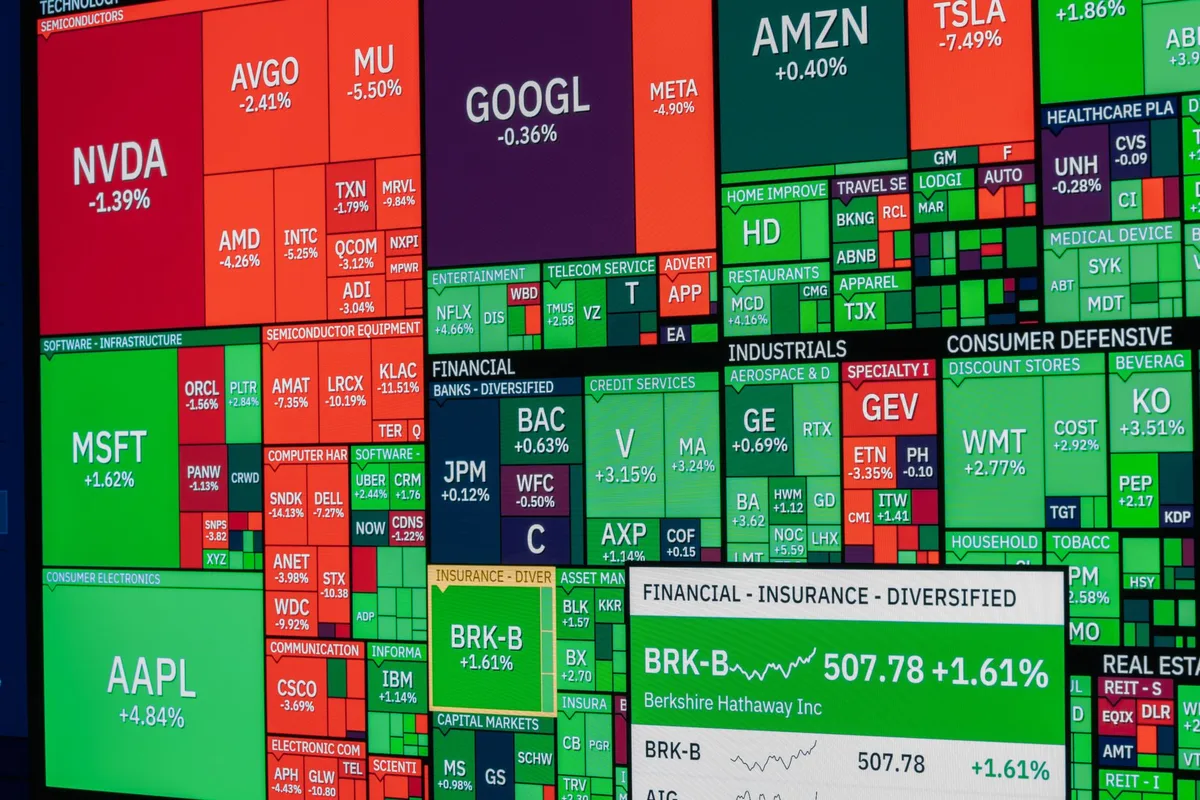
Open a brokerage app and you will see tickers that look like alphabet soup next to labels such as Technology, Energy, Health Care, and Financials. Those products are often sector ETFs: funds that concentrate on one slice of the stock market instead of owning nearly everything. For beginners, that design sounds either brilliant or dangerous, depending on which headline you read last. The truth sits in the middle. Sector ETFs are useful tools when you understand what they own, how concentrated they are, what they cost, and how they sit inside a broader plan.
This guide explains sector ETFs for US readers in 2026. You will learn how an ETF works in plain English, how GICS-style sector maps divide the market into eleven large groups, why concentration cuts both ways, how expense ratios and trading costs show up, how sector funds differ from broad index funds, and how thoughtful investors treat them as satellites rather than as the whole portfolio. Examples use round numbers so the math is checkable. Nothing here is a recommendation to buy or sell any fund, stock, or sector. It is education so you can read a fact sheet without getting sold a story.
What a Sector ETF Is
An exchange-traded fund (ETF) pools investor money and holds a portfolio of securities. Shares of the ETF trade on an exchange during market hours, much like a stock. The Securities and Exchange Commission's Investor.gov materials describe ETFs as registered investment products that can track indexes, hold baskets of stocks or bonds, and carry market risk like other funds. You can lose money. Past performance is not a promise of future results.
A sector ETF is an ETF whose portfolio is built around companies in one industry group or market sector. Instead of tracking a broad benchmark such as the S&P 500 or a total US stock market index, it tracks a sector index or otherwise concentrates holdings in that industry slice. Classic educational examples include funds focused on information technology, energy, health care, financials, utilities, or real estate. The fund still holds many stocks inside that slice, which is more diversification than owning two or three individual names. It is far less diversification than owning the whole market.
That distinction matters more than the ticker. A broad market ETF spreads you across nearly every major sector by market weight. A sector ETF deliberately overweights one theme. If that theme booms, the sector fund can outrun a broad fund for a stretch. If that theme stalls, the sector fund can lag hard even while the overall market is fine. You are making a relative bet, whether you call it that or not.
How Sector ETFs Work Day to Day
Most plain sector ETFs are index-based. A rules-based index lists the stocks that belong to a sector and weights them, usually by market capitalization. The fund company builds a portfolio that tracks that index as closely as practical. When the sector index rises or falls, the ETF's net asset value tends to move with it, minus the fund's costs and any small tracking gap.
During the trading day, ETF shares trade at a market price. That price usually stays close to the value of the underlying holdings because authorized participants can create or redeem large blocks of shares. For liquid, popular sector funds, the premium or discount to net asset value is often tiny. For thinner niche products, gaps can widen. Beginners usually stick to large, widely traded sector funds if they use them at all, and they still treat those funds as concentrated tools.
Inside the fund, holdings are not equal. Market-cap weighting means the biggest companies in the sector dominate the return. A technology sector fund can be driven heavily by a handful of mega-cap names. A health care fund can lean on large drug makers and insurers. Reading the top-ten holdings on the fact sheet is not optional homework. It is how you learn whether you bought a sector or a few famous stocks wearing a sector costume.
Dividends flow through as well. Many sector ETFs distribute dividends on a quarterly schedule. In a taxable brokerage account those distributions can create a tax bill even if you reinvest them. In a traditional IRA or 401(k), distributions stay inside the wrapper. Reinvestment buys more shares automatically, which is a common default for long-horizon investors who do not need the cash for living expenses.
GICS-Style Sectors: The Map Most People Mean
When commentators say "the sectors," they usually mean the Global Industry Classification Standard (GICS) map maintained by S&P Dow Jones Indices and MSCI. GICS groups public companies into eleven sectors at the top level, then into industry groups, industries, and sub-industries underneath. Sector ETFs often track indexes built on that map, or on similar industry taxonomies. Knowing the eleven boxes helps you decode product names.
- Energy: oil, gas, coal and related equipment and services.
- Materials: chemicals, metals, mining, forest products, and related packaging.
- Industrials: capital goods, aerospace and defense, machinery, construction services, and transportation.
- Consumer Discretionary: goods and services people buy more freely when incomes and confidence are strong (retailers, autos, leisure, and similar).
- Consumer Staples: everyday necessities such as food, beverages, household products, and related retail.
- Health Care: pharmaceuticals, biotechnology, health care equipment, and providers.
- Financials: banks, insurers, capital markets firms, and related financial services.
- Information Technology: software, hardware, semiconductors, and IT services.
- Communication Services: telecom, media, entertainment, and interactive services.
- Utilities: electric, gas, and water utilities and related regulated businesses.
- Real Estate: real estate investment trusts and related real estate companies (separated as its own GICS sector in 2016).
Two practical notes. First, classification can change when a company's business mix changes or when the taxonomy is revised. Second, "sector" in marketing copy is sometimes looser than GICS. A fund labeled "clean energy," "cybersecurity," or "genomics" may be a thematic niche inside or across sectors, not a full GICS sector. Always read the index methodology, not only the pretty name on the card.
Sector ETFs vs Broad Market ETFs
A broad US equity ETF aims to own the market's mix of sectors roughly in proportion to how large those sectors are. If technology is a large share of the S&P 500 by market value, a plain S&P 500 fund already gives you heavy technology exposure without a separate ticker. Adding a technology sector ETF on top then doubles down on what you already hold.
That is the beginner trap in one sentence. People buy a total market fund for "diversification," then load sector funds in the sectors that feel exciting, and wake up with a portfolio that is far more concentrated than the word diversified suggests. FINRA's investor education on ETFs notes that many equity ETFs track a specific market sector and that specialized strategies can carry unique risks. The more focused the mandate, the more you should expect sector-specific swings.
A side-by-side view helps:
- Goal. Broad fund: match the market. Sector fund: match one industry slice.
- Diversification. Broad fund: across sectors. Sector fund: across companies inside one sector.
- Typical use. Broad fund: core long-term holding. Sector fund: satellite tilt, hedge, or tactical sleeve for people who accept extra risk.
- Fees. Broad plain-vanilla equity ETFs often charge a few hundredths of a percent. Sector ETFs are often still cheap by historical fund standards, yet they can cost more than the cheapest total market products.
- Behavior in a crash. Both can fall. A sector fund can fall more or less than the market depending on whether that sector is the problem or the refuge.
None of this makes sector ETFs "bad." It makes them sharper tools. Sharper tools cut more cleanly and hurt more when aimed poorly.
Concentration Risk: The Feature and the Bug
Investor.gov materials on diversification emphasize spreading investments so one company's failure does less damage. Sector ETFs give you company-level diversification inside a theme, and they remove diversification across themes. That tradeoff is the whole product.
Consider an educational illustration. Suppose a broad market fund falls 15 percent in a rough year. A sector that gets hit by regulation, commodity price swings, or a demand shock might fall 30 percent or more in the same stretch, while a defensive sector might fall less. Those gaps are why people chase sector funds after a hot streak and why the same people often abandon them after a cold streak. The fund did what it was built to do. The investor's timeline and sizing did not match the tool.
Concentration shows up in three layers:
- Sector layer: one industry's shared risks (rates for banks, oil prices for energy, regulation for utilities and health care, chip cycles for semiconductors).
- Top-holdings layer: a few mega-caps can drive most of a sector fund's daily moves.
- Portfolio layer: stacking multiple sector bets that are secretly correlated (for example, technology plus communication services plus consumer discretionary growth names) can create a stealth growth bet larger than any single ticker suggests.
A workable mental model used by many long-term investors is core-and-satellite. The core is a diversified stock and bond mix sized to the goal and the time horizon. Satellites, if any, are smaller sleeves for views you are willing to be wrong about. If a sector sleeve would keep you awake, it is too large. If cutting it in half would not change your life either way, it may be sized closer to entertainment than to plan.
Costs: Expense Ratios, Spreads, and the Quiet Drag
The expense ratio is the annual percentage the fund charges for management and operations. It comes out of fund assets, so you rarely see a separate bill. SEC investor bulletins on fees stress a blunt point: small percentages become large dollars over long horizons because money skimmed early never compounds for you.
A checkable example. Start with $10,000 and hold for 25 years with no additional contributions:
- At a constant 7 percent net annual return, the balance grows to about $54,274.
- At a constant 6.7 percent net return (a 0.30 percentage point extra annual drag), the balance grows to about $50,695.
The gap is roughly $3,580 on a single $10,000 start. Scale that to a career of contributions and the fee difference stops looking like trivia. Sector ETFs are not automatically expensive. Many charge well under 0.20 percent. The question is always whether the fee is low for what the fund does, and whether a cheaper broad fund already covers most of the exposure you wanted.
Trading costs matter too. Bid-ask spreads, market orders in fast markets, and frequent tactical trading can erase the elegance of a low expense ratio. Long-horizon investors who trade rarely care less about minute-to-minute spreads than day traders do. Still, prefer limit orders when spreads look wide, and avoid turning a sector idea into a weekly hobby unless you fully accept the cost of that hobby.
Cyclical vs Defensive Sectors (Educational Labels)
Teachers often group sectors into rough buckets. Cyclical areas such as consumer discretionary, industrials, materials, and financials often move more with economic growth, hiring, and credit conditions. Defensive areas such as consumer staples, utilities, and parts of health care are often described as less sensitive to the business cycle because people still buy toothpaste, electricity, and many medical services in soft years. Energy can behave like a commodity cycle of its own. Technology and communication services can cut across both stories depending on the era.
Treat those labels as conversation starters, not laws of physics. In a rate shock, utilities and real estate can wobble even if the economy is not in a classic recession. In a pandemic-style event, "defensive" and "cyclical" lines blur. In a speculative boom, defensive sectors can look boring right until the boom ends. Sector history is full of multi-year leadership changes. Chasing last year's winner is how many households reinvent stock picking with extra steps.
Leveraged, Inverse, and Single-Stock Products Are Different Animals
Some products labeled with a sector theme aim for a multiple of daily sector returns, or the inverse of daily returns. The SEC and FINRA have repeatedly warned that leveraged and inverse ETFs are specialized products. Their math is built around daily objectives. Held for longer than a day, compounding effects can make results diverge sharply from a simple multiple of the sector's longer-term move. They are not beginner core holdings, and they are not "the same thing as a sector ETF, only faster."
Single-stock ETFs are another specialty category. Investor.gov explains that they typically seek multiples of a single stock's daily performance and do not provide diversification. Mixing that idea with sector investing is a category error. This article focuses on plain, unlevered sector funds that hold a basket of companies in an industry group.
How Sector ETFs Fit a Diversified Plan in 2026
A diversified plan starts with goals, timelines, and a stock/bond/cash mix that matches money you will need soon versus money that can stay invested for many years. Broad stock funds and bond funds usually do the heavy lifting. Sector ETFs, if used, answer a narrower question: do I want a deliberate overweight to one industry relative to the market's natural mix?
Reasons people give for a sector sleeve (educational, not advice):
- They want to express a long-horizon view on an industry while still owning many companies inside it.
- Their workplace 401(k) already overweights one sector through company stock, and they are studying how to balance the household total (sometimes by avoiding more of the same sector elsewhere).
- They use a small satellite for learning and engagement, sized so a total loss of that sleeve would not change retirement math.
Reasons to skip sector funds entirely are equally valid. Many investors get ample sector exposure automatically through a total market or S&P 500 fund. Adding satellites increases monitoring burden, temptation to tinker, and the chance of buying high after a narrative goes viral. A boring broad portfolio you keep funding often beats a clever sector mix you abandon after two bad quarters.
Before any long-term investing, near-term cash needs belong in safer tools. An emergency fund often lives in something like a high-yield savings account, not in a sector ETF. Sequence matters: rent money and retirement money should not share the same volatility.
A Practical Checklist Before You Buy
If you are evaluating a sector ETF for educational comparison, walk this list with the prospectus and fact sheet open:
- What index does it track? Write the index name down. Search the methodology. Confirm it is a full sector, not a narrow theme wearing sector clothing.
- What are the top holdings and weights? If five names are most of the fund, you are closer to a concentrated stock bet.
- What is the expense ratio? Compare it with other funds tracking a similar sector index, and with a broad market fund that already includes that sector.
- How liquid is the ETF? Large average volume and tight spreads reduce trading friction for ordinary investors.
- Where will you hold it? Taxable account versus IRA or 401(k) changes how dividends and any capital gains distributions affect you.
- What size relative to your total portfolio? Write the percentage before you trade. A sleeve you cannot size in writing is a sleeve you have not thought through.
- What would make you sell? A rule such as "rebalance once a year" is different from "sell if CNBC is scary." Decide in calm weather.
- Are you stacking correlated bets? List every fund you already own and estimate sector exposure at the household level.
Household balance-sheet health still sits next to investing skill. High-interest debt and weak credit can cost more than any sector choice saves. Some people use a tool such as WalletHub Premium to monitor scores, utilization, and alerts so loan costs stay under control while long-term investments compound in the background.
Taxes and Account Location (Plain Version)
In a taxable brokerage account, sector ETF dividends are generally taxable in the year paid. Qualified dividends may receive preferential rates if holding-period rules are met, but that depends on your situation. Selling shares for a gain can trigger capital gains tax. Holding periods matter for short-term versus long-term rates. In tax-advantaged accounts, those events usually stay sheltered until withdrawal rules apply (traditional) or may be tax-free on qualified Roth withdrawals.
Sector funds that trade more inside the portfolio, or that sit in volatile niches, can create more taxable noise in taxable accounts than a plain broad index ETF. That is one reason many households keep satellite ideas inside IRAs when they use them at all. Tax rules are personal. The educational point is simply that the wrapper and the fund design interact.
Rebalancing When a Sector Sleeve Runs Hot
Suppose you intended a 5 percent technology satellite and a strong year pushes it to 9 percent of the portfolio. You now have more concentration than you planned, even if you never bought another share. Rebalancing means trimming back toward the written target and moving the difference into the diversified core (or into cash/bonds if that is what your plan says). The hard part is emotional. Trimming a winner feels wrong in the moment. That is exactly when written rules earn their keep.
Inflation and living costs still set the backdrop for any long-term plan. The Bureau of Labor Statistics Consumer Price Index is the standard public scoreboard for US consumer inflation. Your portfolio does not need to "beat CPI every year." It needs a design that can outpace inflation over decades after fees and taxes, without forcing you to sell long-term holdings to cover short-term bills. Sector bets do not replace that foundation.
Common Myths About Sector ETFs
Myth: "A sector ETF is diversified, so it is about as safe as the S&P 500." It is diversified within a sector. It is not diversified across the economy. Shared industry shocks can hit most holdings at once.
Myth: "If I buy all eleven sector ETFs in equal weight, I have invented a better S&P 500." Equal-weighting sectors is a different strategy from market-cap weighting. It can outperform or underperform for long stretches. It is not automatically superior, and the extra complexity is real.
Myth: "Hot sectors are where beginners should start." Beginners usually need a funding habit, a broad mix, and the ability to leave money alone. Sector timing is an advanced skill with a poor average batting average among amateurs.
Myth: "Low expense ratio means low risk." Fees and risk are different dials. A cheap sector fund can still be very volatile.
Myth: "I already know this industry because I work in it." Professional familiarity can create overconfidence. Your paycheck may already be tied to the same sector, which is more correlation, not less.
Worked Example: Core Plus a Small Satellite
Imagine a household with $100,000 in long-term equity investments for a goal 20-plus years away. An educational core might be $90,000 in a broad US or global stock index fund and $10,000 in a single sector ETF they want as a satellite. If the sector fund drops 40 percent while the broad fund drops 20 percent, the sector sleeve falls to $6,000 and the broad sleeve to $72,000. The total is $78,000, a 22 percent decline, only modestly worse than the broad fund alone because the satellite was 10 percent of the equity pile.
Now flip the sizing. Put $40,000 in the sector fund and $60,000 in the broad fund. The same shock leaves $24,000 in the sector sleeve and $48,000 in the broad sleeve, for a $72,000 total and a 28 percent decline. Same sector idea. Different pain. Sizing is the risk control most beginners skip while they argue about which sector is "next."
Use the compounding slider below to stress-test long horizons with different assumed returns. Try a lower return to mimic long underperformance of a concentrated bet, then compare it with a steadier assumption. Smooth percentages are not forecasts. They are planning lights on a dark road.
Putting It Together
Sector ETFs package one industry slice into a tradeable fund. They track GICS-style or similar sector indexes, hold many companies inside that slice, and leave you exposed to the shared risks of that industry. Compared with broad market ETFs, they offer sharper exposure, often slightly higher costs, and less diversification across the economy. Compared with picking a few individual stocks, they still spread company-specific blowups inside the theme.
For most long-term plans in 2026, the durable edge is still boring: low-cost broad funds, a stock/bond mix that matches your timeline, automatic contributions, and the discipline to rebalance instead of chase. Sector ETFs can sit at the edge of that plan as small, intentional satellites for people who understand concentration and can size the bet in writing. If you cannot explain what index you own, what you pay, and what percentage of your household portfolio the sleeve represents, you are not ready to click buy. Learn the map first. The market will still be there tomorrow.
Most investors cannot pass a basic money test. Can you?
The market charges tuition for every gap in your knowledge. The Financial IQ Test measures what you actually know across investing, banking, credit, and retirement, then shows you exactly which gaps to close before they get expensive.
Test your Financial IQQuestions people ask
What is a sector ETF in plain English?
It is an exchange-traded fund that invests mainly in companies from one industry group, such as technology or energy. You get a basket of stocks in that slice in a single trade, with more concentration risk than a broad market fund and less than owning a few individual stocks.
How many GICS sectors are there?
The Global Industry Classification Standard groups companies into eleven top-level sectors, including Energy, Materials, Industrials, Consumer Discretionary, Consumer Staples, Health Care, Financials, Information Technology, Communication Services, Utilities, and Real Estate.
Are sector ETFs riskier than S&P 500 ETFs?
They are usually more volatile relative to the broad market because shared industry shocks can hit most holdings at once. They can also lag for years when that sector is out of favor. They still spread risk across many companies inside the sector.
Do I need sector ETFs if I already own a total market fund?
Not necessarily. A total market or S&P 500 fund already holds every major sector by market weight. A sector ETF is a deliberate overweight. Many long-term investors skip satellites and keep the plan simple.
What should I check on a sector ETF fact sheet?
Confirm the index, the top holdings and weights, the expense ratio, typical trading volume, and how the fund fits your account type and overall portfolio percentage. Write the intended sleeve size before you trade.
Are leveraged sector ETFs the same as regular sector ETFs?
No. Leveraged and inverse products aim at daily multiples or inverse daily moves and can diverge sharply from longer-term sector returns if held for extended periods. Regulators treat them as specialized products, not beginner core holdings.
Keep reading

How to Choose a Brokerage Account in 2026: A Practical Guide
Dividend Investing for Beginners: Income You Can Actually See

Dollar-Cost Averaging: The Math, the Myths, and When It Wins
The Flourish Letter
One smart money idea each week, charts included. Join free and get the printable 2026 Money Calendar in your welcome email.