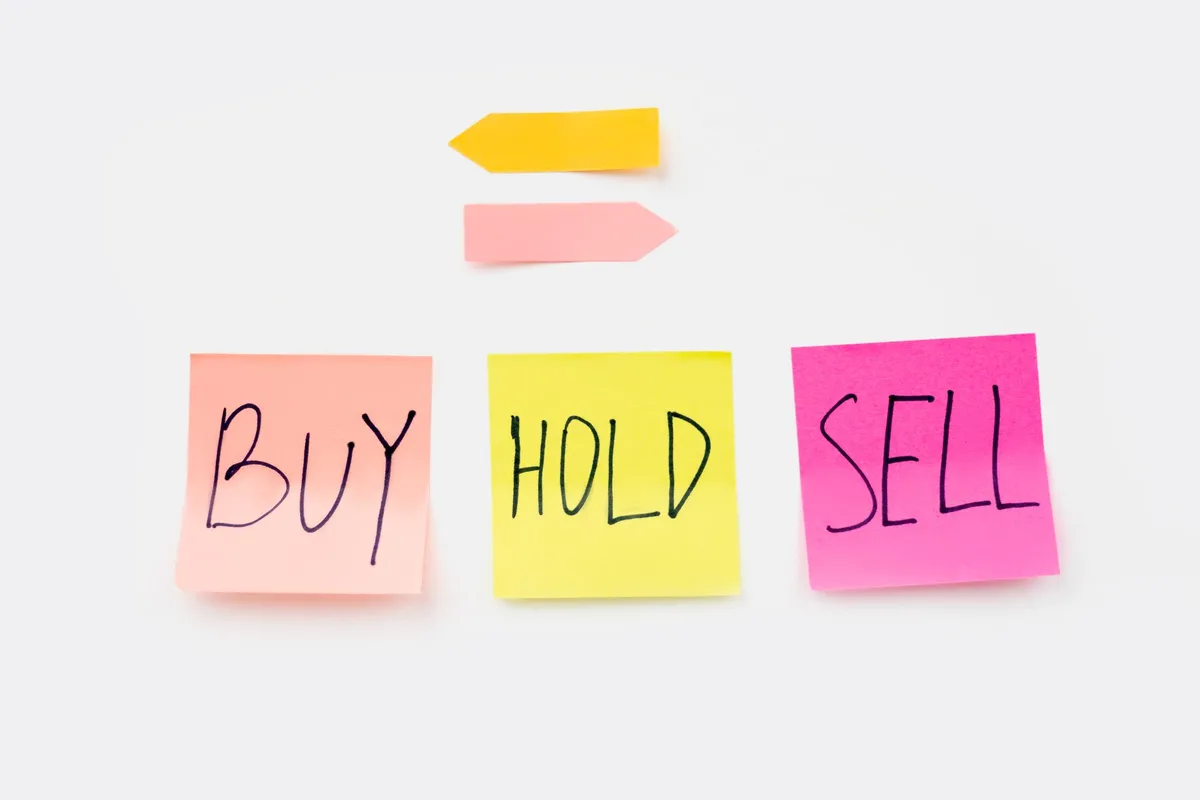
Key takeaways
- A stock option is a contract that gives you the right, but not the obligation, to buy or sell 100 shares at a fixed price before a set date.
- A call is a bet that a stock will rise; a put is a bet that it will fall or a form of insurance on shares you own.
- One contract controls 100 shares, so a quoted premium of $3 actually costs you $300, which surprises almost every beginner.
- Buying an option gives you a known, limited maximum loss, but that loss is often 100 percent of what you paid, and it can happen fast.
- Selling or writing options can bring in steady income but exposes you to much larger risks, so most beginners should learn as buyers first.
- Options are priced from the stock price, the strike, time left, and expected swings called implied volatility, and paying too much for time value is the classic rookie mistake.
If you have ever heard someone at work brag about a stock option trade, or watched a headline about a trader who turned a few hundred dollars into a fortune, you probably came away with two feelings at once. Options sound exciting, and options sound dangerous. Both feelings are correct. Underneath the drama, though, an option is a simple idea that has been around for centuries. It is a contract that lets you lock in the right to buy or sell something at a set price for a limited time. That is it. This guide walks you through what a call and a put really are, how strike prices and expiration dates work, why one contract quietly controls 100 shares, and how the leverage that makes options thrilling is the exact same feature that can wipe out your money. We will do real arithmetic, look at the honest odds, and end with a plain-spoken take on whether a beginner should touch them at all.
The one-sentence definition, then the plain version
A stock option is a contract that gives you the right, but not the obligation, to buy or sell 100 shares of a stock at a fixed price on or before a certain date.
Read that again slowly, because every word earns its place. You get a right, not a duty, so you can walk away if the deal turns bad. It covers a fixed price, so you know in advance what you would pay or receive. It has a deadline, so unlike owning a share, the clock is always running. And it controls 100 shares, which is the detail that turns small-sounding prices into real money.
Think of a simple everyday parallel. Imagine you find a house you love listed at $300,000, but you cannot buy yet. You pay the seller $3,000 for the right to purchase it at $300,000 any time in the next three months. If prices jump and the house is suddenly worth $340,000, your little $3,000 contract is now very valuable, because you can still buy at $300,000. If prices fall instead, you simply let the option lapse and you are out only the $3,000. That is a call option in real life. The stock market version just trades faster and in standard sizes.
Calls and puts: the only two building blocks
Every option strategy ever invented, from the simple to the exotic, is built out of just two pieces. Learn these two and you understand the entire foundation.
A call option is a bet that the price goes up
A call gives you the right to buy 100 shares at the strike price. You buy a call when you think the stock will rise. If it climbs above your strike, your call gains value, because you hold the right to buy cheaply while everyone else pays the higher market price. If the stock sits still or falls, the call loses value and can expire worthless.
A put option is a bet that the price goes down, or a form of insurance
A put gives you the right to sell 100 shares at the strike price. You buy a put when you think a stock will fall, because the right to sell at a high strike while the market price drops is worth money. Puts have a second, calmer use. If you already own shares and want protection, buying a put acts like an insurance policy, since it lets you sell at the strike no matter how far the stock crashes. More on that protective use later.
The four words you must know: strike, expiration, premium, contract
Options come with their own short vocabulary. Four terms carry almost all the weight.
Strike price. This is the fixed price written into the contract, the price at which you can buy (for a call) or sell (for a put). If you buy a call with a $50 strike, you have locked in the right to buy at $50 no matter how high the stock goes.
Expiration date. Every option dies on a set date. After it expires, the contract is gone. Options range from ones that expire in days to ones that run a year or more out, called LEAPS. The nearer the expiration, the faster the option loses its time value as the deadline approaches.
Premium. This is the price you pay to buy the option, quoted per share. If a call is quoted at $3.00, that is $3.00 per share of the 100 shares it controls.
Contract size. One standard equity option contract equals 100 shares. So that $3.00 premium is not $3.00. It is $3.00 times 100, or $300 for a single contract. Miss this and you will badly misjudge how much you are risking. If you buy ten contracts at $3.00, you have spent $3,000 and you now control 1,000 shares worth of exposure.
Intrinsic value and time value: what you are actually paying for
An option's premium is made of two ingredients, and separating them tells you whether you are getting a fair deal or overpaying for hope.
Intrinsic value is the amount the option is already in the money. For a call, it is how far the stock price sits above the strike. If a stock trades at $55 and you hold a $50 call, that call has $5 of intrinsic value, because you could exercise it to buy at $50 and immediately be $5 per share ahead. If the stock is below the strike, intrinsic value is zero. It cannot go negative, because you would simply not exercise.
Time value is everything else in the premium, the extra amount buyers pay for the chance that the stock moves further in their favor before expiration. A $50 call on a $55 stock might trade for $7 even though only $5 is intrinsic. That extra $2 is time value. As expiration approaches, time value melts away, a steady drip that traders call time decay. On the expiration day itself, time value is gone and only intrinsic value remains.
Here is the practical lesson. When you buy an option, you are often paying mostly for time value, which is guaranteed to erode. The stock has to move enough, and soon enough, just to overcome the time value you paid. That is why so many bought options expire worthless even when the trader guessed the direction correctly but the move came too slowly.
A worked example with real arithmetic
Numbers make this concrete. Suppose shares of a company trade at $50. You are optimistic, so you buy one call option with a $50 strike that expires in two months, and the premium is $3.00 per share. Because one contract is 100 shares, your total cost is $3.00 times 100, which is $300. That $300 is the most you can lose, no matter what happens.
Now look at what your call is worth at expiration across a range of stock prices. Remember, at expiration there is no time value left, so the option is worth only its intrinsic value, and your profit is that value minus the $300 you paid.
- Stock at $45: Your $50 call is worthless, because nobody exercises the right to buy at $50 when the market price is $45. You lose the full $300, a 100 percent loss.
- Stock at $50: Still worthless. The strike and the price match, so there is no intrinsic value. You lose the full $300.
- Stock at $53: The call has $3 of intrinsic value, or $300 for the contract. That exactly equals the $300 you paid, so you break even. This $53 figure is your break-even price: the strike of $50 plus the $3 premium.
- Stock at $58: The call is worth $8 per share, or $800. Subtract your $300 cost and you have a $500 profit, which is about a 167 percent return on the $300 you risked.
- Stock at $63: The call is worth $13 per share, or $1,300. Subtract the $300 cost and you profit $1,000, roughly a 333 percent return.
Now compare that to simply buying the stock. To control 100 shares outright you would spend $50 times 100, or $5,000. If the stock rises from $50 to $58, your shares gain $800, which is a 16 percent return on your $5,000. The option buyer turned the same $8 move into a 167 percent return on a far smaller stake. That multiplier is leverage, and it cuts both ways. If the stock had gone nowhere, the stockholder would be flat while the option buyer would have lost everything.
Buying versus writing: the two sides of every trade
Every option contract has a buyer and a seller, and they live in very different worlds. The seller is also called the writer, because they create, or write, the contract and collect the premium up front.
When you buy an option, you pay the premium and you get rights. Your maximum loss is fixed at the premium, which is comforting. Your potential gain can be large. The catch is that time is against you, since the clock and time decay erode your position every single day, and the odds of any single bought option paying off are often modest.
When you write an option, you collect the premium and you take on obligations. Time is now on your side, because every day of decay is money that stays in your pocket. But your risk profile flips. A writer who sells a call without owning the shares, called a naked call, faces theoretically unlimited losses, since a stock can rise without limit. A writer who sells a put takes on the obligation to buy 100 shares at the strike even if the stock has collapsed. Writers win often but can lose big, which is the mirror image of the buyer's frequent small losses and occasional large win.
For a beginner, the honest guidance is to learn as a buyer first, where the worst case is always known and capped, and to only write options in the defined-risk, covered forms described next.
Three beginner-friendly strategies, explained simply
Most sensible entry-level options activity uses one of three defined-risk approaches. None of them is a lottery ticket, and each has a clear purpose.
The covered call: renting out shares you already own
If you own at least 100 shares of a stock, you can sell a call against them and collect a premium. You are agreeing to sell your shares at the strike if the stock rises above it. If it does not, you keep the premium as income and still own your shares. The trade-off is that you cap your upside, since a big rally would see your shares called away at the strike while the stock keeps climbing without you. It is a way to earn a little income on holdings you are comfortable parting with at a set price. DollarFlourish has a dedicated deep dive on this one, but the short version is that it is the gentlest way to sell options because your shares back the obligation.
The cash-secured put: getting paid to wait for a lower price
Suppose you would happily buy a stock at $45, but it trades at $50 today. You can sell a put with a $45 strike and collect a premium. You set aside the full $4,500 in cash to back it, which is what makes it cash-secured. If the stock falls below $45, you buy the shares at $45, a price you already wanted, and you keep the premium on top. If it never falls, you simply keep the premium as income. The risk is real: if the stock crashes to $20, you are still obligated to buy at $45, so only sell puts on companies you genuinely want to own.
The protective put: buying insurance on your shares
If you own shares and fear a drop, you can buy a put as insurance. It gives you the right to sell at the strike no matter how far the stock falls. Like any insurance, it costs a premium, and if the feared crash never comes, that premium is simply the price of peace of mind. It caps your downside on the position at the strike while leaving your upside intact. The cost of the put is the honest trade-off for that protection.
How options get priced, including implied volatility in plain terms
You do not need to memorize a pricing formula to invest sensibly, but you should understand the forces that move an option's premium, because they explain why an option can lose value even when the stock behaves the way you hoped.
Four inputs drive most of the price. First, the stock price relative to the strike sets the intrinsic value. Second, time to expiration adds time value, since more time means more chance for a favorable move. Third, interest rates nudge prices modestly. Fourth, and often the most surprising to newcomers, is implied volatility, which is the market's expectation of how much the stock will swing between now and expiration.
Implied volatility deserves a plain explanation because it trips up so many beginners. When the market expects big swings, options get more expensive, because a wild stock is more likely to make a large favorable move. When the market expects calm, options get cheaper. This creates a trap. If you buy an option right before an earnings report or a big announcement, implied volatility is often inflated, and you are paying a premium loaded with expectation. Once the news comes out, that inflated volatility can collapse, a phenomenon traders call a volatility crush. Your option can lose value even if the stock moved in your favor, simply because you overpaid for the expected drama. Buying cheap volatility and selling expensive volatility is a large part of what experienced options traders actually do.
The risk conversation nobody should skip
This is the section that matters most, so we will be blunt. Options are not a shortcut to wealth, and the structure of the product works against casual buyers in specific ways.
Total loss is normal, not rare. An option that finishes out of the money expires worthless, and you lose 100 percent of what you paid. With ordinary shares, a bad year might cost you 20 or 30 percent and you still own something. With a bought option, the entire stake can vanish on schedule. Only ever use money you can afford to lose in full.
You can be right and still lose. Because you pay for time value and because implied volatility can fall, you can correctly guess a stock's direction and still lose money if the move is too small or too slow. Direction is not enough. Timing and magnitude both have to cooperate.
Leverage magnifies mistakes. The same leverage that turned an 8 dollar stock move into a 167 percent gain in our example can turn a modest wrong guess into a total loss. Leverage does not know whether you are right; it just amplifies the outcome.
Selling options can hurt far more than buying. A naked call has unlimited theoretical risk. An uncovered put can force you to buy a collapsing stock. Never sell options in forms you do not fully understand, and never in sizes that could damage your finances if the trade goes against you.
Costs and taxes add friction. Commissions, bid-ask spreads, and the fact that most short-term options gains are taxed as ordinary income all quietly reduce returns. The IRS treats the tax handling of options with its own set of rules, and gains on positions held under a year get no favorable long-term rate.
Regulators require every new options trader to receive a document called Characteristics and Risks of Standardized Options for a reason. It is dry, but it exists because people routinely underestimate exactly these risks. If a broker, a course, or a stranger online promises consistent big returns from options, treat it as a warning sign, not an opportunity.
Should a beginner trade options at all?
Here is the neighborly, honest answer. For the large majority of people, the smartest money move is boring: build an emergency fund, avoid high-interest debt, and steadily invest in low-cost, broadly diversified index funds inside tax-advantaged accounts. That plan quietly builds wealth for most households, and it requires no options at all.
Options have a legitimate place, but it is a narrow one. Protective puts can genuinely hedge a concentrated position. Covered calls can earn modest income on shares you already own and are willing to sell. Cash-secured puts can be a disciplined way to buy stocks you want at prices you like. If you are drawn to options, the sane path is to keep the vast majority of your savings in your long-term plan, carve off a small amount you can afford to lose entirely, start by buying single calls or puts so your risk is always capped and known, and treat the first year as tuition. Paper trading, where you track hypothetical trades without real money, is a cheap way to learn the mechanics before a dollar is at stake.
What you should not do is fund an options account with rent money, chase the trades you see celebrated online, or believe that leverage is a substitute for patience. The people who use options well treat them as precise tools with defined risk. The people who get hurt treat them as scratch-off tickets. The difference between those two outcomes is not luck. It is respect for the math you just read.
The bottom line
An option is a time-limited right to buy or sell 100 shares at a fixed price. A call bets up, a put bets down or protects, and the premium you pay is split between real intrinsic value and eroding time value. Buying caps your loss at the premium; selling can expose you to far more. The leverage is genuine, and so is the risk of losing everything you put in. Learn the vocabulary, respect the arithmetic, keep any options activity small and defined, and remember that for building lasting wealth, a simple index-fund plan beats clever trading for almost everyone. Options can be a useful tool in a careful hand. They are a fast way to lose money in a hopeful one.
Most investors cannot pass a basic money test. Can you?
The market charges tuition for every gap in your knowledge. The Financial IQ Test measures what you actually know across investing, banking, credit, and retirement, then shows you exactly which gaps to close before they get expensive.
Test your Financial IQQuestions people ask
Do I need a special account to trade options?
Yes. Your broker has to approve you for options separately from a regular brokerage account. You fill out a short application about your experience, income, and goals, and the broker assigns you an approval level. Beginners usually start at the lowest level, which permits buying calls and puts and selling covered calls, and only unlocks riskier strategies after you have shown some experience.
Why does one option contract cost more than the price I see quoted?
Because every standard equity option contract represents 100 shares. The number you see quoted, say $2.50, is the price per share. Multiply by 100 to get the real cost of one contract, which is $250 plus a small commission at many brokers. This 100 share multiplier is the single most common thing new traders overlook, and it makes positions far larger than they appear.
Can I lose more than I put in when trading options?
It depends on which side you are on. If you buy a call or put, the most you can lose is the premium you paid, and no more. If you sell options without owning the underlying shares or holding enough cash, your losses can be far larger than the premium you collected, and a naked call has theoretically unlimited risk. That difference is why beginners are steered toward buying and toward covered strategies.
What happens if my option expires worthless?
If the option has no intrinsic value at expiration, it simply expires and disappears from your account, and you lose the entire premium you paid. There is nothing to sell and nothing to collect. This is a normal and frequent outcome, which is why you should never risk money on options that you cannot afford to lose in full.
Are options a good way for a beginner to get rich quick?
No, and anyone promising that is selling something. Options are powerful tools for hedging risk and for making defined bets, but the same leverage that can multiply a gain can erase your money just as fast. Most people are better served putting the bulk of their savings in low-cost index funds and treating any options activity as a small, educated, and truly optional slice.
What is the difference between American and European style options?
American style options can be exercised any day up to and including expiration, and most options on individual US stocks work this way. European style options can only be exercised on the expiration date itself, and many index options use this style. For a buyer who plans to sell the contract rather than exercise it, the distinction rarely matters, but it is worth knowing the label on what you own.
Keep reading

How to Choose a Brokerage Account in 2026: A Practical Guide
Dividend Investing for Beginners: Income You Can Actually See
Dollar-Cost Averaging: The Math, the Myths, and When It Wins
The Flourish Letter
One smart money idea each week, charts included. Join free and get the printable 2026 Money Calendar in your welcome email.