Key takeaways
- An IPO is the first time a private company sells its shares to the public, usually to raise cash and to let early backers cash out.
- The process runs through investment banks called underwriters, a detailed S-1 filing with the SEC, a roadshow to big investors, and a final price set the night before trading.
- The IPO price is the price insiders pay, and it is almost never the price a regular investor can buy at once the stock starts trading.
- Lock-up periods, typically around 90 to 180 days, keep insiders from selling right away, and their expiration can pressure the price.
- Direct listings and SPACs are alternative doors to the public markets, each with its own tradeoffs.
- Newly public stocks are volatile, and buying into the hype on day one is one of the riskier ways a beginner can invest.
You have probably seen the headline before. A company you have heard of "goes public," the stock "pops" on the first day, and a few lucky people seem to have gotten rich before lunch. It sounds like a party you were not invited to. The truth is more interesting and a lot more useful once you understand how the whole thing actually works. An IPO is not magic, and it is not a lottery ticket. It is a carefully staged financial event with clear players, clear steps, and some predictable traps for anyone who buys in without knowing the rules.
This guide walks through all of it in plain language. What going public really means, why companies choose to do it, how the process unfolds from a private board meeting to the opening bell, who actually gets shares at the official price, and why that price is almost never the one you can buy at. We will also look at the alternatives, the real risks, and the honest answer to the question every beginner asks: is this something I should even try?
What "going public" actually means
Every company starts out private. Its shares are owned by founders, employees, and a small group of early investors such as venture capital funds. Those shares do not trade on any public exchange. If an early employee wants to turn her stock into cash, she cannot simply log into a brokerage app and sell. There is no open market for it.
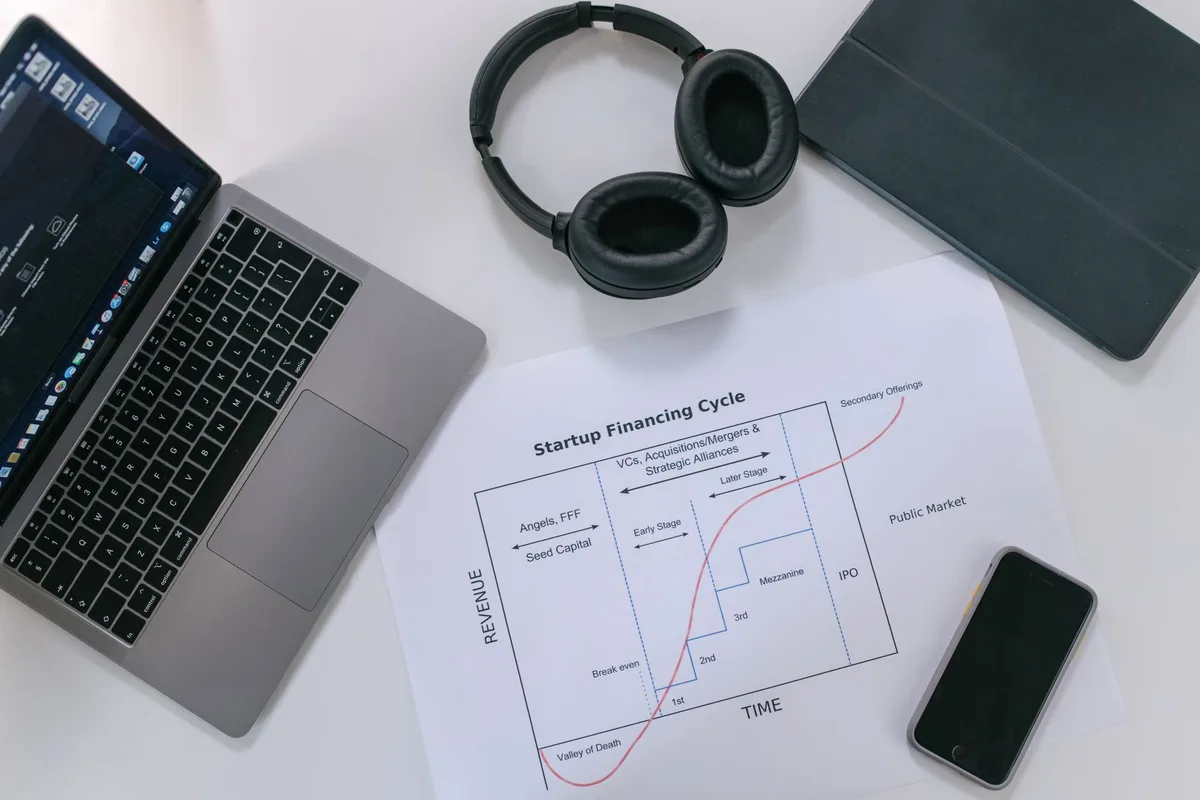
An initial public offering, or IPO, changes that. It is the first time a company sells its shares to the general public and lists them on a stock exchange like the New York Stock Exchange or Nasdaq. After the IPO, anyone with a brokerage account can buy and sell the stock during market hours. The company crosses a line from private to public, and with that line comes a new set of rules, disclosures, and expectations.
Two things are worth separating in your mind right away. First, an IPO raises money for the company only on the shares the company itself sells. Second, an IPO also creates a market where existing owners can eventually sell their shares to others. Those are related but different goals, and understanding the difference explains a lot of what follows.
Why companies decide to go public
Going public is a big, expensive, permanent decision. Companies do not do it casually. There are a few core reasons that come up again and again.
Raising capital. This is the headline reason. By selling new shares to the public, a company can raise a large sum of money in one event. That cash can fund new factories, research, hiring, paying down debt, or expansion into new markets. Unlike a loan, this money does not have to be paid back with interest. The tradeoff is that the founders now own a smaller slice of a bigger pie, and they answer to public shareholders.
Liquidity for early investors and employees. The venture capital funds and early employees who took a risk years earlier want a way to convert their paper wealth into real money. A public market gives them that exit. This is often the quieter motivation behind an IPO, and it explains why so many insiders are watching the calendar for the day they are finally allowed to sell.
Prestige, currency, and visibility. A public listing raises a company's profile with customers and future recruits. It also gives the company a new form of currency. Public shares can be used to acquire other businesses or to compensate employees in a way private stock cannot. There is a real marketing and hiring benefit to being a company people can invest in.
Going public also has downsides that push some companies to stay private longer. Public companies must file detailed quarterly and annual reports, answer to Wall Street's short-term expectations, and spend heavily on legal, accounting, and compliance work. Some founders decide the freedom of staying private is worth more than the cash an IPO would bring. That is why a company can be enormous and still not be publicly traded.
The IPO process, step by step
From the outside an IPO looks like a single day. On the inside it is a months-long project with a well-worn sequence. Here is how it typically unfolds.
Step 1: Hiring the underwriters
The company hires one or more investment banks to manage the offering. These banks are called underwriters, and the lead bank is often called the bookrunner. Their job is enormous. They help decide how many shares to sell, help set the price, market the deal to large investors, and in many cases agree to buy the shares themselves and resell them. For this they collect a fee, historically a meaningful percentage of the money raised. The underwriters are central to almost everything that follows.
Step 2: The S-1 filing and SEC review
Before a company can sell shares to the public, it must file a registration statement with the Securities and Exchange Commission. For most IPOs this document is called the S-1. It is long, detailed, and legally required to tell the truth. It describes the business, the competition, the financial statements, the ownership structure, how the company plans to use the money, and a lengthy list of risk factors.
The SEC reviews the S-1 not to judge whether the stock is a good investment, but to make sure the company has disclosed what investors need to know. This is a crucial point. The government is checking for honest, complete disclosure, not blessing the deal. Any curious investor can read the full S-1 for free on the SEC's EDGAR database, and the risk factors section alone is often more revealing than any glossy press release.
Step 3: The roadshow
Once the paperwork is moving, the company's executives and its bankers hit the road. During the roadshow they meet with big institutional investors, the mutual funds, pension funds, and hedge funds that might buy large blocks of shares. They present the business, answer hard questions, and gauge how much demand there is and at what price.
This is where the real price discovery happens, and it happens behind closed doors among professionals. The bankers build what is called a book of orders, tracking how many shares these big buyers want and how much they are willing to pay. That book, not any public vote, drives the final price.
Step 4: Pricing the deal
The company first publishes an estimated price range in its filing, for example somewhere between eighteen and twenty dollars a share. Then, usually the evening before trading begins, the company and its underwriters settle on one final IPO price based on the demand they saw during the roadshow. If demand was strong, they may price at the top of the range or above it. If demand was soft, they may price low or shrink the deal.
Step 5: The opening trade and the lock-up
On the listing day the stock begins trading on the exchange. The shares that were sold at the IPO price change hands, and now the open market takes over. From this moment, supply and demand from thousands of buyers and sellers set the price, second by second. We will come back to why the opening trade so often differs from the IPO price, because that gap is where a lot of confusion lives.
Layered on top of all this is the lock-up period. Insiders and early investors sign an agreement not to sell their shares for a set stretch of time after the IPO, commonly around 90 to 180 days. This keeps a flood of insider shares off the market during the fragile early days. When that lock-up finally expires, a new wave of shares can become available for sale, which sometimes pushes the price down.
Who actually gets shares at the IPO price
Here is the part that surprises most people. The shares sold at the official IPO price rarely reach ordinary investors. When the underwriters allocate the offering, they distribute it mostly to their best institutional clients and to favored individual clients with large accounts. Big mutual funds, pension funds, and wealthy private clients are first in line.
Why? Because those buyers are valuable to the bank in many other ways, and because handing them shares that might rise in value is a way to reward the relationship. The regular investor, sitting at home with a standard brokerage app, is usually not on that list. In recent years a few brokerages have started offering small IPO allocations to everyday customers, but the amounts are limited, the popular deals get oversubscribed, and there is no guarantee you will receive any shares at all.
So when you read that a stock "priced at twenty dollars," understand that twenty dollars was the price for insiders and institutions. By the time you can click buy, the price may be very different.
IPO price versus opening trade: the gap that fools people
This is one of the most important ideas in the whole topic, so let us slow down. There are two prices that people confuse constantly.
The IPO price is the fixed price the company and its bankers agreed on the night before. It is the price at which the offered shares are sold to those institutional and favored buyers. It is a negotiated number, not a market number.
The opening trade is the first price at which the stock actually changes hands on the public exchange once trading begins. This price is set by live supply and demand. If the general public is excited and demand is hot, the first public trade can open far above the IPO price. That jump is the famous first-day pop.
Imagine a company prices its IPO at twenty dollars. Institutions buy at twenty. The next morning, public demand is intense, and the first public trade prints at thirty dollars. The headline screams that the stock is up fifty percent. But notice who benefited. The insiders and institutions who bought at twenty are sitting on an instant gain. The everyday investor who was excited by the headline and bought at thirty paid the higher price. If the stock later drifts back toward twenty-two, the institutions are still ahead, while the day-one retail buyer is down.
A big first-day pop is often celebrated, but it is not free money for the company either. If the stock immediately trades at thirty, it means the shares were sold to insiders at twenty, and the company arguably left ten dollars per share on the table. That is money that went to the lucky allocation holders rather than into the company's bank account. The pop looks great on television and is far more complicated underneath.
Other doors to the public market: direct listings and SPACs
A traditional underwritten IPO is the classic path, but it is not the only one. Two alternatives come up often enough to be worth understanding.
Direct listings
In a direct listing, a company lists its existing shares on an exchange without hiring underwriters to sell a big block of new shares and without the same roadshow machinery. Existing shareholders can simply sell into the open market, and the price is discovered by the market from the first trade. This approach can be cheaper because it avoids large underwriting fees, and it can be fairer in the sense that there is no favored group buying at a set low price before everyone else. The tradeoff is that a pure direct listing traditionally did not raise fresh capital for the company, since no new shares were being created and sold, although the rules here have evolved. Direct listings tend to suit companies that are already well known and do not urgently need new cash.
SPACs
A SPAC, or special purpose acquisition company, flips the usual order. First, a shell company with no real operations raises money in its own IPO, promising investors that it will later find a private business to merge with. Investors are essentially handing money to a management team and trusting them to go shopping. Once the SPAC finds a target and completes the merger, the private business becomes public through that deal, skipping much of the traditional IPO process.
SPACs can be faster and can let a company go public with projections and marketing that a standard IPO would handle differently. That flexibility cuts both ways. A wave of SPAC deals in the early 2020s produced a lot of disappointing outcomes for shareholders, and regulators have since tightened their focus on disclosure. If you ever consider a SPAC, read carefully about who the sponsors are, how they get paid, and what the target company's fundamentals actually look like.
The real risks of buying newly public stocks
Newly public companies carry risks that are different in kind, not just degree, from established public stocks. It is worth naming them plainly.
Volatility. A stock with only days or weeks of trading history has no settled sense of what it is worth. Prices can swing violently as the market argues with itself. That volatility can be thrilling on the way up and brutal on the way down.
Lock-up expiration. Remember those insiders who could not sell for around 90 to 180 days? When their lock-up ends, a large number of shares can suddenly become available. If many insiders decide to sell at once, the added supply can push the price lower. Savvy observers watch lock-up expiration dates for exactly this reason.
Hype and thin information. A brand-new public company has a short public track record. There are few quarters of results to study and little history of how management behaves under Wall Street's scrutiny. Into that vacuum rushes hype, and hype is a poor foundation for a durable investment decision. The excitement that makes a first day feel electric is the same excitement that can push a valuation far past what the underlying business supports.
Underwriter incentives. The banks running the deal are paid to sell it. They have every reason to present the company in its best light. That does not make them dishonest, but it does mean the marketing you see around an IPO is not neutral analysis. Your job is to read past it to the actual filings.
How a normal investor can participate
If you have decided you want exposure to newly public companies, you have a few realistic options. None of them involve reliably getting shares at the IPO price, because as we covered, that door is mostly closed to individuals.
The most common route is simply to buy the stock in the open market after it starts trading. This is easy and requires no special access. The catch is that you are buying at whatever price the market has set, which after a hot open can be well above the IPO price. Patience helps here. Some investors deliberately wait weeks or months, letting the initial frenzy cool and letting the company report at least one quarter as a public entity before they decide.
A second route is through certain brokerages that offer limited IPO participation to retail customers. These programs can occasionally get you a small allocation at the IPO price, but demand for good deals far outstrips supply, and eligibility rules apply. Treat any allocation you receive as a modest bonus, not a strategy.
A third route is indirect and, for many people, the most sensible. Some diversified funds hold newly public companies as part of a broad portfolio. Owning a total market fund means that when a company goes public and eventually enters the index, you already own a sliver of it without having to time anything. You give up the thrill of the single big bet in exchange for spreading your risk across hundreds or thousands of companies.
So, are IPOs a good idea for beginners?
Here is the honest answer, framed as education rather than advice. For most people who are new to investing, buying an individual stock in its first days of public life is one of the harder ways to begin. You are stepping into maximum volatility, minimum history, and maximum hype, all at once. That is a difficult environment even for professionals, many of whom get it wrong.
This does not mean IPOs are bad or that you should never own a newly public company. It means the odds and the information are stacked in ways that rarely favor the excited day-one buyer. A common, calmer approach is to let a company prove itself over a few public quarters, to read its filings with a skeptical eye, and to size any single-stock position small enough that a bad outcome would not derail your finances. Another common approach is to skip individual IPO bets entirely and get your exposure through diversified funds, where new companies arrive in your portfolio automatically and in moderation.
The most valuable thing you can do is understand the machinery, which you now do. You know that the IPO price belongs to insiders, that the opening trade is a different animal, that lock-ups can pressure the price months later, and that the hype around a listing is marketing, not analysis. That knowledge will not guarantee a good outcome. It will keep you from being the person who buys the headline and wonders, weeks later, where the money went.
The bottom line
An IPO is the moment a private company opens its doors to public investors, usually to raise capital and to give early backers a way out. It runs on a predictable machine of underwriters, an S-1 filing, a roadshow, a negotiated price, and a lock-up. The price you read about is the insider price, and the price you can actually buy at is set by the open market, often higher. Alternatives like direct listings and SPACs offer different tradeoffs. And for a beginner, the smartest move is usually to understand the whole picture first, then decide calmly, rather than chasing the excitement of a single loud day.
Most investors cannot pass a basic money test. Can you?
The market charges tuition for every gap in your knowledge. The Financial IQ Test measures what you actually know across investing, banking, credit, and retirement, then shows you exactly which gaps to close before they get expensive.
Test your Financial IQQuestions people ask
Can a regular person buy a stock at the IPO price?
Rarely. The shares offered at the official IPO price go mostly to the underwriting banks' big clients, such as mutual funds and pension funds. A handful of brokerages now offer small IPO allocations to everyday customers, but access is limited and not guaranteed. Most individual investors end up buying in the open market after trading begins, often at a higher price.
What is a lock-up period and why does it matter?
A lock-up is a contract that bars company insiders and early investors from selling their shares for a set window after the IPO, commonly around 90 to 180 days. It exists so the market is not flooded with insider shares on day one. When a lock-up expires, a wave of new selling can hit the stock, so the price sometimes dips around that date.
Why does an IPO stock sometimes jump on the first day?
The IPO price is set by negotiation between the company and its bankers, not by open trading. If public demand turns out to be stronger than that price assumed, the first trades can open well above it. That first-day pop looks exciting, but it means the company left money on the table, and buyers at the higher open are paying more than insiders did.
What is the difference between a SPAC and a traditional IPO?
In a traditional IPO a company sells its own shares directly to the public. A SPAC is a shell company that raises money in an IPO first, then goes looking for a private business to merge with. The private business becomes public through that merger. SPACs can be faster and involve less standard disclosure up front, which has historically made results uneven for shareholders.
Are IPOs a good investment for beginners?
For most beginners, buying an individual stock in its first days of trading is one of the harder ways to start. The price is volatile, there is little trading history to study, and hype can push valuations far from fundamentals. Many long-term investors prefer to watch a newly public company report a few quarters as a public entity before deciding, or to gain exposure through a diversified fund instead.
How do I find the details of an upcoming IPO?
Every company going public files a registration statement, usually an S-1, with the SEC. You can read it for free on the SEC's EDGAR database. It covers the business, the financials, the risk factors, and how the company plans to use the money. Reading the risk factors section is one of the most useful things a curious investor can do.
Keep reading
How to Choose a Brokerage Account in 2026: A Practical Guide
Dividend Investing for Beginners: Income You Can Actually See
Dollar-Cost Averaging: The Math, the Myths, and When It Wins
The Flourish Letter
One smart money idea each week, charts included. Join free and get the printable 2026 Money Calendar in your welcome email.