How to Become a Freelance Podcast Editor in 2026
Key takeaways
- Clients hire defined episode outcomes such as full edits, multitrack mixes, ad assembly, and monthly retainers, not vague audio help.
- A hireable portfolio is four to six before-and-after samples that show the problem, the fix, loudness target, and turnaround.
- Early clients usually come from specific outreach, platforms used on purpose, and partner referrals rather than inbound fame.
- Per-episode fees and retainers often beat pure hourly once you know your pace, and every quote should include unpaid admin time and tax reality.
- Self-employed editors commonly set aside about 25 to 30 percent of each payment for income tax plus self-employment tax and use written scope with deposits.
- The first 90 days are for proof, process, and a first paid project, not a guaranteed salary replacement.
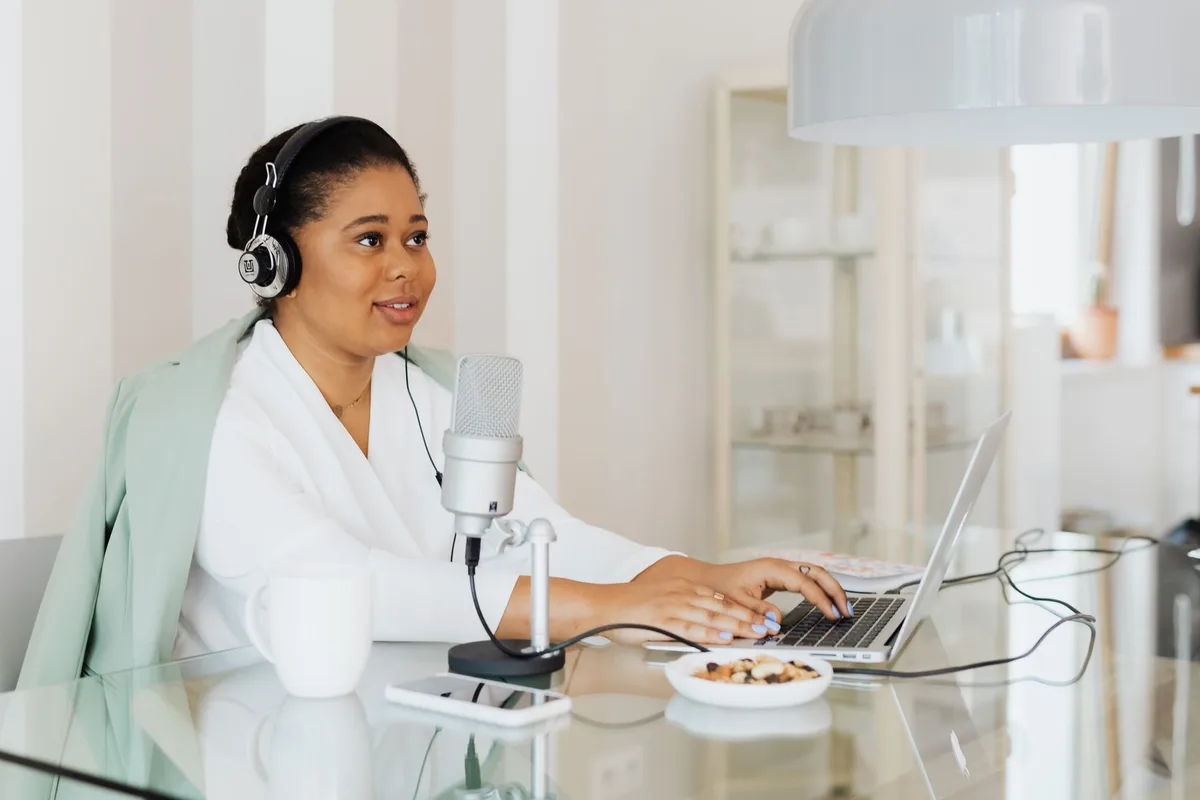
A host records for forty-five minutes, hits stop, and thinks the episode is done. It is not. Breaths pile up. Levels jump when a guest laughs into the mic. A door slams in the background. The intro music is two decibels too loud. That cleanup, pacing, and polish is what a freelance podcast editor sells. In 2026 the medium is still crowded with shows that need consistent audio quality, and many creators would rather pay a specialist than spend Sunday night cutting filler words. This guide is a working path for US adults who want to turn that need into a small service business.
You will see what editors actually sell, which skills matter in a practical order, how to build a portfolio with zero clients, where paying work comes from, how rate and take-home math work after tax set-asides, how self-employment taxes fit, what the first 90 days should look like, and the pitfalls that stall beginners. No overnight salary promise. Just a clear craft you can practice, price, and deliver if you treat sound, deadlines, and money with the same care.
What freelance podcast editors actually sell
Clients rarely hire "someone good with audio" in the abstract. They hire a finished episode that is ready to publish on a schedule. The product is reliability plus clarity. A host wants to talk. An editor turns raw takes into a show that sounds intentional.
Common packages in the independent market look like defined outcomes, not mystery hourly babysitting:
- Full episode edit that removes major mistakes, balances levels, trims long pauses, and delivers a clean master with timed intro and outro
- Dialogue cleanup and noise reduction for rough home studios, HVAC hum, and room echo that make a show feel amateur
- Show assembly that places ads, midrolls, music beds, and sponsor reads at agreed timestamps
- Multitrack mix when host and guest record separately and need sync, gain matching, and a natural conversation feel
- Transcript or show-notes companion as an add-on when the client wants searchable text or chapter markers
- Retainer blocks for a fixed number of episodes per month with a standing deadline and a revision rule
- Launch polish for a new show: template session file, loudness target, file naming, and a short style guide so later episodes match
Notice what is missing. Open-ended "make it sound cool" with no deliverable. Spec contests that pay in exposure. Endless free sample edits for strangers who never book. Healthy freelance podcast editing is a written scope, a file format, a loudness target, a due date, and an invoice.
Related wage-and-salary work sits under broadcast, sound, and video technicians in the Bureau of Labor Statistics Occupational Outlook. Sound engineering technicians, who record, mix, and edit sound for media including podcasts, had a median annual wage of $73,130 in May 2025 in that BLS snapshot. The broader broadcast, sound, and video technician group had median pay of $60,150, about 136,600 jobs in 2025, and projected growth of about 1 percent from 2025 to 2035. Those figures describe employed workers more than a solo editor. They tell you the underlying craft is real. They do not fill your inbox.
Skills that matter in 2026, in a practical order
You do not need a recording-studio degree to start. You need a repeatable loop you can run on a deadline: ingest files, clean dialogue, pace the conversation, mix to a loudness target, export the right format, and hand off without drama. A practical learning order looks like this.
- Listening judgment. Train your ear to hear breaths that break flow, mouth clicks that distract, and uneven levels that make a guest disappear under the host. If you cannot name the problem, you cannot price the fix.
- A primary DAW. Pick one digital audio workstation and stay with it long enough to be fast. Many podcast editors use tools such as Adobe Audition, Reaper, Descript, or Hindenburg. Depth in one tool beats shallow familiarity with six.
- Dialogue editing craft. Cut filler where it helps pacing, keep natural speech where cutting would sound robotic, and preserve the personality of the host. Speed matters, but taste matters more.
- Noise and room treatment in software. Learn when light noise reduction helps and when aggressive processing makes voices sound underwater. Know a few reliable plugins or built-in tools and stop collecting every free VST you see.
- Loudness and delivery standards. Most podcast clients expect a consistent integrated loudness target and true-peak ceiling so episodes sound even across apps. Learn to measure, not guess.
- File hygiene. Multitrack naming, sample-rate awareness, backup habits, and clear export naming (show-episode-date-version) prevent late-night panic.
- Light production extras. Intro and outro placement, simple music beds, chapter markers, and basic show notes are often the difference between a one-off job and a retainer.
- Client craft. Confirm scope in writing, ask about ad placement rules, send a mid-project note if a guest track is unusable, and deliver on the day you promised. A brilliant mix that arrives three days late loses the next month of work.
People coming from radio, live sound, music production, YouTube audio, transcription cleanup, or even careful hobby recording often produce hireable samples in a few months of focused practice. Complete beginners usually need longer. Consistency beats a certificate binge followed by radio silence. Courses can structure study. Buyers hire proof you can turn messy raw files into a publishable episode under a clock. AI tools can speed transcription, filler detection, and first-pass cleanup. Clients still pay you for taste, pacing, loudness discipline, and judgment about what to leave in.
Build a portfolio when you have zero clients
Generalist freelancers compete with everyone who owns a laptop and a free trial of editing software. A niche makes referrals easier. You can widen later. Early focus is a sales tool, not a life sentence. Niches that commonly need recurring edits include interview shows with two remote mics, solo narrative shows that need tight pacing, business and career shows with midroll ads, faith and community shows with volunteer hosts, and sports or local news roundups that ship on a fixed day. "I edit remote interview podcasts to a consistent loudness target with midroll ads placed" is easier to refer than "I do podcast stuff."
This is the chicken-and-egg problem. Buyers want proof. You want buyers. A grid of waveform screenshots will not close a $400 episode package. Before-and-after audio will.
A strong starter set for a freelance podcast editor often includes four to six pieces such as:
- One before-and-after of a rough two-person interview with room noise, with a short note on what you fixed
- One solo-host episode tightened for pacing without sounding chopped
- One multitrack sync example where host and guest recorded separately
- One full assembly with intro, midroll ad bed, and outro timed to a simple style sheet
- Short case notes on every piece: source problems, tools used, loudness target, turnaround time, and what you would do differently next time
Where do the raw files come from if nobody has hired you yet? Use Creative Commons or public-domain interview audio where the license allows derivative work. Record a practice interview with a friend. Offer a deeply discounted first project to a local creator, nonprofit, or church podcast in exchange for permission to show the work, a testimonial, and an honest review. Label speculative work honestly if asked. Never claim a paid client relationship that did not exist. Host the samples on a simple page you control, with streaming players or downloadable clips. Three excellent before-and-afters beat a folder of forty half-finished sessions.
Where paying clients actually come from
Inbound fame is a late-stage luxury. Early freelancers treat pipeline like a weekly job, not a wish.
Freelance platforms and job boards
Platforms can produce first cash and reviews. The tradeoff is fee cuts and price pressure, plus buyers who think editing is "remove the ums by Friday for $40." Use them deliberately for momentum. Write proposals that restate the audio problem in the client's language. Generic passion blurbs get ignored. Migrate toward direct clients as soon as you have proof and testimonials.
Direct outreach with a specific friction
Cold outreach works when it is specific. Find a show whose latest episode has an obvious wound: guest levels that drown the host, a room echo that never got treated, ads that slam in too loud, or a publish schedule that slipped. Send a short note that names one concrete issue, links a relevant before-and-after, and offers a small paid first step such as a single-episode polish or a template setup. Ten thoughtful messages beat fifty templates.
Agencies, producers, and adjacent freelancers
Podcast production studios, virtual assistants who manage show calendars, and video editors who hate audio often need a reliable audio partner when a client list grows. Deliver clean masters, hit dates, and make partners look good. One strong studio relationship can feed overflow work for years. Former coworkers, local creator meetups, and accountants who serve media freelancers are underused. Tell people exactly which show types you edit and for whom.
Productized offers and content
A fixed-price "Episode Rescue" package with a published turnaround, a loudness target, and a sample findings note is easier to buy than a custom discovery project. Short before-and-after posts in communities where indie hosts hang out can create inbound over time. That channel is slow early and useful later. Do not pause outreach while you wait for it to warm up.
Watch for work-from-home scams that ask for upfront fees, equipment kits you must buy from them, or guaranteed high pay with no sample review. Legitimate editing clients pay you. The Federal Trade Commission publishes plain-language guidance on evaluating work-at-home offers. A few minutes of checking can save a costly mistake.
Pricing, billable hours, and take-home math
New freelancers often price the hours they wish they had, not the week they actually live. An episode includes listening, editing, mixing, export checks, unpaid proposals, software costs, and taxes. Below are education examples with arithmetic you can rework. They are not a promise of what you will earn.
Find a floor rate before you pick a pretty number
Suppose you need $3,800 a month for living costs and $200 a month for software, cloud storage, and a bookkeeper. That is $4,000 a month that has to remain after a tax set-aside. If you move 30 percent of every payment into a tax bucket, then gross receipts have to cover the rest. $4,000 divided by 0.70 is about $5,714 a month, or about $68,571 a year. If you can honestly bill 15 hours a week for 46 weeks, that is 15 x 46 = 690 billable hours. $68,571 divided by 690 is about $99 per billable hour as a floor in this example. Quote below that on a regular basis and the business slowly fails even when the calendar looks full.
Now change only utilization. Same $68,571 target, but only 10 honest billable hours a week for 46 weeks: 10 x 46 = 460 hours. $68,571 divided by 460 is about $149 per billable hour. That is why "I charge $50 an hour" can still leave a household short. The hidden work of selling, scheduling, and admin is real. Price the week, not only the waveform.
Hourly, per-episode, and retainer
Hourly billing is easy to explain and often a trap. The faster you get, the less you earn for the same outcome. It still fits truly unknown disaster files. Per-episode fees fit defined show formats. Retainers fit ongoing seasons.
Solo interview example. You estimate 2.5 hours at a $100 floor: 2.5 x 100 = $250. Add a 20 percent buffer for messy guest tracks: 250 x 0.20 = $50. A clean quote is about $300 for a defined edit with one revision round. If you finish in 2 hours, the effective rate is 300 / 2 = $150 an hour. Speed should reward you.
Remote two-mic interview example. Estimate 3.5 hours at $105: 3.5 x 105 = $367.50. Add a 20 percent buffer: 367.50 x 1.20 = $441, often rounded to $450 for a written scope with sync, cleanup, and midroll placement.
Narrative polish example with music beds. Estimate 5 hours at $110: 5 x 110 = $550. Add 20 percent: 550 x 1.20 = $660, often rounded to $650 or $675 depending on how you package it.
Monthly retainer example. Four episodes at $400 each is $1,600 a month. If average time is 2.5 hours per episode, that is 10 hours and an effective $160 an hour on that block. Two retainers at $1,600 are $3,200 a month, or $38,400 a year, before extra project work.
Side-income example: a beginner at $75 an hour with 6 billable hours a week for 48 weeks equals 288 hours and $21,600 gross. A 28 percent set-aside is $6,048, which leaves about $15,552 before extra health insurance or retirement. That can be serious side income. It is not a full salary replacement.
Raise rates on new clients as the calendar fills. When a request expands beyond the written episode scope, quote the addition. Absorbing free transcript packages trains clients to ask for free transcript packages.
After you cover living costs and the tax bucket, some months leave a surplus. The slider below is a simple education tool for parking leftover profit, not a forecast of your editing income. Small, steady transfers into a separate reserve can compound quietly while you keep selling the next episode block.
Taxes, set-asides, and a simple business setup
Most beginners start as sole proprietors. Freelance income generally flows onto a personal return, often with a Schedule C for profit or loss. On top of income tax, self-employment tax funds Social Security and Medicare and runs about 15.3 percent on net earnings. That layer surprises people who only budgeted for the withholding they used to see on a W-2.
If you expect to owe about $1,000 or more for the year, quarterly estimated taxes are usually part of the picture. A durable habit is to move roughly 25 to 30 percent of every payment into a separate bucket the day money arrives. Example: a $450 episode with a 28 percent set-aside means 450 x 0.28 = $126 reserved, and 450 minus 126 = $324 left for living and business costs. A $1,600 retainer at 28 percent sets aside $448 and leaves $1,152. Put that reserve in something boring and separate, such as a dedicated high-yield savings account, so it does not get spent by accident.
Track income and expenses from day one. Software subscriptions, cloud storage, a portion of home office costs if you qualify, education tied to the business, headphones, and an interface can matter at tax time when they are legitimate business expenses under the rules that apply to you. A first-year conversation with a tax professional often pays for itself. The IRS Self-Employed Individuals Tax Center and estimated tax pages are the primary sources of truth for process, not social media threads.
Business structure can evolve. Some freelancers later form an LLC for liability separation and a clearer footing. Structure choices depend on risk, state rules, and tax situation. The Small Business Administration publishes plain-language guidance on choosing a structure when you are ready to reassess.
Separate business and household money as soon as the first paid invoice lands. If you will apply for a business card or a small line of credit later, it helps to know your personal credit picture first. A checkup through WalletHub Premium is one practical way some people watch scores and utilization without turning the whole practice into a credit project. The freelance work still has to earn the money. Credit tools do not replace invoices.
Health insurance, retirement, and paid time off do not arrive with a 1099. Price them into the floor rate instead of pretending a $60,000 wage job and a $60,000 gross freelance year are the same life. They are not. The freelance year has gaps, unpaid sales time, and benefits you now buy yourself.
A first 90-day plan
Days 1 to 14. Choose a narrow offer, such as remote interview edits for indie business shows or solo narrative polish for weekly creators. Study five strong shows in that niche and note what their audio does well. Ship two before-and-after case studies that match what you want to sell. Set up a simple site or portfolio page, an invoice template, a one-to-two page contract, and a separate place for tax reserves.
Days 15 to 45. Apply to suitable platform jobs in small daily batches and send personalized outreach to shows with obvious audio friction. Track replies so you can improve the note. Tell former coworkers and local creators exactly which episode problems you now fix. Take a first paid project even if the fee is modest, provided the scope is clear and the testimonial rights are fair.
Days 46 to 75. Deliver with care. Document loudness targets, file naming, and handoff notes. Collect a testimonial. Raise the next quote slightly. Draft a one-page services menu with three packages so pricing conversations get shorter. Add a lightweight monthly retainer for past clients who still publish on a schedule.
Days 76 to 90. Review effective hourly rate on completed work. Drop the worst-fit project types, such as endless free revisions or disaster files priced like clean interviews. Strengthen the portfolio with paid work first and speculative samples second. Aim to convert at least one client into a small retainer. Clean process now compounds later.
Success at day 90 is not a perfect salary number. Success is proof you can sell, scope, edit, mix, invoice, and improve. Income follows that loop. Many people keep a stable job while this runs, and only step down hours after freelance income covers basics for several months in a row.
Common pitfalls that stall new podcast editors
Pretty waveforms with no listening test. Buyers bounce. Lead with before-and-after audio a non-engineer can hear in thirty seconds.
Learning forever without a live sample. Courses feel productive. Published case studies get you hired. Set a date to publish two pieces and keep it.
Competing only on price. The cheapest editor often wins the most chaotic client. Compete on a named outcome, turnaround, and reliability.
Over-processing because AI suggested a heavy cleanup. Aggressive noise reduction can make voices sound thin and fake. Charge for judgment, not only plugin count.
Skipping deposits and written scope. Handshake projects create unpaid extra rounds and missing guest tracks delivered at midnight. Paper protects the relationship.
Stopping marketing when busy. Feast-and-famine cycles start when outreach dies the week a retainer lands. Keep a light weekly pipeline habit.
Spending every dollar that arrives. Self-employment tax does not care that you felt busy. Automate the set-aside on every payment.
Trying to replace a salaried audio job on week three. Freelance is still a ramp. Plan a runway.
Ignoring file backups. One corrupted session the night before publish can erase a reputation. Redundant storage is part of the craft.
Bottom Line
Becoming a freelance podcast editor in 2026 is less about collecting every new plugin and more about running a tiny service business that makes shows publishable on purpose. Learn a practical loop of listening, dialogue editing, loudness discipline, and clean handoff. Publish before-and-after samples that a host can hear without a technical lecture. Pitch with a specific audio friction, not a vague passion statement. Price with math that includes unpaid admin, tools, and taxes. Protect scope with writing and a deposit. Set money aside from the first payment.
The official labor numbers say sound and broadcast technician work is a real occupation with measurable pay and openings. They do not say your first quarter will feel like a salaried studio with benefits. Treat the early months as proof building. If you can sit with a rough interview, name the stuck moments, and hand a host a clearer episode they can publish on schedule, you already have the seed. The rest is repetition, honest quotes, and patience.
Side hustles add hundreds. The right career adds thousands.
Most income advice stops at gigs and stacking hours. The bigger move is matching your work to how your brain actually performs. RealWorldCareers measures your cognitive strengths and shows the careers your brain was built for.
Find the career your brain was built forQuestions people ask
Do I need a music production degree to freelance as a podcast editor?
No for most indie and small-business podcast buyers. They hire proof that you can clean dialogue, balance levels, hit a loudness target, and deliver on a deadline. Formal audio training can help, and some premium studios prefer deeper engineering backgrounds, but clear before-and-after samples usually close freelance work.
How is podcast editing different from music mixing?
Music mixing often centers on creative balance across instruments and artistic choices. Podcast editing centers on intelligible speech, consistent loudness across episodes, pacing that keeps listeners, and reliable delivery on a publish calendar. There can be overlap in ear training and DAW skill. A freelance podcast offer should still be a named episode outcome, not only a creative mix reel.
How long until I can earn meaningful freelance podcast editing income?
Timelines vary widely. Some people land a first paid episode within weeks of consistent pitching after they have samples. Building steadier monthly income more often takes several months of delivery, testimonials, and outreach. Treat the first ninety days as skill and proof building rather than a fixed paycheck promise.
Which tools should I learn first?
Pick one digital audio workstation you can finish projects in, such as Adobe Audition, Reaper, Descript, or Hindenburg, and learn it deeply enough to be fast. Add loudness metering and reliable noise-reduction habits. Depth in one workflow beats shallow familiarity with six tools. Match the tool to the niche you want to serve.
How should I handle taxes as a freelance podcast editor?
In the United States, freelance income is usually self-employment income. You generally owe income tax plus self-employment tax of about 15.3 percent on net earnings for Social Security and Medicare. If you expect to owe about 1,000 dollars or more for the year, quarterly estimated payments are often required. Many freelancers set aside 25 to 30 percent of each payment and track expenses from day one.
What is a fair deposit before I start editing work?
A deposit of 30 to 50 percent of the project fee is common and fair. It confirms the client is serious, funds early work, and reduces nonpayment risk. For monthly retainers, many editors bill the first half of the month up front or invoice on a fixed date before the episode batch starts. Final masters after the last payment clears is a standard protection for one-off projects.
Keep reading

The 21 Best Side Hustles for 2026, Ranked by Real Pay

Freelancing in 2026: A Complete Guide to Your First $1,000 Month
How Regular People Are Making Money With AI in 2026
The Flourish Letter
One smart money idea each week, charts included. Join free and get the printable 2026 Money Calendar in your welcome email.