How to Make Money as a Sports Official (Referee or Umpire)
Key takeaways
- Sports officials are paid per game, and pay rises with the level of competition, so your income is per-game fee times games worked, not a fixed salary.
- The U.S. Bureau of Labor Statistics reports a median annual wage of $40,710 for umpires, referees, and other sports officials as of May 2025, with projected growth of about 5 percent from 2025 to 2035.
- A pandemic-era estimate of roughly 50,000 lost high school officials was reported in February 2022. Registrations have since recovered: an NFHS update released July 29, 2026 found 2025-26 registrations across 37 surveyed state associations running about 9 percent above the pre-pandemic level, with 26 states back above where they were. Even so, NFHS says more officials are still needed to meet growing demand, and shortages persist in specific sports and areas.
- There is no single national sign-up: HighSchoolOfficials.com starts an inquiry and referral, registration is completed under your state's rules, and assignments come from local associations, assigners, or schools.
- Officials are usually paid as independent contractors with no tax withheld; track games, fees, and gear, and note that business mileage can be deductible while ordinary commuting to games generally is not.
- The hard parts are real: spectator behavior, evening and weekend schedules, physical demand, and a first-season learning curve that feeds the retention problem.
Almost every youth league, middle school, and high school game needs someone in the striped shirt or the plate gear. Someone has to call balls and strikes, spot the offside, and keep a gym full of teenagers playing by the same rules. For a long time that job quietly filled itself. The pandemic changed that, and the ranks thinned out fast. Registration numbers have since recovered, and in the most recent national survey they have climbed past where they stood before the disruption. Even so, the people who recruit and assign officials say the need has not gone away, in part because the demand for games keeps growing too. That mix is exactly why officiating is still one of the more accessible ways to earn money on evenings and weekends.
This guide walks through what sports officials actually do, what the role pays, how the pay is structured, and the concrete steps to get your first assignment. It leans on primary sources where numbers matter, and it is honest about the parts that are hard. Officiating is not a get-rich path and it is not passive. It is a per-game, seasonal, skill-based gig that can put real money in your pocket while keeping you close to a sport you already love.
What a sports official really does
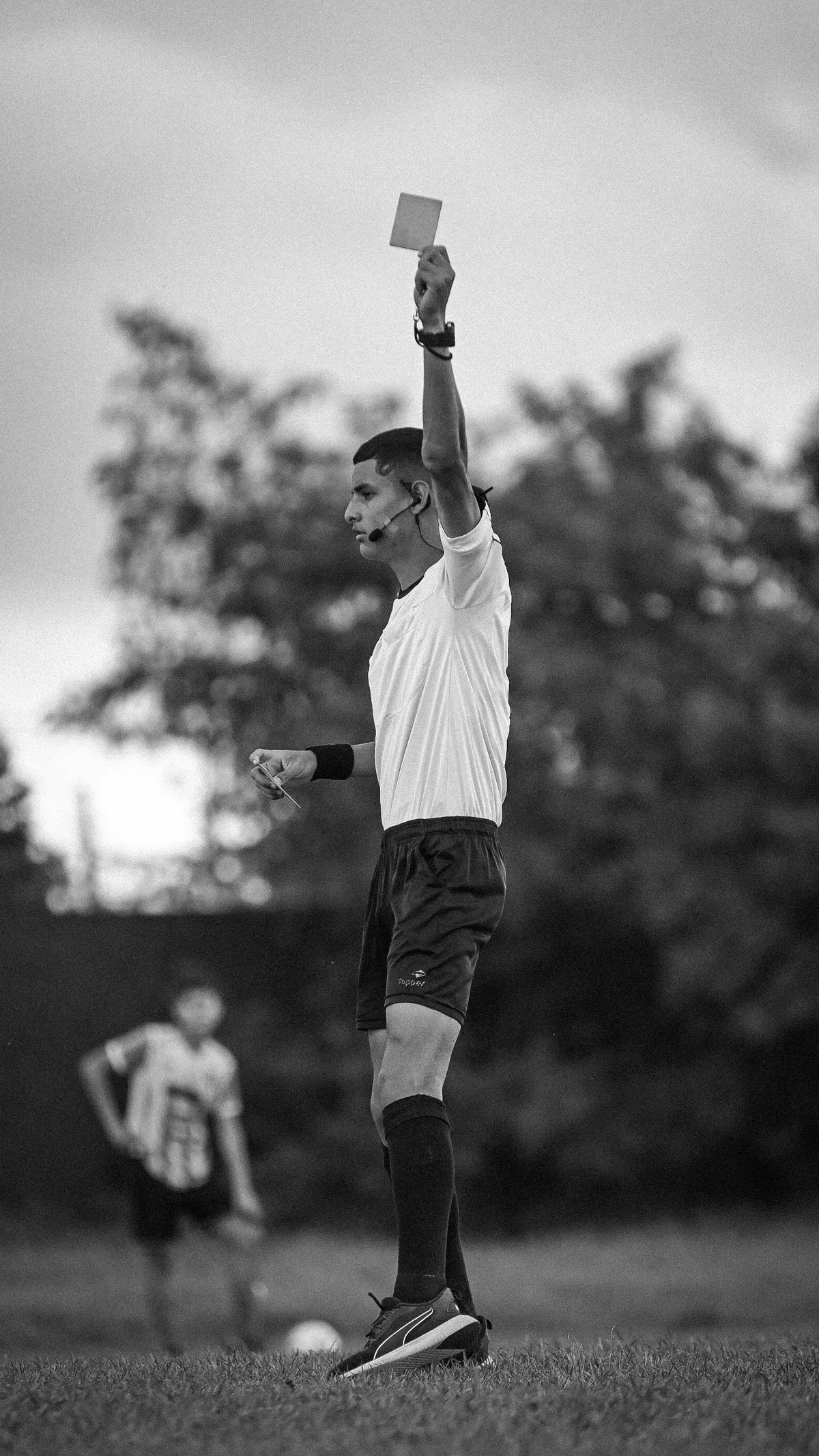
The job title covers a wide range. Umpires work baseball and softball. Referees work basketball, soccer, football, hockey, wrestling, and more. Judges score events like gymnastics and diving. Across all of them, the core work is the same: apply the rulebook consistently, manage the flow and safety of the contest, and make decisions under pressure that players, coaches, and fans will not always like.
On a typical assignment you arrive early, inspect the field or court, check equipment, meet the other officials on your crew, and go over your pregame responsibilities. During the game you are moving the entire time, tracking the play, signaling calls, and communicating with your partners. Afterward you confirm the result and, in many leagues, submit a short report. According to the U.S. Bureau of Labor Statistics, most officials are paid on a per-game basis, and the pay rises as the level of competition increases. That structure shapes almost everything about how you earn in this field.
Why the opportunity exists right now
The headline many people still remember is the shortage. In an estimate reported in February 2022, the National Federation of State High School Associations, the body that oversees high school sports, said roughly 50,000 people had stopped serving as high school officials compared with the last full season before the pandemic. That was a large hole in a workforce that was never huge to begin with, and at the time the federation described the situation across youth and high school sports as reaching crisis levels in some areas.
The important update is what has happened since. The federation runs an annual survey of its member state associations, and each year the count has climbed. A survey released on July 21, 2025 reported that registrations across 36 surveyed state associations reached 237,811 in the 2024-25 school year, about 8 percent above the pre-pandemic figure of 220,340 recorded in 2018-19. A year later, in an update released on July 29, 2026, the federation reported that registrations across 37 surveyed state associations in 2025-26 were about 9 percent above the 2018-19 level and about 2 percent above the prior year, with 26 of those states now back above where they stood before the pandemic. Twelve sports have passed their pre-pandemic registration totals, including reported gains of about 32 percent in girls lacrosse officials, 23 percent in track and field and cross country officials, and 22 percent in wrestling officials.
So here is the honest framing. The pandemic-era loss was real, and it drove a wave of recruitment that is still running under banners like #BecomeAnOfficial. Registrations have recovered, and across the surveyed states they now sit above pre-pandemic levels. But recovering the head count is not the same as meeting demand, and the federation is careful to say so. Its July 2026 update stressed that more officials are still needed to meet the growing demand for education-based athletics, and it pointed to retaining experienced officials as a priority alongside recruiting new ones. An aging workforce is part of the reason. A 2023 survey by the National Association of Sports Officials put the average age of a high school official at 56.7, and most respondents said they were already taking on extra assignments to help cover the schedule. In short, registrations have bounced back while shortages persist in many places.
What that means for you is specific rather than sweeping. The national count looks healthy, but the pressure is uneven. Particular regions, particular sports, and particular levels can still be short of officials even where the overall numbers are strong. For someone deciding whether to try this, that nuance matters. You may well find steady work, especially in a high-demand sport or an underserved area, but you should not assume you can get unlimited games or that every schedule near you is desperate for bodies.
The practical consequences of local shortages are still visible where they persist. In some places, games have been moved to different days, rescheduled, or in difficult cases canceled because there were not enough people to work them. Leagues in those spots are motivated to train newcomers, and assigners there are eager to fill schedules. The right question to ask is not whether there is a national shortage, but whether your sport and your area need people this season.
What officiating pays
Let us separate two different numbers, because they get confused constantly.
The first is the official occupational figure. The Bureau of Labor Statistics reports a median annual wage for umpires, referees, and other sports officials of $40,710 as of May 2025. That category held about 18,200 jobs in 2025, and employment is projected to grow about 5 percent from 2025 to 2035, which the agency describes as faster than the average across all occupations. Entry typically requires a high school diploma or equivalent, with specific requirements set by state and local associations.
The second number is what most part-time officials actually experience, and it looks nothing like an annual salary. Because the work is paid per game and is seasonal, the people in that median figure include a mix of part-timers working a handful of games a week and a smaller group working at higher levels much more intensively. If you officiate youth and school sports on the side, you should think in terms of per-game fees multiplied by how many games you work, not in terms of a yearly salary. That distinction matters for setting expectations and for the tax side, which we will get to.
Per-game fees are set locally by leagues, school associations, and officiating bodies, so there is no single national rate to quote. What is consistent, and what the federal data supports in general terms, is the direction: the higher and more competitive the level, the higher the per-game pay. A youth recreation game pays less than a varsity contest, which pays less than college work. The table later in this guide lays out that ladder with clearly labeled illustrative figures so you can see the shape of it without mistaking example numbers for a promise.
The step by step path to your first game
Getting started is more straightforward than most people expect, in part because associations in many areas are actively recruiting. The key thing to understand up front is that there is no single national sign-up that instantly makes you an official. Here is the realistic sequence.
A few notes on those steps. The federation's central site, HighSchoolOfficials.com, does not register you. It starts an inquiry: you submit basic contact details and the sports that interest you, and the site forwards that information so your state or local high school athletic association can reach out. Actual registration happens afterward, under your state's own requirements. In many states that means signing up through an online platform, paying an annual registration fee, clearing a background check, and passing an open-book rules exam and attending clinics before you work games involving minors. Fees to register and to join a local officiating group are usually modest and are a normal cost of entry rather than a red flag.
It also helps to know where assignments come from, because it is not one office everywhere. Depending on your state and sport, games may be assigned by a local officials association, by a designated assigner, or in some cases by schools directly. In Utah, for example, officials register with the state association and then join a local association, whose assigner issues many sub-varsity games. As the state's guidance makes clear, paying the registration fee does not by itself guarantee assignments. Getting connected to the right local group or assigner is usually what turns registration into an actual schedule.
One encouraging note for newcomers worried about the ramp-up: federation recruitment material emphasizes support, training, and mentorship for people entering the avocation, and officials who stay active past their first few years tend to settle into the role. The early period is where you build rulebook fluency, mechanics, and the reputation that earns better assignments over time.
Gear and startup costs
Officiating has a real but modest startup cost, and it varies a lot by sport. A basketball or soccer referee needs the correct uniform, a good whistle, proper shoes, and a watch or timer. A baseball or softball umpire needs considerably more because of the protective equipment: a mask, chest protector, shin guards, plate shoes, and a ball bag. Football officials carry flags, a bean bag, and a game card. Across sports you will also want a reliable way to track your schedule and get paid, since assignments often come through an online assigning platform.
Treat the gear as a business investment you recover over a season rather than a one-time hit. A sensible approach for a first year is to buy the minimum required to work your assigned level, in the correct uniform standard your association specifies, and upgrade only once you know you will keep going. Buying top-tier equipment before your first game is a common and avoidable way to spend money you have not yet earned.
How the pay ladder actually works
Because pay climbs with level, your earning path is really a progression. You start where associations need bodies most, which is usually youth, recreation, and sub-varsity games, and you move up as you prove yourself. The table below shows that progression with illustrative figures. These are examples to show the shape of the ladder, not quoted rates, because actual fees are set locally and vary widely by region and sport.
Two things drive movement up this ladder. The first is competence, demonstrated through clinics, rules tests, and evaluations from veteran officials and assigners who watch you work. The second is simple reliability. Assigners remember who answers the phone, shows up on time, works professionally, and does not cancel. Being dependable is almost as valuable as being skilled, and it is entirely within your control from day one. Keep in mind, though, that moving up is not automatic or tied to a fixed timeline. Advancement depends on openings, evaluations, and local demand, so it can take more than a season or two to reach the higher-paying levels.
Turning per-game fees into a season of income
Since you are paid per game, your total earnings are a function of your per-game fee, how many games you work per week, and how long your season runs. The chart below walks through illustrative weekly earnings at different levels, using example per-game fees. Again, treat these as labeled hypotheticals to show the math, not as rates you are guaranteed to receive.
The lever most within your reach early on is volume. Many officials multiply their income by working more than one sport across the calendar, so they are busy in the fall with one sport, the winter with another, and the spring with a third. That turns officiating from a short seasonal burst into something closer to year-round. Doubleheaders and tournaments also stack games into a single day, which raises your effective hourly rate because your travel and setup time is spread across more contests.
Travel is the quiet cost that eats into per-game pay. A game that pays well but sits an hour away in each direction can earn less per hour than a lower-paying game ten minutes from home once you count the drive and fuel. Smart officials cluster assignments by location and factor mileage into which games they accept.
The money and tax side
Here is a part new officials often overlook. In most arrangements you are paid as an independent contractor, not an employee. That means no taxes are withheld from your game checks, and you are responsible for reporting the income and paying what you owe. If a payer sends you a tax form at year end, it reflects money you have already received, and even income below any form threshold is still reportable. You can generally deduct ordinary and necessary costs of the activity, such as uniforms, required equipment, and association dues, which lowers the amount you are taxed on.
Mileage is where people most often get it wrong. Business driving can be deductible, but ordinary commuting is not. IRS Publication 463 treats the cost of getting between your home and a work location as a nondeductible personal commuting expense, and that exclusion commonly applies to trips to a local temporary site or a part-time job, which is exactly what driving to a nearby game can look like. Some driving may still qualify as deductible business transportation, for example trips between two games in a single day or from another job to a game, depending on your circumstances. The point is that you cannot simply write off every mile to and from games. Track your driving carefully, separate qualifying business mileage from commuting, and let the rules decide what counts.
Keeping a simple log of games worked, fees received, miles driven, and gear purchased will save you a real headache and real money at tax time. If this is your first time earning self-employment income, it is worth reading our plain English guide to side hustle taxes before your first season ends, so you are setting aside the right amount as you go rather than scrambling later. None of this is tax advice specific to your situation, and a qualified tax professional can confirm how the rules apply to you.
What officiating income can become
Per-game money feels small in the moment, but it is cash you did not have before and it arrives on a predictable schedule during the season. One useful habit is to route your officiating income somewhere separate from your everyday spending so it has a chance to grow rather than quietly disappear. The calculator below lets you play with that idea: feed in a monthly amount roughly equal to what a season of games might generate, pick a time horizon, and see how consistent contributions can compound. The figures are hypothetical and are not a forecast or a promise of any return.
The point is not the exact output. It is the behavioral one. Side income that is earmarked and invested behaves very differently from side income that lands in a checking account and blends into normal life. Officiating pairs naturally with this habit because the money comes in discrete, trackable chunks that are easy to sweep aside before you get used to spending them.
The parts that are genuinely hard
An honest guide has to cover why so many people walked away during the pandemic, because the reasons are real and some of them persist even as the overall registration numbers have recovered. You should weigh them before you buy a whistle.
The first is sportsmanship. The federation has pointed to unsportsmanlike behavior by parents and other adult spectators as a leading driver of attrition, and its #BenchBadBehavior campaign exists to address it. Officiating puts you in the middle of emotionally invested people, and some of them will aim that emotion at you over calls they do not like. Associations have responded with codes of conduct and, in places, stronger protections, but the interpersonal pressure is part of the job. The officials who last tend to develop a thick skin, a calm presence, and the ability to let a bad moment go.
The second is the physical and time demand. You are on your feet and moving for the length of every contest, often outdoors in heat or cold, and games are concentrated in evenings and weekends when your friends and family may be free. Reliability matters, which means committing to assignments weeks in advance and honoring them.
The third is the learning curve. Knowing a sport as a fan is not the same as knowing its rulebook and mechanics as an official. The first season is a real effort of study and practice, and your early games will include mistakes. That is normal and expected, and it is exactly why mentorship from veteran officials is so valuable. The same retention problem the federation keeps flagging shows up here: a lot of people quit precisely because the early going is hard, which is one reason experienced officials are in such demand even as new registrations climb.
Who this is a good fit for
Officiating rewards a specific temperament more than a specific resume. The federation's own recruitment language frames the ideal candidate simply as anyone with a passion for sports and a desire to give back to young people. In practice the people who thrive tend to be decisive under pressure, comfortable being the center of attention and occasionally the target of criticism, physically able to keep up with the game, and reliable about commitments. Prior playing or coaching experience helps with reading the game but is not required, and plenty of strong officials never played at a high level.
It fits especially well for people who want flexible, local, evening-and-weekend income that keeps them active and connected to a sport. Teachers, first responders, retirees, college students, and shift workers all show up heavily in officiating ranks because the schedule can flex around other work. If you are weighing it against other options, you can compare it with the broader landscape of flexible earning in our rundown of side hustles, and officiating stands out for how directly local need can translate into available work.
A realistic first-year plan
If you decide to try it, keep the first year small and deliberate. Start an inquiry through the federation's site or contact your state association directly, complete registration under your state's requirements, join a local officiating group, and pick one sport to start. Attend every clinic you can, read the rulebook more than once, and find a veteran willing to mentor you. Accept youth and sub-varsity assignments to build reps, buy only the required gear for your level, and track every game, dollar, and mile from the first assignment.
Then, at the end of the season, look at the real numbers. How many games did you work, what did you net after gear and travel, and did you enjoy it enough to continue? If the answer is yes, the second year is often where it starts to compound: you keep more of your gear investment, you may move up the pay ladder, you can add a second sport in another season, and your per-game fees and assignments can improve. None of that is guaranteed on a fixed timeline, because advancement depends on evaluations, openings, and local demand rather than seniority alone. But a committed newcomer who gets through that first season has built the skills and the reputation that make the work more rewarding and more flexible over time.
Officiating will never be effortless money, and anyone promising guaranteed pay or instant advancement is not describing the real thing. What it offers instead is honest, local, per-game income in a field that openly says it still needs more people in many places, with a pay ladder you climb through competence and reliability. For the right person, that is a genuinely good deal.
Side hustles add hundreds. The right career adds thousands.
Most income advice stops at gigs and stacking hours. The bigger move is matching your work to how your brain actually performs. RealWorldCareers measures your cognitive strengths and shows the careers your brain was built for.
Find the career your brain was built forQuestions people ask
Do I need a degree or prior experience to become an official?
No. The Bureau of Labor Statistics lists a high school diploma or equivalent as typical entry-level education, and specific requirements are set by state and local associations. Prior playing or coaching helps you read the game but is not required. Most new officials start by working youth sports and learn through clinics, rules study, and mentorship.
How much can I actually make per game?
Per-game fees are set locally by leagues and associations, so there is no single national rate. What is consistent is that pay rises with the level of competition, from youth recreation up through varsity and beyond. The illustrative figures in this guide show the shape of that ladder, but you should ask your local association for the actual fees in your area and sport.
How do I sign up to become a high school official?
The federation's site, HighSchoolOfficials.com, does not register you. It starts an inquiry: you submit basic contact details and the sports you are interested in, and your information is forwarded so your state or local athletic association can contact you. You then complete registration under your state's own rules, which usually involves an annual fee, a background check, a rules exam, and clinics. Assignments are handled separately, often by a local officials association, a designated assigner, or schools directly, depending on your state.
Is officiating income taxed, and can I deduct my gear and mileage?
In most cases you are paid as an independent contractor with no tax withheld, so you are responsible for reporting the income and paying what you owe, even if you do not receive a tax form. Ordinary and necessary costs such as uniforms, required equipment, and dues are generally deductible. Mileage is more limited: IRS Publication 463 treats ordinary travel between home and a work location as nondeductible commuting, which often applies to driving to a local game, while trips that qualify as business transportation, such as going from one game to another, may be deductible. Keep a careful log and confirm the details with a qualified tax professional.
Is there still a shortage of officials?
It depends where you look, and the honest answer has two parts. Registrations have recovered. The federation reported an estimated loss of about 50,000 high school officials in February 2022, but an update released July 29, 2026 found that 2025-26 registrations across 37 surveyed state associations were about 9 percent above the pre-pandemic figure, with 26 states back above pre-pandemic levels. At the same time, the federation says more officials are still needed to meet the growing demand for education-based athletics, and specific regions, sports, and levels remain short. So the head count has rebounded while shortages persist in many places. Check whether your area and sport need people this season.
Can officiating be more than seasonal income?
Yes, within limits. Many officials work more than one sport across the fall, winter, and spring seasons, which turns a short seasonal burst into nearly year-round income. Stacking doubleheaders and tournaments into single days also raises your effective hourly pay. It remains per-game, part-time income for most people rather than a full-time salary.
Keep reading

The 21 Best Side Hustles for 2026, Ranked by Real Pay

Freelancing in 2026: A Complete Guide to Your First $1,000 Month

How Regular People Are Making Money With AI in 2026
The Flourish Letter
One smart money idea each week, charts included. Join free and get the printable 2026 Money Calendar in your welcome email.