How to Make Money With Cash-Back Credit Cards
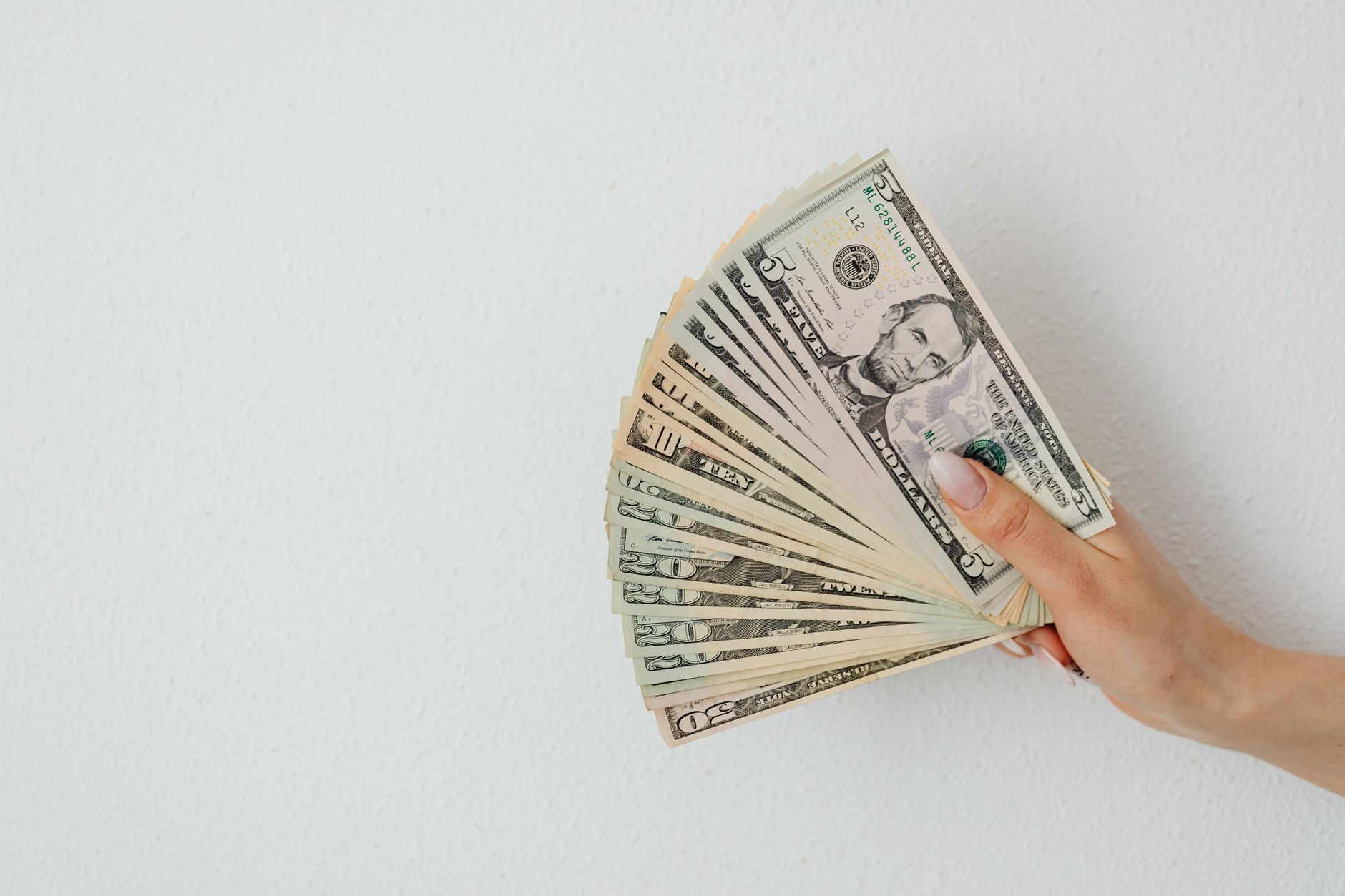
Key takeaways
- Cash back is a rebate on purchases you already planned; it becomes a loss the moment interest on a carried balance exceeds the rewards rate.
- A no-fee flat 2% card on $2,500 of monthly spend returns about $600 a year when every statement is paid in full.
- Category cards beat flat rate only when enough of your natural spend sits inside elevated buckets after caps; otherwise the simpler card wins.
- Signup bonuses are strong on planned spend inside the window and weak when you invent purchases or revolving-finance the threshold.
- Redeem to statement credit or a savings deposit on a fixed schedule; gift cards and forgotten portals quietly erase value.
- Annual fees need a break-even test each year: expected rewards plus credits you will use, minus the fee, versus a no-fee alternative.
Cash-back credit cards do not print free money. They return a small slice of what you already spend, and only if you treat the card like a rebate tool instead of a loan. Done that way, a household that puts ordinary bills and groceries on a 2% card and pays every statement in full can collect hundreds of real dollars a year. Done the other way, a single month of carried balance at a typical purchase APR can erase a year of rewards before the next statement even prints.
This guide is the practical version of that trade. You will see how flat-rate and category cards actually pay, how to run the effective-return math with honest numbers, when a signup bonus helps versus when it just dresses up overspending, how statement credits and deposit redemptions work, when plain cash back beats travel points, and the traps that turn a rebate into a loss. The tone is education for a 2026 U.S. audience, not personalized advice. Your budget and the card agreement still decide the call.
What Cash Back Really Is
Cash back is a rebate on purchases. The issuer pays you a percentage of qualifying spend, usually as a statement credit, a deposit to a bank account, or a paper check. The money comes from merchant fees and from the interest paid by cardholders who carry balances. If you pay in full every month, you are taking the rebate and leaving the interest on the table. That is the entire honest model.
Two common structures cover most of the market. A flat-rate card pays the same percentage on nearly everything, often 1.5% to 2%, with a short list of exclusions. A category card pays a higher rate on specific spending buckets such as groceries, gas, dining, or online shopping, then a lower base rate on everything else. Some category cards rotate the elevated buckets each quarter. Others lock the categories year-round with caps.
Neither structure is automatically better. Flat rate wins for people who hate calendars and want one card in the wallet. Category cards win when a large share of your natural spending sits inside the elevated buckets and you are willing to track caps and dates. The rest of this article is the arithmetic that makes that choice concrete.
The Iron Rule: Pay the Statement in Full
Everything useful about cash back collapses if you carry a balance. Federal consumer materials from the Consumer Financial Protection Bureau explain the grace period in plain terms: if you pay the full statement balance by the due date, you typically owe no interest on purchases. Miss that habit and the purchase APR, often in the high teens or twenties in recent years, starts charging daily.
Work a simple example. You spend $2,500 in a month on a 2% flat card and earn $50 in cash back. If you pay the $2,500 in full, you keep the $50. If you leave a $2,500 revolving balance at about 22.99% APR, the first month of interest alone is roughly $48. One month of interest nearly cancels the rebate. Two months of interest puts you underwater on the rewards for that spend, and the balance is still there generating more interest. Cash back is not a discount on a loan. It is a rebate on purchases you already planned to pay for with money you already have.
Before you open or keep any rewards card, confirm you can autopay the full statement. If you currently carry card debt, the highest-return move is usually stopping the interest bleed, not hunting a higher cash-back rate. Rewards hunting belongs after the balance hits zero and stays there.
Effective Return Math With Real Spending
Ignore the marketing headline for a minute and run your own numbers. Take monthly spend you already make, multiply by the cash-back rate that actually applies, subtract annual fees, and compare the result to what the same spend would earn on a simpler card. That residual is your true yearly rebate.
Example A is a flat 2% card with no annual fee. Monthly card spend of $2,500 that is already in the budget yields $50 a month, or $600 a year. That is the clean baseline many households should beat before they add complexity.
Example B is a category card with 5% on up to $500 of grocery spend each quarter, 3% on gas with no small cap, and 1% on everything else, still with no annual fee. Suppose groceries run $400 a month, gas $200, and other card spend $1,900. Grocery cash back is limited by the quarterly $500 cap at 5%, so only the first $500 of grocery spend each quarter earns 5%, and the rest earns 1%. Rough annual math: grocery elevated portion is $500 times 4 quarters times 5% equals $100. Remaining grocery spend is about $4,300 a year at 1% equals $43. Gas is $2,400 a year at 3% equals $72. Other spend is $22,800 at 1% equals $228. Total about $443. In this particular mix, the flat 2% card at $600 wins. Category cards only win when enough of your spend sits inside uncapped or lightly capped elevated buckets.
Example C flips the mix. Same category card, but groceries are $150 a month, dining is $400 a month at a 3% dining rate with no tight cap, and gas is $250. Now the elevated buckets carry more of the wallet, and the category card can beat a flat 2% card. The lesson is not that one design is superior. The lesson is that your spend map decides the winner, and a five-minute spreadsheet beats a glossy comparison chart.
Signup Bonuses Versus Ongoing Rewards
A welcome offer is a lump rebate for opening a card and hitting a purchase threshold inside a fixed window. A common shape is $200 cash after $1,000 of purchases in three months, or $250 after $3,000. On spending you already planned, that first window can deliver an effective rebate of 8% to 20% before the card settles into its ordinary rate.
Ongoing rewards are the long game. After the welcome offer posts, a 2% flat card on $30,000 of annual spend returns $600 every year with no drama. Over five calm years that is $3,000 of rebates, often more valuable than a single splashy bonus that required inventing purchases.
The right sequence for many people is simple. Capture a welcome offer only when natural spend already clears the threshold with a cushion for returns and posting lag. Pay every statement in full. Then keep the card only if the ongoing rate and fee still beat your next-best option. A bonus that forces lifestyle creep, gift-card stacking, or a revolving balance is not a bonus. It is a costume.
Purchase-based card rewards, including many spend-required welcome bonuses, are generally treated as rebates rather than taxable income for typical consumer cards. That differs from many bank account cash bonuses, which are often reported as interest. When facts look unusual or a Form 1099 arrives, many people check with a tax professional.
Matching Categories Without Turning It Into a Job
Category cards pay more when you route the right spend to the right plastic. The trap is turning that into a part-time logistics hobby. A workable middle path uses one or two cards, not seven.
Start with a map of the last three months of spending. Pull grocery, gas, dining, utilities, insurance, and online shopping totals. If one elevated category already covers a third or more of card spend, a category card aimed at that bucket can beat a flat rate. If spending is scattered across many small buckets, flat rate usually wins on both yield and sanity.
Rotating-category cards need a calendar reminder on activation day each quarter. Miss the activation and the elevated rate never turns on. Caps matter too. A 5% grocery rate that stops after $500 a quarter is really a small fixed rebate plus a 1% card afterward. Run the capped math before you celebrate the headline percentage.
Store cards and co-branded retailer cards can pay high rates inside one merchant ecosystem. They make sense when you already shop there heavily and will pay in full. They make less sense when the high rate nudges you into store loyalty you would not otherwise keep, or when the card lacks strong fraud tools and purchase protections you get from a major-network card.
How Redemption Actually Works
Cash back is only as good as the redemption path. Statement credit is the simplest: the issuer applies the rewards balance against your current bill. You still pay the rest of the statement from your bank account. The credit reduces what you owe; it does not replace the habit of paying in full.
Direct deposit to a checking or savings account turns rewards into visible cash. That is useful psychologically, because statement credits can feel invisible. A clean habit is to redeem into a high-yield savings account on a fixed cadence, monthly or quarterly, so rewards become an emergency-fund contribution instead of a slightly smaller card bill you forget about.
Paper checks and gift cards are usually worse. Checks get lost. Gift cards lock value into one merchant and often expire or carry fees. Unless a gift-card redemption pays a clear premium you will actually use, stick to statement credit or deposit.
Some programs let rewards expire after inactivity or after account closure. Read the rewards rules once. If you close a card, redeem first. If you rarely check the portal, set a calendar reminder every quarter so points do not quietly age out.
When Cash Back Beats Points (and When It Does Not)
Travel points and airline miles can beat cash back when you redeem at a high cents-per-point rate on flights or hotels you were already going to book. They lose when redemptions are inflexible, award charts move against you, or you never take the trips the program assumes.
Cash back wins on clarity. Two percent cash back is two cents on the dollar, every time, with no partner transfer puzzles. For households that value simplicity, hate blackout dates, and already pay lodging and flights with cash or a simple travel portal, a strong cash-back card is often the higher realized return even if a points blog quotes a higher theoretical value.
A practical rule many educators use: value points at one cent each unless you have a proven personal history of higher redemptions. Compare that to a flat 2% cash-back card. A points card that earns 1.5 points per dollar at a realistic one cent each is a 1.5% card in disguise. It needs either a signup bonus you will redeem well or a category bonus you actually use to beat the cash-back alternative.
Annual-fee travel cards add another layer. A $95 or $250 fee can be offset by credits you would use anyway, such as a travel credit you already spend. If you ignore the credits, the fee is a subscription that quietly deletes your rewards. Cash-back cards with no annual fee remove that entire failure mode.
Annual Fees and the Break-Even Test
An annual fee is not automatically a deal-breaker. It is a math problem. On a 2% card, a $95 fee needs $4,750 of annual spend just to break even on the fee alone, before you count any bonus categories or credits. On a 3% effective blended rate, the break-even spend drops to about $3,167. If the card also includes a $100 travel credit you would spend regardless, the net fee can be near zero and the break-even collapses.
Run the test once a year before the fee posts. Add expected cash back for the next twelve months, add the face value of credits you will truly use, subtract the fee, and compare the net to a no-fee alternative. If the no-fee card wins, product-change or cancel before the fee hits. Do not keep a fee card out of inertia. Issuers count on inertia.
Traps That Wipe the Gains
Carrying a balance is trap number one, and it is not subtle. Interest compounds daily on unpaid balances. A rewards rate of 2% cannot outrun a purchase APR near 20% for long. If you are carrying debt, pause new rewards cards, kill the balances, then reopen the rebate conversation.
Manufactured spending is trap number two. Buying money orders, loading prepaid cards, or running circular purchase patterns to farm bonuses can violate card terms, trigger shutdowns, and produce little economic value after fees. Ordinary planned spending is the only clean fuel for cash back. If the threshold only clears with invented purchases, skip the offer.
Overspending for the rate is trap number three. A 5% category does not make a $60 impulse purchase into a bargain. You still spent $57 of net cash after the rebate. The rate discounts a purchase. It does not erase it.
Ignoring exclusions is trap number four. Cash advances, balance transfers, certain bill-pay services, cryptocurrency buys, and some tax payments often earn no rewards and may carry fees. Check the rewards schedule before you put an unusual transaction on the card.
Chasing too many cards is trap number five. Each new account can mean a hard inquiry and a younger average account age. Before you apply, it is reasonable to review your credit picture so utilization, recent inquiries, and any surprises are visible. Many people use a monitoring tool such as WalletHub Premium when they want score tracking and alerts before opening another line of credit. One well-chosen card you pay in full beats a wallet full of plastic you cannot track.
A Simple System That Actually Pays
You do not need a spreadsheet empire. You need a short loop you will still run in six months.
First, pick a primary cash-back card that matches your spend map: flat 2% if your categories are scattered, or one strong category card plus a flat-rate backup if one bucket dominates. Second, turn on autopay for the full statement balance on every rewards card you keep. Third, put recurring bills that accept cards without a surcharge on the primary card, as long as the biller does not add a fee that exceeds the rebate. Fourth, redeem rewards on a fixed schedule into savings so the money becomes visible progress. Fifth, once a year, rerun the fee and rate math and drop any card that no longer clears the bar.
That system captures most of the available value with almost none of the churning theater. The people who quietly earn $400 to $800 a year in cash back are usually not the people with twelve cards. They are the people who never miss a full payment and never invent a reason to spend.
Worked Household Example for a Full Year
Meet a composite household with $4,000 of monthly take-home pay and $2,800 of monthly spending that can cleanly run on cards without surcharges: groceries $550, gas $180, utilities and insurance $420, dining $200, and general retail and online $1,450. They choose a no-fee flat 2% card as the daily driver and pay every statement in full.
Annual card spend: $2,800 times 12 equals $33,600. Cash back at 2%: $672. They redeem quarterly into a high-yield savings account that holds their emergency fund. Over a year the rewards alone add $672 to reserves without a single extra hour of work. If they instead carried an average $3,000 balance at about 22.99% APR while still earning 2% on new spend, interest would run roughly $690 a year, wiping the entire rebate and then some. Same card, opposite outcomes, decided entirely by the payment habit.
Now add a one-time welcome offer in year one: $200 after $1,500 of spend in three months. Their natural spend clears that easily. Year-one total rewards become about $872, still with no annual fee and no invented purchases. Year two drops back to the ongoing $672 unless another natural offer appears. That is what healthy cash-back math looks like: a temporary spike on top of a durable baseline, never a baseline that depends on constant new accounts.
Cash Back and Your Credit File
Responsible rewards use can support a healthy credit file because on-time payments and moderate utilization are core scoring themes. The FTC and CFPB both stress payment history and amounts owed as central ideas. Autopay for the full balance protects payment history. Keeping reported balances low relative to limits protects utilization, even when you spend heavily during the month, if you pay before the statement posts or shortly after.
Opening cards only for bonuses can work against you if applications cluster before a mortgage, auto loan, or apartment screening. Hard inquiries and very new accounts can weigh on scores for a while. Space applications, and skip new cards when a large loan is near. Cash back is optional seasoning. A clean file for a home purchase is usually the larger dollar event.
Who Should Skip Cash-Back Cards for Now
Skip or pause if you carry revolving card balances you cannot clear this month. Skip if a card surcharge on your biggest bills exceeds the rebate. Skip if an annual fee only pays off with credits you will not use. Skip if the only way to hit a welcome offer is manufactured spending. And skip if tracking categories stresses your household more than the extra dollars are worth. A debit card funded by a solid checking account is a completely respectable default until the pay-in-full habit is automatic.
The Bottom Line
Cash-back credit cards make money for people who already spend on purpose and already pay in full. The rebate is real. The interest is also real, and it is larger. Match the card design to your spend map, treat signup bonuses as optional toppings on planned purchases, redeem into savings you can see, and run a yearly fee check. Do those four things and a boring 2% card becomes a quiet raise. Skip the payment discipline and the same card becomes an expensive way to feel like you are winning.
Side hustles add hundreds. The right career adds thousands.
Most income advice stops at gigs and stacking hours. The bigger move is matching your work to how your brain actually performs. RealWorldCareers measures your cognitive strengths and shows the careers your brain was built for.
Find the career your brain was built forQuestions people ask
How do cash-back credit cards make you money?
They rebate a percentage of qualifying purchases, commonly 1.5% to 5% depending on the card and category. You keep that rebate only if you pay the statement in full so interest never starts. Used that way, ordinary household spending can return hundreds of dollars a year without changing your lifestyle.
Is a flat 2% card better than a 5% category card?
It depends on your spend map and the category caps. A flat 2% card is often stronger when spending is spread across many buckets or when elevated categories hit low quarterly caps quickly. A category card wins when a large share of uncapped spend sits in the bonus buckets and you will actually activate and track them.
Do I still earn cash back if I carry a balance?
Usually yes, the rewards still post, but interest typically costs far more than the rebate. A month of interest on a few thousand dollars at a typical purchase APR can cancel months of 2% cash back. The educational rule is simple: if you cannot pay in full, pause rewards hunting and clear the debt first.
Are credit card cash-back rewards taxable?
For most consumer cards, purchase-based cash back and spend-required signup bonuses are generally treated as rebates, not taxable income. Bonuses paid with no purchase requirement, and many bank deposit account bonuses, are more likely to be taxable. Unusual facts or a Form 1099 are reasons many people ask a tax professional.
When do travel points beat cash back?
Points can win when you reliably redeem at a high cents-per-point value on travel you were already booking. Cash back usually wins for flexibility and honesty of value, especially if you value points at about one cent each and compare them to a true 2% cash rebate. If you rarely travel or hate award charts, cash back is the clearer tool.
Should I get a cash-back card with an annual fee?
Only after a break-even test. Add expected yearly cash back and the face value of credits you will truly use, subtract the fee, and compare that net to a strong no-fee card. If the no-fee option wins, skip the fee or cancel before it posts. Unused credits do not count.
Keep reading

The 21 Best Side Hustles for 2026, Ranked by Real Pay

Freelancing in 2026: A Complete Guide to Your First $1,000 Month

How Regular People Are Making Money With AI in 2026
The Flourish Letter
One smart money idea each week, charts included. Join free and get the printable 2026 Money Calendar in your welcome email.