How to Start a Candle Making Business in 2026
Key takeaways
- Candle making is cheap to start and forgiving to learn, but it rewards consistency over creativity. Reliable burn quality and smart pricing beat a big scent lineup every time.
- One wick rule is federal law: a metal core cannot exceed 0.06 percent lead by weight. If you use legal metal-cored zinc or tin wicks, you also owe a General Certificate of Compliance and a conformity statement on shipping cases, which is why many makers stick to cotton or wood wicks.
- Labeling has two layers. Federal law (the Fair Packaging and Labeling Act) requires product identity, net contents, and the manufacturer, packer, or distributor name and place of business on the package. On top of that, if the candle contains a hazardous substance, the Federal Hazardous Substances Act requires a cautionary label that names the substance responsible for the hazard. The ASTM F2058 warning is voluntary, cheap, and worth adding as well.
- An ordinary candle does not need a full ingredient list the way a cosmetic does, but that is not a license to say nothing. Any required hazardous substance disclosure is mandatory, and any voluntary ingredient detail you add becomes a claim you are responsible for.
- Price with real math. Platform fees add up fast, and a common starting point is three to four times your raw material cost, adjusted once you know your true per unit numbers.
- Mix your sales channels: local markets for cash and feedback, a marketplace like Etsy for reach, and eventually your own site and email list to keep the repeat buyers who drive real profit.
If you have ever poured a candle in your kitchen, watched it set up into something clean and pretty, and thought that people would pay for this, you are in good company. Candles are one of those products that feel approachable. The raw materials are not expensive, the skill curve is gentle at the start, and almost everyone already understands what the product is for. That low barrier is exactly why candle making is a popular first business, and also why it is easy to lose money if you treat it like a hobby that happens to have a price tag.
This guide walks through the real picture. Not the dreamy version where you pour on Sunday and quit your job by spring, and not the discouraging version that says the market is too crowded to bother. The honest middle ground is that a small candle business can become a steady side income and, for some people, something bigger. Getting there means understanding three things most beginners skip: the safety and labeling rules that actually apply to candles, what it truly costs to make a sellable product, and how to price so the money that lands in your account is money you keep.
Is a candle business actually a good way to make money?
Candles sell well because they are affordable gifts, they get used up, and buyers come back. A repeat customer is the quiet engine of this business. Someone who loves your fall scent in October often reorders in December and again next year. That repeat behavior is worth more than any single viral post, and it is the reason a modest shop with a few loyal regulars can out earn a flashier one that chases trends.
The flip side is that candles are easy to start, so you are not the only person in your town or your corner of the internet pouring soy wax into amber jars. Competition is real. What separates a shop that earns from one that stalls is rarely the candle itself. It is usually the branding, the consistency of the scent and burn, the photography, and the pricing discipline. You do not need to invent a product nobody has seen. You need to make a reliable product, present it clearly, and charge enough to stay in business.
Be honest with yourself about the goal. If you want pocket money and a creative outlet, a weekend operation selling at local markets can do that. If you want this to replace a paycheck, plan for it to take a year or more of steady reinvestment, testing, and marketing before the numbers get interesting. Neither path is wrong. Trouble starts when someone expects the second outcome while putting in the effort of the first.
What it really costs to get started
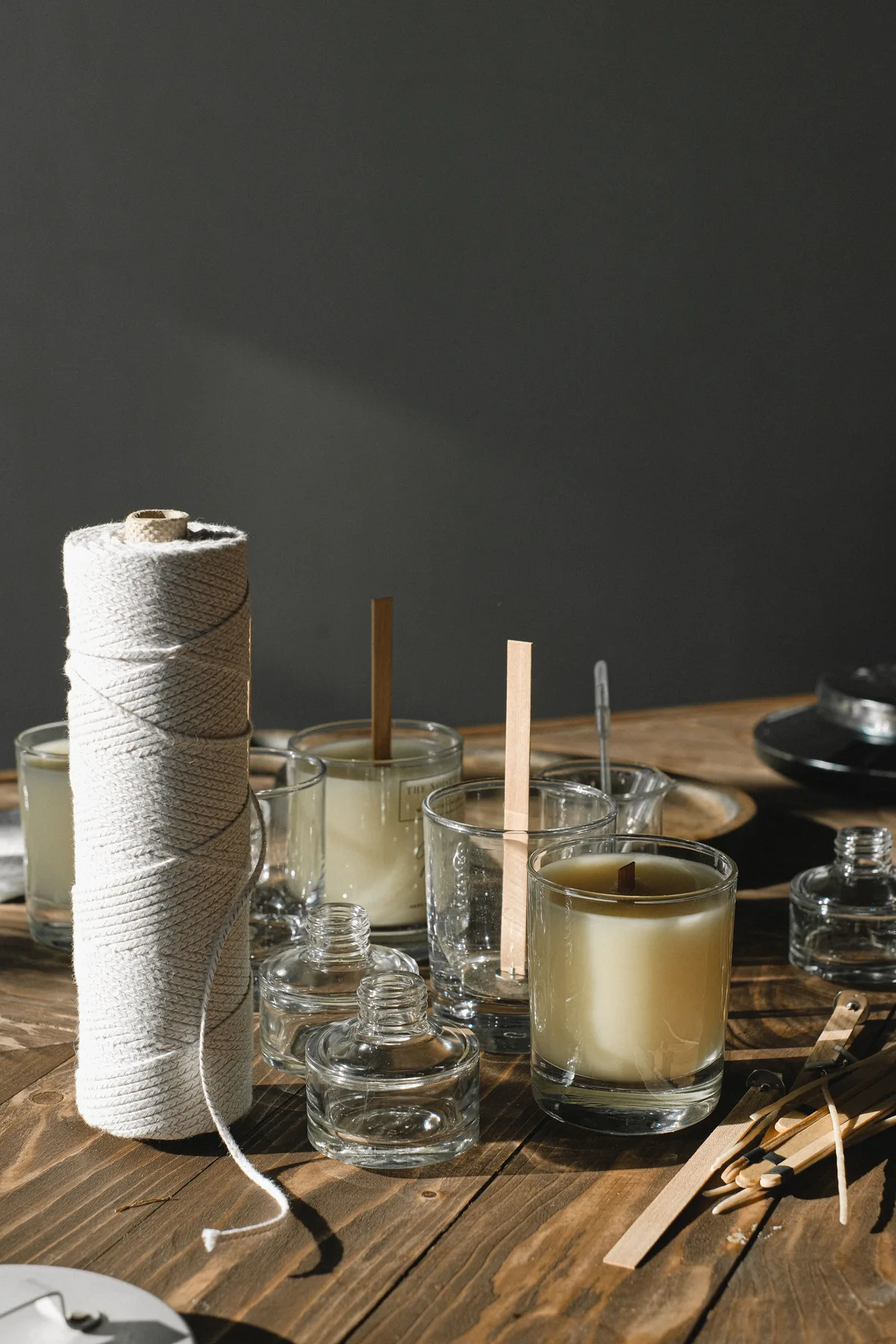
One of the appeals of candle making is that you can begin small. You do not need a commercial kitchen or a warehouse. A clean kitchen table, a few pounds of wax, wicks, fragrance, jars, and a handful of tools will get you making product. The figures below are hypothetical starter ranges, not quotes, and they will shift based on where you buy and how much you buy at once. Buying in bulk lowers your per unit cost but raises your upfront spend, so early on it is fine to start modest and scale your purchasing as orders come in.
The table below lays out a typical first run shopping list with low and high ranges. Treat the totals as a planning tool. Many people get their first batches going for a few hundred dollars, then reinvest their early sales into larger quantities of the wax and jars that are working.
Notice what is missing from that list: a storefront, employees, and expensive machinery. That is the point. The lean startup is part of why this business is forgiving of beginners. The hidden cost that trips people up is not equipment. It is testing. You will pour candles that tunnel, that smell weak, that smoke, or that burn unevenly, and every one of those is wax, fragrance, and a wick you paid for and cannot sell. Budget for that waste on purpose. It is tuition, and skipping it is how unsafe or disappointing candles end up in customers' hands.
The legal and safety rules you cannot skip
This is the section most beginner guides gloss over, and it is the one that protects you. Candles are regulated in the United States mainly for fire and burn safety, and the agency that handles most of that is the Consumer Product Safety Commission, not the Food and Drug Administration. The FDA does not treat a candle as a cosmetic because you do not apply a candle to your body. That stays true only as long as you avoid health claims, which matters more than it sounds. A second agency, the Federal Trade Commission, enters the picture on the labeling side, which most guides leave out entirely.
Federal rules you actually have to follow
A handful of candle rules are genuine federal law, not suggestions, and they fall into two buckets: what goes into the candle and what goes on the package.
Start with the wick. The Consumer Product Safety Commission banned the manufacture and sale of candles with lead-cored wicks. Under 16 CFR 1500.17, the metal core of a candlewick cannot exceed 0.06 percent lead by weight, and the ban has applied to candles manufactured or imported since October 15, 2003. In plain terms, you cannot legally make or sell a candle with a lead wick. Most makers sidestep the whole topic by using cotton or wood wicks, which have no metal core and are not subject to the certification rules described next.
If you do choose a metal-cored wick, usually zinc or tin, the obligations go further than most beginner guides admit. Zinc and tin cores are legal, but a maker who uses covered metal-cored wicks is responsible for issuing a General Certificate of Compliance, a document certifying that the candle meets 16 CFR 1500.17(a)(13). The CPSC also calls for a conformity statement, reading that the product conforms to 16 CFR 1500.17(a)(13), printed on the outer shipping package or case sent to retailers rather than on each individual jar. A supplier telling you their wicks are lead free is reassuring, but that reassurance does not by itself satisfy your own certification and bulk labeling duties once you build those wicks into candles you sell. Because of that extra paperwork, many small makers simply stay with cotton or wood wicks and avoid the issue.
The second bucket is labeling, and here is where the common advice that a warning sticker is enough falls short. Packaged candles sold as consumer goods fall under the Fair Packaging and Labeling Act, a federal law the Federal Trade Commission enforces. It requires three plain pieces of information on the package: the identity of the product, so a buyer knows it is a candle; the net quantity of contents, usually the net weight of the wax shown in both ounces and grams; and the name and place of business of the manufacturer, packer, or distributor. These are not optional courtesies. They are the baseline federal labeling rules for the product itself, separate from any safety warning. A few specialty shapes, such as hand dipped tapers and irregular decorative candles, get an exception on how net contents are expressed, but the identity and business information still apply.
On top of that, the Federal Hazardous Substances Act, which the CPSC administers, requires cautionary labeling when a candle contains a hazardous substance as the act defines it. That cautionary labeling is specific: among other things, it has to name the substance responsible for the hazard, state the nature of the hazard, and give precautionary and keep out of reach of children language. It is a legal labeling obligation, and it is distinct from the voluntary warning wording covered below. The practical takeaway is that labeling a candle properly means two different jobs at once: meeting the mandatory Fair Packaging and Labeling Act identity, net contents, and business information, plus any required hazardous substance caution, and then adding the voluntary safety warnings that careful makers use anyway.
The voluntary ASTM standards worth following anyway
Beyond those federal rules, the detailed safety guidance for candles comes from voluntary standards developed by ASTM International alongside the National Candle Association, the Consumer Product Safety Commission, and fire officials. Voluntary does not mean unimportant. Following them shows that you took reasonable care, which matters a great deal if a product ever causes harm. According to the National Candle Association, three standards sit at the center of candle safety.
- - ASTM F2058 covers cautionary labeling. It calls for warning consumers to always burn a candle within sight, to keep candles away from things that can catch fire, and to keep candles out of the reach of children.
- - ASTM F2179 addresses the strength of glass containers, including thermal shock, so your jar does not crack from the heat of the flame.
- - ASTM F2417 is the fire safety design standard, covering things like maximum flame height, tip over behavior, and how the candle performs at the end of its useful life.
You do not need to memorize the engineering. What you need is a container built to take heat and a label that carries both the mandatory federal information and a clear F2058 style warning. Printable warning labels that follow the F2058 wording are widely available from candle suppliers, and adding one to every candle costs pennies. Think of the ASTM warning as cheap extra insurance that sits on top of the labeling the law already requires, not as a substitute for it.
Fragrance labeling and the claims trap
Here is a subtle but important point. Because candles are not regulated as cosmetics, there is no federal requirement to print a full fragrance ingredient list on an ordinary candle the way a cosmetic has to disclose its ingredients. That is not a blanket license to say nothing, though. As noted just above, if your candle contains a hazardous substance as the Federal Hazardous Substances Act defines it, your cautionary label has to identify the substance responsible for the hazard, so that particular disclosure is mandatory rather than optional. Setting that required caution aside, the extra ingredient or fragrance details you choose to add to an ordinary, non hazardous candle are voluntary, and once you print them they become a claim you are responsible for. The bigger risk for a small maker is wording. The moment you say a candle treats anxiety, cures insomnia, balances hormones, or nourishes skin, you may have reclassified your product as a drug or a cosmetic in the eyes of regulators, which pulls you into a far stricter world. Sell scent and ambiance, not medicine. Describe a candle as calming or cozy if you like, but keep the health promises off your labels and your listings.
Finally, handle the ordinary business setup. Many sellers start as a sole proprietor, but forming a limited liability company can separate your personal assets from the business, which is worth discussing with a professional given that candles involve open flame. Check whether your state or city requires a sales tax permit or a home business license, and get product liability insurance before you sell at a market or ship to strangers. None of this is glamorous, and all of it protects the money you are trying to make. When your sales start, keep clean records, because the income is taxable. Our plain English guide to side hustle taxes walks through what to track from day one.
Pricing your candles so you actually keep money
This is where most candle businesses quietly fail. People price off vibes or off what the shop down the street charges, then wonder why they are busy but broke. The fix is to know your numbers before you set a price.
Start with your true cost per candle, often called the cost of goods. Add up the wax, wick, fragrance, container, label, and packaging for a single unit. Do not guess. Weigh a batch, divide by how many candles it made, and get a real per unit figure. Then layer in the costs people forget: the platform fees, the shipping supplies, and some value for your own labor. Your time is not free, and a business that only works because you pay yourself nothing is not really working.
A common starting framework is to price at a multiple of your cost of goods. Many makers aim for a retail price around three to four times their raw material cost to leave room for fees, labor, marketing, and actual profit. That is a rule of thumb, not a law, and premium branding can support a higher multiple while bargain positioning supports a lower one. The multiple is a starting point. Your own math is the final word.
Platform fees deserve a hard look, because they come straight off the top. The chart below shows a hypothetical breakdown for a 20 dollar candle sold on Etsy, using Etsy's published fee rates. As of 2026, Etsy charges a 20 cent listing fee, a 6.5 percent transaction fee that also applies to the shipping you charge, and a payment processing fee that for United States sellers runs 3 percent plus 25 cents per order. On top of those, Etsy's Offsite Ads program charges a fee only when one of its ads drives a sale, and that program is optional only until a shop passes 10,000 dollars in qualifying sales over a trailing 365 days, after which it becomes mandatory at a 12 percent fee on attributed orders. The fees stack up faster than beginners expect.
Run that math and the lesson is clear. On a 20 dollar candle, the base platform fees alone can eat a couple of dollars before you have paid for a scrap of wax. If your materials cost four dollars and your packaging costs two, you are left with roughly half the sticker price, and that remainder still has to cover your labor, your marketing, your returns, and your profit. If you were pricing that same candle at eight or ten dollars because it felt friendly, you can see how you would end up paying customers to take your inventory. Price for the business you want, not the apology you feel like making.
Where to sell, and the honest tradeoffs
You have three broad channels, and the smart move is usually to mix them rather than bet everything on one.
Local markets, fairs, and pop ups are the fastest way to get real feedback and cash in hand. Buyers can smell the product, which sells candles better than any photo. You keep more per sale because there is no platform cut, though you trade that for booth fees, travel, and a full day standing behind a table. Markets are also where you learn which scents actually move, which is priceless information before you order wax in bulk.
Online marketplaces like Etsy put you in front of buyers who are already shopping for handmade goods. The reach is real and the setup is quick, but you pay for it in fees and competition, and you are renting the audience rather than owning it. Keep an eye on the fee structure as you grow, because Offsite Ads shift from optional to required once you cross that 10,000 dollar sales mark. Marketplaces are a strong place to start and a risky place to stay forever, because the platform controls your visibility. If you go this route, our honest playbook for starting an Etsy shop covers listings, photos, and fees in depth.
Your own website, usually on a simple hosted store builder, costs a monthly fee and demands that you drive your own traffic, but it keeps the most margin and lets you build a customer list you actually own. Most makers grow into this once they have proven their products elsewhere. A healthy long term plan often looks like markets for cash and feedback, a marketplace for reach, and your own site plus an email list for the repeat buyers who become your real profit.
Wholesale is a fourth path worth mentioning. Selling to boutiques and gift shops moves volume at lower margins, typically around half of retail, but it moves product steadily and spreads your brand. It becomes attractive once your process is dialed in and you can produce consistently at scale.
A realistic path from first pour to first sales
Here is how the early months tend to go for someone doing this deliberately rather than impulsively. Keep the batches small until the product is right. Nobody remembers the maker who launched a month later. Plenty of customers remember the one whose candle smoked or whose jar cracked.
The single most important step, and the one hobbyists rush, is burn testing. The goal is to watch every new combination of wax, wick size, fragrance, and jar behave from the first burn to the last, because that is how your customer will actually use it. Do it in supervised cycles rather than one long burn to the bottom. CandleScience's basic procedure is a solid template for beginners: trim the wick to about a quarter inch, light the candle on a clean heat resistant surface, never leave it unattended, and record what you see each hour. Extinguish the candle after no more than four hours, then give it at least five hours to cool before relighting. Repeat that cycle until only about a quarter inch of wax is left, since each burn behaves a little differently as the wax level drops and heat builds in the container. Across those cycles you are checking that the melt pool reaches the edge without tunneling, that the flame stays a reasonable height, and that the candle does not smoke, soot, or overheat its jar. A wick that is a hair too small tunnels and wastes half the candle. One that is too large throws a tall flame and sooty glass. Testing is slow and a little boring and completely non negotiable, because it is the difference between a product and a hazard.
Once your core products burn beautifully across their whole life and smell the way you intend both unlit and lit, you lock in those exact materials, photograph the candles in good natural light, write clear honest descriptions, and start selling through whatever channel fits your first month. Then you do the least exciting and most important thing of all: you reinvest. The early profit does not fund a vacation. It funds more wax, more jars, and the next round of scents, until the business is large enough to pay you and still grow.
Funding the start without going into the red
You do not need a loan to start a candle business, and taking one for a few hundred dollars of wax rarely makes sense. The cleaner approach is to save a small launch budget first, which keeps the venture low stress and lets early sales flow back into growth instead of debt payments. The calculator below lets you play with a hypothetical savings plan to reach your startup number. Adjust the goal to match the starter range you decided on earlier, then see how a modest monthly set aside gets you there. It is a simple way to turn someday into a date on the calendar.
Once you are selling, keep the business and personal money separate from the very first dollar. A dedicated account makes your taxes sane and tells you the truth about whether the business is actually profitable or just busy. Many makers discover, only after they separate the accounts, that a product they loved pouring was barely breaking even. Better to learn that from a spreadsheet than from an empty bank balance.
Common mistakes that drain the profit
A few patterns show up again and again, and all of them are avoidable.
- - Underpricing out of guilt. Charging what the product is worth is not greedy. It is what lets you keep making it.
- - Skipping burn tests to launch faster. This is how refunds, bad reviews, and safety incidents happen.
- - Launching with 30 scents. A tight, excellent lineup outsells a sprawling mediocre one and ties up far less cash in inventory.
- - Treating labeling as just a warning sticker. The federal identity, net contents, and business information are required on the package, not optional extras.
- - Making medical claims. Describing a candle as a cure invites regulatory trouble you do not want.
- - Treating fees as an afterthought. Platform, processing, and advertising fees are part of your cost structure, so price with them baked in.
So, is it worth it?
A candle business will not make you rich overnight, and anyone who promises otherwise is selling a course, not candles. What it can be is a genuinely good small business: low to start, forgiving to learn, built on a product people actually enjoy and rebuy. The makers who succeed are not the most artistic. They are the most consistent. They test until the burn is reliable, they label properly, they price with real math, and they reinvest patiently while they build a group of customers who come back every season.
If that sounds like steady, unglamorous work, that is because it is, and that is also why it works. Start with one or two scents you can pour in your sleep, get the safety and the pricing right before you scale, and let the business grow at the speed your sales can support. Do that, and the candle on your table can quietly turn into a line item on your income.
Side hustles add hundreds. The right career adds thousands.
Most income advice stops at gigs and stacking hours. The bigger move is matching your work to how your brain actually performs. RealWorldCareers measures your cognitive strengths and shows the careers your brain was built for.
Find the career your brain was built forQuestions people ask
Do I need FDA approval to sell candles?
No. Because a candle is not applied to the body, the FDA does not treat it as a cosmetic, and candles are instead regulated mainly by the Consumer Product Safety Commission for fire and burn safety, with labeling rules enforced by the Federal Trade Commission. That changes only if you make health or therapeutic claims, such as saying a candle treats a condition, which can pull your product into stricter drug or cosmetic rules. Stick to describing scent and ambiance.
Is it legal to make and sell candles from home?
In most places, yes, though the specifics depend on your state and city. You generally need to handle ordinary business basics like a sales tax permit if your area requires one, and many sellers consider forming an LLC and carrying product liability insurance because candles involve an open flame. The firmest federal rules are that you cannot use lead-cored wicks and that your packaging must show the product identity, net contents, and your business name and place of business under the Fair Packaging and Labeling Act. Check your local licensing requirements before you sell.
What label do I need to put on my candles?
Think of it as two separate jobs. First, federal law requires your package to show what the product is, the net weight of the wax, and the name and place of business of the manufacturer, packer, or distributor under the Fair Packaging and Labeling Act. If your candle contains a hazardous substance as defined by the Federal Hazardous Substances Act, your cautionary label must also name the substance responsible for the hazard and carry the required warning language. Second, the widely used ASTM F2058 safety warning, telling buyers to burn within sight, keep away from things that can catch fire, and keep out of reach of children, is a voluntary industry standard. It costs pennies and shows reasonable care, so most careful makers add it even though it is not itself mandated.
How much does it cost to start a candle business?
Many people start for a few hundred dollars, buying a starter supply of wax, wicks, fragrance, containers, basic tools like a melting pot and thermometer, and labels. The ranges in this guide are hypothetical planning figures, not quotes, and your costs depend on quantity and supplier. Budget on purpose for wasted test candles, since testing is where beginners spend more than they expect.
What fees does Etsy charge to sell candles?
As of 2026, Etsy charges a 20 cent listing fee per item, a 6.5 percent transaction fee that also applies to the shipping you charge, and a payment processing fee that for United States sellers is 3 percent plus 25 cents per order. Etsy's Offsite Ads program adds a fee only when one of its ads leads to a sale. Shops are generally charged 15 percent on an attributed order and can opt out, but participation becomes mandatory with a 12 percent fee on attributed orders once a shop reaches 10,000 dollars in qualifying sales over a preceding 365 day period. Always confirm current rates on Etsy's own fees page, and price your candles with these fees already factored in.
How should I price my candles?
Start by calculating your true cost per candle by weighing a batch and dividing by the number of units, then add platform fees, packaging, shipping supplies, and a value for your labor. A common starting framework is to price around three to four times your raw material cost, but that is only a rule of thumb. Your own numbers, including fees, decide the final price that keeps you profitable.
Keep reading

The 21 Best Side Hustles for 2026, Ranked by Real Pay

Freelancing in 2026: A Complete Guide to Your First $1,000 Month

How Regular People Are Making Money With AI in 2026
The Flourish Letter
One smart money idea each week, charts included. Join free and get the printable 2026 Money Calendar in your welcome email.