How to Start a Home Staging Business in 2026
Key takeaways
- Home staging splits into occupied work (editing a seller's own furniture) and vacant work (furnishing empty homes), and the two have very different cost structures and risk levels.
- No national license is required, but a strong before-and-after portfolio and good relationships with real estate agents are what actually get you hired.
- Industry survey data shows real benefits: in NAR's 2025 report, 49 percent of sellers' agents said staging reduced time on market and 29 percent saw a 1 to 10 percent lift in offer value, though no single home is guaranteed a result.
- Inventory is the biggest cost and the biggest growth lever; many stagers start lean with consultations, then reinvest profits into furniture that earns rental income across future listings.
- Earnings are lumpy and local, and a busy calendar of high-margin consultations can out-earn a few glamorous vacant jobs once storage, moving, and furniture costs are subtracted.
- Whether you must register a business entity depends on your location and whether you use your own name, but separate accounts, liability insurance, expense tracking, and a plan for self-employment taxes are smart from day one.
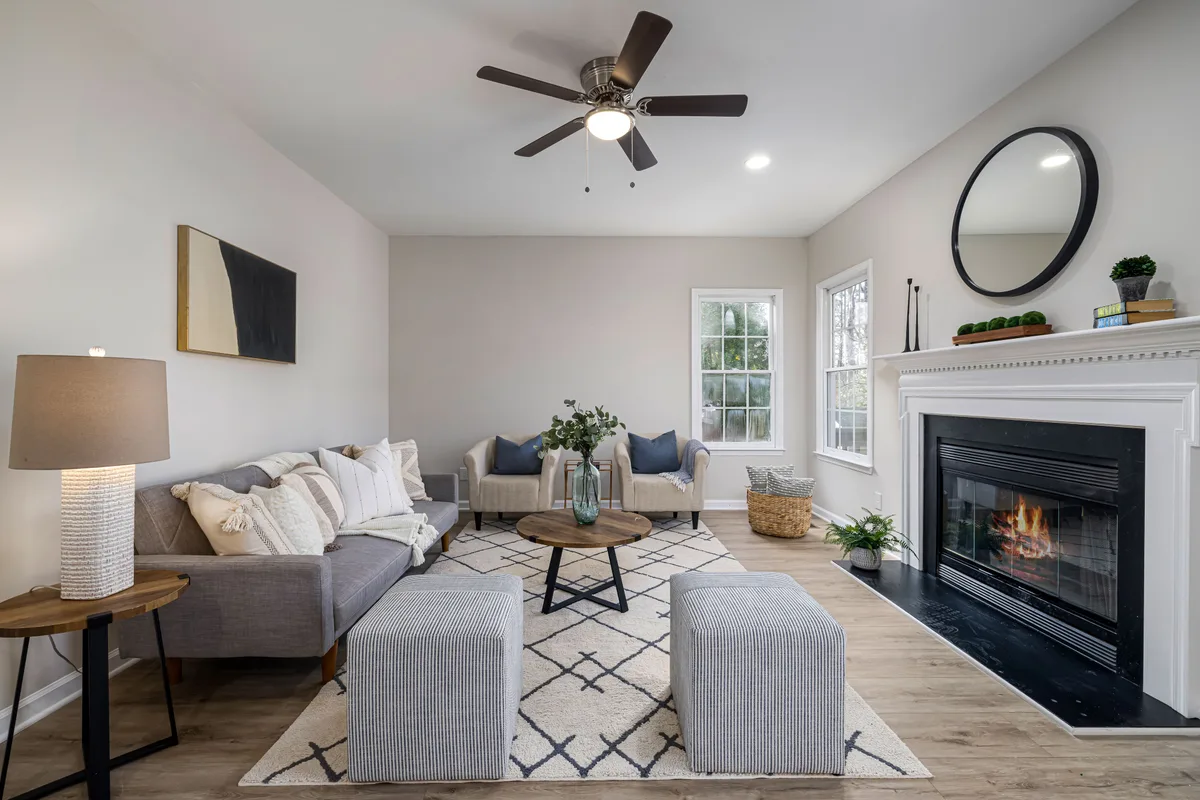
Walk into a house that sits empty and you notice every scuff on the baseboard, every echo, every room that feels a little smaller than you hoped. Walk into the same house after a stager has been through it, and suddenly the living room has a focal point, the primary bedroom feels calm, and you can imagine a Sunday morning there. That difference is the whole business. Home staging is the work of preparing a property so buyers connect with it quickly and offer more for it.
It is a real trade with real demand, but it is also surrounded by a lot of glossy television gloss that hides the unglamorous parts. Staging involves hauling furniture, storing inventory, scheduling around agents, and running the numbers so you actually keep money after expenses. This guide walks through what the job really is, what it takes to start, how stagers charge, and what the income can look like when you are honest about costs. Along the way I will lean on published survey data from the real estate industry so you are working from facts rather than hype.
What a home stager actually does
At its core, staging is about helping a buyer emotionally move in before they have signed anything. A stager studies a property, figures out who is most likely to buy it, and then arranges the space so those buyers feel at home. That can mean rearranging a seller's own furniture, bringing in rented pieces, adding art and lamps and throw pillows, or furnishing an entirely empty house from scratch.
The work splits into two broad types, and they are very different businesses underneath.
- - Occupied staging means the seller still lives there. You work with what they own, edit it down, suggest small repairs or paint, and add a few accessories. Lower cost, lighter lifting, faster turnaround.
- - Vacant staging means the house is empty and you furnish it. This takes real inventory, a truck or movers, storage space, and more cash tied up in furniture. It pays more per job but carries more risk and overhead.
Many stagers start with occupied consultations because the barrier to entry is low, then grow into vacant work once they have cash flow and a warehouse corner to store things. There is no single right path, but knowing which lane you are in shapes almost every decision you make about money.
Why sellers and agents pay for it
Staging is not charity. Sellers spend money on it because they believe it comes back to them at closing, and the industry data gives that belief some weight. The National Association of Realtors publishes a periodic Profile of Home Staging, and its 2025 edition surveyed active agents about what they see on the ground. A few findings are worth keeping in your head when you explain your value to a nervous seller.
According to that NAR report, 83 percent of buyers' agents said staging made it easier for a buyer to picture a property as their future home, and 49 percent of sellers' agents said staging reduced the time a home spent on the market. On price, 29 percent of agents reported that staging produced a 1 to 10 percent bump in the dollar value buyers offered compared with similar homes that were not staged. None of that is a guarantee for any single house, and you should never promise a seller a specific return. But it explains why agents keep recommending staging and why a stager who can speak to those outcomes gets hired.
The same report noted which rooms buyers care about most: the living room led at 37 percent, the primary bedroom followed at 34 percent, and the kitchen came in at 23 percent. That tells you where to spend your effort and your budget when a seller can only afford to stage a few spaces.
Do you need a license or a design degree
Here is the good news and the catch in the same breath. There is no national license required to call yourself a home stager. You do not need a design degree, and you do not need to pass a government exam. That low barrier is part of why the field is crowded in some markets.
The flip side is that credibility has to come from somewhere else. Several organizations offer staging certifications, and while none of them are legally required, a recognized designation can reassure agents and sellers who do not know you yet. More important than any certificate is a portfolio of before and after photos that proves you can transform a space. Agents hire stagers whose past work makes their listings look like money.
For context on the broader design field, the U.S. Bureau of Labor Statistics tracks interior designers as an occupation, and its May 2025 data put the median pay at $67,190 a year across roughly 97,100 jobs, with projected growth of about 3 percent through 2035. Staging is not the same occupation, and most stagers run their own small businesses rather than earning a salary, so treat that figure as a loose neighbor rather than a target. It mainly shows that design-adjacent work is a stable, ongoing field rather than a fad.
The skills that actually matter
You can learn the technical side, but a few traits separate stagers who last from those who burn out.
- - An eye for proportion and flow. You have to feel when a room is crowded or when a sofa is fighting the traffic path. This is trainable, but some people are further along naturally.
- - Speed and physical stamina. Staging day often means hauling, lifting, and finishing a whole house before the photographer arrives. It is physical work.
- - Logistics sense. Vacant staging in particular is an inventory and scheduling puzzle. Where is the gray sectional right now, and which three jobs need it next month?
- - People skills with agents. Real estate agents are your referral engine. A stager who is easy to work with and reliably on time gets the repeat calls.
- - Basic business discipline. Tracking expenses, invoicing, and pricing so the work pays. Plenty of talented stagers go broke because the math never worked.
How to start, step by step
You do not need everything at once. The smartest first move is usually to start lean with consultations and occupied work, build a portfolio, then reinvest into inventory as demand proves itself.
One note on the legal setup, because it is easy to overcomplicate. According to the U.S. Small Business Administration, whether you have to register your business at all depends on your location, your business structure, and whether you use a name other than your own. If you operate as a sole proprietor under your own legal name, you may not need to register anywhere, while forming a formal entity such as an LLC or using a "doing business as" name usually does trigger some state or local paperwork. So keep two ideas separate in your head. On one side sit the things the law or your contracts may actually require, which vary by state and city. On the other sit the smart-practice choices that are not universally mandatory but are worth strongly considering once you are moving other people's furniture and working inside homes you do not own: forming an entity for liability protection, opening a separate bank account so your books stay clean, and carrying liability insurance. Insurance in particular protects you if something gets damaged, and it signals to agents that you are a professional. A quick conversation with an insurance agent or a small-business attorney in your state will tell you which of these are required where you work and which are simply recommended, and I am not a licensed advisor, so treat this as a prompt to ask rather than legal guidance.
What it costs to get going
Startup cost depends almost entirely on whether you plan to do occupied work only or jump into vacant staging. The table below shows an illustrative range. These are hypothetical planning numbers, not quotes, and your market will differ. Use them to sketch your own budget, then replace every figure with a real local price.
The single biggest swing is inventory. An occupied-only stager can start for the price of a consultation checklist, some accessories, and basic business setup. A vacant stager furnishing whole houses can tie up thousands of dollars in sofas, beds, rugs, art, and lamps, plus storage and a way to move it all. That is why many people phase in. They take consultation fees and occupied jobs, bank the profit, and buy inventory piece by piece as specific jobs justify it.
How stagers charge
There is no single pricing model, and part of becoming profitable is matching the model to the work. The common approaches look like this.
- - Consultation fee. A flat charge for a walkthrough where you deliver a room-by-room plan the seller or agent executes. Often a few hundred dollars. The NAR report noted that when agents staged homes themselves the median spend was around $500, while using a professional staging service ran closer to a $1,500 median. Those figures hint at the gap between advice and full service.
- - Occupied staging day rate or flat project fee. You bring accessories and labor and restyle the home using mostly the seller's furniture.
- - Vacant staging package. Usually priced per room or per house, with an initial setup fee plus a monthly rental charge for the furniture while the home is listed. This recurring piece is how vacant stagers build steadier income.
- - De-staging and pickup. A fee to remove everything once the home sells or the listing ends.
The recurring monthly rental on vacant jobs is worth understanding because it changes the economics. You buy a sofa once and can rent it out across many listings over its life. The first job might barely cover the furniture, but every job after that is where the margin lives. That only works if your inventory stays busy, which loops back to logistics and marketing.
What you can realistically earn
Income in staging is lumpy and local, so be skeptical of anyone quoting a tidy annual salary. Your earnings depend on how many jobs you book, your mix of consultation versus full staging, your local price levels, and how efficiently you reuse inventory. The chart below is a clearly hypothetical illustration of gross revenue per project type, meant to show the shape of the business rather than promise any number.
Notice that a consultation earns less per job but costs you almost nothing beyond your time, so the margin can be high. A vacant staging package grosses far more, but a large slice goes to furniture, moving, and storage before you keep anything. Many new stagers are surprised to learn that a busy calendar of small consultations can out-earn a couple of glamorous vacant jobs once you subtract the real costs. Run your own numbers rather than chasing the biggest headline price.
A grounded way to think about a first year is in terms of jobs, not salary. If you book a steady trickle of consultations and occupied projects while you build a reputation, you are learning the trade and generating cash without betting the house on inventory. As referrals grow and you add vacant work, revenue can climb, but so does the money tied up in furniture. The business rewards patience more than it rewards a big opening splash.
Reinvesting your way into inventory
Because inventory is the thing that unlocks higher-paying vacant work, a lot of staging growth is really a reinvestment story. You take the profit from early jobs and plow it back into furniture that then earns rental income across future listings. The slider below lets you play with that idea. It is a general compounding tool, not a staging-specific forecast, so treat it purely as a way to see how steady reinvestment can build over time.
The point is not the exact dollar figure, which is hypothetical and not a prediction. The point is the pattern. Small amounts reinvested consistently, rather than pulled out and spent, are how a kitchen-table consultation business becomes a warehouse operation with trucks. If you would rather keep things simple and never want to own a warehouse, that is a completely valid choice. Occupied-only stagers can run profitable, low-stress businesses for years without buying a single sofa.
Finding clients and building referrals
Your customers are usually not homeowners who found you on their own. They are real estate agents who recommend you to their sellers, and sometimes sellers who were told by their agent that staging is worth it. That makes agent relationships your core marketing channel.
A few approaches tend to work.
- - Build a portfolio first. Even if your early jobs are friends' homes or discounted work, photograph them well. Agents hire from before-and-after images, so your camera roll is your resume.
- - Meet agents where they are. Office meetings, broker open houses, and local real estate groups put you in front of the people who refer. Offer a short, useful talk on what staging does for days-on-market and you become the stager they remember.
- - Make the agent look good. Reliability, clean work, and on-time setup matter as much as taste. An agent's reputation rides on your results, so protect it.
- - Use listing photos as advertising. Staged homes photograph beautifully, and those images circulate online. If you also handle or coordinate photography, you control how your work shows up to the world.
If you want to see how the photo side fits in, our guide on how to start a photography business pairs naturally with staging, since strong listing images are what make your transformations travel. Some stagers add light photo work as a second revenue stream, and some partner with a dedicated photographer instead.
The parts people underestimate
Every trade has hidden friction, and staging has a few that trip up newcomers.
Storage and moving. Furniture has to live somewhere between jobs, and it has to get to the house. Rent, a truck or movers, loading and unloading, and the occasional damaged piece all eat into the glossy per-job price. Vacant staging is as much a moving-and-storage operation as a design one.
Seasonality and market swings. When homes sell quickly, some sellers skip staging because they do not feel they need it. When the market slows, demand for staging can rise because sellers want every edge. Your income may not move in a straight line, so build a cash cushion.
Cash tied up before it comes back. Buy a houseful of furniture and your money is now sitting in a warehouse, not your bank account. It only converts back to cash over many future rentals. Plan for that gap so you are not caught short.
Taste is subjective, but the goal is not. You are not decorating for yourself or even for the seller. You are decorating for the likely buyer, which sometimes means neutral, broadly appealing choices over bold personal ones. Learning to stage for the market rather than your own style is a real skill.
Setting up the money side
Treat this as a business from day one even if it starts small. Keep business income and expenses in a separate account so you can see whether you are actually profitable. Track every furniture purchase, mileage, storage payment, and accessory, because those costs are what stand between a big gross number and real take-home pay.
Staging income is self-employment income, which carries its own tax handling, including self-employment tax and usually quarterly estimated payments. If you are new to working for yourself, our plain-English walkthrough of side hustle taxes covers the basics of what to set aside and when. If your situation gets complicated, a tax professional is worth the fee. I am not a licensed tax advisor, so use these pointers to ask better questions rather than as a substitute for one.
It also helps to borrow organizing habits from adjacent trades. The mindset in our guide to starting a home organizing business overlaps a lot with staging, since both depend on reading a space, working efficiently inside clients' homes, and pricing your time so the work pays.
Is home staging right for you
Staging suits people who get genuine satisfaction from transforming a space and do not mind the physical, logistical grind behind the pretty photos. It rewards reliability and relationships more than raw artistic flash, and it lets you start small and grow at your own pace. You can test the waters with consultations before you ever commit to inventory, which makes it one of the lower-risk ways to turn a design eye into income.
It is a poor fit if you want passive income, hate hauling furniture, or expect every job to pay like the television version. The margins live in the details, and the details are unglamorous. But for someone who loves walking into a tired room and seeing what it could become, then making agents and sellers look good in the process, it is a trade with steady, ongoing demand and a clear path from first consultation to a real business.
Start with one well-photographed project, build a relationship with a handful of local agents, keep clean books, and let the work compound. The houses will keep coming. People will always need help seeing a place as home.
Side hustles add hundreds. The right career adds thousands.
Most income advice stops at gigs and stacking hours. The bigger move is matching your work to how your brain actually performs. RealWorldCareers measures your cognitive strengths and shows the careers your brain was built for.
Find the career your brain was built forQuestions people ask
Do I need a certification or design degree to become a home stager?
No national license or degree is legally required to work as a home stager. Several organizations offer staging certifications that can reassure agents and sellers who do not know you yet, but a convincing portfolio of before-and-after photos usually matters more than any certificate. The broader interior design field does typically expect a bachelor's degree, according to the U.S. Bureau of Labor Statistics, but staging is a separate, mostly self-employed path.
Do I have to register a business or form an LLC to start staging?
It depends on where you work and how you operate. According to the U.S. Small Business Administration, a sole proprietor working under their own legal name may not need to register anywhere, while forming an entity like an LLC or using a business name other than your own usually triggers state or local registration. Many stagers still choose to form an entity, open a separate bank account, and carry liability insurance for the liability protection and professional credibility those bring, even when they are not strictly required. Check your state and local rules, and consider asking a small-business attorney what applies to you.
How much does it cost to start a home staging business?
It depends heavily on your model. An occupied-only stager who sells consultations and restyles sellers' own furniture can start for the cost of accessories, basic business setup, and insurance. A vacant stager who furnishes empty houses may tie up thousands of dollars in furniture, plus storage and a way to move it. Many people start lean and buy inventory gradually as specific jobs justify the expense. Use local quotes rather than the hypothetical planning figures in this guide.
How do home stagers get clients?
Most work comes from real estate agents who recommend staging to their sellers, so agent relationships are the core marketing channel. Stagers build a portfolio, meet agents at office meetings and broker open houses, and earn repeat referrals by being reliable and making the agent's listings look great. Well-photographed staged homes also advertise your work as the images circulate online.
Can staging really increase a home's sale price?
Published industry data suggests staging often helps, though it is never guaranteed for a specific house. In the National Association of Realtors 2025 Profile of Home Staging, 29 percent of agents reported staging produced a 1 to 10 percent increase in the dollar value buyers offered compared with similar unstaged homes, and 83 percent of buyers' agents said staging made it easier for buyers to picture a property as their future home. You should describe these as industry findings, not promise any seller a particular return.
What is the difference between occupied and vacant staging?
Occupied staging means the seller still lives in the home, so you edit and restyle their existing furniture and add a few accessories. It is lower cost and lighter work. Vacant staging means the home is empty and you furnish it entirely, which requires owning or renting inventory, moving it, and storing it between jobs. Vacant work pays more per project but carries more overhead and ties up cash in furniture.
Keep reading

The 21 Best Side Hustles for 2026, Ranked by Real Pay

Freelancing in 2026: A Complete Guide to Your First $1,000 Month

How Regular People Are Making Money With AI in 2026
The Flourish Letter
One smart money idea each week, charts included. Join free and get the printable 2026 Money Calendar in your welcome email.