The Subscription Audit: Find and Cancel Your Money Leaks

Key takeaways
- In a widely cited 2022 C+R Research study, consumers guessed they spent $86 a month on subscriptions. Their real average was $219, about two and a half times the guess.
- Subscriptions are engineered to be forgotten: small amounts, spread across cards and app stores, renewing silently. An audit works because it makes them all visible at once.
- The full audit takes about 90 minutes: pull 90 days of statements, list every recurring charge, check the hidden app-store and PayPal subscriptions, then sort everything into keep, cancel, downgrade, or rotate.
- A typical first audit frees up $50 to $150 a month. Invested at a 7% average return, $100 a month grows to about $52,000 in 20 years.
- The audit only sticks if you add a gate for new subscriptions: calendar reminders before trials end, annual billing only for proven keepers, and a quarterly 15-minute re-check.
Quick test. Without looking at anything, write down what you think you spend on subscriptions each month. Streaming, music, apps, the gym, cloud storage, the box of snacks, the meal kits, the premium version of that one app you upgraded during a free trial in 2023. Got a number? Good. Now hold onto it, because in the most famous study ever run on this question, people who did exactly what you just did guessed $86 a month. Their actual average, once researchers walked them through their statements, was $219. Not a rounding error. Two and a half times the guess.
That 2022 C+R Research finding gets quoted so often because everyone who has ever done a subscription audit recognizes it instantly. The gap is not stupidity. It is design. Subscriptions are deliberately sized to be forgettable, deliberately spread across payment methods so no single statement shows the total, and deliberately renewed in silence. The Federal Trade Commission has spent years going after the worst of these practices under its Negative Option Rule, and regulators keep wrestling with companies over how hard cancellation is allowed to be. You should not wait for that fight to resolve. Ninety minutes on a Sunday closes the leaks yourself.
Why your brain loses to a $12.99 charge
Three design choices make subscriptions nearly invisible. First, the amounts sit below your attention threshold. A $1,400 annual charge would make you sit up; the same money as $116 a month spread over six services never triggers the alarm. Second, the billing is scattered. Some charges hit your credit card by brand name, some hide inside an Apple or Google line item, some ride PayPal, and one or two live on the backup card you never check. No single screen in your life shows the total, which is exactly why your guess was wrong. Third, the renewal is silent. Gym memberships, software, and streaming services do not email you a decision; they email you a receipt, if they email you at all.
Add the free-trial pipeline, where a service collects your card today and bets correctly that future-you will forget the cancellation date, and you have a system perfectly engineered to convert inattention into revenue. The audit below is the counter-system. It is not about becoming a more disciplined person. It is about making the invisible visible once, then installing a few mechanical gates so it stays that way.
The 90-minute audit, step by step
Here is each step in detail. Block 90 minutes, pour a coffee, and bring every account you pay from.
Step 1: Pull 90 days of statements, all of them
Ninety days matters because some subscriptions bill quarterly and many people have a card they barely use. Gather your checking account, every credit card, PayPal, and Venmo if you pay anything from it. If a charge recurs anywhere, it will show up in a 90-day window unless it is annual, and we will catch those in step 3.
Step 2: List every recurring charge
Go line by line and write down anything that repeats: name, amount, billing date, and which card it hits. Do not judge yet, just inventory. Most people find the list runs 12 to 20 items, which is itself a shock when your mental model said six. Watch especially for charges with vague merchant names; that $9.99 from a billing processor you do not recognize is usually an app.
Step 3: Check the four hiding places
Now the ones statements miss. Open your Apple or Google subscription settings, which list everything billed through the app stores, including the trials still in their free window. Check PayPal's automatic payments page. Scan a full year of your most-used card for annual charges: domains, software, memberships, that magazine. Finally, search your email for the words "renewal" and "receipt." This step almost always surfaces two or three charges step 2 missed, and they are usually the most forgotten ones, which makes them the easiest cancellations of the day.
Step 4: Sort everything into four buckets
For every item on the list, ask one question: did I use this in the last 30 days, and would I sign up again today at this price? Then sort. Keep is for things you use weekly and value at full price. Cancel is for anything you had forgotten existed, anything unused for a month, and anything kept out of guilt, including the gym, which deserves honesty rather than hope. Downgrade is for keepers with a cheaper tier that covers your real usage, like ad-supported streaming plans or smaller cloud storage. Rotate is the streaming special: keep one service at a time, binge what you want, cancel, move to the next. Rotation alone often saves $30 a month versus stacking four services out of habit.
Step 5: Execute the same day
Cancellations postponed are cancellations forgotten, so do them before you stand up. Most happen in account settings. For the ones that demand a call or a chat, say the word "cancel" plainly, listen to the retention offer, and accept it only if it genuinely changes your math, because a half-price offer on something you do not use is still a 100% waste. Get confirmation emails and keep them. If a company keeps charging after you cancel, dispute the charge with your card issuer, and know that you can revoke authorization for recurring bank payments directly through your bank. The CFPB publishes plain-English guidance on exactly how.
Step 6: Install the gates
This is what separates a one-time purge from a permanent fix. Three gates do the work. Gate one: the moment you start any free trial, create a calendar reminder two days before it ends. The decision is now scheduled instead of hoped for. Gate two: one in, one out. A new subscription requires canceling an old one, which converts every signup from an impulse into a trade. Gate three: never pay annually for anything new. Annual discounts are for services that have survived at least one of your audits.
Step 7: Re-audit quarterly
Put 15 minutes on the calendar every three months. With your list already built, you are just diffing it against new statements: price increases, sneaky reactivations, and whatever signed up for itself during a long week. Quarterly is frequent enough that nothing compounds and rare enough that you will actually do it.
What the typical household finds
The table below shows common subscription categories with typical price points, sortable by cost. Few households have all of these, but most audits find eight or more, and the annual column is where the shock lives. Three streaming services, one live TV package, a gym, and a meal kit habit clear $5,000 a year on their own.
Where does the money concentrate? For most households the donut looks roughly like this: streaming and entertainment take the biggest slice, fitness and food services follow, and a long tail of apps, cloud storage, and memberships quietly fills out the rest.
A realistic first audit does not zero this out, and it should not. Subscriptions you love and use are some of the best value in your budget; a music service the whole family uses daily costs less per hour of enjoyment than nearly anything else you buy. The win is cutting the slack: the forgotten, the duplicated, the unused, and the oversized tiers. For most households that is $50 to $150 a month, found in an afternoon, with zero change to daily life. If you want help watching for new recurring charges going forward, a good budgeting app that flags recurring transactions makes the quarterly re-check nearly automatic.
Price creep: the leak inside the keepers
Even the subscriptions you rightly keep are leaking, because nearly every major service has adopted the same playbook: raise the price a dollar or two at a time, every year or so, and count on nobody noticing. A streaming plan that cost $9.99 a few years ago can quietly sit at $17.99 today, and because the increase arrived in four small steps, it never triggered a decision. Multiply that pattern across eight services and your keep pile can grow $30 a month heavier without a single new signup.
The quarterly re-audit is your defense, but add two specific habits. First, record the price next to each keeper on your list, so increases become visible the moment they happen instead of two years later. A price increase is a fresh decision point, and companies know most customers never treat it as one. Second, when a price rises, check the tier below before you accept it. Services usually launch their cheaper ad-supported or limited tiers around the same time they raise premium prices, and the lower tier often covers everything you actually use. Downgrading at the moment of an increase feels like a response instead of a sacrifice, which makes it the easiest budget cut you will ever make.
It is also worth re-shopping the bundles once a year. Streaming companies now package combinations the way cable companies once did, and the right bundle can genuinely beat separate subscriptions, but only for the services you were keeping anyway. A bundle that adds two services you never asked for to save $4 on one you use is not a discount. It is a subscription with extra steps.
Families, sharing, and the kid-shaped leak
Households multiply subscriptions, and a family audit usually finds more than a solo one. Start with duplicates: two music accounts where a family plan would cost less, overlapping cloud storage, two people separately paying for the same streaming service. Family tiers usually cost about 50 to 60 percent more than an individual plan while covering four to six people, so consolidating two or three individual accounts into one family plan is frequently a $15-a-month win with zero loss.
Then look at the kid-shaped leaks. App store subscriptions started from a child's tablet, game passes that auto-renew long after the game fell out of favor, and in-app purchases that are technically subscriptions are all classics of the genre. Turn on purchase approval for every child device, so each new subscription requires a parent's confirmation. While you are in those settings, review what is already active; the audit's step 3 applies to every member of the household, and the forgotten-charge rate on kids' devices is spectacular.
One caution in the other direction: sharing logins outside your household to split costs has gotten harder as services crack down, and a plan you depend on can change its rules overnight. Share within what each service's terms actually allow, and treat anything else as temporary luck rather than a budget line.
The part everyone skips: redirect the money
Here is the uncomfortable truth about cancellations: if the freed-up money stays in your checking account, it does not become savings. It becomes slightly nicer takeout. The national personal saving rate tracked by FRED has spent most of recent years in the single digits, and not because Americans lack subscription audits. The money has to move.
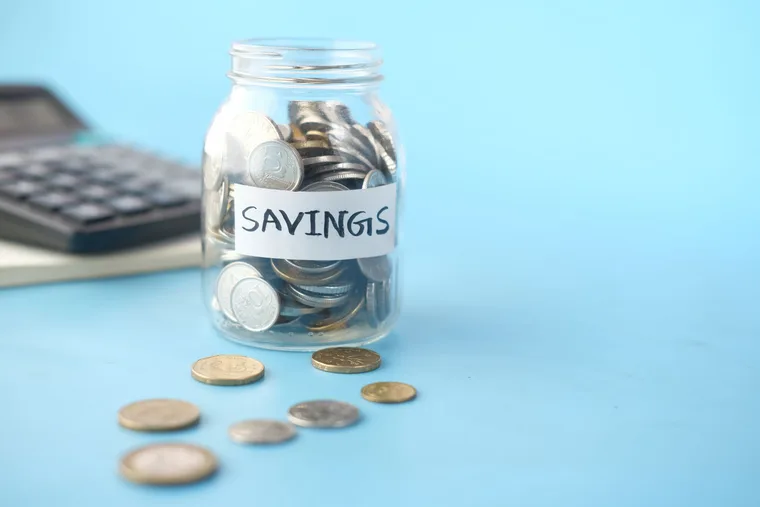
So finish the audit with one more action: total your monthly savings, round down to a clean number, and set an automatic transfer for that amount into a high-yield savings account, dated one day after your paycheck lands. You just converted dead subscriptions into a real savings rate, permanently, with no further willpower required.
And if your emergency fund is already healthy, invest it instead. This is where the audit stops being about $12.99 charges and starts being about wealth. A $100 monthly redirect, invested at a 7% average annual return, grows to about $52,000 in 20 years. At $150 a month it is about $78,000. Drag the sliders and look at your own number, because the services you canceled today were quietly bidding against that future, and they were winning.
When canceling becomes an obstacle course
Some companies make leaving genuinely difficult, and it helps to know both the tricks and your tools before you call. The classic obstacles have names. There is the roach motel, where signing up takes one click and canceling takes a phone call during business hours to a department with a 40-minute hold. There is confirm-shaming, where the cancel button is labeled something like "No, I hate saving money." There is the retention gauntlet, three escalating discount offers you must individually decline. And there is the silent downgrade, where the company "pauses" your membership instead of canceling it, then resumes billing months later. None of these are accidents. All of them are beatable with fifteen minutes of patience and documentation.
Your tools, in escalating order. First, persistence inside the product: search the help center for "cancel" because the path usually exists, just unadvertised. Second, chat transcripts: if you must cancel through a human, use chat instead of phone when offered, ask for written confirmation of the cancellation date, and save the transcript. Third, your bank: under federal electronic funds transfer rules you can revoke authorization for recurring debits from your bank account, and the CFPB's guidance walks through the exact steps, including the written stop-payment order. Fourth, your card issuer: if a merchant bills you after a documented cancellation, dispute the charge, and your transcript from step two wins that dispute almost every time.
Two preventive tactics make future cancellations easier. Virtual card numbers, which many issuers now offer free, let you give each new subscription its own card number that you can turn off unilaterally; the cancellation conversation becomes optional. And for any service with a notorious cancellation process, gyms being the canonical example, read the cancellation terms before you sign, not after. A membership that requires certified mail to leave is telling you something important about how it plans to treat you. Price that into the decision on day one, and a lot of future audits get shorter.
A 30-day test for the borderline cases
Every audit produces a maybe pile: the language app you swear you will reopen, the niche streaming service with one show you like, the premium news tier. Do not agonize. Cancel them, write the date on your calendar, and watch what happens for 30 days. If you genuinely miss one, resubscribe with zero guilt; the service will be delighted to have you back, often with a returning-customer offer sweeter than the price you left. If 30 days pass and you never thought about it, the subscription was inertia wearing the costume of a preference. Most of the maybe pile turns out to be costumes.
That is the whole system. One 90-minute audit, three mechanical gates, a quarterly 15-minute check, and an automatic transfer that makes the savings real. No app required, no discipline required, no negotiation with your own habits at 11 p.m. Just turn the lights on once, and the leaks do not survive being seen.
Put the first audit on your calendar for this weekend, before the next billing cycle hands another month of your money to services you forgot you had. Ninety minutes from now, you will know your real number, and unlike the people in that study, you will never be off by two and a half times again.
Everything you save starts with something you know.
Knowing how interest, insurance, and fine print really work is the discount that applies to everything for the rest of your life. The Financial IQ Test scores that knowledge across 90 tests and shows you where the expensive gaps are.
Test your Financial IQQuestions people ask
How much does the average household spend on subscriptions?
The most cited figure comes from a 2022 C+R Research study in which consumers estimated $86 a month but actually averaged $219, about $2,600 a year. Exact numbers vary by study and household, but the consistent finding is the gap: people reliably underestimate their subscription spending by a factor of two or more.
Where do forgotten subscriptions hide?
Four places, in order of sneakiness: app store subscriptions billed through Apple or Google rather than appearing by name on your card, PayPal automatic payments, annual renewals that only surface once a year, and subscriptions riding on a card you rarely check. A complete audit looks in all four, not just your main bank statement.
What is the fastest way to cancel a subscription that makes it hard?
Start in the account settings, because most cancellations are buried but possible. If the service requires a phone call or chat, say 'cancel' clearly, decline the retention offers unless one genuinely changes your math, and get written confirmation. As a backstop, federal rules let you revoke authorization for recurring electronic payments through your bank, and the CFPB publishes guidance on stopping automatic payments.
Should I use a subscription-canceling app to do this for me?
They can surface charges you missed, but read the pricing first. Several charge subscription fees themselves or take a cut of negotiated savings, and the irony of paying a subscription to manage subscriptions is real. The manual audit in this article takes about 90 minutes and costs nothing, which is hard for any app to beat.
Is it better to pay annually or monthly for the subscriptions I keep?
Annual billing usually costs 15 to 20 percent less, so it is the right call for services you have already kept through at least one audit. Never pay annually for something new. The discount is how services convert your uncertainty into a year of locked-in revenue before you know whether you will use it.
How often should I redo the audit?
Quarterly, and it gets fast. The first audit is the long one because you are building the list. After that, a 15-minute check against your existing list catches new charges, price increases, and anything that crept back in. Many people pair it with another quarterly ritual they already do, like checking their credit report or rebalancing.
Keep reading
50 Real Ways to Save Money in 2026, Ranked by Effort

The Grocery Savings System: Cut Your Food Bill 25%

Scripts That Work: How to Negotiate Every Bill You Have
The Flourish Letter
One smart money idea each week, charts included. Join free and get the printable 2026 Money Calendar in your welcome email.