How to Read a Bank Statement Without Missing Fees
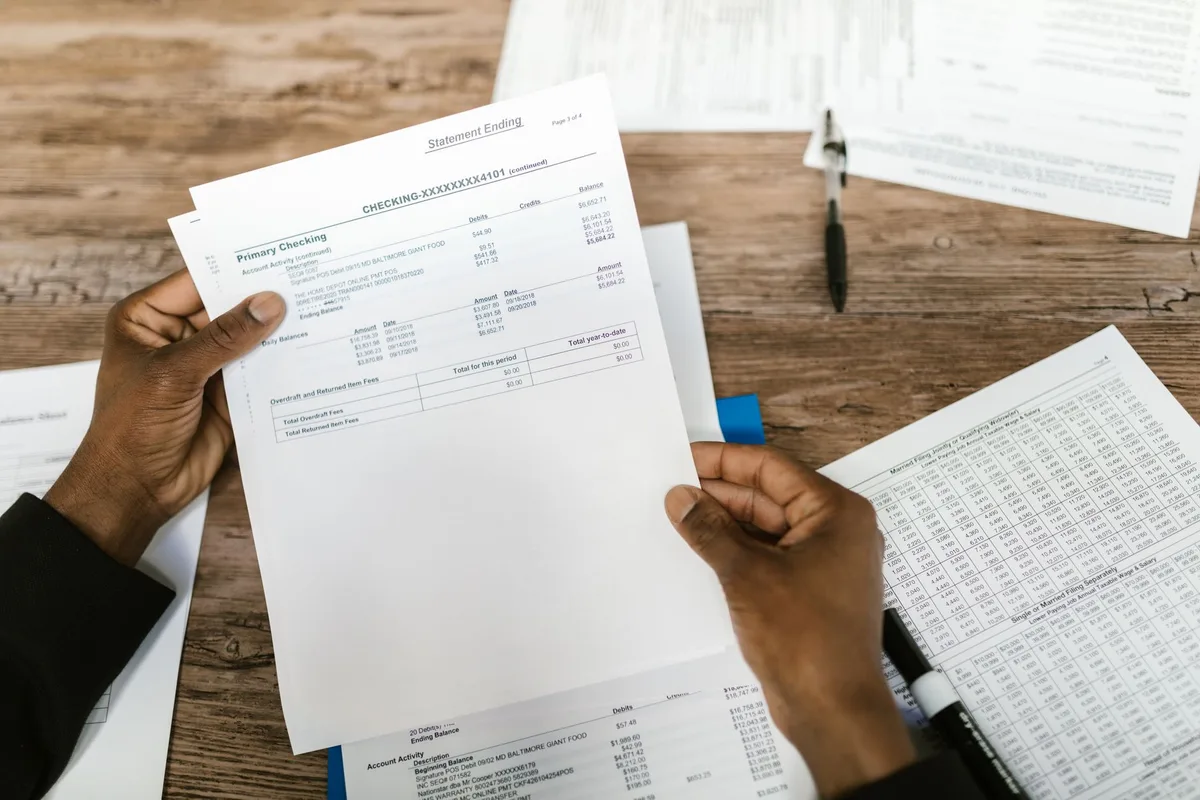
Key takeaways
- A bank statement has a predictable structure, and once you know the five sections, you can scan a full month in about ten minutes.
- Fees rarely announce themselves; they appear as small line items with vague labels, so the trick is knowing the names to search for.
- The single most useful number on the statement is not the ending balance but the difference between beginning and ending balance, because it tells you whether you actually gained or lost ground.
- Reconciling your statement against your own records is the oldest fraud-detection tool there is, and it still catches unauthorized charges faster than waiting for the bank to flag them.
- Federal rules give you strong, time-sensitive rights to dispute errors and unauthorized charges, but the clock starts the day the statement is sent, which is why reading it promptly protects real money.
Most people treat a bank statement the way they treat a software license agreement: they glance at the last number, feel a small jolt of relief or dread, and close it. That habit is expensive. Your monthly statement is the single most honest document your bank produces about you. It records every dollar that arrived, every dollar that left, and, crucially, every dollar the bank helped itself to along the way. The fees that drain accounts do not arrive with a warning. They arrive as quiet, forgettable line items, and the only place they surface in one clean list is the statement you did not read.
The good news is that a bank statement is not a mystery. It has a fixed, predictable structure, and once you understand the five parts, you can read a full month in about ten minutes and know with certainty whether you gained ground, lost ground, or got nicked by something you can fix. This guide walks through the statement section by section, names the fees that hide in the transaction list, and gives you a simple monthly routine that catches errors and fraud while your legal protections are still at their strongest.
The Five Sections of Every Statement
Whether you bank at a giant national institution or a small credit union, and whether you read your statement on paper or as a PDF, the layout is remarkably consistent. There are five parts, and they always appear in roughly this order. Learn what each one is for and you can read any statement from any bank.
The first section is the account summary. This is the box at the top with the big numbers: your beginning balance, total deposits and credits, total withdrawals and debits, any fees, and your ending balance. The second section is the account information: your name, address, account number, usually masked except for the last few digits, and the statement period dates. The third and longest section is the transaction detail, a dated, line-by-line list of everything that moved. The fourth section is the fees summary, which some banks break out separately and some fold into the transaction list. The fifth section is the disclosures and notices, the fine print at the bottom that includes your error-resolution rights and any changes to your account terms.
People skip the fifth section almost universally, and that is a mistake worth correcting. The disclosures are where a bank is legally required to tell you it is about to start charging a new fee, change a waiver rule, or adjust your interest rate. It is dry reading, but it is the early-warning system, and it is printed on the one document you receive every single month. Banks change their fee schedules with a notice that most customers never open, and the change usually takes effect a set number of days later. If you read the notice, you get a window to switch behavior or switch banks before the new charge ever posts. If you do not, the first time you learn about the change is when it costs you.
Start With the Two Numbers That Actually Matter
Before you read a single transaction, look at the account summary and do one piece of arithmetic the statement does not do for you. Subtract your beginning balance from your ending balance. That difference, positive or negative, is the truest measure of the month. The ending balance alone tells you almost nothing, because a $2,000 ending balance means something very different if you started at $1,200 than if you started at $3,500.
Say your statement shows a beginning balance of $2,400 and an ending balance of $2,650. You ended the month $250 ahead. Now compare that to what you expected. If you were saving deliberately and expected to be up around $250, the month behaved. If you thought you were saving $600 a month and the statement says you gained $250, you just learned that $350 leaked somewhere, and the transaction list is about to tell you where. This one subtraction turns a passive glance into an active question, and the question is what makes you actually read the rest.
While you are in the summary box, note the total fees line if your bank provides one. A well-run financial month has a fees total of exactly zero. Any positive number here is a flag, not necessarily a problem, but a thing to explain before you move on. It also helps to glance at the total deposits and total withdrawals figures side by side. If withdrawals badly outpaced deposits in a month you thought was ordinary, that gap is a story the transaction list is about to tell, and knowing the size of the gap in advance tells you how hard to look.
How to Read the Transaction List Like an Auditor
The transaction detail is the heart of the statement, and it is where the real reading happens. Each row typically shows the date, a description, an amount, and a running balance. The descriptions are often abbreviated, cryptic, or written in the merchant processor's language rather than the store's name, which is exactly why unfamiliar charges are easy to wave away. Do not wave them away. The discipline is simple: every debit should map to something you remember doing.
Read the list with three passes. On the first pass, scan the amounts and let anything large or round jump out. On the second pass, read the descriptions and check each against your memory, flagging anything you do not immediately recognize. On the third pass, look specifically for recurring charges, the subscriptions and memberships that renew automatically, and ask of each one whether you still use it and still want it. That third pass alone pays for the ten minutes, because forgotten subscriptions are one of the most common quiet leaks in a modern budget.
Pending versus posted matters here too. A statement only shows posted transactions, the ones that have fully cleared. But when you are reconciling against your own records or your live app, you will see pending items that have not yet posted. A pending charge is real money that is simply mid-flight, and it will land on next month's statement. Understanding this prevents the most common reconciliation panic, where the statement balance and the app balance disagree and everything looks broken. They disagree because they are measuring two different moments in time.
The Fees That Hide in Plain Sight
Now for the part that gives this guide its title. Fees rarely appear under a heading that says fee. They appear as line items with soft, forgettable labels: service charge, account fee, maintenance, item fee, transfer fee. A busy reader slides right past them because they look like just another small debit. The way to beat this is to know the specific names and hunt for them deliberately.
The most common maintenance fee, often somewhere in the $5 to $15 range at large banks, is usually waivable if you meet a condition like a minimum balance or a qualifying direct deposit. The danger is that the waiver fails silently. You do not get a notice that says your waiver did not apply this month. You simply see a maintenance charge, and only if you are reading do you catch it. Overdraft and nonsufficient funds fees are the most expensive category and the easiest to spot once they hit, but they are also the ones most worth disputing quickly, because banks refund occasional fees more often than people expect for customers who ask politely. Out-of-network ATM fees, paper statement fees, and foreign transaction fees round out the usual list.
Run your eyes down the table above and then go find each label in your own statement. The exercise takes two minutes and it retrains how you read forever, because once you have consciously hunted for a service charge line, you never again mistake it for background noise. If you find a fee you did not expect, do not just note it. Ask why the trigger happened, because the trigger is the thing you fix. A maintenance fee means a waiver condition slipped. An ATM fee means you used the wrong machine. Every fee is a piece of information about a habit or a setting, and the statement is where that information lives.
Reconciling: The Ten-Minute Habit That Catches Fraud
Reconciliation sounds like an accounting chore, but it is really just the practice of comparing what the bank says happened against what you know happened. It is the oldest fraud-detection tool in personal finance, and it still works better than waiting for an algorithm to flag something, because you are the only person on earth who knows which charges are legitimately yours.
Here is the streamlined version. Keep a rough running list of your larger transactions during the month, either in a note on your phone or in a budgeting app. When the statement arrives, read down the transaction list and check off each item against your list and your memory. Anything on the statement that you cannot account for gets a circle. Most circles resolve quickly once you recognize the merchant's odd billing name. The ones that do not resolve are exactly what this whole process exists to find: a duplicate charge, a subscription you canceled that kept billing, or an unauthorized transaction from a compromised card.
Speed matters more than people realize, and the reason is legal. Your protections against unauthorized electronic charges are strong, but they are time-sensitive, and the clock generally starts on the date the statement is sent, not the date you get around to opening it. Reading promptly is not just tidy. It is the difference between a fully protected dispute and a partially protected one. This is the concrete, dollars-and-cents reason the whole habit is worth building.
Your Rights When Something Is Wrong
Suppose your reconciliation turns up a charge you did not make, or a fee you believe is an error. You are not at the bank's mercy. Federal Regulation E, which governs electronic fund transfers including debit card and ATM activity, gives you a clear process and a clear timeline. In general, you have 60 days from the date the statement showing the problem was sent to notify your bank of an error or unauthorized transfer. Once you notify them, the bank must investigate, and for many claims it must resolve the matter within a set number of days, often provisionally crediting your account while it investigates.
Reporting a lost or stolen debit card is even more time-sensitive, and the payoff for speed is direct. If you report the loss before any unauthorized charges occur, your liability can be zero. If you report within two business days of learning about the loss, your liability is typically capped at $50. Wait longer and the cap can rise substantially, which is a powerful reason to act the moment you notice something wrong. When you do report an error, do it in writing whenever possible, describe the specific transaction with its date and amount, and keep a dated copy of what you sent. A written record is the single best thing you can hold if a dispute drags on.
None of this is legal advice for your specific situation, and the exact rules can vary with the type of account and transaction. But the shape of your protection is consistent and generous, and the one thing that consistently activates it is prompt, documented action. That, again, traces straight back to reading the statement on time. It is worth adding that fees the bank charged in error are disputable the same way an unauthorized purchase is. If a maintenance fee posted in a month you clearly met the waiver, or an overdraft fee posted on a balance that was never actually negative, you can raise it through the same error-resolution process. Approach it as a factual correction rather than a favor, state the specific fee and why it should not have applied, and ask for it to be reversed.
Reading a Savings or Interest Statement
Checking statements get most of the attention, but if you hold a savings account, a money market account, or an interest-bearing checking account, your statement carries a few extra lines worth understanding. The interest paid line shows what the bank credited you for the period, and it is worth a sanity check against the rate you were promised. If your account advertises a certain annual percentage yield, the monthly interest on your average balance should be roughly consistent with that yield divided across the year.
Watch for two things in particular. First, a rate that quietly dropped. Promotional yields often step down after an introductory window, and the statement disclosures are where that change is announced. Second, any excess-activity or minimum-balance fee on the savings side, which can silently erase a chunk of the interest you earned. There is a particular irony in earning a few dollars of interest and paying a larger fee for dipping below a balance threshold, and the only place you will notice the net loss is on the statement. If your interest is real and your fees are zero, a savings statement is a genuinely pleasant thing to read, and it is worth confirming that pleasant status every month rather than assuming it.
What Small Leaks Cost Over Time
It is tempting to dismiss a $12 maintenance fee or a forgotten $9.99 subscription as too small to matter. The statement-reading habit exists precisely because those small numbers do not stay small when you leave them running. A single overlooked recurring charge is not a one-time cost. It is a monthly cost that compounds against you for as long as you fail to notice it, and the money it drains is money that could have been compounding for you instead.
Try the slider above with your own numbers. Put in a realistic monthly leak, the total of the fees and forgotten subscriptions you might reasonably catch by reading your statement, and drag the years out. Even a modest $25 a month, redirected into a savings account earning a competitive yield, grows into a meaningful sum over a decade or two. That is the real argument for ten minutes a month. You are not just tidying up a document. You are plugging a leak that would otherwise quietly run for years, and you are redirecting that same water into your own reservoir.
Your Monthly Statement Routine
Pull all of this together into a habit you can run on autopilot, and the whole thing takes about ten minutes. Do it the same way every month, ideally within a few days of the statement arriving, so your protections stay at full strength. The routine is short enough to memorize and specific enough to actually catch things.
First, open the account summary and subtract beginning balance from ending balance, then compare that number to what you expected. Second, check the fees total; if it is anything but zero, find out why. Third, read the transaction list in three passes, scanning amounts, then descriptions, then recurring charges, circling anything you cannot account for. Fourth, resolve your circles, recognizing that most are just oddly named merchants and that the leftovers are exactly what you are hunting. Fifth, if you find an error or an unauthorized charge, report it promptly and in writing, and keep a copy. Sixth, glance at the disclosures at the bottom for any announced change to your fees or rate. That is the entire practice.
Do this twelve times a year and a few things happen. You stop paying fees you did not know about, because you now see them. You catch fraud in days instead of months, because you are the detector. You notice subscriptions the moment they outlive their usefulness. And you replace that small monthly jolt of dread with something better, which is the quiet confidence of a person who actually knows where their money went. The statement was always going to be produced whether you read it or not. Reading it is simply the cheapest, highest-return ten minutes in your entire financial month.
Banks profit from what their customers do not know.
Every fee, teaser rate, and disclosure is a test you are taking whether you study or not. The Financial IQ Test scores your real money knowledge across 90 tests and shows you the gaps before a bank finds them first.
Test your Financial IQQuestions people ask
How long should I keep my bank statements?
A common approach is to keep monthly statements for at least one year for everyday reference, and to hold onto any statement tied to taxes, a loan application, or a major purchase for seven years. Most banks let you download PDF statements going back several years, so you rarely need paper copies. If you shred old paper statements, use a cross-cut shredder, because a statement contains your account number and enough detail to help a thief.
What is the difference between my available balance and my current balance?
Your current balance, sometimes called the ledger or statement balance, reflects transactions that have fully posted. Your available balance is what you can actually spend right now, which subtracts pending charges and holds that have not fully cleared. The available balance is almost always the more honest number for day-to-day spending, because a pending charge is real money that is simply waiting to finish clearing.
How quickly do I have to report an error or unauthorized charge?
For electronic transfers and debit card activity, federal Regulation E generally gives you 60 days from the date the statement showing the problem was sent to notify your bank. Reporting a lost or stolen debit card faster sharply limits your liability, often to $50 if you report within two business days. Because the clock runs from the statement date and not the day you happen to read it, prompt reading directly protects your money. Report in writing when you can, and keep a copy.
Why does my statement balance not match what my banking app shows today?
A statement is a snapshot of a fixed period that has already closed, usually a calendar month or a cycle ending on a set date. Your app shows live activity, including everything that happened after the statement period ended. They will almost never match unless you look at the app as of the exact statement closing date. To reconcile properly, compare your records against the statement period, not against today's live balance.
What are the most commonly missed fees on a statement?
The usual suspects are monthly maintenance fees that slip through when a waiver condition is not met, out-of-network ATM fees, paper statement fees, overdraft and nonsufficient funds fees, and small recurring charges from forgotten subscriptions. Many of these carry vague labels like service charge or account fee. The reliable way to catch them is to scan the statement specifically for any line that reduces your balance without a matching purchase you recognize.
Can I get paper and electronic statements at the same time?
Usually yes, though some banks charge a monthly fee for mailed paper statements while electronic statements are free. If your bank charges for paper, switching to electronic delivery is often a quick way to remove a small recurring fee. Whichever you choose, the important habit is actually opening the statement each month, because an unopened statement protects no one.
Keep reading

Never Pay a Bank Fee Again: The Complete Playbook

CD Ladders Explained: Lock In Rates Without Locking Up Your Life

The Emergency Fund Guide: How Much, Where, and How Fast
The Flourish Letter
One smart money idea each week, charts included. Join free and get the printable 2026 Money Calendar in your welcome email.