
Key takeaways
- Self-custodied crypto has no institution behind it, so a court order means nothing without the keys. Your plan must deliver both the map and the keys, separately, at the right moment.
- Keep an annually updated inventory of every account and wallet that your executor can find, listing what exists but never the credentials.
- Choose a deliberate access pattern: exchange process, hardware wallet with sealed instructions, split secrets, multisig, or an inheritance service, each trading convenience against single points of failure.
- Never put seed phrases or account details in your will, which becomes a public court record. Reference a private letter of instruction instead.
- Have your attorney include express digital-asset authority under RUFADAA in your will, power of attorney, and any trust so your executor can lawfully act.
- Inherited crypto gets a step-up in basis to date-of-death value, erasing lifetime capital gains, and the federal estate tax exemption of about $15 million in 2026 means most families owe no estate tax.
When a Canadian crypto exchange founder died suddenly in 2018, he reportedly took the only keys to roughly $145 million of customer funds with him. That story made headlines because of the size, but the same quiet catastrophe happens at kitchen-table scale constantly: someone dies, the family knows there was crypto, and nobody can find it, open it, or prove it existed. Research firms have estimated that millions of bitcoin, on the order of a fifth of the total supply, are already lost or stranded forever, much of it through nothing more dramatic than death and forgetfulness. Crypto is the only major asset class where your heirs can know exactly what you owned, have every legal right to it, and still get nothing. This guide walks through how to make sure your coins actually reach your people: the access plan, the legal documents, the tax rules that are surprisingly friendly, and the mistakes that turn an inheritance into an archaeology project.
Why crypto breaks normal inheritance
Most assets are claims on an institution that has a death procedure. A bank account, a brokerage account, a life insurance policy: each sits with a company that has a bereavement department, a beneficiary form, and a legal duty to hand assets to the rightful heir. The institution is the safety net. If nobody told the heirs the account existed, a search of mail, tax returns, and state unclaimed property databases usually surfaces it eventually.
Self-custodied crypto has no institution. Ownership is the keys, full stop. The blockchain does not know you died, cannot verify a death certificate, and has no customer service. A court can order that your bitcoin belongs to your daughter, and the order is meaningless without the seed phrase. There is no password reset and no unclaimed property process for a wallet nobody can open. Exchange accounts sit in between: the exchange does have a deceased-customer process, but most exchanges historically have not offered beneficiary designations the way banks do, so heirs typically need death certificates and probate paperwork, and first they need to know the account exists at all.
So crypto estate planning has to solve two problems at once, and they pull in opposite directions. Your heirs need enough information to find and access everything. Meanwhile, anyone who gets that information while you are alive can simply take your coins, instantly and irreversibly. Every plan in this guide is a different answer to that tension: maximum access at death, minimum exposure before it.
Step one: the inventory
Start with a simple document listing every place you hold digital assets: each exchange account, each software wallet, each hardware wallet and where it physically lives, plus any staking positions, DeFi deposits, or NFTs of value. For each entry, record what it is and roughly what it holds, but not the credentials. This inventory is the map, not the keys, and keeping those two things separate is the central design principle of everything that follows.
Store the inventory somewhere your executor will actually find it, and date it. An inventory nobody finds fails exactly like no inventory. Common homes for it: with your estate documents, in a shared safe, or with your attorney. Then put a recurring reminder on your calendar to update it once a year, because a two-year-old crypto inventory can miss half the picture.
Step two: choose how heirs will actually get access
This is the heart of the plan, and there are five workable patterns, rising in sophistication. What they share is the separation of map from keys until death puts them together.
Exchange accounts with a documented process
The simplest setup: keep coins at a major regulated exchange and document the account in your inventory. Your executor presents a death certificate and estate paperwork, and the exchange transfers assets to the estate. The strengths are familiarity and the absence of key-handling. The weaknesses are everything self-custody people already dislike, plus probate delays measured in months. If you go this route, check whether your exchange has added beneficiary or legacy-contact features, since some platforms have begun offering them, and keep account security tight, because an exchange account is also the easiest target while you are alive.
Hardware wallet plus sealed instructions
The workhorse plan for self-custody holders. Your coins live on a hardware wallet, and your seed phrase backup, the set of words that can restore everything, is stored separately in a sealed, tamper-evident envelope in a safe place: a home safe, a bank safe deposit box, or with an attorney. Your letter of instruction tells the executor where the envelope is and what to do with it. This is simple and robust, with one sharp edge: anyone who opens that envelope owns your coins. Mitigations include a tamper-evident seal you check annually, a safe deposit box that requires legal authority to open, or splitting the phrase as described next.
Splitting the secret
To remove the single envelope as a point of failure, you can split control. The low-tech version stores the seed phrase in two or three pieces in separate locations, requiring a thief to compromise multiple places. Done carelessly this backfires, because losing one piece can mean losing everything, so most people who split use schemes designed for it. Some hardware wallets support formal secret-splitting standards that produce, say, five shares of which any three can restore the wallet. That tolerates the loss of two shares and the theft of two shares simultaneously. The cost is complexity your heirs must navigate, which makes the written instructions even more important.
Multisignature wallets
A multisig wallet requires multiple keys to move funds, for example two of three keys held by you, your spouse, and an attorney or trusted institution. No single person, including a thief who compromises one key, can take anything. At death, the surviving keyholders combine to move funds where the will directs. This is the strongest structure for large holdings and the one most worth professional help to set up, because a misconfigured multisig is a sophisticated way to lose everything. Several companies now specialize in collaborative-custody multisig with inheritance support built in.
Inheritance services and timer-based tools
A growing category of services automates the handoff: digital vaults that release information to named contacts after verified death, and so-called dead man's switches that act after you fail to check in for a set period. These can work as a layer in a plan, but treat them as conveniences rather than foundations. A startup may not outlive you, a timer can fire on a long hospital stay, and any service holding complete keys is itself a honeypot. If you use one, prefer designs where the service alone can never reconstruct your keys.
Step three: the letter of instruction
Whatever access pattern you choose, it lives or dies on a plain-language letter that a grieving, non-technical person can follow. Assume the reader has never used crypto. The letter should cover: what you own and where, in updated detail; where the sealed materials are and who may open them; step-by-step instructions for the recovery, written at the level of which buttons to press; the name of a technically competent person the executor can call; and an explicit warning list, including never typing the seed phrase into a website, never letting a helpful stranger or online service do the recovery, and moving assets to a fresh wallet promptly once recovered, since the plan's secrecy ends the moment it is executed.
Two placement rules matter. First, the letter must not be inside the will itself. A will becomes a public court record in probate, and publishing your wallet details to the world is the single most self-defeating move in all of estate planning. Reference the letter's existence in the will; keep its contents private. Second, the letter and the seed phrase should not live in the same envelope or the same drawer, because together they are the entire kingdom.
Step four: the legal layer
The access plan gets coins into trusted hands. The legal layer makes the transfer rightful, orderly, and tax-clean. Three pieces matter for most people.
A will that mentions digital assets. Your will should dispose of digital assets explicitly, either as part of the residuary estate or with specific bequests, and should reference your letter of instruction without quoting it. Dying without a will means state intestacy law decides who gets your coins, with no regard for what you would have wanted, and with maximal confusion about access.
Executor authority over digital assets. Nearly every state has adopted a version of the Revised Uniform Fiduciary Access to Digital Assets Act, known as RUFADAA, which lets fiduciaries manage digital assets when the documents grant that power. The catch is that the power generally must be granted. Have your attorney include express digital-asset authority in your will, your power of attorney, and any trust, so your executor can lawfully deal with exchanges and devices rather than arguing about it.
A revocable living trust, for larger holdings. Holding crypto in a revocable trust keeps the transfer out of probate entirely, keeps details out of the public record, and lets a successor trustee act quickly. Transferring wallet-held crypto into a trust is procedurally odd, since the trust must in some sense control the keys, and titling practices are still maturing, so this is squarely attorney territory. It is increasingly common for estates where crypto is a six-figure-plus line item.
The tax picture: better news than you expect
The IRS treats crypto as property, and inherited property gets one of the friendliest rules in the tax code: a step-up in basis. Your heirs' cost basis becomes the fair market value on the date of death, not what you paid. Coins bought for $5,000 and worth $80,000 at death pass with an $80,000 basis, and the $75,000 of lifetime gain is simply never income-taxed. Heirs who sell soon after death typically owe little or no capital gains tax. Long-term holders should let that sink in, because it changes late-life decisions: selling highly appreciated coins at 80 triggers tax that dying with them would erase. That is not advice to hold anything forever; it is a fact your planning should know about.
Estate tax, meanwhile, worries far fewer families than imagined. The federal estate tax exemption is about $15 million per person in 2026, double for married couples with proper planning, so the overwhelming majority of estates owe none. Heirs do need a defensible record of date-of-death values, so executors should capture prices for each asset on that date. Crypto's volatility makes this more important than it is for a bank account, and a screenshot habit plus an exported transaction history makes an accountant's job vastly easier.
Special situations your plan should name
A few asset types need a sentence or two of their own in the letter of instruction, because the generic recovery steps do not cover them.
Staked and locked positions. Coins that are staking, in unbonding queues, or locked in DeFi protocols cannot simply be swept to a new wallet on day one. The instructions should name each position, the platform or protocol it sits in, and the basic exit procedure, including expected waiting periods, so an executor does not mistake a lockup for a loss or, worse, abandon a position they could not immediately see.
NFTs and tokenized collectibles. These live in wallets like coins do, but their value is far harder for an executor to judge, and panic-selling into thin markets destroys value. The letter should flag any items of real worth and suggest a knowledgeable contact before anything is listed for sale.
Business and shared holdings. Crypto held by an LLC, a partnership, or jointly with another person follows the entity's documents first and your will second. If you hold keys for anything that is not entirely yours, including a multisig where you are one signer among several, write down who must be notified, because your death changes that wallet's security model for everyone else in it.
Small dust balances. Most long-time users have a scattering of tiny balances across old wallets and chains. Give your executor explicit permission to ignore anything below a threshold you choose. A line like "abandon anything under $200 rather than spending hours on it" is a genuine kindness, and it keeps the meaningful recoveries from drowning in trivia. Executors consistently report that knowing what to skip was as valuable as knowing what to find.
The mistakes that actually strand coins
The failure stories repeat with remarkable consistency. Here is the list, so yours is not among them.
- Total secrecy. Nobody knew the crypto existed, so nobody looked. The asset side of your net worth should never be a complete surprise to your executor.
- Putting keys in the will. Public record, permanent, irreversible. Reference, never include.
- The memory plan. The seed phrase lived only in the owner's head, or on one unlabeled scrap of paper that got thrown out with the desk. Single unlabeled copies fail constantly.
- The too-clever plan. Encrypted files inside encrypted drives, riddles, codes split across books. Every layer of cleverness multiplies the chance heirs give up. Your adversary is a thief, not a puzzle convention.
- Stale plans. The instructions describe a wallet emptied two years ago and miss the three new ones. Annual review or it rots.
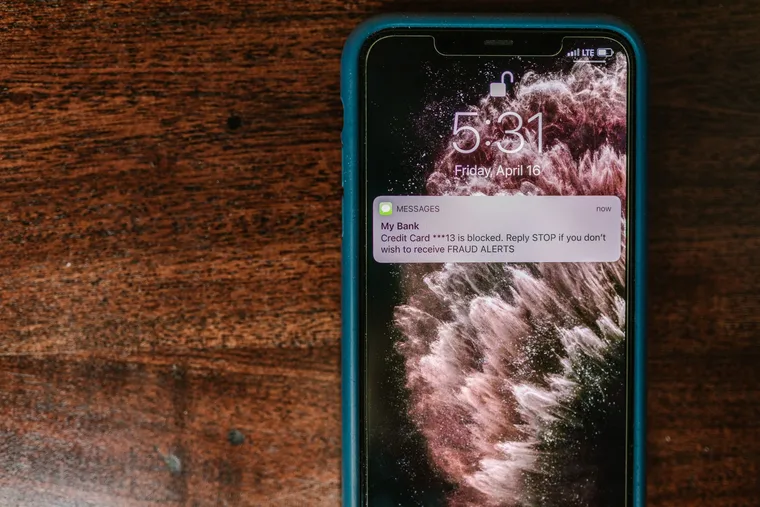
- Helpful strangers. Heirs who could not follow the plan asked an online recovery service or a forum for help and handed the seed phrase to a thief. The letter of instruction must pre-empt this explicitly, because recovery scams target the bereaved deliberately.
- Unbriefed people. The executor learned of their role, and of crypto's existence, at the funeral. A one-hour conversation while you are alive outperforms any document.
The maintenance schedule
A crypto estate plan is not a document, it is a habit with paperwork attached. The cadence below keeps the whole structure alive with about two hours a year of effort.
One last perspective for motivation. The coins most likely to be stranded are precisely the ones held longest by the most disciplined holders, because decades of holding outlast memory, hardware, marriages, and filing systems. If you intend to hold for ten or twenty years, the slider below shows what a position like yours could plausibly be worth to your family under different growth assumptions. Whatever number you land on, that is the size of the gift your two hours a year protects.
The bottom line
Crypto gave individuals the power of being their own bank, and estates are where the second half of that sentence comes due: banks have bereavement departments, and you are now yours. The fix is not exotic. An inventory your executor can find, an access plan that separates the map from the keys, a letter a non-technical person can follow, a will and power of attorney with express digital-asset authority, a named human who has been told, and an annual hour of maintenance. Families recover assets smoothly with that structure in place. Without it, the blockchain keeps the coins safe forever, from everyone, including the people you meant them for.
Crypto punishes guesswork faster than any market on Earth.
Volatility is survivable. Not knowing what you own is not. The Financial IQ Test measures your actual money knowledge, from market basics to risk math, so your conviction is built on understanding instead of a feed full of hype.
Test your Financial IQQuestions people ask
What happens to my crypto if I die without any plan?
Exchange accounts can usually be recovered by your estate through the platform's deceased-customer process, if your heirs know the accounts exist, though probate can take months. Self-custodied coins without a discoverable seed phrase are simply gone. State intestacy law will decide who legally owns them, but legal ownership cannot open a wallet, which is why a meaningful share of all bitcoin is believed permanently stranded.
Should I just give my heirs my seed phrase now?
Sharing a live seed phrase makes the other person a full co-owner immediately, with the power to move everything, and it multiplies the places a thief can find the phrase. Most plans work better by separating information: heirs know the assets exist and where sealed materials are, but cannot reconstruct access until death puts the pieces together through your executor and instructions.
Do my heirs pay taxes on inherited crypto?
Usually very little at inheritance. Crypto is property, so heirs receive a step-up in basis to the fair market value on the date of death, which erases the capital gains accrued during your lifetime for income tax purposes. Federal estate tax only applies above an exemption of about $15 million per person in 2026. Heirs owe capital gains tax only on appreciation after the date of death when they eventually sell, and a few states levy their own inheritance or estate taxes.
Can my executor legally access my exchange accounts?
Generally yes, if your documents grant the authority. Nearly all states have adopted RUFADAA, which lets a fiduciary manage digital assets when the will, trust, or power of attorney expressly says so. Without that language, platforms may resist or delay. Ask your attorney to include digital-asset powers explicitly, and expect exchanges to require death certificates and estate paperwork either way.
Is a safe deposit box a good place for a seed phrase?
It is one of the better single locations: physically secure, protected from house fires, and accessible to an executor with legal authority. The drawbacks are access friction while you are alive, the need for your executor to know the box exists, and the fact that any single location is still a single point of failure. Pairing a box with a second sealed copy elsewhere, or using a formal secret-splitting scheme, removes that last weakness.
How often should I update my crypto estate plan?
Review it once a year and after any major change: new wallets or exchanges, large balance shifts, a move, a marriage or divorce, or a change of executor. An annual check takes about an hour, verifying the inventory, confirming sealed materials are intact and findable, and re-reading the instructions for accuracy. Stale plans fail almost as completely as no plan.
Keep reading

Bitcoin Explained for Normal People (2026 Edition)
The Crypto Scam Field Guide: Every Major Con and How to Spot It

Crypto Taxes in 2026: What You Actually Owe the IRS
The Flourish Letter
One smart money idea each week, charts included. Join free and get the printable 2026 Money Calendar in your welcome email.