Key takeaways
- Mining is the process that confirms Bitcoin transactions and adds them to the blockchain, and the reward for doing it is how new bitcoin enters circulation.
- Miners race to find a number that makes a block's cryptographic hash fall below a target, a contest that is pure trial and error and consumes enormous computing power.
- A new block is found roughly every 10 minutes on average, and the network automatically adjusts difficulty about every two weeks to keep that pace steady.
- The block reward is cut in half about every four years in an event called the halving, and the April 2024 halving lowered it to 3.125 bitcoin per block.
- Bitcoin's supply is capped at 21 million coins, and the shrinking block reward is the schedule that enforces that hard limit.
- Mining is now an industrial business dominated by specialized machines and pools, so going solo at home almost never pays off.
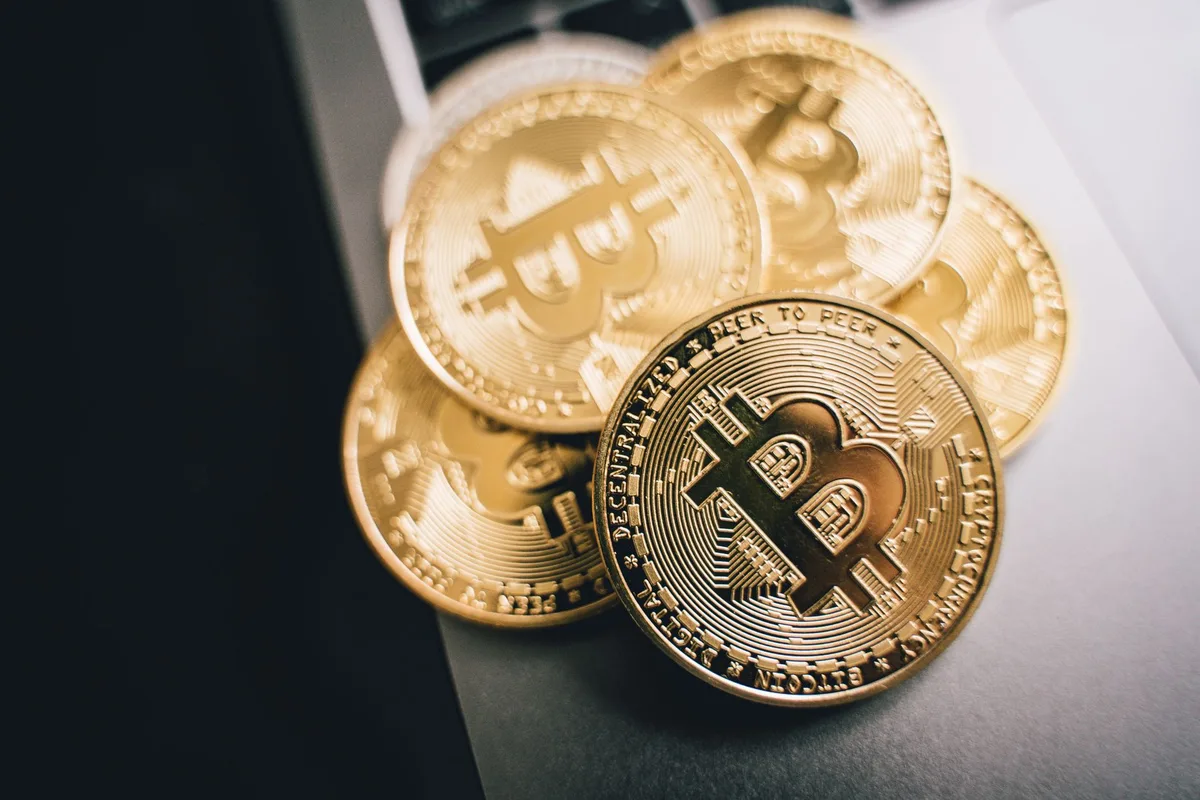
The word mining makes it sound like there is a digital cave somewhere full of gold coins, and that powerful computers are out there digging them up. That picture is almost entirely wrong, and letting go of it is the first step to actually understanding Bitcoin. No coins are buried anywhere. What miners are really doing is running a massive, worldwide guessing contest, and the prize for winning is the right to add the next page to a shared public ledger. New bitcoin gets handed out as a thank-you for that work. Understanding how this contest functions tells you almost everything important about Bitcoin: why it feels secure, why it uses so much electricity, why there will only ever be 21 million coins, and why mining at your kitchen table almost never makes money. Let us take it apart piece by piece.
What Mining Is Actually For
Before any guessing happens, it helps to know what problem mining solves. Bitcoin has no bank, no company, and no central computer keeping track of who owns what. Instead it relies on a shared record called the blockchain, a long chain of blocks where each block holds a batch of recent transactions. Everyone on the network keeps a copy. The hard question is this: if no single authority is in charge, who gets to decide which transactions are valid and in what order, and how does everyone agree on one version of the truth?
Mining is the answer. Miners are the workers who gather up pending transactions, check that each one is legitimate, package them into a new block, and then compete for the right to add that block to the chain. Winning the competition is deliberately expensive, which is the whole point. Because adding a block costs real computing effort, nobody can cheaply rewrite history or sneak in fake transactions. The cost of the work is what buys the network its trust. So mining is really two jobs fused into one: it confirms payments, and it is the only way new bitcoin is created.
That second job matters for how you think about the system. New coins are not printed by a central authority on a whim. They are released as a reward to whoever wins each round of the contest, on a fixed and predictable schedule written into the software. That is what people mean when they call Bitcoin's supply rules transparent. Anyone can read exactly how many coins exist now and how many ever will.
The Guessing Contest at the Heart of It All
Here is the part that confuses almost everyone, explained plainly. At the center of mining sits a tool called a hash function. A hash function takes any input, a block of transactions in this case, and scrambles it into a fixed-length string of numbers and letters. The result looks random, and it has a useful property: change the input even slightly and the output changes completely and unpredictably. There is no way to work backward from the output to figure out what input would produce it. Your only option is to try inputs and see what comes out.
To add a block, a miner has to find a special number, called a nonce, that when combined with the block's data produces a hash that falls below a certain target value. Think of the target as a rule that says the winning hash must start with a long run of zeros. There is no clever shortcut to find such a number. The miner simply tries one nonce, hashes the block, checks whether the result is small enough, and if not, tries the next nonce, and the next, billions and trillions of times per second. It is pure trial and error at staggering speed.
The miner who stumbles onto a valid nonce first gets to announce the new block to the network. Everyone else can verify the answer almost instantly, because checking a single hash is trivial even though finding it was brutally hard. This asymmetry, hard to solve but easy to check, is the engine of the whole system. Once the block is verified by the network, it is added to the chain, the winner collects the reward, and the race immediately restarts on the next block.
The Step by Step Journey of a Transaction
It helps to follow a single payment from the moment you send it to the moment it is locked into the ledger forever. The path is the same for every transaction on the network, whether it is a few dollars or a few million.
First you create and broadcast a transaction, signing it with your private key to prove the coins are yours to spend. That transaction travels to computers across the network and lands in a waiting area often called the mempool, a holding pen of unconfirmed payments. Miners look in this pool and select transactions to include in the block they are building, usually favoring those that attach a higher fee, since the fee becomes part of their reward.
Next, a miner assembles a candidate block from those transactions and begins the guessing contest, hunting for a nonce that produces a valid hash. When some miner somewhere wins, the new block is broadcast and the rest of the network checks the work. If it is valid, every participant adds the block to their copy of the chain, and your transaction now has one confirmation. As more blocks pile on top of it, each one harder to undo than the last, your transaction becomes effectively permanent. Many services treat a payment as fully settled after about six confirmations, which takes roughly an hour on average.
Block Time, Difficulty, and the Self-Correcting Clock
One of the most elegant ideas in Bitcoin is how it keeps a steady rhythm. The network aims to produce one new block roughly every 10 minutes, on average. Not every block. Sometimes two arrive within a minute of each other, sometimes there is a 40-minute gap. But over time the average holds near 10 minutes, and that consistency is no accident.
The trick is an automatic adjustment called difficulty. Difficulty is essentially how many leading zeros the winning hash must have, or put another way, how small the target is. Roughly every two weeks, or every 2,016 blocks, the network looks back at how fast those blocks were found. If they came faster than 10 minutes apart on average, meaning more computing power joined the contest, the network makes the puzzle harder. If blocks came slower, it makes the puzzle easier. This feedback loop keeps the 10-minute pace remarkably stable no matter how much mining power enters or leaves the network.
This self-correcting clock is why Bitcoin's coin issuance stays on schedule across decades. Even as the total computing power has grown from a few hobbyist laptops in 2009 to millions of industrial machines today, blocks still arrive about every 10 minutes, because the difficulty rises to match. The contest gets harder, but the clock keeps the same time.
The Block Reward and the Halving
Now to the reward that makes all this effort worthwhile. When a miner wins a block, they collect two things. The first is the block subsidy, a chunk of brand-new bitcoin created out of thin air by the protocol. The second is the sum of the transaction fees from every payment included in that block. Together these make up the block reward.
The block subsidy is not constant. It is cut in half on a fixed schedule, an event known as the halving, which happens every 210,000 blocks, or roughly every four years. The schedule has played out like clockwork. The subsidy started at 50 bitcoin per block when the network launched in 2009. It dropped to 25 in 2012, to 12.5 in 2016, to 6.25 in 2020, and most recently to 3.125 bitcoin in the April 2024 halving. The next halving, expected around 2028, will lower it again to 1.5625 bitcoin.
Each halving cuts the flow of new coins in half, which is why people pay so much attention to these events. Issuance slows down step by step, and it will keep slowing until the subsidy shrinks to essentially nothing. This shrinking schedule is not a bug or a market accident. It is a deliberate design choice meant to make Bitcoin scarce and predictable, the digital opposite of a currency that can be printed without limit.
The 21 Million Cap and Why It Exists
Add up every block subsidy from the very first block to the very last, with the reward halving every 210,000 blocks, and the total comes to just under 21 million bitcoin. That is the hard cap. No more than 21 million coins will ever exist, and the halving schedule is precisely the mechanism that enforces it. Each halving brings the running total closer to that ceiling without ever quite touching it, like a series that converges on a limit.
Because each block is divisible down to tiny fractions, the final coins will be issued in ever smaller slivers, and the last new bitcoin is expected to be mined around the year 2140. After that, no new coins will ever be created. The cap is one of the defining features of Bitcoin and a big part of why supporters describe it as digital scarcity. Unlike a government that can issue more of its currency, Bitcoin's rules are fixed in code that the whole network would have to agree to change, which is extraordinarily unlikely given that scarcity is the entire appeal.
It is worth being clear-eyed here. A fixed supply does not guarantee that the price will rise, and it does not make bitcoin a safe investment. Scarcity is a property of the supply, not a promise about value. The price of bitcoin has swung wildly in both directions, and regulators consistently warn that crypto assets carry real risk of loss. Understanding the supply cap helps you understand the design. It tells you nothing about what any coin will be worth tomorrow.
Solo, Pool, or Cloud: The Ways People Actually Mine
In the earliest days, a person could mine bitcoin on an ordinary laptop and reasonably expect to win blocks. Those days are long gone. Today the contest is so competitive that the hardware and the approach you choose make all the difference, and for most individuals the honest answer is that none of them is a path to easy money.
The machines themselves have evolved dramatically. Early miners used regular computer processors, then graphics cards, and eventually the industry moved to specialized chips called ASICs, short for application-specific integrated circuits. An ASIC does exactly one thing, compute Bitcoin hashes, and it does that one thing thousands of times more efficiently than a general-purpose computer. Competing without one today is essentially hopeless.
Even with good hardware, you still have to choose how to mine. Solo mining means you compete entirely on your own and keep the full reward when you win, but with only one machine against the whole world, you might wait years between wins, if you ever win at all. Pool mining is what nearly everyone does instead. A pool combines the computing power of thousands of miners, wins blocks far more regularly, and splits each reward among members in proportion to the work they contributed, minus a small fee. You earn smaller amounts but far more steadily. Cloud mining means renting computing power from a company that owns the hardware, which spares you the noise and heat but introduces a different risk: many cloud mining offers have turned out to be poor deals or outright scams, so this is the corner of mining where caution matters most.
Why Mining Eats So Much Electricity
The energy use of Bitcoin is one of the most debated facts about it, and the reason traces straight back to the guessing contest. Security comes from making the puzzle genuinely hard, and hard means that millions of machines must run flat out, each making trillions of guesses every second, all day and all night. That work consumes a great deal of electricity. The Cambridge Bitcoin Electricity Consumption Index, which tracks this closely, has long estimated the network's annual electricity use to be on the scale of a midsize country.
In the United States, the Energy Information Administration has begun tracking the power draw of large crypto mining operations directly, a sign of how significant the load has become for the grid. There are two honest ways to look at this. Supporters argue that the energy is not wasted, because it is exactly what makes the ledger tamper resistant. Rewriting history would mean redoing all that work, which is prohibitively expensive. Critics counter that the environmental cost is hard to justify for a payment network, especially where the electricity comes from fossil fuels. Both views have merit, and a thoughtful person can hold the tension between them rather than pretending one side is obviously right.
One nuance worth knowing is that miners chase the cheapest electricity on earth, which increasingly means stranded or surplus power, such as hydro that would otherwise go unused or natural gas that would otherwise be burned off. This does not erase the concern, but it complicates the simple story that every watt is pure waste. The energy picture is genuinely mixed, and you should be skeptical of anyone, on either side, who presents it as simple.
What Mining Looks Like After the Rewards Run Out
A natural question is what happens when the block subsidy finally shrinks to nothing, somewhere around the year 2140. If the reward of new coins is the incentive that powers the whole contest, does mining just stop? The answer, by design, is no. Remember that miners earn two things: the new-coin subsidy and the transaction fees. The subsidy fades away, but the fees do not.
The plan baked into Bitcoin is that, over the long run, transaction fees gradually replace the subsidy as the reason to mine. As the new-coin reward halves again and again, the fees attached to transactions are meant to become the dominant share of a miner's income, and eventually the only share. Whether fees alone will be large enough to keep the network as secure as it is today is a genuine open question, debated seriously by people who study Bitcoin. The design assumes the market will sort it out. That is a long-term bet rather than a settled fact, and it is one of the most interesting unresolved aspects of the system.
For now, though, this is a distant horizon. We are more than a century away from the last coin, and the subsidy still makes up the large majority of mining revenue. The fee-only future is a fascinating design question, not a practical concern for anyone mining or holding bitcoin today.
The Bottom Line on Bitcoin Mining
Strip away the jargon and Bitcoin mining is a simple idea executed at enormous scale. Computers around the world race to guess a number that seals a block of transactions onto a shared ledger, the winner earns new bitcoin plus fees, and the contest restarts every 10 minutes. Difficulty adjusts automatically to keep that pace, the reward halves about every four years, and the whole schedule marches toward a fixed cap of 21 million coins. The expense of the work is not a flaw. It is the source of the network's security, even as it fuels a real and unsettled debate about energy. If you take one thing away, let it be this: mining is not treasure hunting, and it is not free money. It is the costly, clever bookkeeping that lets a currency run without anyone in charge. Understanding it will not tell you whether bitcoin is a good investment, a question regulators urge you to approach with real caution, but it will let you see clearly what the machine is actually doing.
Crypto punishes guesswork faster than any market on Earth.
Volatility is survivable. Not knowing what you own is not. The Financial IQ Test measures your actual money knowledge, from market basics to risk math, so your conviction is built on understanding instead of a feed full of hype.
Test your Financial IQQuestions people ask
What is Bitcoin mining in simple terms?
Mining is the work that keeps the Bitcoin network running and honest. Computers around the world bundle pending transactions into a block and then compete to solve a hard math puzzle that seals that block onto the public ledger. The first computer to solve it gets to add the block and earns newly created bitcoin plus the transaction fees. So mining does two jobs at once: it confirms payments and it releases new coins on a fixed schedule.
How long does it take to mine one bitcoin?
There is no fixed time to mine exactly one bitcoin, because miners earn whole blocks, not single coins. The network produces one block about every 10 minutes, and as of 2026 each block pays 3.125 bitcoin plus fees. A single modern machine has only a tiny share of the global computing power, so on its own it might wait years between blocks. That is why nearly all miners join pools and share rewards in proportion to the work they contribute.
What is the Bitcoin halving?
The halving is a scheduled event, built into Bitcoin's code, that cuts the block reward in half about every four years, or more precisely every 210,000 blocks. It started at 50 bitcoin per block in 2009, dropped to 25, then 12.5, then 6.25, and most recently to 3.125 bitcoin in April 2024. Each halving slows the creation of new coins. This steadily tightening issuance is the rule that drives Bitcoin toward its fixed cap of 21 million coins, which is expected to be reached around the year 2140.
Is Bitcoin mining profitable for a regular person at home?
For most people, no. Mining today is an industrial activity that rewards cheap electricity, specialized hardware, and large scale. A hobbyist running one machine competes against warehouses full of thousands of machines, so the odds of finding a block alone are extremely small. Joining a pool smooths out the rewards, but after electricity, hardware wear, and pool fees, home mining often breaks even at best. Treat any profit projection with caution and never assume guaranteed returns.
Why does Bitcoin mining use so much electricity?
The security of Bitcoin comes from making the puzzle genuinely hard to solve, which requires real computing work and therefore real energy. Millions of specialized machines run constantly, each making trillions of guesses per second. The Cambridge Bitcoin Electricity Consumption Index estimates the network uses electricity on the scale of a midsize country. Supporters argue this energy is what makes the ledger tamper resistant, while critics question the environmental cost. Both points are worth weighing honestly.
What happens to mining when all 21 million bitcoin are created?
Mining does not stop. Once the last new coin is issued, expected around the year 2140, miners will no longer earn a block reward of new bitcoin. Instead they will be paid entirely through the transaction fees that users attach to their payments. The network is designed to keep running on fees alone, so confirmations and security continue even after issuance ends. Whether fees alone will be enough to keep the network secure is an open question that the design assumes the market will answer.
Keep reading
Bitcoin Explained for Normal People (2026 Edition)
The Crypto Scam Field Guide: Every Major Con and How to Spot It
Crypto Taxes in 2026: What You Actually Owe the IRS
The Flourish Letter
One smart money idea each week, charts included. Join free and get the printable 2026 Money Calendar in your welcome email.