Key takeaways
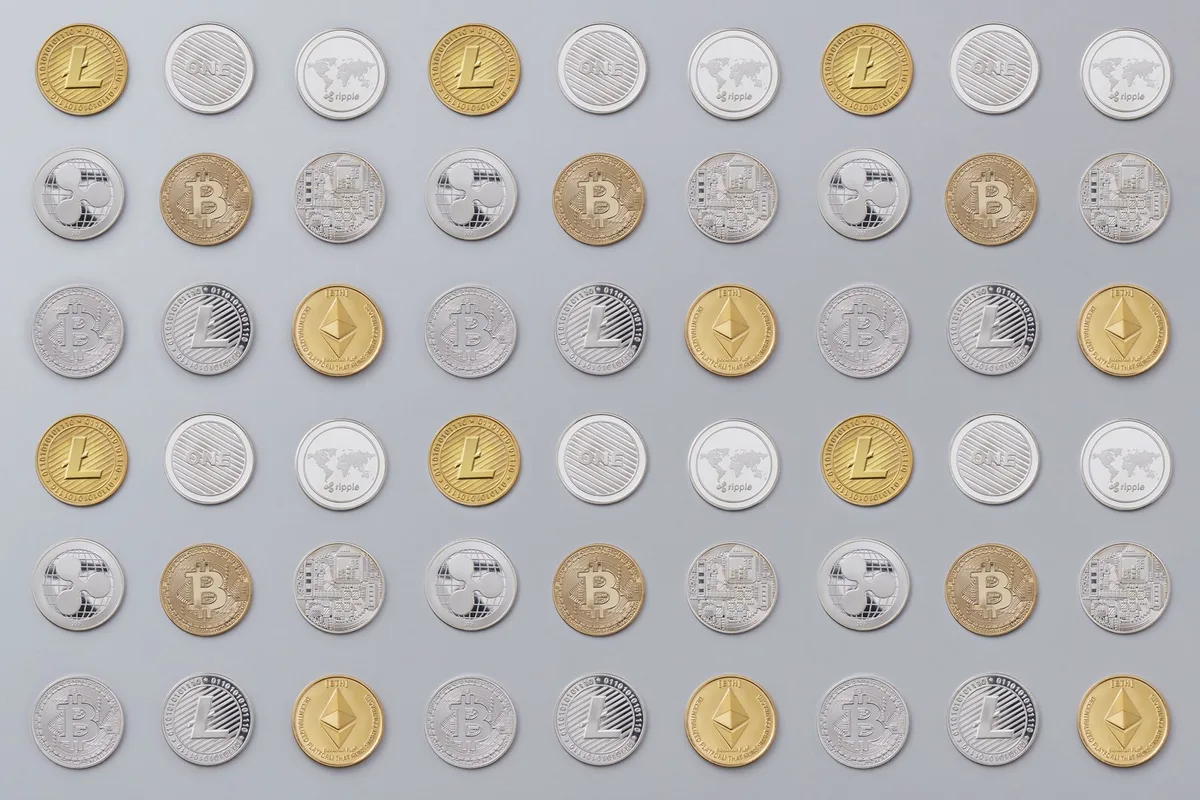
- An NFT is a unique token on a blockchain that points to an asset, like art, music, or a game item, and records who holds that token.
- Owning the token is not the same as owning the copyright. In most cases you own a receipt, not the legal right to reproduce the work.
- The 2021 boom was a speculative bubble, and most NFTs from that era have lost the large majority of their value since.
- Minting and trading cost real money in network fees, called gas, which can swing from a few dollars to a great deal more.
- Common scams include rug pulls, wash trading to fake demand, and fake mint sites that drain your wallet, so treat unsolicited offers with deep suspicion.
- The IRS treats NFTs as property, and some are taxed as collectibles, so every sale or trade can be a taxable event.
A few years ago, a digital picture of a bored-looking cartoon ape sold for more than a suburban house. Headlines screamed, celebrities piled in, and a lot of regular people were left with the same quiet question: what on earth did that person actually buy? If you have ever felt a little embarrassed asking what an NFT really is, you are in good company. The honest answer is that the technology is simpler than the hype, the ownership is murkier than the price tags suggested, and the story of what happened after the boom is one the headlines mostly skipped.
This guide walks through all of it in plain English. We will cover what an NFT actually is under the hood, the difference between owning a token and owning the art, how minting and gas fees work, the real use cases beyond cartoon apes, what happened to prices after 2021, the scams that drained real wallets, and how the IRS treats these things at tax time. No hype, no doom, just a clear-eyed tour. You will not get rich from this article, but you also will not get fooled.
What an NFT Actually Is
NFT stands for non-fungible token. That phrase is doing a lot of work, so let us unpack it. Fungible means interchangeable. A dollar bill is fungible, because any dollar is worth exactly the same as any other dollar, and you do not care which specific one you hold. Non-fungible means the opposite: the item is unique and not freely swappable for an identical one. Your concert ticket with a specific seat number is non-fungible. So is the deed to your house.
A token, in this world, is a record on a blockchain. A blockchain is a shared digital ledger maintained across thousands of computers, where entries are extremely hard to alter once written. Most NFTs live on Ethereum, though other networks host them too. So a non-fungible token is a one-of-a-kind entry on that shared ledger that says, in effect, this specific token exists, and this wallet address currently holds it. When you buy an NFT, the ledger updates to show the token moving to your wallet. That public, hard-to-fake record of who holds what is the entire innovation.
Contrast this with a regular cryptocurrency coin, which is fungible. If you and a friend each hold one unit of the same coin, your units are identical and interchangeable, just like two dollar bills. An NFT breaks that rule on purpose. Each one carries a unique identifier, so the ledger can tell your token apart from every other token, even ones from the same collection. That uniqueness is what lets a blockchain represent things that are supposed to be one of a kind, whether that is a piece of art, a specific seat at a concert, or a particular in-game sword.
Here is the part that trips everyone up. The token is not usually the artwork itself. In most cases the token contains a small bit of data plus a link that points to where the actual image, video, or music file lives. The blockchain is expensive to store data on, so the heavy files almost always sit somewhere else, either on a normal web server or on a distributed file system. The token is the verifiable claim of ownership. The file it points to is a separate thing entirely, and that gap matters more than the marketing ever admitted.
What You Do and Do Not Own
This is the single most misunderstood part of NFTs, so it deserves its own section. When you buy an NFT of an artwork, you almost always own the token, and nothing more. You do not automatically own the copyright. You cannot legally print the image on shirts and sell them, license it for an ad, or stop other people from screenshotting and sharing it. The artist, or the project, keeps those rights unless they hand them to you in an explicit written license.
A useful comparison: buying an NFT is closer to buying a signed, numbered print than to buying the original painting and all rights to it. You hold a recognized, provable claim to a specific copy, and that claim can have real value to collectors. But the right to reproduce the work stays with the creator. Some projects do grant broad commercial rights to holders, and a few have built whole brands around that. The point is that you have to read the actual license. The token alone grants you nothing about copyright.
There is a second, more technical ownership gap. Because the file usually lives off-chain, your token can outlive the thing it points to. If the project stops paying for the server, or the storage link rots, you can be left holding a token that points to a broken link. The good projects use durable, distributed storage to reduce this risk, but it is real, and it is worth checking before you ever spend money. Here is a side-by-side of the two ideas people constantly blur together.
How Minting and Buying Actually Work
Minting is the act of creating a new NFT by writing it onto the blockchain for the first time. When an artist or project mints, they pay a network fee to record the token, and the ledger now recognizes it as existing. After that, the token can be bought and sold, with each transfer recorded on the same ledger. Buying an already-minted NFT happens on a marketplace, which is basically an online storefront connected to your crypto wallet.
To do any of this you need a crypto wallet, which is software that holds your digital assets and signs transactions. You fund it with cryptocurrency, usually the native coin of whatever network you are using, then connect it to a marketplace and either mint, bid, or buy at a listed price. The walkthrough below shows the typical path from empty wallet to owning your first token, with the spots where money leaves your pocket marked clearly.
Now to the fees, because they surprise people. Every action that writes to the blockchain costs a network fee known as gas. Gas pays the computers that process and secure transactions. The catch is that gas is not fixed. It rises and falls with how busy the network is, the way surge pricing works for a ride during rush hour. During quiet periods a transaction might cost a few dollars. During a frenzy, the same transaction can cost far more, and on a bad day people have paid more in gas than the NFT itself was worth. You pay gas even on transactions that fail, which is a genuinely painful lesson many new buyers learned the hard way.
The Real Use Cases Beyond Cartoon Apes
It is easy to write off the whole category because of the absurd ape prices, but the underlying tool, a verifiable record of a unique digital item, has uses that have nothing to do with profile pictures. None of these has reshaped the world yet, and several remain experiments. Still, they are where the more durable value tends to live.
Event ticketing is a natural fit, because a ticket is already a unique, transferable claim to a specific seat, and an NFT version can be harder to counterfeit and can route resale royalties back to the organizer. Video game items are another: an NFT can represent a sword or a skin that a player truly controls and could, in principle, carry between games or sell freely. Musicians have used NFTs to sell limited releases and route ongoing royalties to holders. Brands have used them as membership passes that unlock events or perks. And physical goods, from sneakers to luxury watches, have been paired with NFTs as a tamper-resistant certificate of authenticity. The common thread is provable uniqueness and ownership, not speculation.
It is worth being honest about the limits here, too. Many of these ideas work better on paper than in practice. A ticket only benefits from being an NFT if the venue actually supports it, and most still do not. Game items only travel between games if developers agree to honor each other's tokens, which they rarely do, because each studio wants players inside its own world. The technology removes one obstacle, proving who owns what, but it does not magically create the cooperation, demand, or infrastructure that a real product needs. When you hear a pitch built around a clever NFT use case, the useful question is not whether the idea is possible. It is whether anyone with the power to make it work has actually agreed to.
The 2021 Boom and What Came After
To understand NFTs in 2026, you have to be honest about the cycle that made them famous. In 2021 and into early 2022, a speculative mania swept through the space. Prices for certain collections exploded, trading volume hit staggering numbers, and a story took hold that these tokens were a new asset class destined to keep climbing. A lot of that buying was not about art or utility. It was people hoping to flip a token to a greater buyer at a higher price.
Then the music stopped. As broader crypto markets fell through 2022, NFT prices collapsed alongside them. Trading volume dried up. Many collections that had sold for the equivalent of tens of thousands of dollars fell to a tiny fraction of those highs, and a large share of projects became effectively unsellable, with no buyers at any price. Studies and market trackers in the years since have repeatedly found that the substantial majority of NFTs minted during the boom now trade for far less than their peak, and many are worth close to nothing. The chart below sketches the shape of that ride. The numbers are illustrative of the well-documented pattern, not a quote of any single index.
This is not a prediction that NFTs are finished. Technologies often crash hard, shed the speculation, and then find narrower, more real uses, which is roughly where parts of the space sit now. But it is a warning against the story that any given token is a sure path upward. If you are looking at NFTs in 2026, you are looking at a market that already had its bubble pop in full public view. Anyone who tells you otherwise is selling something.
The Scams, Plainly
Where there is hype and money, there are predators, and the NFT world has had more than its share. The FTC and SEC have both issued repeated warnings about crypto and NFT schemes. You do not need to memorize every trick, but you do need to recognize the main shapes so your guard goes up at the right moments.
A few of these deserve a closer look. A rug pull is when a team hypes a project, takes in money from buyers, then abandons it and vanishes with the funds, leaving holders with worthless tokens. Because many teams operate anonymously, recovering the money is often impossible. Wash trading is when bad actors repeatedly buy and sell an asset between wallets they control, manufacturing fake volume and price history to make a project look hot and lure real buyers. Fake mint sites and phishing are perhaps the most dangerous, because they target your wallet directly. A scammer copies a real project's website, or sends a too-good offer, and tricks you into approving a transaction that drains your assets. The cruel part is that a signed blockchain transaction is typically irreversible. There is no bank to call.
The defensive habits are simple and worth burning into memory. Never share your wallet's secret recovery phrase with anyone, ever, for any reason. A legitimate service will never ask for it, so a request for that phrase is by itself proof of a scam. Distrust unsolicited offers and urgent deadlines, which are pressure tactics designed to stop you from thinking. Verify website links through official channels rather than clicking from a message, since a fake site can look pixel-perfect. Be wary of any return that sounds guaranteed, because guaranteed returns do not exist in honest investing. And remember that on a blockchain, once you approve a transaction, the money is usually gone for good.
One more habit protects you from yourself: go slow. Almost every wallet-draining scam relies on the victim acting fast, whether from fear of missing a hot mint or panic over a fake warning. Adding even a few minutes of friction, closing the tab and finding the project through its official accounts, defeats a large share of these attacks. The scammers are counting on urgency. Refusing to be rushed is one of the cheapest and most powerful defenses you have.
How NFTs Are Taxed
Here is the part that ambushes people in April. The IRS treats digital assets, including NFTs, as property, not as currency. That has real consequences. When you sell an NFT for more than you paid, you generally have a capital gain that you must report. When you sell for less, you may have a capital loss. And critically, trading one NFT for another, or buying an NFT with cryptocurrency that has risen in value, can itself be a taxable event, because you are effectively disposing of one piece of property to get another.
There is a further wrinkle. The IRS has indicated that some NFTs may be treated as collectibles, similar to art or coins. Long-term gains on collectibles can be taxed at a higher maximum rate than the rates that apply to most stocks, up to 28 percent rather than the usual long-term capital gains brackets. Whether a specific NFT counts as a collectible depends on what it represents, and the guidance continues to develop. None of this is tax advice, and the rules can be intricate, so many people in this situation work with a tax professional.
The practical takeaway is record keeping. Track what you paid for each NFT, including the gas fees, since those can affect your cost basis. Track what you received when you sold or traded, and the date. The IRS also asks about digital asset activity right on the front of the federal tax return, so this is not a corner of the tax code you can quietly ignore. Below is a simplified look at how a single flip might be taxed. The figures are an example, not a rate quote for your situation.
So Should You Care About NFTs at All?
That depends entirely on why you are asking. If you are drawn to NFTs as a way to support an artist whose work you love, or to hold a membership or collectible that you would genuinely enjoy even if its price went to zero, then the technology is a real and interesting tool. Go in with clear eyes, read the license, understand the fees, and spend only what you can comfortably lose.
If you are asking because someone promised you that NFTs are the next big way to build wealth, slow down. The boom already happened, the crash already happened, and the wreckage is public record. There is no reliable, low-risk path to riches here, and anyone implying otherwise is either mistaken or working an angle. NFTs are a clever piece of plumbing for proving who owns a unique digital thing. That is genuinely useful. It is also a long way from a guarantee, and treating a speculative token like a savings plan is how people get hurt. Understand the tool, respect the risks, and let that knowledge, rather than the hype, decide whether any of it belongs in your life.
Crypto punishes guesswork faster than any market on Earth.
Volatility is survivable. Not knowing what you own is not. The Financial IQ Test measures your actual money knowledge, from market basics to risk math, so your conviction is built on understanding instead of a feed full of hype.
Test your Financial IQQuestions people ask
If I buy an NFT, do I own the artwork?
Usually not in the way people assume. You own a token on a blockchain that points to the artwork and proves you hold that specific token. Unless the seller explicitly grants you copyright in writing, the artist keeps the right to reproduce, license, and sell the underlying image. Think of it as owning a numbered receipt rather than owning the painting outright.
Where is the actual image or file stored?
Often not on the blockchain at all. The token usually stores a link to the file, which may live on a regular web server or on a distributed system like IPFS. If that server goes down or the link breaks, the token can end up pointing at nothing. This is one reason a token can keep existing while the thing it represents quietly disappears.
Are NFTs a good investment?
This guide does not give investment advice, but the honest picture is sobering. NFTs are highly speculative, prices are volatile, and most projects from the 2021 boom have lost the bulk of their value. Many sell for far less than they did at the peak, and some cannot be sold at all. Treat any money you put in as money you can fully afford to lose.
How are NFTs taxed in the United States?
The IRS treats digital assets, including NFTs, as property. Selling an NFT, or even trading one NFT for another or for cryptocurrency, can trigger a capital gain or loss that you must report. The IRS has also said some NFTs may be taxed as collectibles, which can carry a higher long-term capital gains rate. Keep records of what you paid, including gas fees, and what you received.
What is a rug pull?
A rug pull is when the people behind a project hype it, sell tokens or NFTs to the public, then abandon the project and disappear with the money. The website goes quiet, the social accounts vanish, and the token becomes worthless. Because many teams are anonymous, victims often have little recourse. Regulators including the FTC and SEC have warned repeatedly about these schemes.
Do NFTs have any use beyond collectible art?
Yes, though the real-world traction is still modest. NFTs have been used for event ticketing, in-game items you can carry between platforms, music royalties, membership passes, and proof of authenticity for physical goods. The underlying idea, a verifiable record of a unique digital item, is genuinely useful. Whether any given project delivers lasting value is a separate question.
Keep reading
Bitcoin Explained for Normal People (2026 Edition)
The Crypto Scam Field Guide: Every Major Con and How to Spot It
Crypto Taxes in 2026: What You Actually Owe the IRS
The Flourish Letter
One smart money idea each week, charts included. Join free and get the printable 2026 Money Calendar in your welcome email.