Key takeaways
- One bitcoin is made of 100 million satoshis, so a satoshi is 0.00000001 BTC.
- The unit is named after Satoshi Nakamoto, the pseudonymous creator of Bitcoin.
- Sats exist because of divisibility, letting you buy a tiny fraction of Bitcoin with just a few dollars.
- Other units like bits (microBTC) and millibitcoin (mBTC) sit between a single sat and a whole coin.
- Transaction fees on the Bitcoin network are measured in sats, usually as sats per virtual byte.
- Converting dollars to sats is simple division, and this guide walks through the exact math.
The first time someone hears the price of Bitcoin, the reaction is usually the same. One coin costs tens of thousands of dollars, so how could a normal person ever own any of it? The answer is a small word you will hear over and over in crypto circles. That word is satoshi. Once you understand what a satoshi is, the whole price tag stops being scary. You do not need a whole bitcoin. You can own a sliver of one, and that sliver has a name, a math behind it, and a growing culture around it.
This guide walks through exactly what a satoshi is, why it exists, where the name came from, and how it connects to the other Bitcoin units you will bump into. We will do the conversion math together with real worked examples, so by the end you can look at any dollar amount and know roughly how many sats it buys. No jargon left unexplained, and no math you cannot follow.
What a satoshi actually is
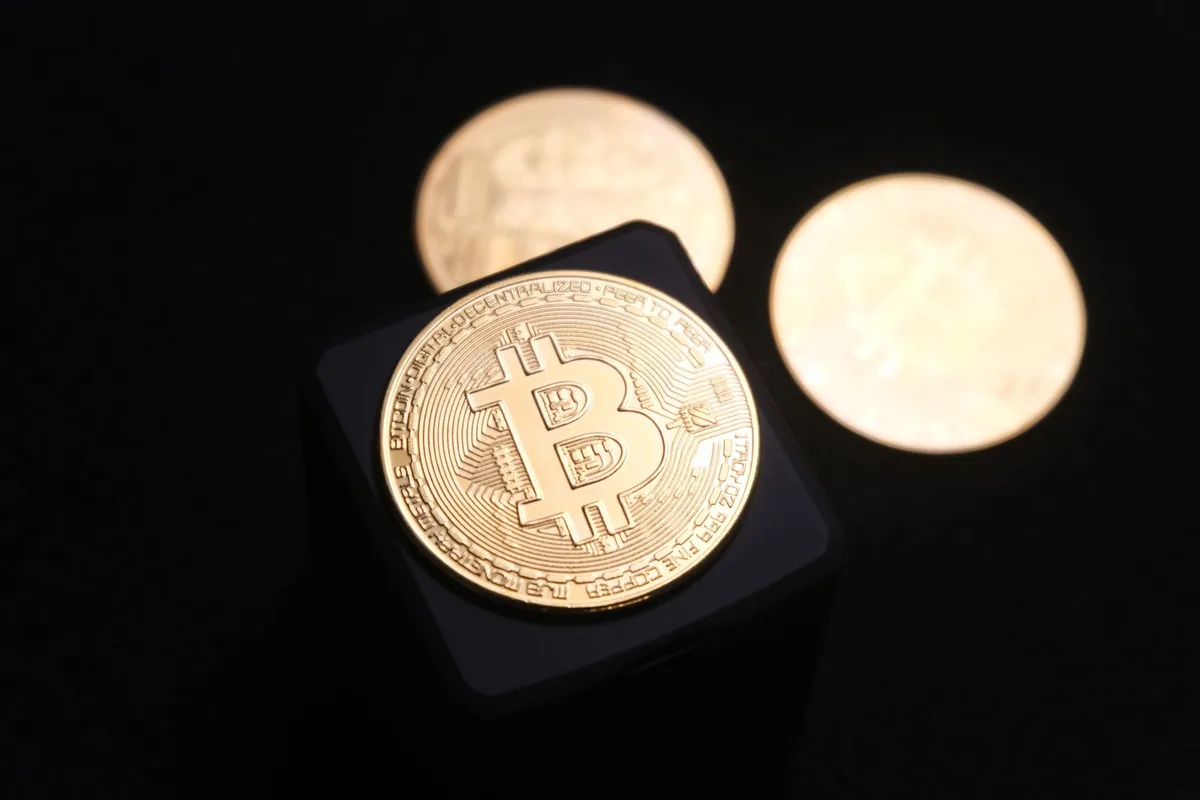
A satoshi is the smallest unit of Bitcoin that the network recognizes. Think of it the way you think of a penny inside a dollar, except the split goes far deeper. A dollar breaks into 100 pennies. A single bitcoin breaks into 100,000,000 satoshis. That is one hundred million pieces per coin.
Written as a decimal, one satoshi equals 0.00000001 BTC. That is a decimal point followed by seven zeros and then a one. Flip it around and the relationship is just as clean. One bitcoin equals 100 million sats. This ratio is baked into the Bitcoin software itself and it does not change over time. Whether Bitcoin is worth five dollars or five hundred thousand dollars, there are always exactly 100 million satoshis inside each coin.
People shorten satoshi to sat in everyday talk. You will hear someone say they own a few thousand sats, or that they send sats to a friend. It is the same idea as saying cents instead of hundredths of a dollar. The short version just rolls off the tongue.
It helps to sit with just how small a satoshi is. If you imagine a single bitcoin as a whole pizza, one satoshi is not a slice. It is a crumb so small you could cut the pizza into a hundred million equal pieces and a satoshi would be exactly one of them. That is far finer than any physical currency. A US dollar only splits into 100 official pieces. Bitcoin splits into a million times more than that. This is why people who work in Bitcoin quickly stop thinking in whole coins and start thinking in sats, the same way a cashier thinks in cents rather than in fractions of a dollar bill.
Why the unit is named after Satoshi Nakamoto
Bitcoin was introduced in 2008 through a nine page document often called the whitepaper. It was published under the name Satoshi Nakamoto. To this day, no one knows for certain who that person or group really was. The identity stayed hidden, and Satoshi stepped away from the project in its early years and never claimed the fortune tied to the earliest coins.
When the community needed a name for the smallest unit, honoring the creator was a natural choice. So the tiniest slice of a bitcoin carries the pseudonym of the person who started it all. There is a nice symmetry there. The biggest idea in the system and the smallest piece of it share the same name.
Worth noting, the whitepaper itself did not use the word satoshi. The community adopted the term a bit later, and it stuck. Today it is standard language across exchanges, wallets, and news coverage.
Why satoshis exist at all: divisibility
The real reason sats matter is divisibility. Money is only useful if you can break it into pieces small enough for the job at hand. You cannot buy a coffee if the smallest unit of currency is worth a thousand dollars. Whoever designed Bitcoin understood this, so they built in a very deep level of division from the start.
Because a bitcoin splits into 100 million parts, the network can handle both enormous transfers and tiny ones. A large investor can move dozens of coins. At the same time, a beginner can buy the equivalent of a few dollars and still receive a precise, countable amount of value. Both people are using the same asset, just measured at different scales.
This deep divisibility also future proofs the currency. If Bitcoin ever became worth far more than it is today, ordinary purchases would happen in sats rather than whole coins. The unit is small enough to keep working even if a single bitcoin someday carried a very high price.
Compare this to how clumsy money would be without small units. Imagine a country where the smallest coin was worth $500. You could not tip, you could not buy a snack, and prices would have to be rounded in strange ways. Everyday life needs tiny units of value. Bitcoin bakes that need into its design at a very deep level, which is part of why the sat is treated as the true base unit of the system rather than an afterthought. The whole coin is really just a convenient label for 100 million of the base units stacked together.
There is also a technical reason the number is fixed at 100 million. Computers handle whole numbers cleanly but struggle with tiny fractions and rounding. By defining every amount as a whole number of satoshis, the Bitcoin software avoids the messy rounding errors that can creep in when money is stored as a decimal. Under the hood, your balance is always a plain integer count of sats. The decimal you see in your wallet is just a friendly way of displaying that count.
The other Bitcoin units you will meet
A satoshi is the floor, and a whole bitcoin is the ceiling, but there are a couple of handy units in between. You do not have to memorize them, yet knowing they exist keeps you from getting confused when a wallet or an article uses one.
The first is the bit, also written as a microbitcoin or a lowercase greek letter mu followed by BTC. One bit equals 100 satoshis. Put another way, one bit is one millionth of a bitcoin. Some wallets and merchants like bits because the numbers are friendlier. Instead of saying you paid 500,000 sats, you could say you paid 5,000 bits.
The next step up is the millibitcoin, almost always written as mBTC. One mBTC equals 100,000 satoshis, or one thousandth of a bitcoin. This unit is popular for medium sized amounts. If a bitcoin were worth $100,000, then one mBTC would be worth about $100, which is an easy number for a human to picture.
Here is the full ladder in plain terms. The smallest rung is the satoshi. Multiply by 100 and you get a bit. Multiply the bit by 1,000 and you get a millibitcoin. Multiply the millibitcoin by 1,000 and you finally arrive at one whole bitcoin. Every rung is just the one below it scaled up.
How sats let you buy Bitcoin with any dollar amount
Here is where the whole thing becomes practical. Because Bitcoin divides so finely, exchanges and apps let you buy by dollar amount instead of by whole coins. You type in that you want to spend $25, and the app converts that into the matching number of satoshis and drops them into your account. You never have to think about buying a full coin.
This is the piece that trips up newcomers the most. They assume that owning Bitcoin means owning at least one bitcoin, the way you might own one whole share of some pricey stock. It does not work that way here. Fractional ownership is the normal case, not a special feature. The overwhelming majority of people who hold Bitcoin hold a fraction of a single coin, measured in sats.
Because of this, the sticker price of one bitcoin should never be your reason to stay away. The real question is simply how much money you want to put in. The app handles the fractions. You just decide the dollar amount and the app tells you how many sats you received.
Stacking sats: the slow and steady mindset
Once people get comfortable buying fractions, many adopt a habit the community calls stacking sats. The idea is simple. Instead of trying to time a big purchase perfectly, you buy small amounts on a regular schedule and let your pile of satoshis grow over time. Someone might set up an automatic buy of $10 every week, or $50 every payday.
This is a version of a classic investing approach sometimes called dollar cost averaging. By buying the same dollar amount on a fixed schedule, you naturally pick up more sats when the price is low and fewer sats when the price is high. You never have to guess the right moment. You just keep stacking.
The mindset shift matters as much as the math. When you think in sats, a falling price is not only bad news. A lower price means your next $10 buys more satoshis than it did last week. People who stack sats tend to watch their satoshi count grow rather than obsessing over the dollar value day to day. That said, Bitcoin is volatile and can lose value, so stacking is a personal choice and not a guarantee of profit.
Sats in transactions and network fees
Satoshis are not just an accounting label. They are the actual unit the Bitcoin network uses under the hood. Every transaction is really a movement of satoshis from one address to another. When your wallet shows a balance of 0.005 BTC, the network is tracking that as 500,000 sats.
Fees are where sats show up most visibly. When you send Bitcoin, you include a small fee that goes to the miners who confirm and secure transactions. That fee is measured in satoshis. The standard way to quote it is sats per virtual byte, often shortened to sats per vByte. A virtual byte is just a measure of how much space your transaction takes up in a block, and bigger or more complex transactions cost more.
Here is the practical takeaway. When the network is crowded, people compete to get their transactions confirmed quickly, so the fee rate in sats climbs. When the network is quiet, the rate falls, sometimes to just a handful of sats per vByte. If you are not in a hurry, sending during a quiet stretch can save you a meaningful amount. Wallets usually show you the current rate and let you pick between faster and cheaper options.
Converting dollars to sats: the math made simple
Now for the part that makes you fluent. Converting between dollars and sats is just division and multiplication, and once you see it done a couple of times it becomes second nature.
Start with the core fact. One bitcoin equals 100 million sats. So the value of a single satoshi in dollars is simply the Bitcoin price divided by 100 million. If Bitcoin is priced at $100,000, then one sat is worth $100,000 divided by 100,000,000, which comes out to $0.001. That is one tenth of a cent per sat.
To find how many sats a dollar buys, flip the division around. Take 100 million and divide by the Bitcoin price. At a $100,000 price, that is 100,000,000 divided by 100,000, which equals 1,000 sats per dollar. So one dollar buys 1,000 sats, and ten dollars buys 10,000 sats.
Let us walk through a full worked example. Say Bitcoin trades at $80,000 and you want to buy $50 worth. First find sats per dollar. That is 100,000,000 divided by 80,000, which equals 1,250 sats per dollar. Now multiply by your $50. That is 1,250 times 50, which equals 62,500 sats. So your $50 purchase lands you 62,500 satoshis, which is the same as 0.000625 BTC.
One more, going the other direction. Suppose you hold 250,000 sats and Bitcoin is at $90,000. First convert your sats to BTC by dividing by 100 million. That is 250,000 divided by 100,000,000, which equals 0.0025 BTC. Now multiply by the price. That is 0.0025 times $90,000, which equals $225. So your quarter million sats are worth $225 at that price.
Notice the pattern. Dollars to sats means divide 100 million by the price to get sats per dollar, then multiply by your dollars. Sats to dollars means divide your sats by 100 million to get BTC, then multiply by the price. Two small steps each way, and you are done.
A quick reference you can lean on
It helps to carry a few anchor numbers in your head. At a round Bitcoin price of $100,000, one dollar buys 1,000 sats and one sat is worth a tenth of a cent. If the price doubles to $200,000, then a dollar buys only 500 sats, because each sat is now worth twice as much. If the price falls to $50,000, a dollar buys 2,000 sats. The cheaper Bitcoin gets, the more sats your dollar picks up.
This inverse relationship is the whole reason the sat mindset is useful. Your dollar amount can stay the same while the sats you receive move up and down with the market. Watching your total satoshi count grow over months of small buys is a calmer way to hold Bitcoin than staring at the dollar value every single day.
Common mistakes and gentle warnings
A few honest cautions before you go. First, do not confuse a satoshi in Bitcoin with the many other coins and tokens out there. The satoshi is specific to Bitcoin. Other cryptocurrencies have their own smallest units with their own names, and they do not use the 100 million ratio.
Second, remember that Bitcoin is volatile. The number of sats you own stays fixed once you buy them, but their dollar value can swing sharply in either direction. Only put in money you can afford to leave alone, and treat any purchase as your own decision rather than a sure thing.
Third, keep an eye on fees. On some apps, a very small purchase can carry a fee that eats a noticeable slice of your money. Buying $5 at a time can be fine, but check what the platform charges so the fee does not quietly outweigh the tiny amount you are stacking. Comparing a couple of platforms before you commit is a common and sensible step.
Putting it all together
A satoshi is the smallest slice of a bitcoin, and there are 100 million of them in every coin. The unit honors Satoshi Nakamoto, the mysterious creator, and it exists so that Bitcoin can be divided finely enough to be useful for both huge transfers and tiny everyday amounts. Between the sat and the whole coin sit the bit and the millibitcoin, handy middle rungs on the ladder.
Once you think in sats, the intimidating price of a whole bitcoin fades into the background. You buy by dollar amount, you stack small purchases over time, and you can convert between dollars and sats with a little division. That fluency is what turns Bitcoin from a confusing headline number into something you can actually reason about. Start small, check the math, and let the sats add up.
Crypto punishes guesswork faster than any market on Earth.
Volatility is survivable. Not knowing what you own is not. The Financial IQ Test measures your actual money knowledge, from market basics to risk math, so your conviction is built on understanding instead of a feed full of hype.
Test your Financial IQQuestions people ask
How many satoshis are in one bitcoin?
There are exactly 100,000,000 satoshis in one whole bitcoin. That means a single satoshi equals 0.00000001 BTC, which is one hundred-millionth of a coin. This fixed ratio never changes, no matter what the price of Bitcoin does.
How much is one satoshi worth in dollars?
It depends entirely on the price of Bitcoin at the moment. If one bitcoin trades at $100,000, then one satoshi is worth one tenth of a cent, because $100,000 divided by 100 million equals $0.001. When the Bitcoin price rises, each satoshi becomes worth more, and when it falls, each satoshi is worth less.
What does stacking sats mean?
Stacking sats is a popular phrase for buying and accumulating small amounts of Bitcoin over time rather than trying to buy a whole coin at once. People often set up small recurring purchases, sometimes just a few dollars a week. The idea is to slowly build a position in satoshis instead of being scared off by a large single price tag.
Can I buy less than one full bitcoin?
Yes, and most people who buy Bitcoin never own a whole coin. Because a bitcoin divides into 100 million satoshis, exchanges let you buy any dollar amount, such as $10 or $25 worth. You simply receive the matching number of satoshis, and they show up in your account balance.
What is a bit or a millibitcoin?
These are middle-sized units between a single satoshi and a full coin. A bit, also called a microbitcoin, equals 100 satoshis, or one millionth of a bitcoin. A millibitcoin, written as mBTC, equals 100,000 satoshis, or one thousandth of a bitcoin. They exist to make everyday amounts easier to read and say.
Are satoshis used to pay Bitcoin network fees?
Yes. When you send Bitcoin, you attach a fee that miners collect for including your transaction in a block. That fee is measured in satoshis, and the common rate is quoted as satoshis per virtual byte, often shortened to sats per vByte. When the network is busy, the fee rate in sats climbs, and when it is quiet, the rate drops.
Keep reading
Bitcoin Explained for Normal People (2026 Edition)
The Crypto Scam Field Guide: Every Major Con and How to Spot It
Crypto Taxes in 2026: What You Actually Owe the IRS
The Flourish Letter
One smart money idea each week, charts included. Join free and get the printable 2026 Money Calendar in your welcome email.