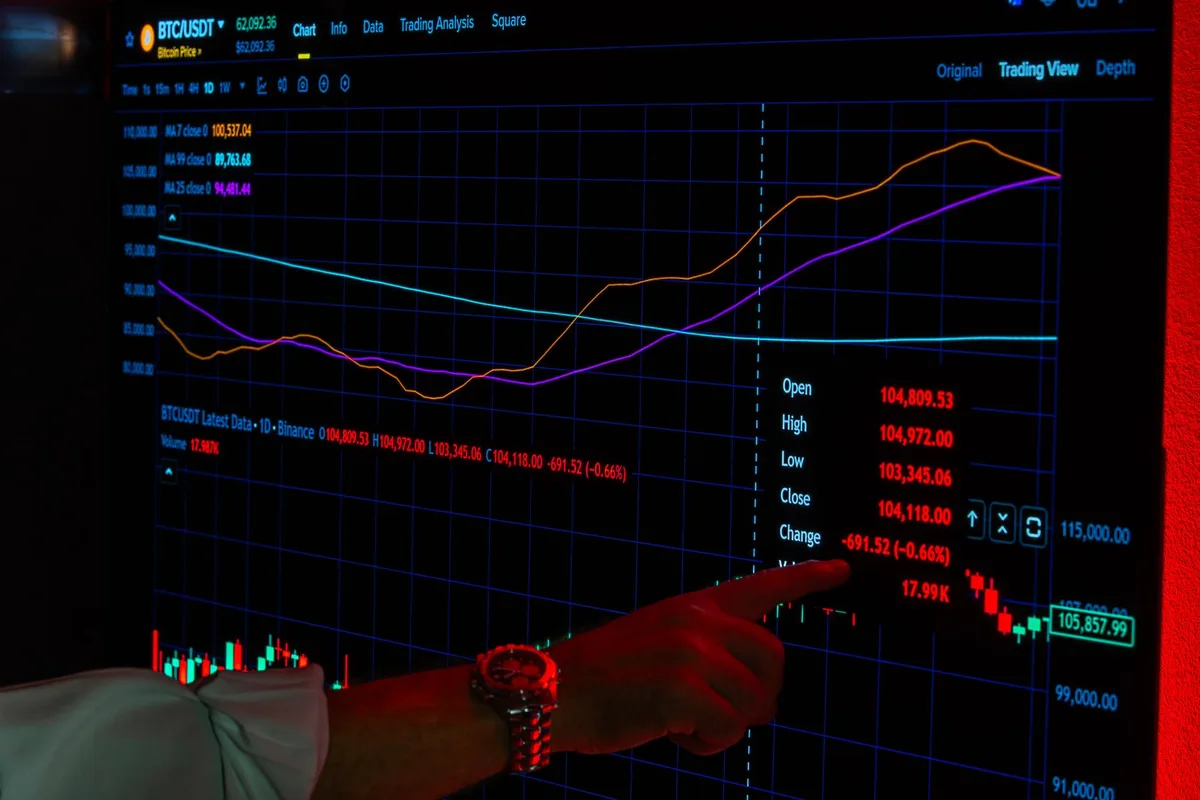
Key takeaways
- Raydium is a Solana decentralized exchange and automated market maker: non-custodial on-chain programs for swaps, pools, LP positions, farms, and related products such as token launches.
- Traders swap against shared pool inventory from a self-custody wallet; liquidity providers deposit tokens to earn swap fees and, in some setups, farm incentives, while accepting inventory risk.
- Early Raydium AMM v4 integrated with OpenBook's order book as a hybrid design; official docs state that integration is deactivated and current AMM v4 swaps run as pure AMM curve trades.
- RAY is the protocol's native token used in governance and incentive designs at a high level; you do not need to buy RAY merely to execute a basic swap.
- Major risks include impermanent loss for LPs, smart-contract bugs, rug and hostile-token risk, wallet phishing, and full crypto price volatility; a CEX fails differently by concentrating custody risk in the platform.
- Beginners researching pools should verify mint addresses, pool type and depth, site URLs, and whether they are swapping or providing liquidity before signing size that hurts.
If you have spent time around Solana tokens, you have probably seen Raydium next to a swap button, a pool page, or a farm APY screenshot. People call it a DEX, an AMM, a liquidity venue, or simply the place where a lot of Solana trading depth lives. Those labels overlap, and the overlap creates confusion. Raydium is not a bank. It is not a brokerage with SIPC coverage. It is also not the same thing as a large centralized crypto exchange where you deposit dollars and leave coins sitting in a platform account. At a high level, Raydium is a Solana decentralized exchange and automated market maker: a set of non-custodial on-chain programs that power token swaps, liquidity pools, LP positions, farms, and related products such as token launches. This guide explains pools and LP risk, swap fees at a high level, Raydium's early hybrid order-book history, the RAY token's role, how risks differ from centralized exchanges, and how beginners can research pools more carefully before signing. It is education for a 2026 U.S. reader, not investment advice and not a recommendation to use any particular app.
What Raydium is in plain English
Start with the job to be done. You hold Token A in a Solana wallet. You want Token B. Or you want to deposit both tokens into a shared pool so traders can swap against your inventory while you earn a share of fees. Raydium's documentation describes the protocol as permissionless, non-custodial smart contracts on Solana that power swaps, pools, liquidity positions, and token launches, with raydium.io as the official web app for many of those flows. In everyday conversation, "I swapped on Raydium" usually means your wallet signed a transaction that traded against Raydium pool liquidity on Solana.
Two ownership facts matter immediately:
- You keep custody until you sign. A typical Raydium swap or deposit asks your wallet to approve a transaction. Tokens move from your address according to that signed instruction set. There is no classic "deposit to Raydium and leave it there like a brokerage balance" model the way many people deposit to a centralized exchange.
- Settlement is on-chain. Success and failure depend on Solana network conditions, program execution, and the pool state your transaction hits. A failed transaction can still cost a network fee even when the swap does not complete.
If those facts feel abstract, picture a warehouse of tokens that anyone can trade against by following published rules. The warehouse is the liquidity pool. The pricing rule is the automated market maker. Your wallet is the key that authorizes a withdrawal or deposit. The blockchain is the ledger that either accepts the move or rejects it. Raydium is the family of warehouse designs and tools built for Solana, not a customer-service desk that can reverse a bad signature.
DEX, AMM, pool, and LP: the vocabulary that unlocks the rest
A decentralized exchange (DEX) settles trades through on-chain programs instead of a company matching desk that holds your deposit. An automated market maker (AMM) is the pricing formula that quotes how many token B you get for token A based on pool balances and the pool's math. A liquidity pool is the shared inventory of tokens that makes those trades possible. A liquidity provider (LP) deposits tokens into a pool and receives a claim on a share of that pool, often represented by an LP token or, in concentrated-liquidity designs, a position NFT.
Raydium sits firmly in that family. Solana's own developer documentation describes accounts, programs, instructions, and transactions as the building blocks of on-chain activity. For a retail user, the practical translation is that Raydium swaps and deposits are Solana transactions you sign, not account balances sitting inside a corporate ledger until you withdraw.
Traders pay a fee embedded in the swap. Liquidity providers earn fee income in proportion to their share of the pool (and sometimes extra farm incentives), subject to how the specific pool and farm setup work. Fees are compensation for taking inventory and smart-contract risk, not a guaranteed savings rate and not FDIC-insured interest.
Solana context: why the chain matters
Raydium's story is tightly tied to Solana. When the network is healthy, many Solana swaps settle quickly with relatively small network fees compared with congested periods on some other chains. That does not make Solana risk-free. Congestion, outages, failed transactions, and spam-like activity have shown up in public crypto history across many chains, Solana included. Fast and cheap when healthy is not the same as "always works."
You also need SOL (or another accepted fee-payment path your wallet supports) to pay network fees. Running out of fee currency is a common beginner trap. You can hold a bag of tokens and still be stuck if you cannot pay to move them.
Here is a live look at SOL's recent price path. Price charts do not explain Raydium's pool math, but they remind you that the assets moving through any Solana swap inherit crypto's volatility:
Raydium's product surfaces (high level, without the jargon fog)
Raydium is not one single pool type. Official docs describe several product surfaces that matter for education:
- AMM v4. The original constant-product design from 2021. Classic x times y equals k style pricing. Still operational for many existing pools, but no longer the recommended default for brand-new pools.
- CPMM. A newer constant-product AMM designed as the modern default for new standard pools: simpler integration, Token-2022 support, and a fee model that, by default, sends swap fees to LPs more cleanly than the older hybrid setup.
- CLMM. Concentrated liquidity, similar in spirit to Uniswap v3-style ranges. LPs choose a price range. Liquidity is active only while price sits in that range. Capital can be more efficient for traders when ranges are well set, at the cost of active management for LPs.
- Stable AMM. A specialized design for tightly related assets such as stablecoin pairs, using a lookup-table style curve rather than plain constant-product math, aiming for lower slippage near a one-to-one relationship.
- Farms. Staking programs that can distribute extra reward tokens to eligible LP positions, historically including RAY and other reward mints depending on the farm.
- LaunchLab and related launch tools. Bonding-curve style token launches that can graduate into a standard pool. New-token markets are among the riskiest corners of crypto. Treat them as speculation, not savings products.
- Perps (UI surface). Raydium docs note perpetual futures via a Raydium Perps UI powered by Orderly Network, not as a native AMM pool. Perps add leverage and liquidation risk. Separate spot swaps from leveraged trading before mixing them.
You do not need every product on day one. Most newcomers first meet a simple swap against a deep major pair, then later meet LP deposits, farms, and launch screens. Keep the categories separate so a farm APY screenshot does not blur into "this is how every Raydium swap works."
The hybrid order-book chapter (history that still clarifies the brand)
Early Raydium marketing and architecture leaned on a hybrid idea. AMM v4 originally integrated with Serum's central limit order book (later associated with OpenBook on Solana). The pitch was practical: Solana's speed made it possible for a pool to share liquidity with an order book so a swap could fill against the AMM curve, the book, or both.
Raydium's own documentation is clear about the present tense. That OpenBook integration has been deactivated. Current AMM v4 swap traffic flows through the AMM curve as a pure AMM path. The history still matters for reading older "Raydium equals order book plus AMM" explainers that were accurate for an earlier era and are stale now. When you research a pool today, read the live pool type and fee tier, not a 2021 blog post.
How a Raydium swap works in practice
Screens change. The economic path is stable:
- Connect a wallet you control. Browser extension, mobile wallet, or hardware-backed setup. The website is a front end. The trade settles on Solana.
- Pick input and output tokens carefully. Tickers collide. Scam tokens reuse famous names. Prefer verified mint addresses from sources you trust, not a random search hit.
- Enter an amount and read the quote. Look at expected output, price impact, route (if shown), and slippage tolerance. Slippage is how much worse than the quote you will still accept if the pool moves while your transaction waits.
- Approve the token if needed. Many tokens need an approval so a program can pull funds. Unlimited approvals to the wrong spender are a classic drain pattern. Prefer limited approvals when the interface allows.
- Sign and wait. You pay network fees in SOL (plus any priority fee you set). Success updates balances. Failure can still cost fees with no completed swap.
Aggregators such as Jupiter often route volume through Raydium pools because Raydium holds deep liquidity for many Solana pairs. You may "swap on Jupiter" and still touch Raydium under the hood. That is normal. It does not change the risk that the pool, the token, or your wallet hygiene can still hurt you.
Providing liquidity: fees, farms, and inventory risk
Depositing into a Raydium pool means you supply the assets the pool needs in the ratios it currently requires (or, for CLMM, within a chosen price range). In return you get an LP claim. When traders swap, pool composition drifts and fees accumulate for LPs.
Some LP positions can be staked in farms for additional reward tokens. Farm APYs on dashboards compress volume fees, token emissions, and market assumptions into one cheerful percentage. Treat any APY screenshot as a snapshot, not a personal forecast. Emissions paid in a volatile token can look rich on Tuesday and thin on Thursday.
Even in a busy pool, you can lose relative to simply holding the tokens outside the pool. That gap is what people call impermanent loss (inventory drift): when the two tokens change price relative to each other, an LP's stake can be worth less in total token terms than holding the starting basket. Fees and farm rewards may offset some of that drag, or they may not. There is no promise they will.
Educational rule of thumb: if you would not willingly hold every asset in the pool through a stressful week, think carefully before becoming an LP in that pool. Concentrated-liquidity ranges amplify the same idea. When price leaves your range, you stop earning swap fees on that position until price returns or you reposition, and your inventory can skew hard toward one side.
Swap fees at a high level (what you actually feel)
Raydium traders usually face two cost layers, plus a soft third.
Pool swap fees. Fee tiers vary by product and pool configuration. AMM v4 documentation historically centers on a 0.25 percent trade fee with an LP and protocol split. Stable AMM documentation describes a much lower 0.02 percent trade fee aimed at tightly related pairs. CPMM and CLMM use configurable fee tiers (examples in docs include tiers such as 0.01 percent, 0.25 percent, and 1 percent for CPMM configs). Always read the live quote. Marketing pages go stale; the transaction you sign does not.
Network fees. Paid to Solana validators for including your transaction, not as a traditional brokerage commission to "Raydium the brand." Priority fees can rise when the network is busy. Tiny trades can still look expensive all-in if you retry several times.
Price impact. Your own trade moves the pool against you when you take liquidity. A $2,000 swap in a deep SOL-stable pool may barely move the quote. The same notional in a thin meme pool can deliver a painful average price. If the interface warns about high price impact, believe it.
Illustrative math check (education, not a live quote). Suppose a pool charges 0.25 percent and you swap $4,000 of one major token for another with negligible price impact. Fee drag is about $10 before network fees. If instead you swap $40 with the same 0.25 percent pool fee ($0.10) but burn $0.20 across a failed try and a success, all-in cost is about $0.30 on a $40 clip, or 0.75 percent before any impact. Low Solana network fees help, but they do not rescue careless retries or thin pools.
RAY token role at a high level
RAY is Raydium's native protocol token. At a high level, it has been used in governance and incentive designs, including farm rewards that helped bootstrap liquidity early in the protocol's life. Holding RAY does not entitle you to a traditional stock dividend, does not make you a corporate shareholder in the securities-law sense by itself, and does not guarantee future cash flows. Its market price can be extremely volatile.
You can swap on Raydium without buying RAY. You can hold RAY without providing liquidity. Separate the DEX product from the governance ticker the same way you separate "using a stock exchange" from "buying the exchange's stock." If RAY's role matters to a decision you are making, read current primary documentation rather than a social-media summary.
Raydium versus a centralized exchange (CEX)
Centralized exchanges and Raydium-style DEX paths solve overlapping jobs with different trust models.
On a typical CEX, you create an account, complete identity checks where required, deposit cash or crypto, and trade against the platform's order book. Balances usually sit as claims on the exchange until you withdraw. History includes exchange failures, hacks, freezes, and long withdrawal delays. Convenience is high. Counterparty dependence is high.
On a Raydium path, you connect a wallet you control. Trades and LP deposits settle on-chain. You do not generally "leave money at Raydium" as a deposit account. You take smart-contract risk, wallet-security risk, pool and token risk, and the full self-custody burden. There is no password-reset desk for a lost seed phrase, and no FDIC insurance on wallet token balances.
Neither model is automatically safer. They fail differently. CEX risk concentrates in the platform. Self-custody DeFi risk concentrates in your key hygiene, the programs you approve, the sites you trust, and the tokens you touch. Many people use both: a CEX for fiat on-ramps and a wallet plus Raydium (or an aggregator that routes to Raydium) for on-chain swaps. Size both so a failure in either place is survivable.
Risks you should name out loud
U.S. investor-education materials from Investor.gov and FINRA repeatedly warn that crypto markets can be volatile, speculative, fertile ground for fraud, and light on familiar investor protections. A polished Raydium UI does not cancel those warnings. Sort the risks into buckets so marketing language cannot blur them.
Smart-contract and protocol risk. Raydium programs are software. Bugs, economic exploits, unexpected token behaviors, and composed integrations have drained real funds across DeFi history. Audits help. They are not insurance. Raydium's history includes a December 2022 pool-authority compromise tied to operational key management rather than a core AMM math bug.
Impermanent loss and inventory risk. LPs can underperform simple holding when relative prices move. Concentrated ranges can amplify that pain when price leaves the range. Fees may or may not offset the gap.
Token, rug, and liquidity risk. Illiquid tokens can gap violently. Some tokens restrict transfers, tax sells, or hide other hostile mechanics. Launch-pad markets and fresh meme mints can be abandoned after retail buys. A pool on Raydium does not mean the token is sound. Permissionless listing is not a vetting seal.
Wallet and phishing risk. Fake sites, malicious extensions, poisoned search ads, and fake "support" accounts try to drain wallets or steal seed phrases. Bookmark official URLs. Never paste a seed phrase into a website.
Approval and permission risk. Careless unlimited approvals can be abused later. Prefer limited allowances when offered, and revoke unused approvals with a tool you have verified.
Network and operational risk. Congestion, downtime, RPC failures, and wallet bugs can strand a trade or burn fees on failed tries.
Leverage and perps risk (if you go there). Perpetual futures can liquidate positions quickly. That is a different product family from spot AMM swaps.
Behavioral risk. Fast, cheap swaps make it easy to overtrade. Memecoins and farm screenshots can empty a learning wallet in an afternoon.
How beginners can research pools more safely
No checklist makes crypto safe. A checklist can make careless mistakes less common. Before you swap size that hurts, or before you LP at all, work through questions like these:
- What is the exact mint address for each token? Compare it against a source you trust. Do not trust ticker text alone.
- What pool program and fee tier am I using? AMM v4, CPMM, CLMM, and Stable AMM are different animals. Concentrated ranges need extra attention.
- How deep is the pool relative to my trade? If your size is a large fraction of visible liquidity, expect painful impact or shrink the size.
- Who created the pool and when? Brand-new pools with tiny depth and anonymous tokens deserve extreme skepticism.
- Can I explain the token's job in one honest sentence? If the only sentence is "number go up," you are gambling, not researching.
- What does a 50 percent drawdown do to my budget? If the answer touches rent, debt minimums, or emergency savings, the size is too large.
- Have I verified the site URL and the wallet simulation? Phishing clones are industrious. Read what you are signing.
- Am I swapping or providing liquidity? Mixing those verbs is how people stumble into impermanent loss they did not mean to take.
For LaunchLab-style or other brand-new tokens, assume insider timing advantage until proven otherwise, and assume you may not exit at a fair price when excitement fades. Permissionless launches are not mutual funds.
Taxes and records at a light educational level (U.S.)
This is general education based on publicly available IRS framing around digital assets. It is not tax advice for your return.
The IRS treats digital assets as property for federal tax purposes. Selling or exchanging one crypto asset for another can be a taxable disposal of the asset you gave up, even if you never touched U.S. dollars in the middle. A Raydium swap of Token A for Token B is commonly analyzed as disposing of A and receiving B at fair market value, which can create capital gain or loss. Providing liquidity, receiving fee income, receiving farm reward tokens, and later withdrawing can each create additional recordkeeping questions.
Keep records: dates, amounts, transaction signatures, and USD fair market values at each taxable event. On-chain DeFi activity often leaves you responsible for reconstructing your own history. When dollars get meaningful, a tax professional who understands digital assets is cheaper than a spring-time panic.
Worked sketch (education only). Suppose you bought 5 SOL earlier for a total basis of $500 ($100 per SOL). Later you swap 1 SOL for a meme token when SOL's USD price is $180. Ignoring fees for the sketch, you dispose of 1 SOL with basis $100 and receive meme tokens worth about $180. Rough gain on the disposed SOL is about $80 before fees. The meme token's starting basis is generally tied to what you gave up (about $180 here). If the meme later goes to zero, that later loss is a separate chapter. The swap did not "not count" because you never cashed out to dollars.
A realistic beginner path (education, not a script)
People who want to learn with a smaller blast radius often:
- Practice reading quotes on deep major pairs with tiny size after confirming the official interface and token mint addresses.
- Avoid obscure brand-new pools and unaudited lookalike front ends.
- Treat high farm APY dashboards as marketing until they can name the assets, the contracts, and the inventory-risk scenario.
- Use limited token approvals and revoke stale allowances with a reputable tool, knowing revoke transactions cost fees.
- Keep a SOL fee buffer for several tries, not one optimistic click.
- Size any LP deposit so a full loss of that slice is painful but not life-breaking.
- Write down tax lots as they go instead of reconstructing a year of signatures in April.
- Separate spot swaps, LP deposits, launch-pad speculation, and leveraged perps into different decisions with different size caps.
If any step feels confusing, pause. Confusion is useful data. It is not a reason to hurry because a yield number is blinking.
Common misconceptions
"If it is on Raydium, it is safe." Permissionless pools host reputable majors and garbage tokens. The venue is infrastructure, not a seal of quality.
"DEX means no risk because I keep my keys." Different risks, not zero risk. Phishing, bugs, rugs, and inventory drift are real.
"Raydium is still a hybrid AMM plus OpenBook fill." That was the early design. Official docs state the OpenBook integration has been deactivated for current AMM v4 swap traffic.
"Low Solana fees mean every trade is cheap." Price impact, pool fees, failed retries, and bad tokens still matter.
"Farm APY is a savings rate." Emissions and fees compensate risk. They are not a bank APY and not insured.
"I need RAY to swap." Swapping does not require holding RAY.
"Providing liquidity is the same as swapping." LP positions carry impermanent loss and different exposure.
"I can ignore taxes until I cash to USD." Many swaps are taxable dispositions under U.S. digital-asset rules even without a bank withdrawal.
How to evaluate claims you will see online
Filter Raydium content with three questions. First, is this explaining mechanism (pools, fees, LP risk, phishing) or promising returns? Mechanism education can help. Return promises deserve skepticism. Second, is someone asking you to connect a wallet to an unverified site or mint a token "to qualify"? Treat that as hostile until proven otherwise. Third, does the claim separate Raydium the protocol from a random fork, a fake UI, or an unrelated ticker with a similar name?
Primary documentation from Raydium and Solana beats anonymous threads for how the system is designed. Investor.gov, FINRA crypto-risk pages, and IRS digital-asset pages beat Telegram tips for U.S. risk and tax framing.
Putting the pieces together
Raydium is a Solana DEX and AMM suite: non-custodial programs for swaps, liquidity pools, LP positions, farms, and related launch and trading surfaces. Traders swap against shared inventory. Liquidity providers warehouse that inventory for fees and sometimes farm rewards, accepting impermanent loss, smart-contract risk, and token risk. Early Raydium history included a hybrid AMM plus OpenBook design; that integration is deactivated now, and live AMM v4 swaps run as pure AMM curve trades. RAY is protocol incentive and governance plumbing, not a required swap ticket. Centralized exchanges concentrate custody risk in a firm. Raydium paths concentrate self-custody, program, and token risk in your wallet decisions.
If you remember only one paragraph, remember this one. A deep Solana AMM can make everyday swaps fast and still ruin an LP during a violent relative-price move, or ruin a trader who buys a rug mint that merely sits in a Raydium pool. Size positions carefully, verify mint addresses and URLs, keep tax records, and never confuse a familiar brand name with a low-risk product.
Crypto punishes guesswork faster than any market on Earth.
Volatility is survivable. Not knowing what you own is not. The Financial IQ Test measures your actual money knowledge, from market basics to risk math, so your conviction is built on understanding instead of a feed full of hype.
Test your Financial IQQuestions people ask
What is Raydium in one sentence?
Raydium is a Solana DEX and AMM protocol: a set of non-custodial smart contracts and an official web app for swapping tokens, providing liquidity, farming rewards, and related products such as token launches. It is not a bank, not FDIC-insured, and not the same as depositing assets to a centralized exchange account.
What is the difference between swapping and providing liquidity on Raydium?
Swapping is a trade against an existing pool: you give one token and receive another, paying pool fees and network fees. Providing liquidity means depositing tokens into a pool as an LP so others can trade against that inventory. LPs can earn fees (and sometimes farm rewards) but face impermanent loss and different smart-contract exposure.
Does Raydium still use an OpenBook order-book hybrid?
Historically, AMM v4 shared liquidity with Serum/OpenBook so swaps could fill against the AMM, the book, or both. Raydium's documentation states that OpenBook integration has been deactivated; current AMM v4 swap traffic flows through the AMM curve only. Read live docs for the pool type you are using rather than older hybrid explainers.
Do I need to buy RAY to use Raydium?
No. Swapping tokens on Raydium does not require holding RAY. RAY matters for governance participation and certain incentive or farm designs tied to the protocol. Holding RAY is a separate speculative and governance decision from using the DEX.
How is Raydium different from a centralized crypto exchange?
On a typical CEX you deposit and trade while balances sit as claims on the firm until withdrawal. On Raydium you generally keep assets in your wallet until you sign an on-chain swap or LP deposit. CEX risk centers on the platform; Raydium risk centers on keys, phishing, smart contracts, pool inventory, and the tokens you touch.
Are Raydium pools insured?
No federal deposit insurance covers DeFi pool deposits or crypto price losses. You rely on smart contracts, the assets in the pool, your wallet security, and your own operational care. SEC and FINRA investor-education materials stress that crypto markets can lack familiar investor protections and that losses can be total.
Keep reading
Bitcoin Explained for Normal People (2026 Edition)
The Crypto Scam Field Guide: Every Major Con and How to Spot It

Crypto Taxes in 2026: What You Actually Owe the IRS
The Flourish Letter
One smart money idea each week, charts included. Join free and get the printable 2026 Money Calendar in your welcome email.