Key takeaways
- Ripple is a technology company. XRP is a separate digital asset on the public XRP Ledger. Buying XRP is not buying equity in Ripple.
- The XRP Ledger uses a consensus process among validators to confirm transactions in seconds with low fees, rather than bitcoin-style proof-of-work mining.
- XRP began with a fixed genesis supply of 100 billion. Ripple later locked a large portion in on-ledger escrow to make potential releases more predictable.
- Some payment designs can use XRP as a bridge asset for cross-border flows, but institutional software interest is not a personal return forecast.
- Major risks include price volatility, company and escrow narrative risk, custody mistakes, scams, and the lack of traditional deposit insurance on the asset itself.
- Treat any XRP allocation as speculative. Fund cash and retirement foundations first, and size so a deep drawdown is annoying, not life-changing.
You hear "Ripple" and "XRP" used as if they are the same thing. They are not. Ripple is a company. XRP is a digital asset that lives on the XRP Ledger, a public blockchain built for fast payments. People mix the names because Ripple builds payment software that can use XRP, and because early branding tangled the labels. This guide separates the company from the token, explains how the ledger works in plain English, covers supply and escrow at a high level, and walks through risks, storage, and how XRP differs from bitcoin and ether without the hype.
The one-sentence version
XRP is the native asset of the XRP Ledger, a public network designed to move value quickly with low fees. Ripple is a private technology company that develops payment products and has historically held and sold large amounts of XRP. Owning XRP is not owning a share of Ripple. Using a Ripple product is not the same as holding XRP. Keep those ideas apart and the rest of the story gets much clearer.
What XRP actually is
XRP is a cryptocurrency. It is a digital token tracked on a shared ledger secured by cryptography. According to the XRP Ledger's own introductory docs, XRP was created when the ledger launched, with a fixed maximum of 100 billion units. There is no mining schedule that slowly creates new XRP the way bitcoin mining creates new bitcoin. The full supply existed at genesis, and tiny amounts can be permanently destroyed when users pay transaction fees.
People buy, sell, send, and hold XRP for several overlapping reasons:
- Payments and bridging. XRP can move between accounts in seconds on the ledger, and some payment designs use it as a bridge asset between currencies.
- Network fuel. Small amounts of XRP are needed to pay fees and to fund a minimum reserve on an account, so the token has an operational job on its own chain.
- Market speculation. Like other major crypto assets, XRP trades on open markets and can rise or fall hard with sentiment, liquidity, and headlines.
- Ecosystem activity. The XRP Ledger also supports issued tokens, a built-in decentralized exchange, and other payment features. XRP is the native asset those systems still orbit.
None of those uses turn XRP into a savings account, a bond, or a guaranteed settlement coupon. Utility explains why a token exists. It does not forecast your personal return.
Ripple the company vs XRP the asset
This is the distinction that prevents expensive confusion.
Ripple is a company (historically OpenCoin, then Ripple Labs, now commonly just Ripple). It builds software and services aimed at financial institutions and payment flows, including products marketed for cross-border settlement. Ripple engineers contribute to open-source XRP Ledger software, but the ledger is a public network, not a private Ripple database.
XRP is the digital asset on that public ledger. Anyone can hold XRP in a compatible wallet or on an exchange that lists it. Your XRP balance is not equity in Ripple. It does not give you voting control of the company. It does not entitle you to Ripple's revenue.
Why the names collide:
- Early community language used "Ripple" for the technology, the company, and the asset in overlapping ways.
- Ripple received a large gift of XRP from the creators and has sold XRP over time to fund operations, market making, and ecosystem work.
- Ripple's public payment story often mentions XRP as an optional bridge asset inside some flows, which makes headlines treat "Ripple" and "XRP" as synonyms.
The XRP Ledger Foundation and XRPL documentation stress that Ripple does not own or control the ledger the way a company owns a private database. Ripple is a major contributor and a major XRP holder historically, which still matters for supply optics and narrative risk. Contributor is not the same as sole owner. Holder is not the same as the asset itself.
How the XRP Ledger works in plain English
You do not need a computer science degree. You need a workable mental model.
The XRP Ledger is a shared, public record of balances and transactions. Independent servers keep copies of that record. When people send payments, those candidate transactions are proposed, compared, and accepted through a consensus process among trusted validators. XRPL educational materials describe agreement among validators, commonly discussed around a high supermajority threshold, with new ledger versions arriving in a few seconds rather than in the multi-minute confirmation windows many people associate with bitcoin.
A beginner-friendly picture looks like this:
- Accounts and balances. You control an account with cryptographic keys. The ledger tracks how much XRP (and other issued balances) that account holds.
- Transactions. A payment, trust-line change, trade, or other action is a signed transaction. Once validated in a ledger version, it becomes part of the shared history.
- Consensus, not proof-of-work mining. The network does not rely on energy-heavy mining races to decide the next block. Validators compare proposed transaction sets and advance when enough trusted validators agree.
- Fees that get destroyed. Fees help stop spam. On the XRP Ledger, transaction fees are burned rather than paid to miners as a block reward.
- More than plain XRP transfers. The ledger was built with multi-currency payments, issued tokens, and a native decentralized exchange in mind, so value can "ripple" across hops when paths exist.
Speed and low fees are real design goals, not marketing poetry. They also do not erase market risk. A cheap, fast transfer of a volatile asset is still a transfer of a volatile asset.
Intended use cases: cross-border settlement education
The payment story around XRP is easiest to understand if you start with the old problem. Moving money across borders through traditional correspondent banking can involve multiple banks, nostro and vostro accounts pre-funded in local currency, delays measured in days, and fees that are painful for smaller amounts. Liquidity sits idle in accounts around the world so banks can pay out quickly when a transfer arrives.
Crypto-native payment designs try to shrink that friction. One educational pattern associated with XRP looks roughly like this:
- A sender wants to deliver value in Country B's currency.
- On the sending side, local value is converted into a bridge asset.
- The bridge asset moves quickly across a network.
- On the receiving side, the bridge asset is converted into the local payout currency.
In some Ripple product designs, XRP can serve as that bridge when the route makes economic sense. In other designs, institutions may move value using other rails or stable value representations without requiring the end customer to speculate on XRP. That last sentence matters. A bank or payment firm evaluating software is not the same event as you buying XRP on a retail app because a social post said "banks are coming."
Treat institutional adoption headlines as infrastructure news, not as a personal return forecast. Partnership announcements, pilots, and software licenses can be real and still leave retail XRP prices driven by open-market supply, demand, leverage, and mood.
Supply, escrow, and why the numbers confuse people
XRP's supply story is unusual compared with bitcoin's gradual issuance.
According to XRPL introductory materials:
- About 100 billion XRP were created at genesis.
- Creators gifted a large majority (commonly described as 80 billion) to the company that became Ripple.
- In 2017, Ripple placed 55 billion XRP into on-ledger escrow to make the schedule of potential supply more predictable.
Escrow, in plain English, is a time lock. Coins sit in contracts on the ledger that release according to schedule rather than sitting in an ordinary spendable wallet with no public timer. Ripple's escrow design has been widely described as allowing up to 1 billion XRP to become available each month, with unused amounts often returned into later escrow contracts. Exact balances in escrow and in circulation change over time, so treat any single circulating-supply screenshot as a point-in-time reading, not a permanent constant.
What this means for a household learner:
- Fixed maximum is not the same as tight float. A hard cap of 100 billion tells you no more can be minted from nothing. It does not tell you how many tokens are freely trading this month.
- Escrow is transparency about timing, not a promise of price support. A public release schedule can reduce uncertainty about sudden unbounded sales. It does not guarantee buyers will absorb whatever enters the market.
- Company sales are a narrative risk. Because Ripple has been a large holder and seller historically, headlines about escrow unlocks and company distributions can move sentiment even when the mechanical schedule was already known.
- Fee burns are tiny in percentage terms. Destroying small fee amounts over years does not turn XRP into a rapidly shrinking supply asset by itself.
If someone sells you XRP with a slogan about "only 100 billion ever" and skips escrow, float, and holder concentration, they are giving you a slogan, not an education.
XRP vs bitcoin vs ethereum: different jobs
Comparisons help only when they stay honest.
Bitcoin is primarily framed as scarce digital settlement money and a long-running monetary narrative. It uses proof-of-work mining, has a declining issuance schedule toward a 21 million cap, and often prioritizes robustness and credible neutrality over payment speed for everyday retail clicks.
Ethereum is a smart-contract settlement platform. Ether pays for computation and securing the network through staking after the proof-of-stake transition. People hold ETH as a bet on Ethereum demand, apps, and security economics, not only as a payment coin.
XRP is the native asset of a ledger optimized for payments, pathfinding, and fast finality through consensus. Holding XRP is closer to a bet on payment-network usage, liquidity, market structure around that asset, and sentiment about Ripple-adjacent headlines than it is a bet on bitcoin-style digital gold or ethereum-style general-purpose computing.
In a broad crypto rally, these assets often rise together because risk appetite lifts the sector. In a crash, they often fall together too. Shared weather is not shared identity. Over multi-year windows, relative performance can diverge sharply.
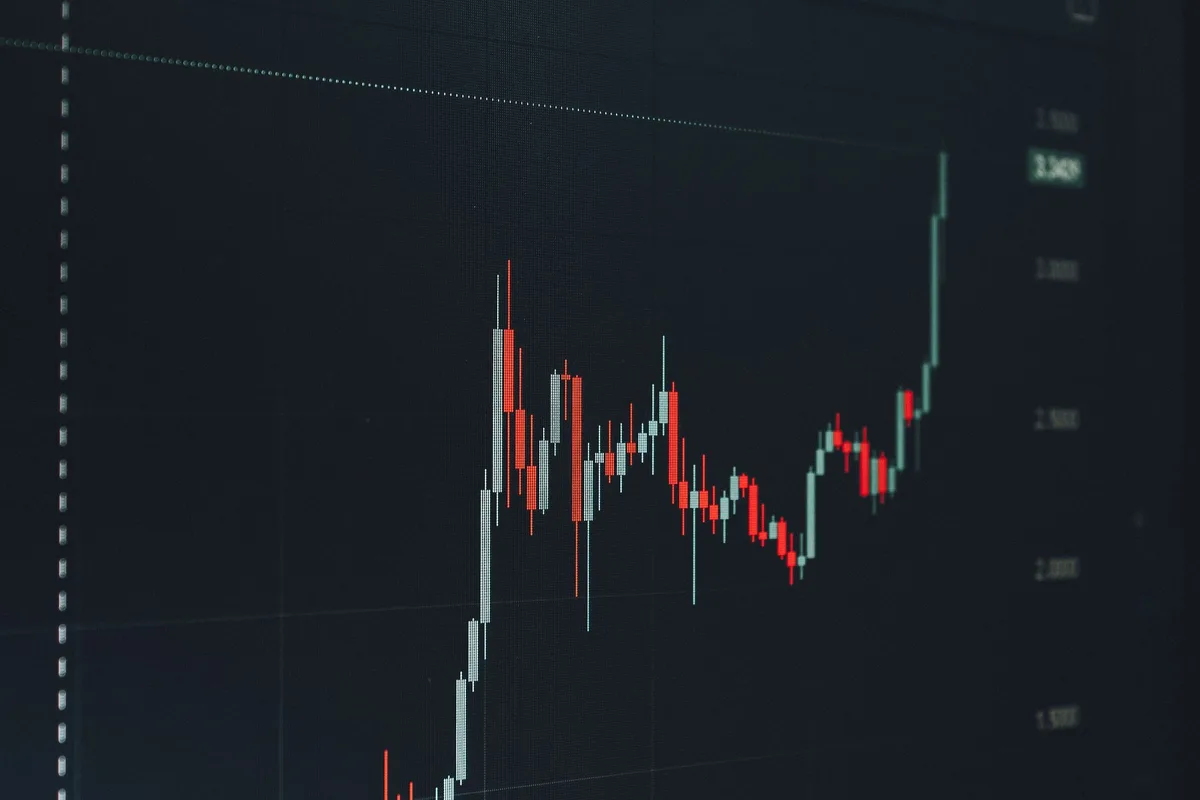
The live chart above shows recent XRP price action from market data. It is a temperature check, not a thesis. Past paths do not promise future ones.
How people typically buy and store XRP
This section is education, not an endorsement of any exchange, broker, or wallet.
On a centralized exchange. Many people create an account at a major crypto exchange, complete identity checks where required, deposit dollars or other crypto, and buy XRP in a spot market. The exchange then shows an XRP balance in the account. That balance is usually a claim on the platform's custody, not keys you fully control. Exchange risk includes outages, withdrawal delays, hacks, freezes, and insolvency. Proof-of-reserves marketing, if any, is a transparency tool, not FDIC insurance.
In self-custody. Some users withdraw XRP to a wallet where they control the keys, such as a reputable software wallet or a hardware device that supports the XRP Ledger. Self-custody removes exchange solvency risk and replaces it with personal key risk. Lose the seed phrase, and recovery can be impossible. Share the seed phrase, and theft can be instant. Always verify receive addresses with a small test send first.
Network details matter. XRP Ledger withdrawals need the correct network and, in some setups, destination tags or memos so an exchange can credit the right customer account. Sending on the wrong network or omitting a required tag is a common irreversible mistake.
Taxes and records. In the United States, crypto disposals can be taxable events. The IRS publishes digital asset guidance for filers. Keep records of buys, sells, swaps, and transfers. Do not invent tax theory from a comment thread.
A cautious first-session pattern looks boring on purpose: use a well-known platform, start tiny, enable strong account security, test withdrawals with a dust amount, and only then decide whether XRP belongs in a speculative sleeve at all.
The honest risk list
XRP is one of the largest and most liquid crypto assets by market activity in many periods. Size and familiarity are not safety.
- Price volatility. XRP can rally hard and crash hard. Multi-year holders have lived through deep drawdowns. Assume another severe decline is possible.
- Company and supply narrative risk. Because Ripple has been closely associated with large XRP inventories and escrow releases, news about the company, lawsuits, settlements, unlocks, or sales can move the token even when your personal thesis was "payments technology."
- Regulatory and classification uncertainty over time. Crypto assets sit in an evolving U.S. legal and supervisory landscape. Investor-education materials from the SEC and CFTC have long warned that virtual currency trading is speculative and that protections differ from traditional brokerage cash accounts. Rules and interpretations can change. This article is education, not a legal classification opinion.
- Adoption risk. Payment technology can succeed in niches without producing the retail price path social media imagined. Competing rails, stablecoins, bank networks, and other blockchains all compete for the same settlement problem.
- Liquidity and venue risk. Easy to trade in calm markets can become stressful in panic markets. Spreads widen. Platforms pause. Withdrawals queue.
- Operational risk. Phishing sites, fake support agents, wrong-network sends, and seed-phrase theft remain everyday disaster paths.
- No traditional deposit insurance on the asset itself. Holding XRP is not like holding cash in an FDIC-insured bank deposit. Exchange terms vary. Self-custody has no help desk that can reset a lost key.
U.S. investor-education offices and consumer agencies also warn that scams cluster around crypto: fake investment clubs, fake celebrity endorsements, and urgent "send XRP now" scripts. If a stranger needs your coins to unlock a prize, it is a scam.
The slider above is an educational compound-growth toy, not an XRP forecast. Crypto prices jump and crash. Smooth curves lie. Use the tool to respect how sensitive outcomes are to rate and time assumptions, then remember that real XRP paths have included deep drawdowns no gentle curve captures. If you already fund emergency savings in a high-yield savings account and retirement basics, any XRP sleeve should still be sized so a brutal drawdown is annoying, not catastrophic.
Who XRP education is for, and who can skip buying it
Worth understanding if: you want to know why XRP shows up in payment headlines, you are comparing major crypto assets, you already use crypto and want a clear Ripple-versus-XRP mental model, or you are researching whether a small speculative position belongs inside an already diversified risk sleeve.
Easy to skip buying if: you only want broad crypto exposure through bitcoin, ether, or regulated funds; you do not want company-supply narrative risk; a deep altcoin drawdown would force you to sell long-term investments or take on debt; or you simply do not need another speculative ticker. Skipping XRP is a completely coherent choice.
There is also a middle path. Learn the vocabulary so headlines make sense, keep your speculative budget small or zero, and refuse to confuse software adoption stories with a personal leverage plan.
Five myths that create expensive mistakes
- Myth: Ripple and XRP are the same thing. Ripple is a company. XRP is an asset on a public ledger. Mixing them muddles both investment risk and product news.
- Myth: Fast and cheap means safe. Speed and fees measure network design. Risk measures markets, custody, regulation headlines, and your own security habits.
- Myth: Escrow unlocks are secret dumps. The escrow framework was built to publish a schedule. Markets can still react emotionally to known events, but "secret infinite mint" is the wrong mental model for XRP's fixed genesis supply.
- Myth: If banks use Ripple software, XRP must moon. Institutions can evaluate or use software without creating a direct coupon to your retail bag. Some flows may use XRP. Some may not. Software interest is not a price oracle.
- Myth: Large market cap means conservative. Liquidity and fame help you enter and exit. They do not create principal protection.
A simple due-diligence checklist
- Write down why you care: vocabulary, payments research, or speculative price exposure. Mixing motives creates oversized positions.
- Say out loud: "I am not buying equity in Ripple when I buy XRP."
- Decide the maximum loss you can tolerate in dollars, then size backward from that number.
- Learn the difference between exchange custody and self-custody before you withdraw.
- Practice with a tiny test amount, including any destination tag requirements.
- Read primary docs on xrpl.org for ledger mechanics, and regulator education pages for risk framing, instead of relying only on social threads.
- Ignore urgency. Anyone demanding you buy or send XRP in the next ten minutes is handing you a red flag.
The bottom line
XRP is the native digital asset of the XRP Ledger, a public network built for fast, low-fee value transfer and multi-currency payment paths. Ripple is a company that builds payment technology, contributes to ledger software, and has historically held and sold large amounts of XRP under a public escrow framework meant to make supply timing more predictable. Those facts can all be true at once without turning XRP into a share of Ripple, a guaranteed cross-border coupon, or a substitute for bitcoin or ether.
If you keep the company and the token separate, treat escrow as a supply schedule rather than a price put, size any speculative position for serious drawdowns, and verify custody details before you move meaningful money, you will already understand Ripple and XRP more clearly than most people who bought a ticker because the names sounded interchangeable.
Crypto punishes guesswork faster than any market on Earth.
Volatility is survivable. Not knowing what you own is not. The Financial IQ Test measures your actual money knowledge, from market basics to risk math, so your conviction is built on understanding instead of a feed full of hype.
Test your Financial IQQuestions people ask
Is Ripple the same thing as XRP?
No. Ripple is a private company that builds payment software and has historically held large amounts of XRP. XRP is the native digital asset of the public XRP Ledger. You can hold XRP without owning any part of Ripple, and Ripple can build products that mention XRP without turning your tokens into company stock.
Does Ripple own or control the XRP Ledger?
According to XRPL educational materials and FAQ framing, the XRP Ledger is a public decentralized network. Ripple is a major contributor and historically a major XRP holder, but it does not own the ledger like a private company database. Network rule changes that affect transaction processing still depend on broad validator agreement, not a single corporate switch.
What is XRP escrow in simple terms?
Escrow is a time lock on the ledger. In 2017, Ripple placed a large amount of XRP into on-ledger escrow so potential supply would enter availability on a more predictable schedule, commonly described as up to 1 billion XRP per month with unused amounts often re-locked. Escrow improves schedule transparency. It does not guarantee price support.
Is XRP used for cross-border payments?
Some payment designs can use XRP as a bridge asset: convert to XRP, move it quickly, then convert to the destination currency when the route makes sense. Other institutional flows may use different rails. Software pilots and partnerships are infrastructure stories. They are not automatic proof that retail XRP prices will rise.
How is XRP different from bitcoin and ether?
Bitcoin is mainly framed as scarce digital money secured by proof-of-work. Ether powers Ethereum smart-contract activity and staking economics. XRP is the native asset of a payments-focused ledger with fast consensus finality. Prices often move together in risk-on markets, but the long-term jobs and risks are not identical.
Should beginners buy XRP?
There is no universal answer, and this site does not give personalized advice. Many beginners are better served learning the Ripple-versus-XRP distinction first, funding emergency savings and retirement basics, and only then deciding whether a small speculative crypto sleeve makes sense. Skipping XRP entirely is a coherent choice.
Keep reading
Bitcoin Explained for Normal People (2026 Edition)
The Crypto Scam Field Guide: Every Major Con and How to Spot It
Crypto Taxes in 2026: What You Actually Owe the IRS
The Flourish Letter
One smart money idea each week, charts included. Join free and get the printable 2026 Money Calendar in your welcome email.