How to Save Money on Appliance Repair in 2026
Key takeaways
- Ten minutes of power, filter, vent, and error-code checks often saves a diagnostic fee and a wrong repair.
- DIY suits coils, filters, lint paths, and simple screens; gas, sealed refrigerant, and burned wiring belong to qualified techs.
- Manufacturer warranties and store service contracts are different products; read exclusions and service fees before you buy coverage.
- Match exact model numbers for parts; cheap mismatches that leak twice are not savings.
- On aging fridges and washers, add kilowatt-hour cost to the repair quote before you choose fix or replace.
- A labeled appliance fund in high-yield savings turns a failed compressor into a cash problem, not a debt spiral.
The refrigerator hums wrong on a Tuesday night. The washer leaves a puddle. The dryer takes two cycles to finish a load. Panic spending starts when you open a search tab, click the first "same-day repair" ad, and authorize a diagnostic fee before you know whether the problem is a $12 part, a clogged filter, or a machine that should have been replaced two years ago. In 2026, appliance repair bills are one of the easiest household costs to either control or inflate. Diagnosis, timing, parts strategy, and a cash reserve decide which story you live.
This guide is practical education for US homeowners and renters who want to spend less without gambling with safety. You will learn how to diagnose before you call, when DIY is reasonable versus when a licensed tech is cheaper long term, how manufacturer warranties and extended service contracts actually work, where to source parts without getting burned, how to run repair-versus-replace math (including energy cost on aging fridges and washers), and why HVAC filter basics belong in the same money conversation. Keep a labeled repair reserve in a high-yield savings account so a failed compressor does not become revolving debt.
Where Appliance Money Actually Goes
Most households do not budget for appliances as a line item. They react. A fridge fails on a holiday weekend. A dryer that has been slow for months finally trips a breaker. A dishwasher "works" while quietly wasting hot water because the spray arms are clogged. The spend shows up as service call fees, parts markups, emergency premiums, food loss, laundry at a laundromat, financing interest, and the quiet drag of inefficient machines that never get replaced on purpose.
Think in four buckets. First is free or near-free maintenance: coil cleaning, lint screens, HVAC filters, level legs, clean condensers, and error-code resets after a power blip. Second is small parts and DIY-friendly repairs: inlet screens, door seals, belts on some models, drain pumps when access is clear. Third is scheduled professional repairs with written scopes. Fourth is capital replacement timed for weekday delivery, utility rebates, and ENERGY STAR efficiency gains. Households that spend less over a decade usually overinvest slightly in the first two buckets so they under-spend on panic versions of the third and fourth.
Energy is part of the bill even when nothing is "broken." The U.S. Department of Energy has long documented large efficiency gains in refrigerators and clothes washers over prior decades. ENERGY STAR notes that older refrigerators can use substantially more electricity than certified new models, and that a second fridge left running in a garage can quietly cost you year after year. Repair math that ignores kilowatt-hours is incomplete math.
Diagnose Before You Call
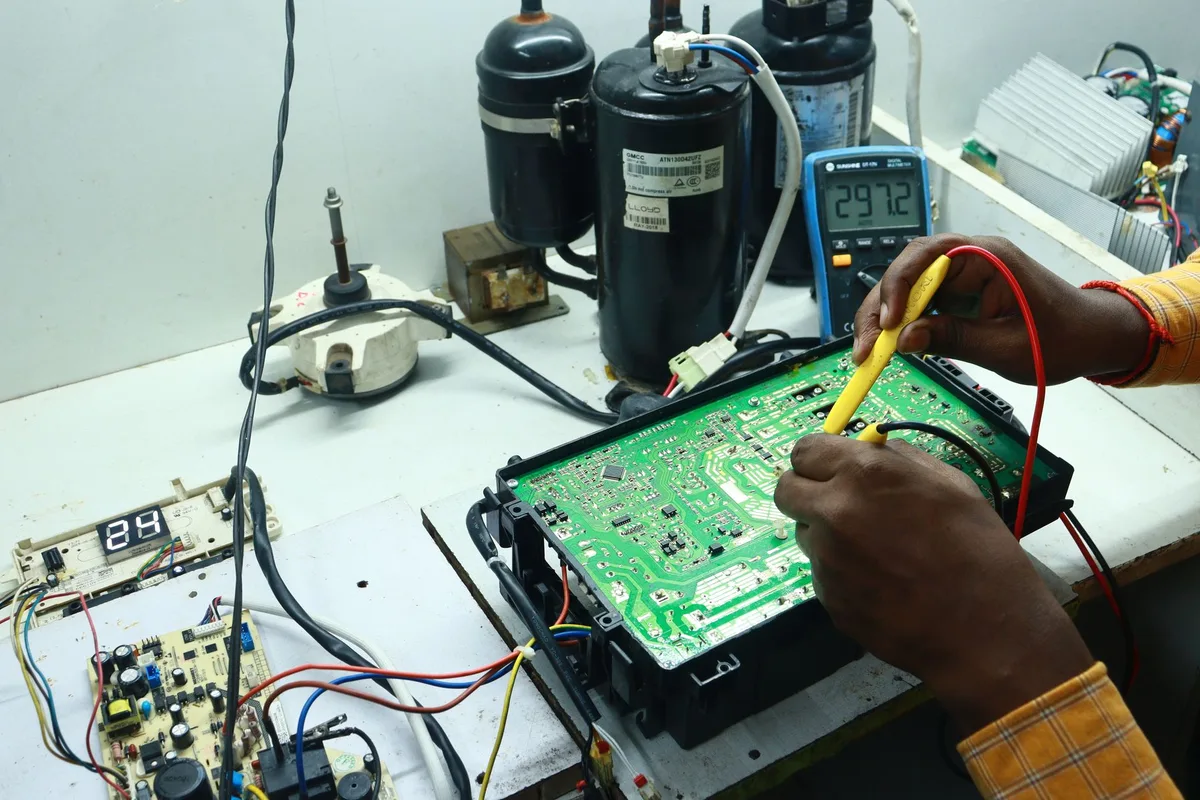
A calm diagnosis is the highest-return skill in appliance money management. Many "failed" machines are tripped breakers, loose plugs, clogged filters, frozen water lines, or user settings. Ten minutes of structured checks can save a $99 to $150 diagnostic fee, and more importantly, it keeps you from authorizing a repair you do not need.
A simple pre-call checklist
- Confirm power: outlet, plug fully seated, dedicated circuit breaker, GFCI reset on kitchen and laundry circuits
- Confirm water and drain: shutoffs open, inlet hoses not kinked, standpipe clear, no frozen line in winter garages
- Read the display: note exact error codes and when they appear (start, mid-cycle, drain, heat)
- Check the obvious filters: dryer lint screen, washer inlet screens, dishwasher filter cup, fridge condenser coils if accessible
- Smell and look for safety flags: burning plastic, gas odor, scorched outlets, standing water near electrics
- Photograph model and serial tags before you move the unit; write the codes down
If you smell gas, see sparks, or have water near live outlets, stop. Leave the area if needed and call your utility or emergency services for gas, and a qualified tech for electrical hazards. Money-saving does not mean improvising around fire or shock risk. CPSC guidance on clothes dryers has long emphasized lint buildup as a fire hazard. Cleaning the lint screen every load and checking the exhaust path periodically is both safety and cost control, because restricted airflow makes dryers run longer and hotter.
DIY Versus Pro: Decide With Risk, Not Pride
DIY is not automatically cheaper. A $40 part becomes a $900 problem when a wrong hose floods a floor or a gas dryer connection is disturbed by someone who should not be touching gas. The decision is about risk, warranty language, tool access, and the cost of being wrong.
Often reasonable DIY for handy people
- Cleaning refrigerator condenser coils and checking door gasket seal with a dollar-bill test
- Replacing HVAC and room-air filters on the schedule the manufacturer recommends
- Cleaning dryer lint screens every load and inspecting the outdoor vent for crushed or blocked ducting
- Clearing dishwasher filter cups and spray-arm holes clogged with food debris
- Replacing simple washer inlet screens and confirming level legs so machines do not walk and leak
- Resetting after a power outage when the manual describes a specific sequence
Call a qualified technician sooner
- Any gas appliance work: ranges, dryers, furnaces tied into appliance packages, or anything involving combustion venting
- Sealed refrigeration systems (compressor, sealed refrigerant lines) that require EPA Section 608 certified handling
- High-voltage dryer or range wiring, burned terminals, or repeated breaker trips
- Washer transmissions, complex electronic control boards under warranty, or machines still under manufacturer coverage that requires authorized service
- Anything that involves opening a sealed combustion path or modifying venting
If you rent, check your lease before you open a panel or replace a major appliance. Landlords often control vendor choice and may require notice. If you own a condo, confirm association rules for common laundry rooms and water shutoffs. Education first, then tools.
Warranties and Extended Warranties: Honest Reading
Manufacturer warranties and store "extended warranties" (often service contracts) are not the same product. The FTC explains that written warranties must be available before you buy, and that federal law under the Magnuson-Moss framework governs how warranties are disclosed and what sellers can require. A full warranty and a limited warranty are different. Labor may or may not be included. Shipping a heavy appliance back to a depot can erase the value of a "free" parts warranty.
Before you pay for an extended service contract at checkout, read what is excluded. Many contracts exclude preexisting conditions, rust, misuse, missing maintenance, commercial use, and cosmetic damage. Some pay a service fee per visit that rivals a cash diagnostic from an independent shop. Some steer you to a network with long wait times. Others are useful for a high-repair-cost brand in a household that cannot absorb a $600 board replacement. There is no universal answer. There is only the contract in front of you versus your cash reserve and the age of the machine.
Keep the original receipt, the model and serial numbers, and registration confirmation if the brand requires it. Using unauthorized parts or unapproved service can complicate coverage on some brands. Ask the manufacturer support line what voids coverage before you DIY a control board. For education on warranty rights and service contracts, FTC consumer pages on warranties remain a clear starting point.
When a big repair will hit a credit card because cash is thin, pause long enough to look at the broader credit picture: utilization, other balances, and whether a short-term plan is realistic. A quick review through a tool like WalletHub Premium can help you see whether financing a repair would crowd out other goals. Paying a repair in cash from a fund is usually simpler. Financing can be a bridge when the alternative is food spoilage or unsafe equipment, if you have a written payoff plan.
Parts Sourcing Without Getting Burned
Parts strategy is where many repair bills quietly inflate. OEM (original equipment manufacturer) parts often cost more and may be required to keep certain warranties intact. High-quality aftermarket parts can be fine for older out-of-warranty machines when the part is well reviewed and correctly matched. Cheap no-name parts that fail in six months are not a bargain.
Match the exact model number, including suffix letters when the brand uses them. A "close enough" door gasket or water inlet valve can leak. Photograph the old part before you order. Prefer sellers that show return windows and clear compatibility charts. For sealed-system parts and gas components, prefer licensed service that supplies and installs the part. Your time has a cost too. A two-week wait for a backordered board may make a temporary workaround (cooler, laundromat) cheaper than hotel living, but food safety still comes first for refrigerators.
Ask the technician for a parts line-item on the invoice: part number, brand, and whether it is OEM. Markups are normal in the trade. Surprise markups without a written estimate are how trust breaks. For non-emergency work, get the parts list before authorizing labor so you can compare options.
Repair Versus Replace: Run the Numbers
A useful rule of thumb many households use for education (not as a hard law) is the age-and-cost test. If a machine is well past mid-life and the repair quote exceeds roughly half the price of a comparable new unit installed, replacement often wins on total cost of ownership, especially when the old unit is inefficient. Adjust for your situation. A $180 repair on a three-year-old washer under partial warranty is usually a repair. A $700 control-board job on a 12-year-old side-by-side that already wastes electricity and has a failing ice maker is often a replace conversation.
Illustrative fridge energy math
Suppose an aging second refrigerator in a garage uses about 1,000 kWh per year and your all-in electricity rate is about $0.16 per kWh. That is roughly $160 per year in electricity alone, before food loss from uneven temperatures. An ENERGY STAR model in a similar size class might use on the order of a few hundred kWh per year depending on configuration. ENERGY STAR has noted that older refrigerators can use about 35% more energy than ENERGY STAR certified models on average, and that refrigerators over 15 years old can cost more than $80 per year extra to run in their consumer guidance. Your utility rate and usage pattern control the exact dollars. The point is to put kWh on the same spreadsheet as the repair quote.
DOE materials have also highlighted large historical efficiency gains: modern refrigerators use far less energy than 1970s units while offering more storage. That does not mean every aging fridge must be replaced tomorrow. It means a failing 18-year-old unit with a $500 repair quote deserves an energy-aware decision, not a reflex "fix it" or "replace it."
Washer and dryer considerations
Washers fail on pumps, bearings, control boards, and door locks. Check whether the machine still cleans well and whether it leaks only from a cheap hose. Dryers that take forever often have airflow problems: lint, crushed vent, plastic accordion duct that should have been rigid or semi-rigid metal per many manufacturer and CPSC safety messages. Fixing airflow can restore performance without a new machine. Gas dryer ignition and valve work belong to qualified techs.
HVAC Filter Basics Belong in the Appliance Budget
Furnace and air-handler filters are not glamorous, but they are one of the cheapest ways to protect both comfort equipment and indoor airflow. A clogged filter makes blowers work harder, can freeze evaporator coils in cooling mode, and shortens equipment life. Many manufacturers recommend checking filters monthly and replacing them on a schedule that matches your filter type, pets, and dust load. A $10 to $25 filter on time is cheaper than an emergency HVAC visit that starts with "when did you last change the filter?"
Use the correct size. A filter that is too restrictive for your system can cause problems even when new. Follow the arrow for airflow direction. Write the install date on the frame with a marker. If you have a smart thermostat that tracks runtime, use longer run hours in pollen season as a cue to inspect sooner. This habit sits next to dryer lint cleaning in the "small money, big downside" category.
What Fair Service Quotes Look Like in 2026
Pricing varies by metro area, brand complexity, and time of day. A fair process still looks similar. You want clarity on the diagnostic fee, whether it credits toward repair, the parts list with numbers, labor hours or flat rate, trip charges, and warranty on parts and workmanship. Vague verbal estimates are how small jobs become surprise invoices.
Get two quotes for non-emergency repairs when the first number feels high. Compare apples to apples. A low bid that uses no-name parts with no labor warranty is not automatically better than a higher bid with OEM parts and 90 days of workmanship coverage. Ask who will be on site: factory-authorized, independent licensed tech, or a marketing lead that subcontracts. Check reviews for patterns of upselling, not only star averages.
Beware of pressure tactics on elective work. "This price is only good if you sign today" is a red flag when the fridge is still cooling and you can shop weekday rates. True emergencies (no refrigeration for food safety in summer heat, gas smell, flooding laundry) need speed. A noisy but working dishwasher on Saturday morning may wait until Monday.
Build an Appliance Repair Fund
The financial strategy behind cheaper appliance ownership is boring and powerful. Estimate a realistic annual maintenance and repair allowance based on the age of your kitchen and laundry set. Many households aim for a few hundred dollars a year for filters, hoses, and small service calls, plus a larger reserve toward a fridge or washer replacement. Fund it monthly into a high-yield savings account labeled for home appliances so the money is available without a store card at 25% APR.
A simple example: if you target a $2,000 appliance buffer and you already have $400 saved, setting aside $100 a month at a competitive savings APY closes most of the gap in roughly a year and a half while earning a little interest. Adjust for a household with older machines or a second fridge. Use the slider below to model your own goal, current savings, monthly transfer, and APY. Treat it as planning education, not a prediction that your compressor fails on a set date.
A Worked Weekend Scenario
Jordan notices the dryer needs two cycles. Instead of booking Saturday emergency service, Jordan cleans the lint screen thoroughly, checks the outdoor vent hood (it was packed with lint and a bird nest fragment), and replaces a crushed plastic duct section with semi-rigid metal per common safety guidance. Drying time returns to normal. Cost: under $40 and two hours.
The same month, the refrigerator starts clicking and warming. Jordan confirms the breaker, cleans dusty condenser coils, and still sees rising temps. A weekday diagnostic finds a failing starter relay for $165 parts and labor. The fridge is seven years old and otherwise efficient. Jordan pays from the appliance fund. No food loss beyond one package of thawing meat moved to a cooler in time. No credit card. No holiday surcharge.
Contrast that with ignoring the slow dryer for six months until a lint-related overheat scare, then replacing a still-fixable unit on a financing plan while the fridge fails on a Sunday and the household eats restaurant food for three days. Process beats luck. Small maintenance and a cash buffer change the entire year.
What Not to Do
- Do not ignore burning smells, scorched plugs, gas odors, or repeated breaker trips
- Do not treat chemical drain cleaners as monthly washer or dishwasher medicine
- Do not skip dryer lint and vent care; CPSC materials treat lint buildup as a fire risk
- Do not buy an extended service contract you have not read, especially if you already keep a solid cash reserve
- Do not authorize open-ended repairs without a written not-to-exceed figure on older machines
- Do not finance elective stainless upgrades at high APR when a short delay and a cash fund would work
A 90-Minute Appliance Money Session
Block an hour and a half this month. Photograph every major appliance model and serial tag. Replace HVAC filters that are due. Vacuum fridge coils if accessible. Check dryer vent outflow while the dryer runs. Test GFCI outlets in kitchen and laundry. Write a one-page preferred tech list with two names and daytime numbers for appliance and HVAC. Transfer this month's contribution to the appliance repair fund. That single session prevents many of the expensive stories people tell after the fact.
If you only finish half, start with lint, filters, and model-number photos. Those three actions cut fire risk, protect airflow equipment, and make future parts orders accurate. Add the fund transfer even if the dollar amount is small. Momentum matters more than perfection.
Final Perspective
Saving money on appliance repair is not about never calling a technician. It is about calling the right person at the right time with a diagnosis in hand, a clear parts plan, and cash ready. Clean the free stuff first. Respect gas, sealed refrigeration, and electrical hazards. Read warranties and service contracts with skepticism and a highlighter. Put energy cost on the same page as the repair quote when machines are old. Keep filters and vents on a boring schedule. Fund a labeled reserve so emergencies stay operational problems instead of debt problems. The households that spend less over ten years are rarely the ones that never had a broken washer. They are the ones who treated appliances like a system with a budget, not a series of unwelcome surprises.
Everything you save starts with something you know.
Knowing how interest, insurance, and fine print really work is the discount that applies to everything for the rest of your life. The Financial IQ Test scores that knowledge across 90 tests and shows you where the expensive gaps are.
Test your Financial IQQuestions people ask
When is an appliance problem a true emergency?
Treat gas smells, sparks, scorched outlets, flooding near electrics, or a refrigerator that cannot keep food safe in hot weather as urgent. A noisy but still-cooling fridge or a slow dryer with a clean lint screen can often wait for weekday rates. Stabilize food with coolers and ice when needed, then call a vetted technician rather than the first search ad alone.
Are extended warranties worth it on appliances?
Sometimes, for households that cannot absorb a large repair and for brands with expensive electronics, if the contract terms are strong. Often not, when exclusions, per-visit fees, and wait times erase the value and you already keep a cash repair reserve. Read the service contract as carefully as the sticker price. FTC warranty pages explain how written warranties and service contracts differ.
Should I repair or replace a 12-year-old refrigerator?
Compare the repair quote to roughly half the installed price of a comparable new unit, then add expected electricity cost for the remaining years. ENERGY STAR notes older refrigerators can use substantially more energy than certified models. A modest repair on a still-efficient mid-life fridge often wins. A large sealed-system repair on a very old, inefficient unit often loses.
How often should I change HVAC filters?
Many manufacturers suggest checking filters about monthly and replacing them on a schedule that matches filter type, pets, and dust. Write the install date on the frame. A cheap filter on time is far less expensive than airflow problems that lead to frozen coils or blower stress. Use the size and MERV range your system is designed for.
Can I use aftermarket parts instead of OEM?
On older out-of-warranty machines, quality aftermarket parts that match the exact model can be reasonable. During an active manufacturer warranty, unauthorized parts or service can complicate coverage. Avoid the cheapest no-name parts for water valves, gaskets, and anything safety-related. Ask your technician to list part numbers on the invoice.
How big should an appliance emergency fund be?
Many households start with a few hundred dollars for filters and small repairs plus a path toward $1,500 to $3,000 for a major fridge or laundry replacement, adjusted for home age and whether you have a second fridge. Automate monthly transfers into a labeled high-yield savings account. The right number is the one that keeps a failure off high-interest credit.
Keep reading

50 Real Ways to Save Money in 2026, Ranked by Effort
The Subscription Audit: Find and Cancel Your Money Leaks

The Grocery Savings System: Cut Your Food Bill 25%
The Flourish Letter
One smart money idea each week, charts included. Join free and get the printable 2026 Money Calendar in your welcome email.