How to Save Money on International Money Transfers and Remittances
Key takeaways
- International transfers cost you in more than one place: the visible upfront fee and the hidden exchange rate markup, plus a new 1 percent federal tax, effective January 1, 2026, on transfers funded with cash, money orders, cashier's checks, or similar physical instruments, with proposed regulations designating traveler's checks as the only added instrument so far.
- Do not just compare arrival amounts for the same send amount. Hold your total out of pocket budget steady with fees and tax included and compare what arrives, or fix the recipient amount and compare total cost.
- World Bank Q3 2025 data put the global average cost of sending $200 at 6.36 percent, with banks at 14.99 percent and digital services at 4.59 percent, so your channel choice matters enormously.
- There is no universal cheapest payout method. In the same World Bank Q3 2025 data, cash pickup averaged 5.56 percent, bank account deposit 7.86 percent, and same-bank or partner deposit 13.91 percent, so quote each option for your corridor.
- Regulation E protections apply to personal, family, or household transfers over $15, not to business or commercial payments, and include upfront disclosures, a 30 minute cancellation window, and up to 180 days to report an error.
- A canceled transfer gets your money and fee back from the provider, but because the 1 percent tax can still apply, you may have to recover that portion by claiming it from the IRS separately.
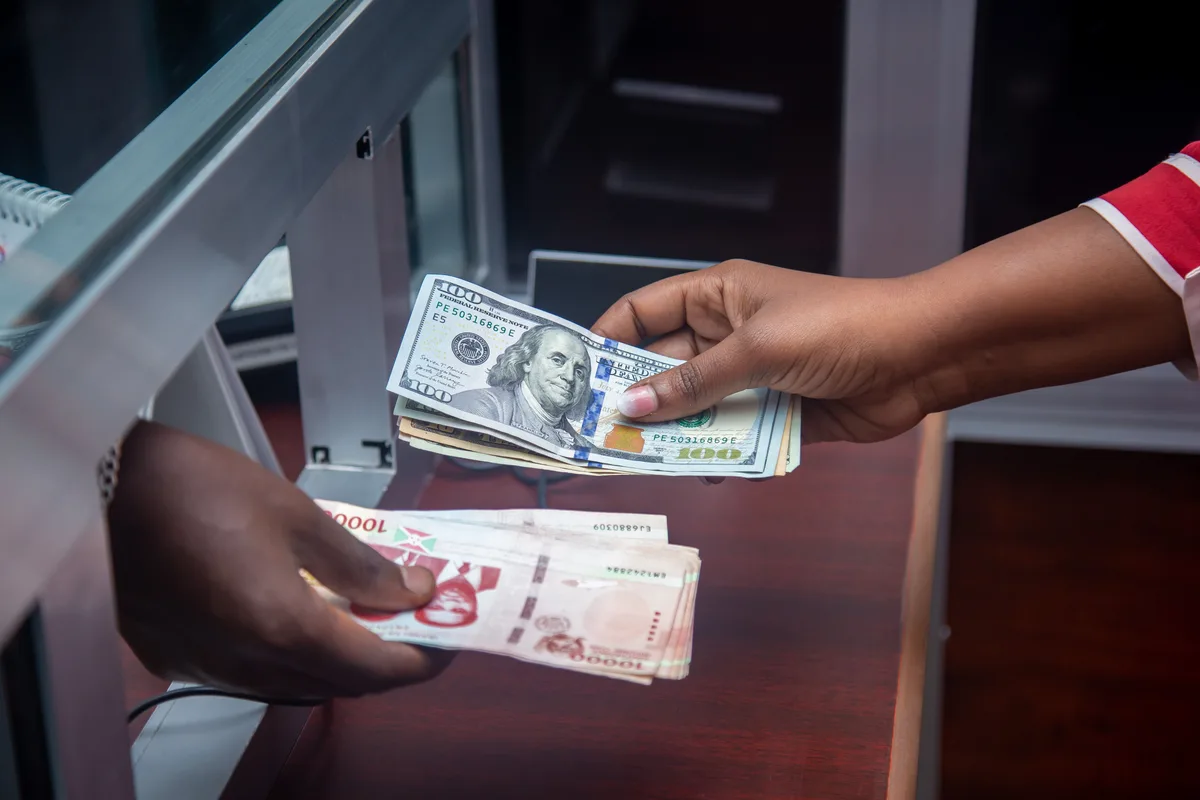
Sending money across a border should feel simple. You pick an amount, the person on the other end gets it, and you move on with your day. But the actual price of that favor is usually hiding in more than one place, and most people only ever notice one of them. If you send money to family in another country, help out a student abroad, pay an overseas freelancer, or settle a bill in a different currency, a few small habits can quietly keep real dollars in your pocket on every single transfer.
This guide walks through how these transfers are priced, what the law does and does not protect, a new tax that took effect in 2026, and the concrete moves that shrink the cost. The hard numbers here come from public government and World Bank data. Anywhere I run an example with made up figures, I will say so plainly, because a worked illustration is not the same thing as a quote from any real company.
Where the money actually goes
A money transfer company can charge you in two ways, and the cheaper looking option is often the more expensive one once you add both together. Depending on how you fund the transfer, a small government tax can now apply as well. Hold that third piece in mind; we will come back to it.
The first charge is the one you can see. It is the upfront transfer fee, a flat dollar amount or a small percentage the company lists right next to the send button. This is the number ads love to shout about, and plenty of companies brag about a low fee or even a zero fee.
The second charge is the one most people miss. It is the exchange rate markup. Currencies trade against each other at a reference price often called the mid-market rate, which is roughly the midpoint between what buyers and sellers are willing to accept at that moment. You can look it up for free on a search engine or a currency site. When a company converts your dollars, it usually hands you a rate that is a little worse than the mid-market rate and quietly keeps the difference. That gap is a cost even though it never appears as a line item called a fee.
Here is the trap in plain terms. A company that advertises no fee can still make the exchange rate noticeably worse than mid-market, so you end up paying more than you would at a company that charges a visible fee but uses a fair rate. Neither label tells the whole story on its own, which is why the comparison method below matters so much.
What the global numbers say
You are not imagining it if these transfers feel pricey. The World Bank tracks the total cost of sending money across borders, combining the upfront fee and the exchange rate margin into one figure, and the averages are higher than most people expect.
According to the World Bank's Remittance Prices Worldwide report for the third quarter of 2025 (Issue 54), the global average cost of sending $200 was 6.36 percent, which works out to about $12.72 on that $200. That average had barely moved from 6.49 percent two quarters earlier, and it sits well above the international target of trimming the global average to 3 percent or less. In other words, the typical transfer still costs roughly twice what long standing policy goals are aiming for.
The average also hides a huge spread depending on how you send. The same World Bank data put banks at an eye watering 14.99 percent on average for a $200 transfer, while dedicated money transfer operators averaged 4.72 percent. Splitting it another way, digital transfers averaged 4.59 percent and non digital transfers averaged 7.30 percent. The cheapest qualifying services in each corridor, which the World Bank groups into a benchmark it calls SmaRT, averaged just 3.29 percent. The lesson is blunt: the channel you choose can easily triple or quadruple your cost for the exact same amount of money.
The rights you already have
Before we get into tactics, it helps to know that the law already stacks a few protections in your favor when you send money from inside the United States. These come from the Consumer Financial Protection Bureau's remittance rules under Regulation E, and they generally apply when you use a remittance transfer provider to send more than $15 to a person or company in another country.
There is an important limit to flag first. Regulation E is built for consumers. It covers a transfer you request primarily for personal, family, or household reasons, such as supporting relatives or sending a gift. A transfer requested for business or commercial reasons, like a company paying an overseas contractor out of a business account, generally falls outside these rules, according to the CFPB. So if you are paying a freelancer as part of running a business, do not assume the cancellation window and error rights described below protect you the same way they protect a personal transfer home.
The disclosure rule tends to save the most money, because it forces the cost into the open. Before you pay, the provider has to show you the fees and taxes it is collecting, the exchange rate that applies, and the amount of money expected to be delivered to the recipient, according to the CFPB. That delivered amount is a strong number for comparing companies, and the law puts it right in front of you. After you pay, you get a receipt with the same details plus a plain statement of your cancellation and error rights.
But read that delivered amount with one caveat. Regulation E does not require the quoted figure to include every charge on the receiving end. Certain fees charged by the recipient's own bank, and certain foreign taxes collected by someone other than your provider, can be left out, and in place of an exact number the law lets the provider show a disclaimer warning that the recipient may get less. Some providers include an estimate, but they are not required to. So the delivered amount is your best single comparison figure, yet it is not always the final sum that lands in the recipient's hands. For a destination that taxes inbound transfers or where the receiving bank charges its own fee, ask whether anything further will be shaved off.
You also get a short grace period. In general you can cancel an international transfer within 30 minutes after sending it and get your money back, as long as it has not already been picked up or deposited into the recipient's account, per the CFPB. You need a way to reach the provider inside that window, and the provider must refund within three business days. There is a wrinkle worth knowing since the 2026 tax arrived. Regulation E requires the provider to return the money you sent and the fee it charged, but it only has to refund taxes to the extent the law allows. The new 1 percent remittance tax is written so that it can still apply even when a transfer is canceled, so the provider may hand back your transfer amount and its fee while the tax is not part of that refund. In that case the Treasury's proposed rules point you to recover the tax yourself by filing a claim with the IRS. So picture the cancellation refund as two tracks: the provider returning your transfer and fee quickly, and the federal tax, if any, recovered separately. Transfers you schedule in advance work a little differently, and you can generally cancel those up to three business days before the transfer date.
Finally, if something goes wrong, you have time to fight it. You can report a problem with a transfer up to 180 days from the date the funds were supposed to be available, and the company has to investigate and report back to you, generally within 90 days, according to the CFPB. If an error is confirmed, you may get a refund or have the transfer resent. None of this guarantees any particular outcome, but it does mean you are not powerless when a personal transfer stalls or arrives short.
How to compare providers without getting fooled
The first instinct to drop is comparing the fee alone, because a low fee can hide a poor exchange rate. But there is a subtler trap in the other direction, and it matters more now that a tax can enter the picture for some transfers. Simply typing the same send amount into two apps and picking whichever shows the biggest arrival number is not always right. Fees, and any tax, can be added on top of that send amount separately, which means two quotes built on the same principal can cost you different totals out of pocket.
The clean way to compare is to hold one side of the deal steady. Pick whichever of these fits how you think:
- Fix your total out of pocket budget. Decide you will spend, say, $1,000 all in, including the fee and any tax, and ask each provider what the recipient would actually get for that complete budget. Then the biggest arrival number genuinely wins.
- Fix the recipient amount. Decide the recipient needs a specific sum, and ask what each option would cost you in total, fee and tax included, to deliver it. Then the lowest total cost wins.
Either approach folds every charge into one honest comparison. What you want to avoid is comparing arrival amounts while the fees and taxes that sit on top of the principal differ between providers, because that is exactly how a more expensive service can look like the winner.
It helps to know the mid-market rate before you start, so you can see how much each company is shaving off. Search the two currencies, note the midpoint rate, and treat any provider whose rate is far below it as expensive even if its fee looks tiny. A good rate with a modest fee almost always beats a flashy zero fee paired with a poor rate. Quotes can drift during the day as currencies move, so get your comparisons close together. And watch the receiving end, since the sending company may take a cut while a bank on the recipient's side skims another amount before your family ever sees it.
The cheapest ways to send
Once you understand the two provider charges, the ranking of sending channels makes more sense. Digital transfers from specialized money transfer companies tend to be the cheapest, in person counters sit higher, and bank wires are frequently the most expensive route of all.
That chart uses the World Bank's channel averages for a $200 transfer in the third quarter of 2025. You can see why a bank wire, convenient as it is, can be a quiet money drain for routine family support. A few practical ways to land on the cheaper end of that range:
- Lean toward digital first. App based and online transfer services generally post lower total costs than brick and mortar counters or bank wires, and they make it easy to see the arrival amount before you commit.
- Compare payout methods instead of assuming one is always cheaper. In the World Bank's Q3 2025 data, paying out to a cash agent averaged 5.56 percent, paying out to a bank account averaged 7.86 percent, and a deposit to the same bank or a partner bank averaged 13.91 percent. So quote cash pickup, bank deposit, and mobile wallet for your exact corridor and budget, and let the actual numbers pick the delivery method.
- Check more than one app. Costs on the same corridor can differ meaningfully between providers, and the cheapest one is not always the one with the loudest marketing. A two minute comparison can be worth a nice lunch.
- Look at specialist services for your specific countries. Some providers are cheap for one corridor and mediocre for another, because their partner networks differ by region.
If you routinely send to the same person, it is worth doing a careful comparison once, picking a winner, and then rechecking every several months rather than agonizing over every transfer. Rates and fee structures change, but not usually week to week.
Timing, amounts, and how you pay
A handful of smaller levers can trim the cost further once you have picked a good provider.
How you fund the transfer matters, and not only for the reason you might expect. Paying from a bank account or debit card is usually cheaper than paying with a credit card, because many providers treat a credit card payment as more expensive to process and pass that along. On top of that, some credit card issuers treat a money transfer as a cash advance, which can trigger a separate cash advance fee and a higher interest rate that starts accruing immediately. Funding from your checking account sidesteps both problems in most cases, and as the next section explains, it also keeps you clear of a new tax.
Size can change the math too. Many services charge a flat fee rather than a strict percentage, so bundling three small transfers into one larger monthly transfer can lower the total fee burden, as long as the exchange rate markup does not eat the savings. On the other hand, splitting is occasionally cheaper when a provider's percentage based pricing jumps above a certain threshold. There is no universal rule, which is exactly why you hold your budget or the recipient amount steady and compare both ways.
Exchange rates wander with the market, and no one can reliably predict them, so chasing the perfect moment is usually a losing game. For most people the better move is to avoid the obviously bad moments, like converting at an airport kiosk or a hotel desk, where markups tend to be steep, and otherwise send on a normal schedule. If you are sending a large one time amount and the timing is flexible, some providers let you lock a rate or set a target rate, which takes the guesswork out. And keep an eye on promotions with clear eyes. New customer offers that waive the first transfer fee are real savings, but only if the exchange rate on that transfer is still fair. A waived fee wrapped around a poor rate is just the same trap in a party hat.
A new 1 percent tax on cash funded transfers
Starting January 1, 2026, there is a cost to know about that has nothing to do with your provider's pricing. A federal excise tax of 1 percent applies to certain remittance transfers sent from the United States, and the provider collects it from you, the sender, at the time you pay, according to an overview of the new rules from BDO. It was created by the law signed in July 2025 and sits under a new section of the tax code.
The part that decides whether you owe it is how you fund the transfer. By statute, the tax applies when you hand the provider cash, a money order, a cashier's check, or another similar physical instrument. If you fund the transfer from a U.S. bank account, or with a debit or credit card, the tax does not apply, per the same guidance. In plain terms, paying with physical cash at a counter can add 1 percent that paying from your checking account or a card would avoid entirely.
One edge of the rule is still settling, so it is worth being precise about what counts as a physical instrument. The statute lists cash, money orders, and cashier's checks, and it also lets Treasury designate other similar instruments. Treasury used that authority in proposed regulations issued in April 2026, which add traveler's checks, and only traveler's checks, to the list, on the reasoning that they work much like money orders and cashier's checks, according to the Federal Register notice. Those proposed rules treat cash, money orders, cashier's checks, and traveler's checks as the complete set of taxable funding methods, subject to an anti-avoidance rule that lets the IRS look through transactions arranged mainly to dodge the tax. Taxpayers can generally rely on the proposed rules for transfers after December 31, 2025, but only if they apply them consistently and in full. Because the regulations are still proposed and could change before they are finalized, treat the traveler's check case as not yet fully settled, and watch for the final rule if that is how you tend to pay.
It also helps to separate two things that both use the word cash. Cash funding is how you pay the provider on the sending side. Cash pickup is how your recipient collects the money on the other end. The new tax is about funding, not pickup. You can fund a transfer from your bank account and still have your family collect it as cash abroad without triggering the tax, because you did not pay the provider with a physical instrument.
On a $500 cash funded transfer, the 1 percent tax is $5. On a $1,000 cash funded transfer it is $10. That is separate from any fee and any exchange rate markup, and it is added on top of the amount you are sending. For anyone who sends regularly and has been paying in cash out of habit, switching to a bank account or card is one of the simplest ways to cut this particular cost to zero. It is also why the comparison method above insists on including any tax in your out of pocket total; two providers can show the same delivered amount while one of them leaves you owing an extra 1 percent at checkout. And because the proposed rules say the tax can attach even when a transfer is later canceled or expires, getting your money and fee back from the provider does not automatically give you the tax back. If that happens, the sender may file a claim with the IRS to recover it, so keep every receipt until you are sure the money arrived.
A worked example you can copy
Numbers make this concrete, so here is a fully made up illustration. Imagine you are sending $1,000 abroad and three options quote you different combinations of fee and markup. These figures are hypothetical and chosen to show the pattern, not pulled from any real provider.
Here is exactly how those arrival figures were built, so you can repeat the math. For each option I started from the same $1,000, subtracted the upfront fee, then reduced what was left by the exchange rate markup. The results are shown as U.S. dollar equivalents valued at the mid-market reference rate, not as amounts already converted into any particular destination currency. To turn $991.02 into pesos, rupees, or anything else, you would multiply by that day's exchange rate for the currency you are sending to.
Notice what happens. The bank wire shows a big visible fee and a markup, and the recipient ends up with the equivalent of $926.35. The cash agent has a smaller fee but a wider exchange rate markup, landing around $952.32. The low cost app charges a small fee and a slim markup, so about $991.02 arrives. The gap between the most and least expensive option here is roughly $65 on a single $1,000 transfer, and none of that gap was visible from the advertised fee alone. If you send monthly, that is real money over a year.
Two more notes keep this honest. These figures assume you fund from a bank account or card, so the 1 percent cash funding tax does not apply; pay the bank wire or the agent in physical cash and you would add roughly $10 more on this $1,000 transfer. And the actual exchange rate moves moment to moment, so your real results will differ. The method, though, is exactly what you should do in real life: hold your full budget steady, read each delivered figure, include any tax, and pick the biggest net result.
Common traps that quietly cost you
- Treating zero fee as free. A company can advertise no fee and still earn plenty on a poor exchange rate. Always check the delivered amount for a fixed budget.
- Comparing arrival numbers with different costs on top. Two quotes on the same send amount can carry different fees or taxes, so fix your total out of pocket spend or the recipient amount before you compare.
- Paying in physical cash out of habit. Since January 1, 2026, funding with cash, a money order, a cashier's check, or a similar physical instrument can add a 1 percent federal tax that bank account or card funding avoids.
- Paying by credit card without thinking. You may trigger a cash advance fee and immediate interest on top of the transfer cost.
- Converting at kiosks, airports, or hotels. Convenience locations tend to carry the widest markups of all.
- Ignoring the receiving side. A recipient bank or local tax can deduct more than the quoted delivered amount, so read the full disclosure and ask.
Turn the savings into something
Shaving a few dollars off each transfer feels small in the moment, but routed somewhere useful it adds up. If you cut your transfer costs and park the difference in savings or investments rather than letting it drift back into spending, the gap compounds over time. The slider below is a hypothetical tool, not a forecast or a promise of any return. Set the monthly amount to whatever you realistically expect to save, and see how it could grow.
If you would rather keep that money somewhere safe and reachable instead of invested, our guide on where to keep your savings breaks down the trade offs between high yield accounts, certificates, and short term options. And because fees are a theme that runs well beyond borders, it is worth reading how to save money on bank fees for the same mindset applied to your everyday banking.
A simple routine that works
You do not need to become an expert in foreign exchange to stop overpaying. The whole system boils down to a short routine. First, look up the mid-market rate for your two currencies so you have a reference point. Second, decide your full budget or the exact amount the recipient needs, then compare providers on that steady basis rather than on the fee alone. Third, fund the transfer from a bank account or debit card rather than cash or a credit card, which keeps you clear of both the credit card pitfalls and the new 1 percent cash funding tax. Fourth, quote each payout option your recipient could use, since cash pickup, bank deposit, and mobile wallet can each turn out cheapest depending on the corridor, and ask about any receiving side deductions. Fifth, keep your receipt and, for a personal transfer, act fast if anything looks wrong, since you have cancellation rights for 30 minutes and error rights for 180 days.
Do that once with care, settle on a provider you trust for your corridor, and recheck it a couple of times a year. The money you keep is not dramatic on any single transfer, but for anyone who sends regularly, it is the kind of steady, boring savings that actually sticks. That is usually the best kind.
Everything you save starts with something you know.
Knowing how interest, insurance, and fine print really work is the discount that applies to everything for the rest of your life. The Financial IQ Test scores that knowledge across 90 tests and shows you where the expensive gaps are.
Test your Financial IQQuestions people ask
How should I compare two providers to find the cheapest?
Hold one side of the deal steady so every charge is folded in. Either fix your total out of pocket budget, say $1,000 including the fee and any tax, and ask each provider what the recipient actually gets for that full amount, or fix the sum the recipient needs and ask what each option costs you in total to deliver it. Just maximizing the arrival number for the same send amount can mislead you, because fees and the 1 percent cash funding tax can be added on top of the principal and differ between providers.
What is the new 1 percent remittance tax and does it apply to me?
Since January 1, 2026, a 1 percent federal excise tax applies to certain money transfers sent from the United States to recipients abroad, collected from the sender at the time of payment. By statute it applies when you fund the transfer with cash, a money order, a cashier's check, or another similar physical instrument. Proposed regulations issued in April 2026 use Treasury's authority to add traveler's checks, and only traveler's checks, to that list, treating the four together as the complete set of taxable funding methods subject to an anti-avoidance rule. Taxpayers can rely on those proposed rules for transfers after December 31, 2025 only if they apply them consistently and in full, and final regulations could still change the details. The tax does not apply when you fund from a U.S. bank account or with a debit or credit card. Note this is about how you pay the provider, not how your recipient collects the money, so bank funded transfers picked up as cash abroad are not taxed for this reason.
Does the quoted delivered amount include every charge on the receiving end?
Not always. Under Regulation E, the provider's quoted delivered amount does not have to include certain fees charged by the recipient's own bank or certain foreign taxes collected by someone other than your provider. In place of an exact figure, the law lets the provider show a warning that the recipient may receive less. Some providers include an estimate, but they are not required to, so treat the delivered amount as a strong estimate and ask whether anything further will be deducted for your destination.
Can I cancel a transfer after sending it, and does this cover business payments?
For a personal transfer, generally yes. Under CFPB rules you can cancel an international transfer within 30 minutes of sending it, as long as the money has not been picked up or deposited yet, and advance scheduled transfers can usually be canceled up to three business days before the date. The provider must return the money you sent and the fee it charged, generally within three business days. One caveat since 2026: Regulation E only requires the provider to refund taxes to the extent the law permits, and the new 1 percent remittance tax can apply even to a canceled transfer. So the provider may return your transfer and fee while you recover the 1 percent tax separately by filing a claim with the IRS. These protections apply to transfers made primarily for personal, family, or household purposes. Transfers made for business or commercial reasons generally fall outside Regulation E, so do not assume the same cancellation and error rights apply.
Is a bank deposit always cheaper than cash pickup for my recipient?
No. The World Bank's Q3 2025 data show no universal winner across payout methods: cash agent payout averaged 5.56 percent, bank account payout averaged 7.86 percent, and deposit to the same bank or a partner bank averaged 13.91 percent. These are aggregates and your corridor may differ, so quote cash pickup, bank deposit, and mobile wallet for the same send amount and budget and let the actual numbers decide, while also confirming any receiving side fees.
Is it safe to pay for a transfer with a credit card?
It can cost more than you expect. Many providers charge more for credit card funding, and some card issuers treat a money transfer as a cash advance, which can add a separate fee plus interest that starts accruing right away. Paying from a checking account or debit card usually avoids both problems, and because bank and card funding are not subject to the new 1 percent tax on cash, money orders, cashier's checks, and similar physical instruments, they can be cheaper on that front too.
Keep reading
50 Real Ways to Save Money in 2026, Ranked by Effort

The Subscription Audit: Find and Cancel Your Money Leaks

The Grocery Savings System: Cut Your Food Bill 25%
The Flourish Letter
One smart money idea each week, charts included. Join free and get the printable 2026 Money Calendar in your welcome email.