Key takeaways
- A hot wallet stays connected to the internet and is convenient for spending, while a cold wallet stays offline and is far safer for long-term savings.
- Whoever controls the private keys controls the crypto, so the phrase 'not your keys, not your coins' is the whole game.
- Your seed phrase is the master backup for a self-custody wallet, and anyone who reads it can drain your funds forever.
- A sensible split for most people is a small spending balance in a hot wallet and the bulk of savings in cold storage.
- Most crypto theft comes from scams, phishing, and leaked seed phrases rather than someone breaking the underlying math.
- Custodial accounts on an exchange trade some safety and control for convenience, and they can be frozen or fail.
You bought some crypto. Maybe a little, maybe more than a little. Now a quiet question sits in the back of your mind. Where is it actually kept, and what stops someone else from taking it? That question matters more than which coin you picked, because in crypto the person who controls the keys controls the money. This guide walks through the real answer in plain language. No hype, no fear, just how storage works and how a normal person can keep their coins safe.
The two words you will hear over and over are hot wallet and cold wallet. They describe how your crypto is stored and, more importantly, how exposed it is to the internet. Once you understand the difference, most of the confusing advice online snaps into focus. Let us start with the single idea everything else rests on.
What you are really storing is a key, not a coin
Here is the part that surprises people. Your crypto does not live in your wallet the way cash lives in a leather billfold. The coins exist as records on a public network. What your wallet actually holds is a private key, which is a very long secret number. That key is the only thing that lets you move the coins. If you have the key, the network treats you as the owner. If someone else gets the key, the network treats them as the owner too. The blockchain does not know or care who the real you is.
This is why the crypto community repeats the phrase, not your keys, not your coins. It sounds like a slogan, but it is a literal description of how the system works. A wallet is really just a tool for storing and using your private keys safely. Everything about hot versus cold storage comes down to one question. How exposed are those keys to the outside world?
Most people never see the raw private key. Instead, modern wallets show you a seed phrase, also called a recovery phrase. This is a list of ordinary words, usually twelve or twenty four of them, in a specific order. Behind the scenes, that word list is a human-friendly way to represent the master key that can regenerate every private key in your wallet. Write the words down and you can restore your whole wallet on a new device. Lose the words and lose the device, and the funds are gone. Let someone read the words, and they can take everything.
Sit with that for a second, because it reshapes how you should think about safety. Protecting your crypto is mostly about protecting a short list of words from being seen, photographed, typed into the wrong website, or lost. The math underneath crypto is extremely hard to break. The words on a sticky note are not. Nearly every real theft happens at that human layer, not by cracking the code.
Hot wallets: convenient, connected, and always a little exposed
A hot wallet is any wallet whose keys live on a device that is connected to the internet. That includes the app on your phone, a browser extension wallet, a desktop program, and the balance you keep on an exchange. The defining trait is simple. The keys can be reached, at least in principle, by anything that can reach that device over the network.
The upside is real. Hot wallets are fast and easy. You can send crypto in seconds, connect to apps, swap tokens, and check balances from your pocket. For someone who is actively spending, trading, or just learning, that convenience is the whole point. A hot wallet is the checking account of crypto. It is where you keep the money you expect to touch soon.
The downside is exposure. Because the keys sit on a connected device, a range of attacks can reach them. Malware can scan your computer for wallet files. A fake app can pretend to be a real wallet. A poisoned link can trick your browser extension into signing away your funds. None of this means hot wallets are reckless. It means they carry the same background risk that any internet-connected account carries, and you should size the balance accordingly.
A good rule of thumb: keep only what you would be comfortable losing in a hot wallet, the same way you would not carry your life savings as cash in your front pocket.
It also helps to know that not all hot wallets are the same. An exchange balance is custodial, which we will cover shortly, and its safety depends on the company. A self-custody phone app puts the keys in your hands but still on a connected device. Both are hot in the sense that matters. Both should hold a spending-sized balance, not your long-term stack.
Cold wallets: offline, deliberate, and built for savings
A cold wallet keeps your private keys completely offline. Because the keys never touch an internet-connected device in a usable form, the most common remote attacks simply cannot reach them. There is nothing online to hack. This is the vault, the part of your setup meant to sit quietly and hold value for the long haul.
The most popular form is a hardware wallet. This is a small physical device, roughly the size of a USB stick or a small remote, that stores your keys inside a secure chip. When you want to send crypto, you connect the device, review the transaction details on the device screen, and physically press a button to approve. The private key signs the transaction inside the device and never leaves it. Even if the computer you plugged into is riddled with malware, the key stays sealed inside the hardware.
There is an older, simpler form called a paper wallet, where the keys or seed phrase are written or printed on paper and kept somewhere safe. It is genuinely offline, but it is fragile and easy to get wrong, and it offers no protection when you actually want to spend. For most people in 2026, a reputable hardware wallet is the practical choice for cold storage. Paper still matters, but as a backup of your seed phrase rather than as your main tool.
Cold storage is not free and it is not instant. A hardware wallet costs money, and moving funds takes a few deliberate steps. That friction is a feature, not a bug. It is exactly what stops a moment of panic or a clever scam from draining your savings in one click. The tradeoff is convenience for security, and for money you are holding rather than spending, that is usually the right trade.
Custodial vs non-custodial: who is holding the keys
There is a second split that sits alongside hot and cold, and beginners often confuse the two. Custodial versus non-custodial answers a different question. Not how connected are the keys, but who is holding them at all.
In a custodial setup, a company holds the keys for you. The clearest example is an exchange account. You have a login and a balance, but under the hood the exchange controls the actual keys. This feels familiar and safe because it works like a bank. If you forget your password, you can reset it. If you get locked out, there is a support team. The catch is that you are trusting that company to stay solvent, stay honest, and stay secure. History includes exchanges that froze withdrawals or collapsed, taking customer funds with them.
In a non-custodial setup, you hold the keys yourself. A hardware wallet is non-custodial. So is a self-custody phone app. Nobody can freeze your account, and nobody can lose your funds through their own failure. The flip side is total responsibility. There is no password reset and no support line that can recover your seed phrase. If you lose it, it is gone. Non-custodial is more freedom and more homework.
A lot of people use both. They keep a modest balance on a well-known exchange for easy buying and selling, then withdraw the amount they want to hold for the long term into their own non-custodial cold wallet. That way the convenience of custody handles the trading, and self-custody handles the savings. The important thing is to make the choice on purpose rather than leaving everything on an exchange by default.
The security tradeoffs, side by side
It helps to see the tradeoffs laid out rather than described in paragraphs. No single option wins on every dimension. Hot wallets win on convenience and cost. Cold wallets win on security. Custodial accounts win on recoverability but ask you to trust a third party. The right pick depends on how much you hold and what you plan to do with it.
Notice that the goal is not to declare one winner. The goal is to match the tool to the job. A small, active balance belongs somewhere convenient. A large, patient balance belongs somewhere secure. Most sensible setups use more than one wallet on purpose, each sized to its role. That layered approach is what experienced holders actually do, and it is simpler than it sounds.
How the money tends to get stolen
To protect yourself, it helps to know how theft actually happens. It is almost never someone brute-forcing the cryptography. It is people being tricked or careless. Consumer protection agencies see the same patterns repeat, and once you know them, most are easy to avoid.
The biggest category is scams that get you to hand over access voluntarily. A fake support agent messages you and asks for your seed phrase to fix a problem. A romance or investment contact walks you through moving funds to a site they control. A fake giveaway promises to double any crypto you send. According to the Federal Trade Commission, no legitimate business or government agency will ever ask you to pay in cryptocurrency, and no honest party will ever ask for your seed phrase. If someone does either, it is a scam, full stop.
The second category is phishing and malicious approvals. You click a link, land on a site that looks like your wallet or a popular app, and connect. Then you approve a transaction that, in the fine print, grants access to your tokens. The FBI Internet Crime Complaint Center reports billions in losses tied to crypto fraud each year, much of it flowing through convincing fake platforms. The Cybersecurity and Infrastructure Security Agency stresses slowing down and verifying before you click, because urgency is the scammer's favorite tool.
The third category is simple exposure of the seed phrase. A photo of the words saved to a cloud that later gets breached. The phrase typed into a fake recovery website. A backup left where a houseguest or family member could find it. Because the seed phrase is the master key, any of these can end in total loss. The defense is boring and effective. Never type it into any screen, never photograph it, and store it offline in more than one safe place.
A practical setup for a normal person
Enough theory. Here is a setup that balances safety and sanity for someone who is not trying to become a security expert. Adjust the amounts to your own situation, but the shape holds for most people.
Think in two buckets. The spending bucket is a small hot wallet, either a reputable exchange account or a self-custody phone app, holding only what you plan to use in the near term. The savings bucket is a hardware wallet holding the bulk of your crypto, set up once and rarely touched. Money flows from spending to savings as your holdings grow, not the other way around.
Setting up the savings bucket is the part worth doing carefully. It is not hard, but each step matters. Here is the process from start to finish.
A few habits make the whole thing far safer over time. Buy your hardware wallet directly from the manufacturer or an authorized seller, never secondhand, so nobody has tampered with it or preloaded a seed phrase. Write your recovery words on paper or a metal backup plate, and store copies in two separate safe locations, such as a home safe and a trusted relative's home or a bank box. Test a small recovery before you trust the device with real money, so you know your backup works.
When you send crypto, always double-check the receiving address, ideally the first and last few characters, because some malware quietly swaps a copied address. On a hardware wallet, verify that address on the device screen itself, not just on your computer. And treat any message that creates urgency with suspicion. Real problems can wait ten minutes while you slow down and verify. Scams cannot, which is why they push you to hurry.
Watching your holdings without exposing them
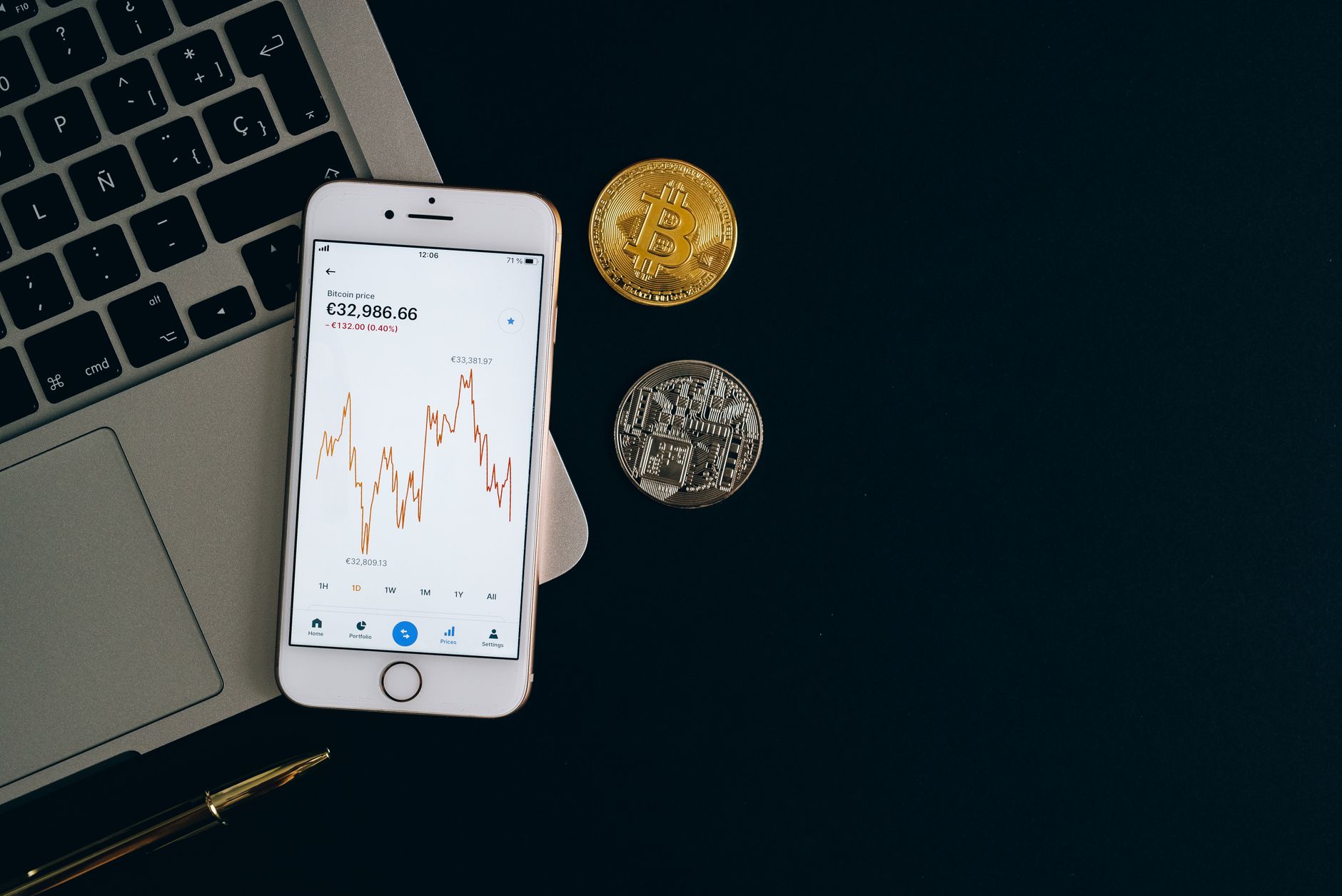
One nice thing about crypto is that checking a balance does not require exposing your keys. You can watch prices and even monitor a public wallet address without ever connecting your cold storage. Your keys can stay offline while you simply observe the market. That separation between watching and spending is part of what makes cold storage practical for the long term.
Prices move constantly, and that volatility is a reminder of why storage discipline matters. When the market swings, scams and panic spike right alongside it. The people who stay calm are usually the ones whose savings are already tucked into cold storage, out of reach of a rushed decision. A quiet, offline stack is hard to lose in a moment of excitement or fear.
Common mistakes to avoid
A short list of pitfalls catches most newcomers. Leaving everything on an exchange forever is the first, because a custodial balance is only as safe as the company holding it. Storing a seed phrase as a photo or a note in the cloud is the second, and it defeats the entire purpose of cold storage. Typing a recovery phrase into a website is the third, and it is almost always the last step before a wallet gets drained.
Another quiet mistake is buying a used or discounted hardware wallet from an unknown seller. A tampered device can come with a seed phrase the attacker already knows, so your first deposit walks straight into their hands. Buy new, from the source. Finally, do not skip the recovery test. A backup you never verified is a backup you are only hoping works. Confirm it once while the stakes are low.
None of these require deep technical skill to avoid. They require a little patience and a habit of pausing before you act. That is genuinely most of crypto security. The tools do the hard math. Your job is mostly to guard a few words and to slow down when something feels urgent.
Putting it all together
Crypto storage stops feeling mysterious once you hold onto the core idea. You are protecting keys, and those keys are represented by a seed phrase you must guard above all else. Hot wallets keep those keys on a connected device for convenience, which suits a small spending balance. Cold wallets keep them offline for safety, which suits your long-term savings. Custodial accounts hand the keys to a company for ease and recoverability, at the cost of trusting that company.
For most people, the answer is not to pick one and ignore the rest. It is to use each for what it does best. A little in a hot wallet you can spend freely. The bulk in cold storage you touch rarely and protect carefully. A seed phrase written on paper or metal and stored offline in two safe places. And a healthy habit of slowing down whenever anyone asks you to hurry, pay in crypto, or share your recovery words.
Do that, and you have moved past the riskiest part of owning crypto. Not by becoming a security engineer, but by understanding what you are really holding and treating it with the care it deserves. The math will keep your coins safe. Your calm, careful habits keep them yours.
Crypto punishes guesswork faster than any market on Earth.
Volatility is survivable. Not knowing what you own is not. The Financial IQ Test measures your actual money knowledge, from market basics to risk math, so your conviction is built on understanding instead of a feed full of hype.
Test your Financial IQQuestions people ask
Is a hot wallet safe enough for a beginner?
A hot wallet is fine for small amounts you plan to spend or trade soon. The risk is that it lives on an internet-connected device, so malware or a phishing link can reach it. Keep only what you can afford to lose in a hot wallet and move long-term savings to cold storage.
What happens if I lose my seed phrase?
If you lose the seed phrase and no longer have access to the wallet device or app, the funds are almost certainly gone for good. There is no customer service line that can reset it for a self-custody wallet. This is why writing it down carefully and storing it in more than one safe place matters so much.
Can someone steal crypto from a hardware wallet?
The private keys never leave a hardware wallet, so a thief cannot simply copy them off a hacked computer. The realistic risks are you approving a malicious transaction, entering your seed phrase into a fake website, or someone physically taking the device and your written backup. Buy the device new from the maker and never type the seed phrase into a screen.
Do I need a cold wallet if I only own a little crypto?
If you hold a small amount and mostly trade, a reputable exchange account or a hot wallet may be reasonable for now. The moment your holdings grow into money you would hate to lose, cold storage becomes worth the modest cost. Many people set the switch point at a few hundred to a few thousand dollars.
What is the difference between custodial and non-custodial?
Custodial means a company holds the keys for you, like an exchange account. Non-custodial means you hold the keys yourself, like a hardware or software wallet you control. Custodial is convenient and recoverable through the company, but you are trusting that company. Non-custodial gives you full control and full responsibility.
Keep reading
Bitcoin Explained for Normal People (2026 Edition)
The Crypto Scam Field Guide: Every Major Con and How to Spot It

Crypto Taxes in 2026: What You Actually Owe the IRS
The Flourish Letter
One smart money idea each week, charts included. Join free and get the printable 2026 Money Calendar in your welcome email.